Portret Edward Steichen

47 najbolj znanih slik umetnika Edward Steichen, galerijska izbira

Posodobljeno oktober 2026 · uvrščeno glede na naš skoraj priljubljenosti (iskanja, obiske in naročila za vsako delo) · 47 del v našem katalogu avtorja Edward Steichen

Kratek opis

Med vsemi originali, ki jih je pustil Edward Steichen, je najbolj znan Le Tournesol (The Sunflower) (1920), ki se nahaja v kolekciji National Gallery of Art, Washington. Takoj za njima sta Behind-the-scenes photograph, Paying the Piper (1921) in Portrait, Osgood Perkins (1923). Naš katalog vsebuje 47 del umetnika Edward Steichen; galerija je ohranila 47 del, ki jih svet najbolj oboževa, odlikovanih z datumom nastanka, pripadajočim muzajem in zgodbojo.

1900 – 1973, Bivange Pictorialism Največ del: Museum of the Moving Image

10 najboljših slik umetnika Edward Steichen: izbira galerije

1
Le Tournesol (The Sunflower) (1920) avtorja Edward Steichen

Le Tournesol (The Sunflower)

1920 · Oil On Canvas · National Gallery of Art, Washington

The eye meets a sudden, bright collision of color where a stylized sunflower rests against a fractured sky. A large, yellow disk dominates the center, its hue shifting from a pale canary to a deep, warm goldenrod as it moves toward a dark honey outline. At the very heart of this bloom, a pine-green circle sits nestled within a ring of celery green. The flower head appears propped over the…

2
Behind-the-scenes photograph, Paying the Piper (1921) avtorja Edward Steichen

Behind-the-scenes photograph, Paying the Piper

1921 · Black and White Photography · Museum of the Moving Image, Astoria

To stand before this monochromatic document from 1921 is to step directly onto the dusty, exhilarating threshold of cinematic history. This photograph, capturing a behind-the-scenes moment from the production of 'Paying the Piper,' is far more than a mere record; it is an artifact imbued with the palpable energy of creation. One can almost hear the clatter of equipment and the hushed direction calls echoing across the makeshift set. The…

3
Portrait, Osgood Perkins (1923) avtorja Edward Steichen

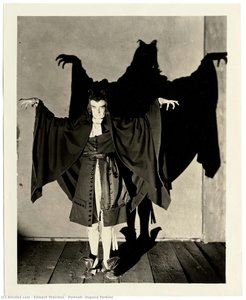
Portrait, Osgood Perkins

1923 · Black and White Photography · Museum of the Moving Image, Astoria

Edward Steichen’s 1923 photograph, "Portrait, Osgood Perkins," is not merely a picture; it is an immersion into the velvet depths of theatrical fantasy. This striking black and white studio portrait captures a moment suspended between life and myth. The subject, dramatically costumed as a vampire, stands in profile, his posture radiating an almost predatory elegance. Steichen masterfully uses the stark contrast inherent to early 20th-century photography to sculpt this figure…

4
Portrait of Clarence White (1905) avtorja Edward Steichen

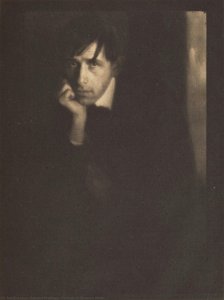
Portrait of Clarence White

1905 · Acrylic On Canvas · Denver Art Museum, Denver

To stand before Edward Steichen's Portrait of Clarence White is to step into a hushed moment suspended in time. This photograph is far more than a mere likeness; it is an immersion into the delicate landscape of introspection. The composition draws the viewer immediately into the intimate space shared between the artist and his subject. Clad in the soft, enveloping tones of monochrome, the portrait captures a man whose gaze…

5
Preview slide, The Kid (1921) avtorja Edward Steichen

Preview slide, The Kid

1921 · Acrylic On Canvas · Museum of the Moving Image, Astoria

Edward Steichen's "The Kid," produced in 1921 for the film starring Charles Chaplin and Jackie Coogan, stands as a quintessential example of Art Deco poster design—a bold declaration of cinematic excitement frozen in time. More than just an advertisement, it’s a meticulously crafted visual narrative that captures the spirit of its era.

6
Fan magazine, Motion Picture Magazine, vol. 9, no. 6 (1915) avtorja Edward Steichen

Fan magazine, Motion Picture Magazine, vol. 9, no. 6

1915 · Illustration · Museum of the Moving Image, Astoria

In this captivating artifact from July 1915, we are transported back to the dawn of the silver screen, an era where the magic of motion pictures began to weave itself into the very fabric of global culture. The cover of Motion Picture Magazine, volume 9, number 6, serves as more than just a periodical; it is a vibrant time capsule of early twentieth-century celebrity worship and artistic caricature. At its…

7
Herald, The Ten Commandments (1925) avtorja Edward Steichen

Herald, The Ten Commandments

1925 · Print · Museum of the Moving Image, Astoria

This evocative piece captures not merely an event, but a monumental moment in human mythology—the parting of the Red Sea. The composition immediately plunges the viewer into a scene of overwhelming drama and divine intervention. One can almost hear the roar of the receding waters and feel the tension gripping the figures on the shore. It is a visual narrative rendered with epic scope, designed to transport the observer across…

8
Lobby card, Blood and Sand (1922) avtorja Edward Steichen

Lobby card, Blood and Sand

1922 · Illustration · Museum of the Moving Image, Astoria

This evocative lobby card for "Blood and Sand," dating back to 1922, transports the viewer directly into the passionate, sun-drenched melodrama of early cinema. It is more than just a promotional piece; it is a carefully constructed tableau vivant, capturing the very essence of cinematic yearning. The composition immediately draws the eye to the central figure—a man embodying the romantic archetype, dressed in attire suggestive of Spanish passion and drama.…

9
Lobby card, Blood and Sand (1922) avtorja Edward Steichen

Lobby card, Blood and Sand

1922 · Photography · Museum of the Moving Image, Astoria

To gaze upon this lobby card for "Blood and Sand" is to step directly onto the vibrant, dramatic set of early cinema history. This piece is not merely a promotional artifact; it is a carefully constructed tableau vivant, capturing the raw energy and intoxicating allure that defined the silent film era. The composition immediately arrests the viewer with its bold chromatic choices—the passionate reds, the electric yellows, and the deep,…

10
Preview slide, The Immigrant (1919) avtorja Edward Steichen

Preview slide, The Immigrant

1919 · Illustration · Museum of the Moving Image, Astoria

In the realm of vintage visual culture, few images capture the whimsical essence of early cinema as effectively as this Preview slide for The Immigrant. This evocative piece serves as a window into a bygone era, presenting a delightful caricature of the legendary Charlie Chaplin in his most iconic role as the Tramp. The central figure is rendered with a charmingly exaggerated physicality; his oversized shoes, hat, and suit create…

Izbor umetnika Edward Steichen se nadaljuje, od 11 do 47

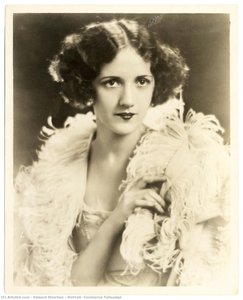
11Paul Robeson avtorja Edward SteichenPaul RobesonGeorge Eastman Museum 12Lobby card, The Love Special (1921) avtorja Edward SteichenLobby card, The Love Special1921 · Museum of the Moving Image 13In Memoriam (1906) avtorja Edward SteichenIn Memoriam1906 · Denver Art Museum 14Lobby card, The Heart of the North (1921) avtorja Edward SteichenLobby card, The Heart of the North1921 · Museum of the Moving Image 15Studio site photograph, Famous Players-Lasky, Hollywood, CA (1922) avtorja Edward SteichenStudio site photograph, Famous Players-Lasky, Hollywood, CA1922 · Museum of the Moving Image 16Sunflower (1920) avtorja Edward SteichenSunflower1920 · George Eastman Museum 17Preview slide, Hunting Big Game in Africa (1922) avtorja Edward SteichenPreview slide, Hunting Big Game in Africa1922 · Museum of the Moving Image 18Isadora Duncan in the Parthenon, Athens (1921) avtorja Edward SteichenIsadora Duncan in the Parthenon, Athens1921 · Toledo Museum of Art 19Lobby card, The Green Temptation (1922) avtorja Edward SteichenLobby card, The Green Temptation1922 · Museum of the Moving Image 20Film still, Footlights (1921) avtorja Edward SteichenFilm still, Footlights1921 · Museum of the Moving Image 21Nocturne, Temple d'Amour (1910) avtorja Edward SteichenNocturne, Temple d'Amour1910 22Film still, Experience (1921) avtorja Edward SteichenFilm still, Experience1921 · Museum of the Moving Image 23Brequet Photographic Plane Brought Down in Flames, World War I (1918) avtorja Edward SteichenBrequet Photographic Plane Brought Down in Flames, World War I1918 24Lobby card, Java Head (1923) avtorja Edward SteichenLobby card, Java Head1923 · Museum of the Moving Image 25Advertising slide, Paramount Pictures (1915) avtorja Edward SteichenAdvertising slide, Paramount Pictures1915 · Museum of the Moving Image 26Herald, The Kid Brother (1927) avtorja Edward SteichenHerald, The Kid Brother1927 · Museum of the Moving Image 27Lobby card, The Blue Fox, Episode 10 (1921) avtorja Edward SteichenLobby card, The Blue Fox, Episode 101921 · Museum of the Moving Image 28Special message slide, (1915) avtorja Edward SteichenSpecial message slide,1915 · Museum of the Moving Image 29Lobby card, The Man from Lost River (1921) avtorja Edward SteichenLobby card, The Man from Lost River1921 · Museum of the Moving Image 30The Lotus Screen, S.S.S (1909) avtorja Edward SteichenThe Lotus Screen, S.S.S1909 31Studio site photograph, Thomas H. Ince Studios, Culver City, CA (1922) avtorja Edward SteichenStudio site photograph, Thomas H. Ince Studios, Culver City, CA1922 · Museum of the Moving Image 32Herald, Blood and Sand (1922) avtorja Edward SteichenHerald, Blood and Sand1922 · Museum of the Moving Image 33Portrait, Constance Talmadge (1920) avtorja Edward SteichenPortrait, Constance Talmadge1920 · Museum of the Moving Image 34Preview slide, Cleopatra (1917) avtorja Edward SteichenPreview slide, Cleopatra1917 · Museum of the Moving Image 35Lady in a Flower Field (1899) avtorja Edward SteichenLady in a Flower Field1899 36The Little Round Mirror (1901) avtorja Edward SteichenThe Little Round Mirror1901 37Film still, Behind the Scenes (1914) avtorja Edward SteichenFilm still, Behind the Scenes1914 · Museum of the Moving Image 38Portrait, William Farnum (1920) avtorja Edward SteichenPortrait, William Farnum1920 · Museum of the Moving Image 39Aerial Bombs Dropping on Montmedy, World War I (1918) avtorja Edward SteichenAerial Bombs Dropping on Montmedy, World War I1918 40Aerial View of Trenches (1918) avtorja Edward SteichenAerial View of Trenches1918 · New Orleans Museum of Art 41Film still, Footlights (1921) avtorja Edward SteichenFilm still, Footlights1921 · Museum of the Moving Image 42Jean Walker Simpson (1923) avtorja Edward SteichenJean Walker Simpson1923 43Film still, Puritan Passions (1923) avtorja Edward SteichenFilm still, Puritan Passions1923 · Museum of the Moving Image 44Program Orfeja gledališča, Filadelfija, ZDA (1915) avtorja Edward SteichenProgram Orfeja gledališča, Filadelfija, ZDA1915 · Museum of the Moving Image 45Aerial View of Trenches (37) (1918) avtorja Edward SteichenAerial View of Trenches (37)1918 · New Orleans Museum of Art 46Lobby karta, Rosita (1923) avtorja Edward SteichenLobby karta, Rosita1923 · Museum of the Moving Image 47Fotografija studia, Thomas H. Ince Studios, Culver City, Kalifornija (1922) avtorja Edward SteichenFotografija studia, Thomas H. Ince Studios, Culver City, Kalifornija1922 · Museum of the Moving Image

Slavna platna umetnika Edward Steichen, razdeljena po obdobjih

Motivi, ki so očarali Edward Steichen

Četiri teme, ki se v teh originalih najpogosteje ponavljajo, vsaka z svojim vrhunskim primerom.

Muzeji, ki hranijo originala umetnika Edward Steichen

6 muzejev, ki vsebujo največ slik na tej strani.

Muzej Mesto Sloga Edward Steichen Slike iz tega seznama
Museum of the Moving Image, AstoriaMuseum of the Moving Image Astoria 32 Behind-the-scenes photograph, Paying the Piper, Portrait, Osgood Perkins, Preview slide, The Kid
Denver Art Museum, DenverDenver Art Museum Denver 2 Portrait of Clarence White, In Memoriam
George Eastman Museum, RochesterGeorge Eastman Museum Rochester 2 Paul Robeson, Sunflower
New Orleans Museum of Art, New OrleansNew Orleans Museum of Art New Orleans 2 Aerial View of Trenches, Aerial View of Trenches (37)
National Gallery of Art, WashingtonNational Gallery of Art Washington 1 Le Tournesol (The Sunflower)
Toledo Museum of Art, ToledoToledo Museum of Art Toledo 1 Isadora Duncan in the Parthenon, Athens

Edward Steichen desetletje za desetletjem: originali, ki definira vsako od njih

Delo po desetletjih

Izberite desetletje, da si ogledate original, ki ga opredeljuje.

Vprašanja zbirateljev o slikah umetnika Edward Steichen

Za katero delo je Edward Steichen najbolj znan/a?Razkriti odgovor

Le Tournesol (The Sunflower) (1920), National Gallery of Art, Washington. Zatem sledeta Behind-the-scenes photograph, Paying the Piper (1921) in Portrait, Osgood Perkins (1923).

Koliko je bil Edward Steichen let, ko je nastalo delo Le Tournesol (The Sunflower)?Razkriti odgovor

20 let: delo Le Tournesol (The Sunflower) iz leta 1920, Edward Steichen pa je bil/a rojen/a leta 1900.

Katera je deset najbolj znanih slik umetnika Edward Steichen?Razkriti odgovor

Le Tournesol (The Sunflower), Behind-the-scenes photograph, Paying the Piper, Portrait, Osgood Perkins, Portrait of Clarence White, Preview slide, The Kid, Fan magazine, Motion Picture Magazine, vol. 9, no. 6, Herald, The Ten Commandments, Lobby card, Blood and Sand, Lobby card, Blood and Sand in Preview slide, The Immigrant. Zgornja lestica prikazuje leto nastanka in muzej za vsako delo.

Koliko slik je pustil Edward Steichen?Razkriti odgovor

Naš katalog vsebuje 47 del avtorja Edward Steichen, datiranih od 1909 do 1927.

V katerih muzejih so razložena remek dela umetnika Edward Steichen?Razkriti odgovor

Večini v Museum of the Moving Image (Astoria), Denver Art Museum (Denver) in George Eastman Museum (Rochester). Zgoraj navedena tabela muzejev vsebuje njihov celoten seznam.

V katerih letih je Edward Steichen naslikal svoja najbolj znana dela?Razkriti odgovor

V obdobju 1920s: 29 od 47 del na tej strani je bilo izdelovanih takrat, med njimi pa Le Tournesol (The Sunflower).

Kakšna sta prva in zadnja znana originala umetnika Edward Steichen?Razkriti odgovor

Na tej strani je najstarejše delo iz The Lotus Screen, S.S.S (1909) in najstarejše iz Herald, The Kid Brother (1927).

Katere teme je Edward Steichen najpogosteje izbiral?Razkriti odgovor

Early 20th century (8), Black and white (7) in Portrait (6), na 47 delih na tej strani.

Katero tehniko je Edward Steichen najpogosteje uporabljal?Razkriti odgovor

Black and White Photography, za 9 od 47 del na tej strani.

Kateri umetniški slog pripada Edward Steichen?Razkriti odgovor

Pictorialism, glede na originala na tej strani.

Katera dela umetnika Edward Steichen so razstavljena v muzeju Museum of the Moving Image?Razkriti odgovor

Behind-the-scenes photograph, Paying the Piper, Portrait, Osgood Perkins in Preview slide, The Kid: v muzeju Museum of the Moving Image, Astoria se nahaja 32 del z te strani.

Edward Steichen: življenje in delo

Življenje, ki premosti svetove: Umetniška odprava Edwarda Steichena

Édouard Jean Steichen, pozneje znan kot Edward Steichen, je bil나 lik, ki se je izstopal iz vseh preprostih razvrstitev. Rodil se je leta 1879 v majhnem vasi Bivange v Luksemburškem, njegova pot pa se je spremenila v izjemno pot od evropskih korenin do postajanja enega najbolj vplivnih ameriških umetnikov – ne le kot fotografa, temve vlagi kot slikar, kurator in vizionar, ki je preoblikoval naš način zaznavanja vizualne kulture. Prva leta je zaznamovalo pomembno preseljenje; leta 1881 se je družina Steichen izselila v Hancock v Michigan, kjer so iskali nove priložnosti. Ta premik je mlademu Edwardu vplil občutek premikanja in morda povečano občutljivost pri opazovanju – lastnosti, ki bodo globoko oblikovale njegovo umetniško vizijo. Še kot otrok je bil prisoten vroden talent za risanje, ki so ga negovali podpirajoči starši, ki so prepoznali in spodbudili njegove ustvarjalne nagnjenosti. Ključni trenutek je prišel v šestnajstih letih, ko je prejel svoj prvi aparat, s čimer se je začelo obdobje v veliki meri samostojnega učenja skozi neustrašne eksperimente. To ni bilo le obvladovanje tehnike; šlo je za odkrivanje novega jezika, načina za zajemanje sveta z neposrednostjo in intimnostjo, ki prej nista bili dosegljiva. Kasnejša selitev v Milwaukee mu je prinesla učeništvo pri litografiji, kar mu je nudilo dragocena tehnična znanja, hkrati pa je omogočilo cvetenje njegovih umetniških pobud.

Od piktorializma do moderne vizije: Steichenova umetniška evolucija

Steichenov izstop na sceno se je skladal z razvijanjem piktorialističnega gibanja, ki je temeljilo na poskusu dvigniti fotografijo na raven fine umetnosti. Hitro je postal osrednja figura, ki je uporabljala mehko fokusiranje in slikarne učinke za ustvarjanje slik, ki so vzbudile vzdušje in razpoloženje namesto zgolj dokumentiranja realnosti. Ta iskanje ga je vodilo do Alfreda Stieglitza, sorodnega duha, ki je prepoznal Steichenov izjemen talent. Skupaj sta leta zględ 1902 ustanovila Photo-Secession, skupino posvečeno promociji fotografije kot legitimne umetniške forme. Objavljanje revije *Camera Work*, izjemno vplivnega fotografskega časopisa, je postalo njihova platforma za širjenje idej in predstavljanje revolucionarnih del. Ustanovitev galerije 291 v New Yorku je še utrdila njun vpliv, saj je ponudila prostor, kjer so se avantgardna evropska umetnost – Picasso, Matisse, Cézanne – razstavljali ob fotografiji, kar je spodbudilo medkulturni dialog in izzival konvencionalne umetniške meje. Vendar Steichenova umetniška pot ni bila statična. Premenje prvega svetovnega vojne je delovalo kot katalizator. Zapustil je eterične lastnosti piktorializma in namesto tega sprejel estetiko »čiste fotografije« (Straight Photography) – značilno z ostrim fokusom, natančno podrobnostjo in neokrasjeno predstavitvijo realnosti. Ta premik je odražal širši kulturni gib proti modernizmu in zavračanje sentimentalnosti v korist jasnosti in neposrednosti.

Mojster številnih medijev: Moda, film in človeška kondicija

Steichenova vsestranost je bila izjemen. Ni se omejeval na en umetniški domen; brez težav je prehajal med fotografijo, slikarstvom in celo filmskim umetnostjo. Njegov vstop v modno fotografijo v 20. in 30. letih je revolucionarno spremenil industrijo. Pri delu za reviji *Vogue* in *Vanity Fair* se je premaknil dlje od same dokumentacije oblačil k ustvarjanju slik, ki so bile sofisticirane, glamurozne in prežeto z občutkom pripovedovanja. Razumel je, kako uporabiti svetlobo, poziranje in kompozicijo, da prenese ne le slog, temveč tudi osebnost in čustva. To obdobje ga je uveljavilo kot pionirja na tem področju, ki je postavil standarde za generacije prihajajočih modnih fotografov. Med drugo svetovno vojno je svoji sprejęti državi služil z režijo filma *The Fighting Lady* (1944), priznanega dokumentarnega filma za ameriško vojskovno moravo, ki je ponudil vizceralno predstavitev zračnega boja. Vendar pa njegovo najbolj trajno dediščino predstavlja razstava *The Family of Man*, kurirana v Museum of Modern Art leta 1955. Ta monumentalna izstava, ki je vključevala fotografije iz šestint nhiêu držav, je bila močno sporočilo o univerzalnih človeških izkušnjih – ljubezni, rojstvu, smrti, veselju, žalosti – ki presegajo kulturne in geografske meje. Prepoznana v UNESCOv register svetovne pomembne dediščine ostaja spomin na Steichenovo verovanje v združevalno moč fotografije.

Dediščina in vpliv: Trajen učinek na vizualno kulturo

Edward Steichen je umrl leta 1973, za pustil pa izjemno bogat opus, ki še vedno navdihuje in sproža razmisle. Njegov vpliv je večdimenzionalen. Temeljito je spremenil percepcijo fotografije, jo dvignil iz čisto tehničnega procesa v priznano umetniško obliko. Njegovo pionirsko del v modni fotografiji ni le opredelilo estetike ene dobe, temveč je postavilo nove standarde za vizualno pripovedovanje znotraj industrije. Galerija 291 je s svojo zagovarjalniško vlogo za evropski modernizem igrala ključno vlogo pri predstavljanju revolucionarnih umetnostnih gibanj ameriški publiki. In *The Family of Man*, s svojim sporočilom o skupni človečnosti, ostaja globoko relevanten v vse bolj fragmentiranem svetu. Njegova sposobnost nemotnjega navigiranja med komercialnimi in umetniškimi prizadevanji je dokazala, da lahko kreativnost cveti v različnih kontekstih. Steichenova kariera je bila dokaz moči eksperimentiranja, inovacije in neustrašnega stremiča k umetniški viziji. On preprosto ni dokumentiral sveta; on ga je interpretiral, oblikoval in na koncu spremenil način, kako ga vidimo.

Pomembna dela

  • The Pond–Moonlight (1904): Pomembna piktorialistična fotografija, slavna zaradi svoje atmosferične globine in tonske bogatosti; rekordna prodajna cena na dražbi potrjuje njeno trajno privlačnost.
  • The Flatiron (1904): Še jedno pomembno zgodnje delo, ki prikazuje njegovo obvladovanje fotografske tehnike in kompozicije, ki je na dražbi doseglo izjemno ceno.
  • Portreti slavnih: Obsečna zbirka, ki s svojo zagono občutljivost zajema bistvo pomembnih osebnosti iz sveta umetnosti, literature in zabave.
  • The Fighting Lady (1944): Prepoznavan dokumentarni film iz obdobja druge svetovne vojne, ki ponuja fascinanten vpogled v zračne bitke.
  • The Family of Man (1955): Revolucionarna razstava v MoMA, ki s fotografijami iz vsega sveta raziskuje univerzalne človeške izkušnje in je dobila priznanje UNESCO.