Preklop na tiskanine
 Preberi več







































 Za umetniška dela ali reprodukcije, ki so po katerikoli strani širše od 105 cm (približno 41 palč), bo okvir poslan v razstavljeni obliki kot komplet. Ta metoda zagotavlja varno dostavo in preprečuje poškodbe med transportom.


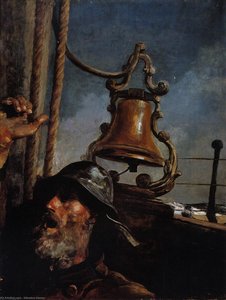
Winslow Homer: The Fog Warning – A Meditation on Resilience
Winslow Homer’s “The Fog Warning,” painted in 1885, isn't merely a depiction of a fisherman battling the elements; it’s an arresting exploration of humanity confronting overwhelming forces—a cornerstone of American Realism and a testament to Homer’s profound understanding of the human spirit.
- Subject Matter: The painting centers on a solitary fisherman, Silas Thorne, valiantly attempting to haul in his catch amidst turbulent waves off Prout's Neck, Maine. This scene captures not just physical exertion but also embodies the struggle for survival against nature’s capricious fury.
- Style & Technique: Homer employs a distinctly Realist approach, rejecting romanticized idealism for an unflinching portrayal of daily life at sea. His masterful use of oil paint—characterized by *alla prima* application and thick impasto brushstrokes—immediately conveys the dynamism and raw power of the storm.
- Historical Context: Painted during Homer’s return to America after his formative years in England, “The Fog Warning” reflects his deep connection to Maine's coastal communities. It builds upon his earlier explorations of maritime life, demonstrating a shift toward confronting serious themes—the enduring battle between humankind and the elemental forces.
Atmospheric Realism: Homer’s Mastery of Light and Texture
Homer’s artistic brilliance shines through in his meticulous rendering of atmospheric effects. The muted color palette – dominated by grays, blues, browns, and ochre – reinforces the painting's somber mood and emphasizes the chilling beauty of the seascape. Layers of glazing techniques create depth and tonal variation, while visible brushstrokes capture the undulating movement of the waves with remarkable accuracy.
- Color Palette: Homer’s deliberate use of color contributes significantly to the painting's emotional impact. The subdued hues evoke a sense of isolation and vulnerability, mirroring Thorne’s precarious position against the storm’s onslaught.
- Brushwork & Texture: Thick impasto brushstrokes—particularly prominent on the water surface—create a palpable textural richness that mirrors the chaotic conditions of the sea. This technique powerfully communicates the physicality of the struggle for survival.
Symbolism and Emotional Resonance
"The Fog Warning" transcends mere visual representation; it’s laden with symbolic significance. The lone fisherman embodies perseverance, resilience, and the humbling awareness of human insignificance in comparison to nature's grandeur. Homer skillfully captures not just a moment of physical exertion but also conveys an underlying psychological tension—the confrontation between courage and fear.
- Symbolism: Thorne’s unwavering determination symbolizes humanity’s capacity for overcoming adversity, while the vast expanse of the sea represents both opportunity and peril. Homer's masterful composition draws the viewer into the fisherman’s experience, fostering empathy and contemplation.
A Legacy of Impressionistic Detail
Despite its grounding in Realism, “The Fog Warning” retains traces of Luminism—particularly in its atmospheric haze—demonstrating Homer's ability to synthesize diverse artistic influences. Ultimately, this painting stands as an enduring masterpiece—a poignant reminder of the human spirit’s capacity for fortitude and beauty amidst hardship.
- Influence: Homer’s work anticipates Impressionistic techniques while maintaining a steadfast commitment to realism, cementing his place as one of America's most influential painters.
Vprašanja in odgovori
Kateri umetnik in kateri slog stojita za "Napovedna zmrza"?
Vinslo Homer je ustvaril "Napovedna zmrza" v okviru gibanja Contemporary Realism.
Ali je "Napovedna zmrza" v celotnosti bolj svetel ali bolj temen?
"Napovedna zmrza" ima v celoti senčenost, njegova luminanca pa znaša Mehak senčni del.
Za kakšno vrsto umetniškega dela velja "Napovedna zmrza" avtorja Vinslo Homer?
"Napovedna zmrza" avtorja Vinslo Homer je razvrščeno v kategorijo Stenska umetnost. Ta kategorija opisuje vrsto umetniškega dela, da je original.
 Predogled v realnem okolju
 Pošlji
 Deli
Deli
 Podrobnosti o delu
 Priročnik

 Prenesi sliko
 Podobni izdelki
 Rentgenski posnetek
 Predvajaj diaporama
 Vprašanja in odgovori
 Statistika
 Top 100