

 Preverite v realnem okolju
 Pošlji kot čestitko
 Deli
Deli
 Podrobnosti
 Priročnik

 Prenesi
 Podobni artefakti
 Rentgenski posnetek
 Predvajaj diaporama
 Statistika
Standing Male Nude
 Oil On Canvas
- WallArt
 1849
1849 63.0 x 53.0 cm
 Royal College of Art
 Preberi več
Ročno izdelana oljna reprodukcija
Ročno slikano olje na platnu v vaši izbiri velikosti in okvirja, izdelano po naročilu naših umetnikov. ( Preklop na tiskanine Preklop na digitalno sliko)




P118B €10

P118H €10

P118W €10

P438Z €10

P508JH €12

P508YH €12

P805H €10

P805Z €10

P919BZ €10

P919G €10

P919XJ €10

P959ZH €10

P968JZ €12

W106C €8

W218G €10

W218JH €8

W218Y €10

W307PJ €10

W316G €10

W316PJ €8

W316Y €10

W398PJ €8

W4111J €10

W500HY €15

W500JH €15

W692G €12

W849H €8

W940BG €15

W953PJ €8




Izberite eno od naših vnaprej določenih velikosti, ki ustrezajo prvotnim proporcijam umetničkega dela.

Vnesite širino in višino, ki jih potrebujete, da se slika prilega vašemu okviru ali steni. Ker je delo ročno slikano, lahko umetnik pri različnih oblikih slik pri robovih doda malo več barve ali pa jih malo odreže — izberite sami. Pred začetkom slikanja vam pošljemo digitalni predogled za potrditev. Slika, prikazana na tej strani, ni končni rezultat — le predogled prikazuje dejansko podobo.
Po oddaji naročila bo ekipa OriginalUniqueArt.com stranki po e-pošti poslala navodila in predogled digitalnega predogleda.
Mednarodna dostava () v 3/4 tednih namesto običajnih 5 tednov. (26 oktober). Brez kompromisov pri kakovosti.

Brezplačna ekspresna dostava po vsem svetu

Visokokakovostno laneno platno

Popolno zavarovanje pošiljke

Garancija povračila carine in uvoznih davkov

Garancija popolnega barvnega ujemanja

Politika vračila v 100 dneh (le v primeru okvar)

Garancija 100% povračila denarja

Popust pri večjem naročilu
 Možnost stekla je na voljo le za velikosti pod 110 cm

Standing Male Nude
Tehnika reprodukcije
Velikost reprodukcije
-


Skupna cena
€ 263
Standing Male Nude: A Pioneer of British Art
William Etty’s “Standing Male Nude” is not merely a depiction of the human form; it's a pivotal moment in the history of British art, a bold assertion of artistic freedom within a society grappling with Victorian sensibilities. Painted in 1849, this monumental canvas—measuring an impressive 63 x 53 centimeters—captures a figure poised on the precipice of action, his arms outstretched as if bracing for a challenge or perhaps simply embracing the expansive possibilities of existence. The painting’s immediate impact lies in its unapologetic celebration of the nude male body, a subject largely taboo within the established artistic conventions of the time. Etty, a Royal Academician and a man known for his intensely personal and often controversial work, defied societal expectations by presenting this powerfully rendered figure with an honesty and directness rarely seen in contemporary art.
Etty’s technical mastery is immediately evident. The artist meticulously renders every curve of the musculature, from the taut definition of the shoulders and chest to the subtle ripple beneath the skin. His use of light and shadow is particularly striking; a dramatic chiaroscuro effect emphasizes the contours of the body, lending it an almost sculptural quality. Note the way the light catches on the exposed flesh, creating highlights that seem to shimmer with life. The background—a dark, undefined space—further isolates the figure, intensifying its presence and drawing the viewer’s attention entirely to the subject. This deliberate simplicity underscores Etty's focus on his primary concern: capturing the essence of human form with unparalleled realism and emotional depth.
A Study in Form and Emotion
The painting’s historical context is crucial to understanding its significance. Following the abolition of slavery, Britain was undergoing a period of intense social and political change. The Victorian era, characterized by strict moral codes and a conservative outlook, sought to impose order and restraint on all aspects of life. Yet, within this framework, artists like Etty were pushing boundaries, exploring themes of sexuality, vulnerability, and the human condition with unprecedented frankness. “Standing Male Nude” can be interpreted as a defiant statement against these restrictive norms, a celebration of the body’s inherent beauty and power.
Furthermore, Etty's work reflects his deep engagement with classical art. He was heavily influenced by the works of Renaissance masters like Titian and Rubens, particularly their depictions of the human nude. However, unlike many of his contemporaries who simply copied these ancient models, Etty infused them with a distinctly British sensibility. His figures are not idealized or ethereal; they possess a palpable physicality, a sense of raw emotion that resonates deeply with the viewer. The pose itself—a dynamic and slightly awkward stance—suggests a moment of contemplation, a pause before action, inviting us to consider the complexities of human experience.
Symbolism and Interpretation
While the precise meaning of “Standing Male Nude” remains open to interpretation, several symbolic elements contribute to its richness. The figure’s outstretched arms could represent a yearning for connection, a desire for freedom, or perhaps simply an embrace of life's uncertainties. Some scholars have suggested that the pose alludes to classical Greek sculpture, specifically depictions of Apollo—the god of light, music, and poetry—imbuing the painting with connotations of strength, beauty, and artistic inspiration. The starkness of the composition also lends a sense of vulnerability; stripped bare, both physically and emotionally, the figure is exposed to the world, inviting us to confront our own perceptions of beauty and mortality.
Beyond its immediate visual impact, “Standing Male Nude” serves as a testament to Etty’s artistic vision and his courage in challenging conventional norms. It remains a powerful and evocative work of art, offering a glimpse into the complexities of Victorian society and the enduring fascination with the human form. Reproductions of this masterpiece continue to captivate audiences today, reminding us of the transformative power of art to provoke thought, inspire emotion, and challenge our understanding of the world around us.
Vprašanja in odgovori
Kakšen je vzdušje v delu "Standing Male Nude" avtorja Vilijam Ety?
"Standing Male Nude" avtorja Vilijam Ety je po vzduju opisan kot Dramatic. Ta razvrščitev lahko pomaga pri izbiri ustreznega okolja za delo.
Kako svetel je celotni sklad "Standing Male Nude"?
V smislu zaznane svetlobnosti je "Standing Male Nude" avtorja Vilijam Ety deep_shadow.
Kakšna je tehnika in velikost originalnega dela "Standing Male Nude" avtorja Vilijam Ety?
Originalno delo "Standing Male Nude" avtorja Vilijam Ety je Oil On Canvas z dimenzijami 63 x 53 cm. Tehnika in velikost opisujeta originalni objekt.
Biografija umetnika
A Pioneer of the British Nude: The Life and Art of William Etty
William Etty, a name perhaps less instantly recognizable than his contemporaries like Turner or Constable, nevertheless occupies a pivotal position in 19th-century British art. Born in York on March 10, 1787, above his father’s bakery, Etty's journey from humble beginnings to Royal Academician was one marked by relentless dedication, artistic innovation, and no small measure of controversy. His early life offered little indication of the path he would forge. Apprenticed at age twelve to a printer in Hull, seven years were spent immersed in the practicalities of typography – a world far removed from the canvases that would eventually bear his signature. Yet, even amidst the mechanical demands of printmaking, Etty nurtured a burgeoning passion for drawing, an impulse that ultimately propelled him towards London and the hallowed halls of the Royal Academy Schools in 1807. There, under the tutelage of Thomas Lawrence, he honed his skills through diligent copying, laying the foundation for a career defined by masterful depictions of the human form. The Rise to Prominence: Nudes and Controversy Etty’s breakthrough arrived in 1821 with Cleopatra's Arrival in Cilicia, a painting that immediately ignited both admiration and scandal. The work, teeming with nude figures, was exhibited to widespread acclaim, yet simultaneously earned him a reputation for indecency. This duality would become a defining characteristic of his career. He wasn’t merely depicting nudity; he was exploring the human form with an unprecedented realism and anatomical precision for a British artist of that era. His commitment to accurately rendering flesh tones, light, and shadow – influenced by his study of Venetian masters like Titian and Rubens during travels in Italy and France – set him apart. He continued to produce historical scenes populated with nudes, often drawn from classical mythology or literature, such as The Sirens and Ulysses. These works were commercially successful, allowing Etty to thrive despite the constant criticism leveled against his subject matter. In 1828, he was elected a Royal Academician, solidifying his position within the established art world, even as whispers of impropriety followed him. Beyond the Nude: Portraits and Still Life While Etty is most celebrated for his nudes, his artistic range extended beyond this controversial domain. Recognizing the need to broaden his appeal – and perhaps secure a more stable income – he ventured into portraiture during the 1830s. Though not as groundbreaking as his figure paintings, these portraits demonstrate his technical skill and ability to capture character. Furthermore, Etty became one of the first English painters to seriously engage with still life, demonstrating an eye for detail and a sensitivity to texture that rivaled the Dutch masters he admired. This diversification reveals a pragmatic side to Etty’s artistic practice, a willingness to adapt to market demands while remaining true to his core aesthetic principles. He continued, however, to return to the nude form throughout his life, driven by an unwavering fascination with its beauty and expressive potential. Legacy and Rediscovery William Etty died in York on November 13, 1849, leaving behind a substantial body of work that initially enjoyed considerable popularity. However, tastes shifted in the decades following his death, and his paintings fell into relative obscurity. By the late 19th century, his once-celebrated works were largely forgotten, dismissed as outdated or simply too shocking for Victorian sensibilities. A remarkable rediscovery began in the early 21st century. His inclusion in Tate Britain’s landmark Exposed: The Victorian Nude exhibition (2001–2002) sparked renewed interest in his art, prompting critical reevaluation and a reassessment of his place in British art history. The restoration of The Sirens and Ulysses in 2010 further cemented this revival, revealing the brilliance of his technique and the enduring power of his vision. Today, William Etty is recognized as a pioneering figure who challenged artistic conventions, celebrated the human form with unparalleled realism, and left an indelible mark on the landscape of British art. His works stand as testaments to his skill, dedication, and unwavering commitment to capturing the beauty and complexity of the human experience.Key Works
- Cleopatra's Arrival in Cilicia (1821): The painting that launched Etty’s career and established his reputation for depicting nudes.
- The Sirens and Ulysses (1837): A dramatic depiction of Homer’s epic, showcasing Etty's mastery of composition and anatomy.
- Reverend William Jay (c. 1836-40): An example of his portraiture work, demonstrating a keen eye for character.
- Standing Female Nude (date unknown): A study showcasing Etty’s exceptional skill in rendering realistic flesh tones and form.

Vilijam Ety
1787 - 1849 , Združeno kraljestvo Velike Britanije in Irana
Ključne informacije
- Artistic Movement Or Style: Romanticism
- Artists Who Influenced This Artist: ['Thomas Lawrence']
- Date Of Birth: March 10, 1787
- Date Of Death: November 13, 1849
- Full Name: William Etty
- Nationality: British
- Notable Artworks:
- Cleopatra's Arrival
- The Sirens and Ulysses
- Place Of Birth: York, United Kingdom
Sorodni članki
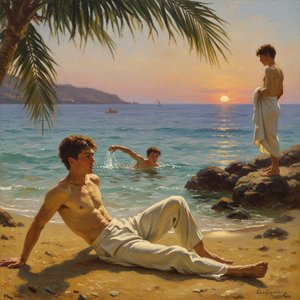
Henry Scott Tuke: Sunlit Masculinity & the Pastoral Ideal in Victorian Painting
Explore the captivating world of Henry Scott Tuke's paintings – a master of British Impressionism renowned for his intimate depictions of youth and sunlit maritime scenes. Discover his legacy & aesthetic influence.

The Eloquent Form: A Historical & Aesthetic Exploration of the Nude in Art
Explore the captivating history of the nude in art! From ancient Greece to modern masters, discover its evolving symbolism, techniques & enduring beauty. Expert insights for collectors and enthusiasts.
25 Mojstrovin Britanskega Muzeja: Umetniški Zakladi za Vaš Dom | OriginalUniqueArt
Odkrijte 25 mojstrovin Britanskega muzeja! Preberite zgodbe o slikarjih, tehnikah in nesmrtnih umetninah. Reprodukcije slik, dekoracija doma & navdih za vaš interier na OriginalUniqueArt.com. Raziščite celotno zbirko online!

The Enduring Allure of the Nude: A Historical & Artistic Exploration of the Human Form
Explore the captivating history of nude art! Discover iconic paintings & artists from classical to modern eras. Uncover symbolism, techniques & find museum-quality reproductions at OriginalUniqueArt.

William Etty: Rediscovering Victorian Sensibility & the Sublime in Historical Painting
Explore the captivating world of William Etty, a pioneering Victorian artist famed for his dramatic historical paintings and groundbreaking nude figures. Discover his life, controversial reception, and enduring legacy with our expert analysis.

