

 Preverite v realnem okolju
 Pošlji kot čestitko
 Deli
Deli
 Podrobnosti
 Priročnik

 Prenesi
 Podobni artefakti
 Rentgenski posnetek
 Predvajaj diaporama
 Statistika
Still-Life
 Oil On Canvas
- WallArt
- Baroque
 1653
1653- Early Modern
 105.0 x 88.0 cm
 Hermitage Museum
 Preberi več
Giclée tisk / Umetniški tisk
Giclée ali platnati odtis muzejske kakovosti z hitro proizvodnjo in prilagodljivimi možnostmi končne obdelave. ( Naročite ročno slikano reprodukcijo Preklop na digitalno sliko)




P118B €10

P118H €10

P118W €10

P438Z €10

P508JH €12

P508YH €12

P805H €10

P805Z €10

P919BZ €10

P919G €10

P919XJ €10

P959ZH €10

P968JZ €12

W106C €8

W218G €10

W218JH €8

W218Y €10

W307PJ €10

W316G €10

W316PJ €8

W316Y €10

W398PJ €8

W4111J €10

W500HY €15

W500JH €15

W692G €12

W849H €8

W940BG €15

W953PJ €8




Izberite eno od naših vnaprej določenih velikosti, ki ustrezajo prvotnim proporcijam umetničkega dela.

Vnesite širino in višino, ki jih potrebujete za svoj okvir ali steno. Tiskanje se lahko le odreže, vendar ga ni mogoče narediti večjega od slike, zato format z drugačno obliko pomeni izgubo dela slike. Pred tiskanjem vam pošljemo digitalni predogled za potrditev. Slika, prikazana na tej strani, ne prikazuje dejanskega izrezkov — le predogled to omogoča.
Globalna dostava () v 2 tednih namesto standardnih 4/5 tednov. (26 oktober)

Brezplačna ekspresna dostava po vsem svetu

Visokokakovostno laneno platno

Popolno zavarovanje pošiljke

Garancija povračila carine in uvoznih davkov

Garancija popolnega barvnega ujemanja

Politika vračila v 100 dneh (le v primeru okvar)

Garancija 100% povračila denarja

Popust pri večjem naročilu
 Možnost stekla je na voljo le za velikosti pod 110 cm

Still-Life
Giclée tisk / Umetniški tisk
Velikost reprodukcije
-


Skupna cena
€ 70
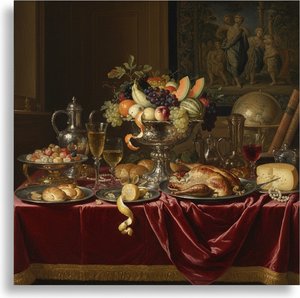
A Symphony of Light and Luxury
In the quiet, shadowed corners of the Dutch Golden Age, few masters could command the stage with as much dramatic flair as Willem Kalf. His 1653 masterpiece, Still Life with Lobster, Drinking Horn and Glasses, is not merely a painting of objects; it is a carefully orchestrated performance of light, texture, and prestige. As one gazes upon this canvas, they are immediately transported into an era of unprecedented maritime prosperity, where the spoils of global trade were celebrated through the meticulous brushstrokes of the pronkstilleven—the grand, opulent still life. The composition serves as a window into a world of sensory indulgence, where every glint of silver and every dewdrop on a peach tells a story of wealth, discovery, and the fleeting nature of earthly delights.
The artwork captures a moment of suspended animation, presenting an arrangement that feels both bountiful and profoundly intimate. A vibrant lobster, its shell a testament to Kalf’s ability to render organic complexity, rests amidst the soft, velvety skins of peaches and pears. These natural elements are juxtaposed against the hard, reflective surfaces of man-made treasures: a gleaming silver goblet, a sturdy drinking horn, and delicate glassware that catches the light with ethereal precision. This interplay between the perishable fruit and the enduring precious metals creates a tension that is central to the Baroque experience, inviting the viewer to linger on the exquisite details of each meticulously rendered form.
The Mastery of Chiaroscuro and Texture
Technically, Kalf’s work represents the pinnacle of seventeenth-century Dutch realism. He employs chiaroscuro—the dramatic use of intense light and deep shadow—to sculpt his subjects out of the darkness. This technique does more than provide depth; it breathes life into the inanimate. The way light spills across a silver vessel or pierces through a glass, casting long, evocative shadows across a richly patterned tablecloth, creates a palpable sense of three-dimensionality. For the discerning collector or interior designer, this mastery of contrast offers a profound visual weight that can anchor a room, providing a focal point that changes character as the ambient light of a space shifts throughout the day.
Beyond the play of light, Kalf’s true genius lies in his tactile virtuosity. He possesses an uncanny ability to translate the language of touch into oil on canvas. One can almost feel the cool, smooth surface of the bronze candlestick, the rougher texture of the drinking horn, and the soft, yielding flesh of the ripening fruit. This commitment to hyper-realistic detail ensures that a high-quality reproduction of this piece retains its soul, offering an immersive experience that celebrates the beauty of material existence. It is this level of craftsmanship that makes Kalf’s work eternally relevant for those seeking to infuse their environments with a sense of historical grandeur and sophisticated elegance.
Symbolism and the Soul of the Baroque
To look closely at Kalf’s arrangement is to read a silent poem about the human condition. In the seventeenth century, nothing was purely decorative; every element carried a weight of meaning. The lobster, often associated with luxury and abundance, serves as a symbol of the era's economic triumphs. Meanwhile, the drinking horn alludes to conviviality and social standing, reminding the viewer of the communal joys of the Dutch mercantile class. Yet, beneath this layer of opulence lies a subtle memento mori—a gentle reminder of mortality. The very ripeness of the fruit suggests an approaching decay, a poignant contrast to the enduring brilliance of the silver and gold.
This duality—the celebration of life’s richness alongside a contemplation of its transience—is what gives the painting its profound emotional resonance. It evokes a sense of quiet melancholy wrapped in a cloak of splendor. For those looking to decorate with art that possesses depth and narrative, Kalf’s work offers an unparalleled opportunity. A reproduction of this still life does not just adorn a wall; it invites conversation, stimulates the intellect, and brings a touch of timeless, scholarly prestige to any curated collection or thoughtfully designed interior.
Vprašanja in odgovori
Kakšen čustveni ton ima "Still-Life" avtorja Willem Kalf?
"Still-Life" avtorja Willem Kalf izraža Dramatic čustven ton.
Kateri umetniški smer je "Still-Life" avtorja Willem Kalf?
"Still-Life" avtorja Willem Kalf pripada gibanju Baroque. To gibanje zagotavlja slogovni kontekst dela.
Kakšna je tehnika in datum nastanka dela "Still-Life" avtorja Willem Kalf?
"Still-Life" je bila izdelana leta 1653 z uporabo tehnike Oil On Canvas.
Biografija umetnika
Življenje pogrnjeno v luksuz: Svet Willem Kalfja
Willem Kalf, ime sinonimno za bogate stillebenje nizozemskega zlata doba, je se vrnil v Rotterdam leta 1619 v družino z udobnim življenjem. Njegov oče, Jan Jansz Calff, je imel funkcije v mestni upravi in mlademu Willemu zagotovil vzgojo, ki je razvil tako občutje varnosti kot tudi izpostavitev na rastjo trgovskega sveta, kar je kasneje močno vplivalo na njegovo umetnost. Čeprav ostajajo podrobnosti o Kalfjevi zgodnji usposabljanju nekaj nejasnih, je znano, da je v 1630-ih letih preživel obdobje umetniškega razvoja v Parizu, kjer se je pogrnil v živahno skupnost flamanskih umetnikov, ki so delovali v Saint-Germain-des-Prés. To formativno izkušnjo ga je namestila na manjše rustikalne interjere in stillebenje – skromni začetki, ki bodo kasneje vzeli obliko veličastnega pronkstillevenja, za katerega se danes slavi. Izguba oba starša do leta 1638 ga je sprožila vrnitev v Nizozemske, kar je postavilo sceno za njegovo zrelo umetniško obdobje.Od skromnih začetkov do majsterskega prikaza
Kalfjeva zgodnja dela iz Pariza razkrivajo umetnika, ki si išče svoje mesto. Ta sliki so pogosto prikazovale preproste aranžmacije – zelenjavo, običajna kuhinjska orodja kot ješča in lonci – postavljene proti tamno osvetljenim ozadjim, kjer so bile likov sugerirane, namesto da so bile popolnoma razviti. Ta stil je odmeval zgodnje umetniške tradicije v Flamandi v začetku 17. stoletja, zlasti delo umetnikov kot je David Teniers mlajši. Vendar pa je ambicija Kalfja kmalu presegla te skromne kompozicije. Po vrnitvi v Nizozemske je započil izjemno evolucijo proti temu, kar je postalo njegov podpisni stil: pronkstilleven, ali „razmariteno stillebenje“. To niso bili le prikaz objektnosti; bile so premišljene izložbe bogastva in sofisticiranosti, ki so predstavljale luksuzne predmete kot so srebrne posode, delikatno porcelan, eksotični sadje in bliskajoče steklo.Umetnost iluzije in simbolična resonanca
Kar je resnično razlikovalo Kalfjevo pronkstillevenje, je bila njegova neprekrivena majstorstvo svetlobe in teksture. Imel je izjemno sposobnost prikazovanja odračne lastnosti srebra, prozirnosti stekla in vsakrilnih površin sadja z osupljivim realizmom. Njegove kompozicije niso bile naključne aranžmacije; bile so pedatiški načrtovane orkestracije, namenjene ujetju igranja svetlobe in senčenja, kar je ustvarjalo občutek globine in dramatičnosti. Čeprav je osnovna struktura njegovih slikov – razpored predmetov – ostala relativno enaka, je vsako delo bilo svedočanstvo o Kalfjevi veščini v variranju tekstur in hvatanju subtilnih svetlobnih učinkov. Vendar pa je za preprosto tehnično briljancijo stala subtilna simbolična dimenzija. Luksuzni predmeti, ki so jih prikazoval, niso bili le lepi; namigovali na teme przemijanjnosti, bogastva in minljive narave življenjskih užitkov – pozdrav tradiciji vanitas, ki je bila razširjena v nizozemski slikarstvo.Nasledje in vpliv
Vpliv Willem Kalfja se je širil čez njegovo lastno bogato produktion. Njegova polimonochroma stillebenja so izkazovala zmerljivo vplivnost na francsko umetnost, zlasti v kvartalu bratov Le Nain, ki so cenili njegovo sofisticirano uporabo svetlobe in senčenja. Čeprav niso individualna dela tako široko prepoznana kot dela nekaterih njegovih sodnikov, je Kalfjevo prispevek k žanru neosporiv. Pomagal je definirati pronkstillevenje, ujetje duha nizozemskega družbe 17. stoletja – obdobja, značilnega za brezprecedno gospodarsko blagostanje in rastjo trgovečne klube, ki so bili željni prikazati svoje bogastvo in iziranost. Danes njegovi naslovni dela okrasijo prestižne muzejske zbirke po vsem svetu, vključno z Muzej Boijmans Van Beuningen v Rotterdamu, Nacionalno galerijo umetnosti v Washingtonu D.C. in Getty muzejem, kar zagotavlja, da njegovo nasljeđe kot majster nizozemskega stillebenja nadaljuje navdihovati čudenje in občudje. Njegova pedatična pozornost podrobnostim in majsterska uporaba svetlobe ostajata znakom umetniške odličnosti.Raziskovanje naprej
- Wikipedia: https://en.wikipedia.org/wiki/Willem_Kalf
- National Gallery of Art: https://www.nga.gov/artists/1430-willem-kalf
- Getty Museum: https://www.getty.edu/art/collection/person/103JR3

Willem Kalf
1619 - 1693 , Netherlands
Ključne informacije
- Artistic Movement Or Style: Nizozemska zlata doba, stilleben
- Artists Or Movements Influenced By This Artist:
- Francsko umetnost
- Brateri Le Nain
- Artists Who Influenced This Artist:
- Simon Luttichuys
- Pieter Claesz
- Willem Claeszoon Heda
- Date Of Birth: 1619
- Date Of Death: 1693
- Full Name: Willem Kalf
- Nationality: Nizozemski
- Notable Artworks:
- Stilleben z nautilus kovnico
- Le vieux puits
- Srebreni džb &= porcelanski zdajalnik
- Place Of Birth: Rotterdam, Nizozemska
Sorodni članki

Golden Light & Dutch Skies: The Timeless Magic of Dutch Golden Age Landscapes
Discover the breathtaking beauty of Dutch Golden Age landscapes. Explore the mastery of light, chiaroscuro, and 17th-century realism through an expert art history lens, celebrating the enduring legacy of the Dutch Masters for discerning collectors and art lovers.
Abraham Hendricksz van Beyeren: Pioneering Dutch Still Life & the Banquet Tradition
Explore the captivating world of Dutch Golden Age still life with Abraham van Beyeren. Discover his innovative techniques, symbolic banquet scenes & lasting influence on art history. Learn about collecting these masterpieces.

Illuminating Innovation: Exploring the Dutch Golden Age of Painting
Explore the Dutch Golden Age of painting with OriginalUniqueArt. Discover Rembrandt, Vermeer & other Masters. Learn about key characteristics, iconic artworks, and lasting influence. Expert insights for collectors & enthusiasts.

10 Mojstrovin Nizozemske Zlate dobe: Umjetnost, ki je definirala svojo dobo
Odkrijte 10 mojstrovin Nizozemske zlate dobe! Rembrandt, Vermeer & več – spoznajte zgodbe za temi ikoničnih umetnin. Inspirirajte se za notranji dizajn in poiščite reprodukcije na OriginalUniqueArt.com!

Golden Age Reflections: Dutch Baroque Painting & Cultural Innovation
Explore the Dutch Golden Age of painting! Discover key artists like Vermeer & ter Borch, their innovative techniques, and the rich cultural context behind these Baroque masterpieces. Learn about collecting & appreciating this iconic art period.
