Text size

() ·

A painting made for you, by hand

Apple Tree (Apfelbaum)

Ročno izdelana oljna reprodukcija

Ročno slikano olje na platnu v vaši izbiri velikosti in okvirja, izdelano po naročilu naših umetnikov. ( Preklop na tiskanine Preklop na digitalno sliko)

Opis zbirateljskega predmeta

Discover Kandinsky's 'Apple Tree (Apfelbaum)' (1913), a vibrant & geometric abstraction showcasing early modernism. Explore its dreamlike forms & bold colors in this unique 10x10cm artwork.

Biografija umetnika

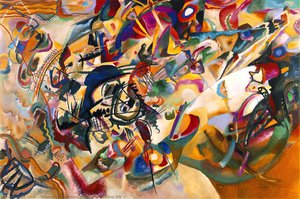
Wassily Kandinsky je revolucionarni ruskega umetnika, ki je spremenil svetovno umetnost z inovativnim abstraktnim slogom in izrazem globokih čutnih idej. Znani so po velikanskemu delu "Kompozicija VII", kjer uporabljajo intenzivne barve in geometrijske oblike za prikazovanje notranjih svetovnosti.

from ·

Chapter 1

How large should it be?

Slide to change the size; the picture on the left shows the frame at its real width. The proportions of the original are kept.

Standardna velikost
po meri
CM
INCH

Izberite eno od naših vnaprej določenih velikosti, ki ustrezajo prvotnim proporcijam umetničkega dela.

širina
višina

Vnesite širino in višino, ki jih potrebujete, da se slika prilega vašemu okviru ali steni. Ker je delo ročno slikano, lahko umetnik pri različnih oblikih slik pri robovih doda malo več barve ali pa jih malo odreže — izberite sami. Pred začetkom slikanja vam pošljemo digitalni predogled za potrditev. Slika, prikazana na tej strani, ni končni rezultat — le predogled prikazuje dejansko podobo.

Chapter 2

How should it arrive?

Choose the edges of the stretched canvas

Choose your frame

Corner sample of the WhiteWrap canvas edge finish, stretched on masivno drevo bars
White €1
Corner sample of the BlurSideWrap canvas edge finish, stretched on masivno drevo bars
Blurside €1
Corner sample of the ExtendedWrap canvas edge finish, stretched on masivno drevo bars
Extended €1
Corner sample of the P118B picture frame: izoblit polistiren, 5 cm wide and 3 cm thick
P118B €10
Corner sample of the P118H picture frame: izoblit polistiren, 5 cm wide and 3 cm thick
P118H €10
Corner sample of the P118W picture frame: izoblit polistiren, 5 cm wide and 3 cm thick
P118W €10
Corner sample of the P438Z picture frame: izoblit polistiren, 5.5 cm wide and 3.5 cm thick
P438Z €10
Corner sample of the P508JH picture frame: izoblit polistiren, 7 cm wide and 3.5 cm thick
P508JH €12
Corner sample of the P508YH picture frame: izoblit polistiren, 7 cm wide and 3.5 cm thick
P508YH €12
Corner sample of the P805H picture frame: izoblit polistiren, 5 cm wide and 3.5 cm thick
P805H €10
Corner sample of the P805Z picture frame: izoblit polistiren, 5 cm wide and 3.5 cm thick
P805Z €10
Corner sample of the P919BZ picture frame: izoblit polistiren, 7 cm wide and 3.5 cm thick
P919BZ €10
Corner sample of the P919G picture frame: izoblit polistiren, 7 cm wide and 3.5 cm thick
P919G €10
Corner sample of the P919XJ picture frame: izoblit polistiren, 7 cm wide and 3.5 cm thick
P919XJ €10
Corner sample of the P959ZH picture frame: izoblit polistiren, 5 cm wide and 3 cm thick
P959ZH €10
Corner sample of the P968JZ picture frame: izoblit polistiren, 6 cm wide and 4 cm thick
P968JZ €12
Corner sample of the W106C picture frame: masivno drevo, 5 cm wide and 3 cm thick
W106C €8
Corner sample of the W218G picture frame: masivno drevo, 5 cm wide and 3 cm thick
W218G €10
Corner sample of the W218JH picture frame: masivno drevo, 5 cm wide and 3 cm thick
W218JH €8
Corner sample of the W218Y picture frame: masivno drevo, 5 cm wide and 3 cm thick
W218Y €10
Corner sample of the W307PJ picture frame: masivno drevo, 6 cm wide and 3 cm thick
W307PJ €10
Corner sample of the W316G picture frame: masivno drevo, 6 cm wide and 3 cm thick
W316G €10
Corner sample of the W316PJ picture frame: masivno drevo, 6 cm wide and 3 cm thick
W316PJ €8
Corner sample of the W316Y picture frame: masivno drevo, 6 cm wide and 3 cm thick
W316Y €10
Corner sample of the W398PJ picture frame: masivno drevo, 5 cm wide and 3 cm thick
W398PJ €8
Corner sample of the W4111J picture frame: masivno drevo, 6.5 cm wide and 3.5 cm thick
W4111J €10
Corner sample of the W500HY picture frame: masivno drevo, 7 cm wide and 5 cm thick
W500HY €15
Corner sample of the W500JH picture frame: masivno drevo, 7 cm wide and 5 cm thick
W500JH €15
Corner sample of the W692G picture frame: masivno drevo, 8 cm wide and 4 cm thick
W692G €12
Corner sample of the W849H picture frame: masivno drevo, 5 cm wide and 3 cm thick
W849H €8
Corner sample of the W940BG picture frame: masivno drevo, 7.5 cm wide and 4.5 cm thick
W940BG €15
Corner sample of the W953PJ picture frame: masivno drevo, 6 cm wide and 3.5 cm thick
W953PJ €8
Corner sample of the H24-GOLD picture frame: gravirano leseno okvopje z gessoem, 10 cm wide and 6 cm thick
H24-GOLD €30
Corner sample of the H24-SILVER picture frame: gravirano leseno okvopje z gessoem, 10 cm wide and 6 cm thick
H24-SILVER €30
Corner sample of the H36-GOLD picture frame: gravirano leseno okvopje z gessoem, 15 cm wide and 6.5 cm thick
H36-GOLD €45
Corner sample of the H36-SILVER picture frame: gravirano leseno okvopje z gessoem, 15 cm wide and 6.5 cm thick
H36-SILVER €45
Predogled okvirja
V okviru

Moulding: . Overall size with the frame: .

Chapter 3

Who paints it, and should anything change?

Examples of what can be changed: Replace face with customer photo; Add pet (e.g., replace cat with dog); Include hidden message in background; Change background landscape or elements.
After order, OriginalUniqueArt.com team will email client for instructions and provide a mockup preview

Mednarodna dostava () v 3/4 tednih namesto običajnih 5 tednov. (2 november). Brez kompromisov pri kakovosti.

Chapter 4

The finishing touches

A nameplate, as in a museum?

Podrobnosti o gravirani bronasti plošči

This elegant plaque features the artist's name and the title of the artwork, finely engraved for a timeless presentation.

It is made from bronze with a refined, elegant finish. The text is precisely laser-engraved for a sharp and permanent result. Measuring 9x2 cm, the plaque is compact yet easy to read. It's built to be durable and scratch-resistant, offering a professional, museum-quality look. Mounting is simple thanks to the included adhesive backing.

Podrobnosti o transparentni akrilni plošči

The plaque includes essential engraved details such as the artist's name, the title of the artwork, the date it was created, the type of media used-like oil on canvas or watercolor-a brief description of the piece, and a QR code that links to the complete artwork information.

It is crafted from clear acrylic, offering a sleek, modern appearance. The text is UV-engraved in black to ensure strong visual contrast. With a size of 10x15 cm, it ensures optimal readability. It comes equipped with two metal hooks for secure wall mounting. The plaque is designed to be weather-resistant, making it suitable for various environments, and it includes interactive features that work seamlessly with smartphone scanning.

Podrobnosti o črni akrilni plošči

This elegant plaque includes engraved information such as the artist's name, the title of the artwork, the date it was created, the type of media used (like oil on canvas or watercolor), a short description of the artwork, and a QR code for quick access to more information.

The plaque itself is made from refined black acrylic with a premium finish. The text is laser-engraved in white for high contrast and readability. Its size is 10x15 cm, designed to be easy to read. It comes with two metal hooks for professional mounting. The design is sleek and fits any interior style. It is also weather-resistant and durable, with built-in digital integration for mobile compatibility.

A protective varnish?

When do you need it?

Chapter 5

Your painting, as you ordered it

Apple Tree (Apfelbaum)

Tehnik reprodukcije

Velikost reprodukcije

-

Izbor vrhunskih umetnikov

Več podrobnosti, dovršenosti in dodatnega časa za izdelavo

-

Okvir za reprodukcijo

-

-

Za umetniška dela ali reprodukcije, ki so po katerikoli strani širše od 105 cm (približno 41 palč), bo okvir poslan v razstavljeni obliki kot komplet. Ta metoda zagotavlja varno dostavo in preprečuje poškodbe med transportom.

Potrebna je profesionalna montaža – to ni izdelek za DIY izdelavo.
Komplet mora sestaviti in platno napeti izkušen profesionalni okvirjest, pri čemer bo uporabil lepil za les (ni vključeno), klešče za napetje platna in spone, da bi ohranil pravokotnost letev med sušenjem lepila. Nepravilna montaža ali neenakomerna napetost platna lahko trajno poškoduje umetniško del in ni pokrita z našo garancijo.

  • Vključene so vse letve iz masivnega lesa, natančno izrezane po meri.

  • Montaža poteka s priloženimi vijaki, vendar je za kotiče potrebna lepil za les, ki ga ni v kompletu in ga mora zagotoviti vaš okvirnik.

  • Za uporabo so potrebna profesionalna orodja, ki niso vključena: klešče za napinjanje platna (napetnik) in sponke za ohranjanje pravokotnosti letev med sušenjem lepila.

Pomembno:
Za stike v kotih potrebujete lepil za les, nosilce je treba z spenjačami držati, dokler se lepil popolnoma ne suši, za zategovanje platna na sestavljenem okvirju pa potrebujete spenjače za platno. Noben od teh pripomočkov ni vključen v komplet. Pred naročilom te velikosti, prosimo, poskrbite za izkušenega profesionalnega okvirja.

Značka z imenom

-

-

Zaščitni lak

Sijajni lak (poudarja barve ter zagotavlja zaščito pred svetlobo in vlago)

-

Prilagodi svoje umetniško delo

Primeri možnih prilagoditev: zamenjava obraza s fotografijo kupca; dodajanje hišnega ljubljenčka (npr. zamenjava mačke s psom); vključitev skritega sporočila v ozadje; sprememba krajšave ali elementov ozadja.

-

Hitra dostava

Mednarodna dostava () v 3/4 tednih namesto običajnih 5 tednov. (2 november). Brez kompromisov pri kakovosti.

-

Hitra dostava

Globalna dostava () v 5 tednih. (9 november).

Vključeno v ceno

Skupna cena

€ 289

Skupna cena € 289

Možnost stekla je na voljo le za velikosti pod 110 cm

Included with every order

  • Brezplačna ekspresna dostava po vsem svetu
  • Visokokakovostno laneno platno
  • Popolno zavarovanje pošiljke
  • Garancija povračila carine in uvoznih davkov
  • Garancija popolnega barvnega ujemanja
  • 100-dnevna politika vračil (le v primeru okvar)
  • Garancija 100% povračila denarja
  • Popust pri večjem naročilu

Apple Tree (Apfelbaum) by Wassily Kandinsky: A Glimpse into Spiritual Abstraction

  • Artwork Title: Apple Tree (Apfelbaum)
  • Artist: Wassily Kandinsky
  • Date: 1913
  • Dimensions: 10 x 10 cm
  • Medium: Woodblock Print
  • Location: Museum of Modern Art (MoMA), New York City, NY, US

A Synthesis of Sound and Vision: The Context of 'Klänge'

‘Apple Tree (Apfelbaum)’ is not merely a standalone artwork; it’s a significant piece within Wassily Kandinsky’s larger project, Klänge (Sounds). Created in 1913, this woodblock print forms part of a series of fifty-six prints and thirty-eight prose poems intended to be experienced together. Kandinsky conceived of Klänge as a “musical album,” aiming for a synesthetic experience – the blending of senses. He sought to translate musical structures and emotions into visual form, mirroring his deep interest in music, having previously played both piano and cello. This period marked a crucial shift in Kandinsky’s artistic journey, moving him further away from representational art towards pure abstraction. The work was born out of a desire to explore the spiritual realm through non-objective forms, reflecting Kandinsky's belief that color and form could evoke profound emotions and spiritual experiences.

Deconstructing Nature: Style and Technique

‘Apple Tree (Apfelbaum)’ exemplifies early modernism, showcasing Kandinsky’s evolving style as he moved towards abstraction. The artwork departs significantly from traditional depictions of nature. Instead of a realistic portrayal of an apple tree, we see a stylized representation constructed from geometric shapes – squares, circles, and triangles – arranged in a dynamic composition. The woodblock printing technique itself contributes to the work's unique aesthetic. Kandinsky’s deliberate use of lines and planes creates a flattened perspective, typical of early 20th-century artistic trends influenced by Cubism and Expressionism. The limited color palette—primarily greens and yellows—further emphasizes the abstract nature of the piece, avoiding naturalistic hues in favor of expressive color relationships. The simplification of forms and the bold use of color are hallmarks of Kandinsky’s approach to conveying spiritual meaning through art.

Symbolism and Emotional Resonance

While seemingly simple, ‘Apple Tree (Apfelbaum)’ is rich with symbolic potential. The apple tree itself has long been associated with themes of knowledge, temptation, and abundance in Western culture. Kandinsky’s abstraction of this familiar image invites viewers to move beyond literal interpretation and engage with the artwork on a more emotional and spiritual level. The stylized figures dancing or celebrating within the scene suggest a sense of joy, vitality, and perhaps even ritualistic connection to nature. The overall effect is dreamlike and evocative, prompting contemplation about the relationship between humanity, nature, and the unseen forces that shape our world. Kandinsky aimed to bypass rational thought and directly access the viewer’s emotions through his art, and ‘Apple Tree (Apfelbaum)’ serves as a powerful example of this ambition.

Kandinsky: A Pioneer of Abstract Art

  • Born on December 4, 1866, in Moscow, Russia, Wassily Wassilyevich Kandinsky came from a diverse background – his mother was Muscovite, one great-grandmother a Mongolian princess, and his father from near the Chinese border.
  • Initially demonstrating aptitude for music, he proficiently played the piano and cello.
  • He studied law and economics at Moscow University, graduating in 1889.
  • A pivotal moment occurred when witnessing Monet’s “Haystacks” exhibition, sparking his interest in art.
  • In 1896, at age 30, Kandinsky abandoned his academic career to pursue painting seriously.

Move to Munich and Early Artistic Development

  • Kandinsky relocated to Munich, Germany, studying at Anton Ažbe’s private school and later the Academy of Fine Arts.
  • His early style was influenced by Impressionism, Fauvism, and Symbolism.

Vprašanja in odgovori

Ali so barve dela "Apple Tree (Apfelbaum)" avtorja Vasiliy Vasil'Evič Kandinskij živahne ali utemljene?

"Apple Tree (Apfelbaum)" avtorja Vasiliy Vasil'Evič Kandinskij odlikuje Zamegljeno saturacija in Uravnotežen intenzivnost barv.

Kakšen občutek si povezujete z delom "Apple Tree (Apfelbaum)"?

"Apple Tree (Apfelbaum)" avtorja Vasiliy Vasil'Evič Kandinskij izraža Duhovni čustven ton.

S kakšno tehniko je izdelano "Apple Tree (Apfelbaum)" in v katerem slogu?

V delu "Apple Tree (Apfelbaum)" se tehnika Xilografija srečuje z gibanjem Early Modernism.

More about this painting

Predogled v realnem okolju Predogled v AR Preklop na tiskanine Preklop na digitalno sliko Pošlji
Podrobnosti o delu Priročnik Dodaj v priljubljene Prenesi sliko Podobni izdelki Rentgenski posnetek Predvajaj diaporama Q&A Statistika

In numbers

  • 1913the year it was painted
  • 29frames to choose from
  • standard sizes, in its own proportions
  • 5weeks to paint and deliver it
Vasiliy Vasil'Evič Kandinskij

Vasiliy Vasil'Evič Kandinskij

1866 - 1944, Rusija

Quick facts about Vasiliy Vasil'Evič Kandinskij

  • Artistic Movement Or Style: Abstraktna umetnost, Ekspresionizem
  • Artists Or Movements Influenced By This Artist: ['Abstraktna ekspresija']
  • Artists Who Influenced This Artist:
    • Claude Monet
    • Richard Wagner
  • Date Of Birth: 1866
  • Full Name: Wassily Wassilyevich Kandinsky
  • Nationality: Ruski
  • Notable Artworks: ['Kompozicija VII']
  • Place Of Birth: Moscow, Russia

Biografija umetnika

A Life Immersed in Color and Spirit

Wassily Wassilyevich Kandinsky, born December 4, 1866, in Moscow, Russia, was a revolutionary figure who irrevocably altered the course of modern art. His journey wasn’t one of immediate artistic calling; initially destined for a career in law and economics at the University of Moscow, it was a profound encounter with Impressionist painting – specifically Claude Monet's “Haystacks” – and a deeply moving experience witnessing Wagner’s opera "Lohengrin" that ignited within him an irrepressible desire to pursue art. This pivotal moment, occurring around age thirty, marked not merely a career change but a complete transformation of perspective, setting him on a path toward pioneering abstraction. He soon relocated to Munich, enrolling at the prestigious Academy of Fine Arts and studying under Franz von Stuck, though even within formal training, Kandinsky’s spirit yearned for exploration beyond conventional boundaries. Early influences included Russian folk art, gleaned from an ethnographic expedition to the Vologda region in 1889, which instilled a fascination with vibrant color palettes and symbolic imagery. This foundation would prove crucial as he began to develop his unique artistic language. These early explorations weren’t simply about aesthetic preference; they were rooted in a deep cultural connection and a burgeoning understanding of how art could communicate beyond the literal. He experimented with landscapes and portraits, demonstrating considerable skill but always feeling constrained by representational limitations.

The Dawn of Abstraction: From Expressionism to Inner Necessity

Kandinsky’s early works reveal a strong expressionistic bent, characterized by bold colors and emotional intensity – pieces like “Papeln (Poplars)” from 1902 exemplify this period. However, he wasn't content with merely representing the external world; he sought to express inner realities, spiritual truths that transcended mere visual depiction. This quest led him gradually away from representational art and toward a revolutionary exploration of color, form, and their emotional resonance. He believed that colors possessed inherent psychological effects, capable of evoking specific feelings and sensations in the viewer. This conviction was deeply intertwined with his burgeoning interest in Theosophy, a spiritual movement emphasizing esoteric knowledge and universal brotherhood. As he delved deeper into these ideas, Kandinsky’s paintings became increasingly non-objective, shedding recognizable forms in favor of abstract compositions driven by an “inner necessity.” This wasn't simply about abandoning representation; it was about discovering a new visual language capable of expressing the intangible realms of emotion and spirituality. He sought to create a visual equivalent of music, where color and form harmonized to evoke profound emotional responses.
  • Notable Early Works: “Papeln (Poplars),” “Fruitful Tree,” “Moscow Landscape”
  • Influences: Impressionism (Monet), Russian Folk Art

Geometric Harmony and Spiritual Resonance

The period following his involvement with the influential artist group Der Blaue Reiter (The Blue Rider), which he co-founded in Munich in 1911, saw a further evolution in Kandinsky’s style. While earlier works often featured fluid, organic shapes, he began to explore geometric abstraction, focusing on the interplay of circles, triangles, and squares. “Several Circles” (140 x 140 cm) stands as a prime example of this phase – a dynamic composition where color and form interact in a harmonious yet energetic dance. He theorized extensively about the relationship between art and spirituality, arguing that true artistic expression required overcoming the limitations of visual perception and accessing realms beyond the observable world.
  • The Blaue Reiter Group: Collaboration with Franz Marc and other artists
  • Theoretical Writings: “Concerning the Spiritual in Art” (1911)

Bauhaus Influence and Lasting Legacy

The outbreak of World War I forced Kandinsky's return to Russia in 1914, but following the Russian Revolution, he found himself increasingly at odds with the prevailing artistic climate. In 1920, he accepted a teaching position at the Bauhaus school in Germany, where he profoundly influenced generations of artists with his theories on color, form, and abstraction. The Bauhaus provided an ideal environment for Kandinsky to further develop his ideas and explore new creative avenues. He continued to experiment with geometric forms and vibrant colors, often incorporating layered impasto techniques to create textured surfaces that added depth and complexity to his compositions – as seen in later works like “An Intimate Party” (1942). After the closure of the Bauhaus by the Nazi regime in 1933, Kandinsky moved to France, where he remained for the rest of his life. His impact on modern art is immeasurable; he is widely recognized as a pioneer of abstract expressionism and a key figure in the development of non-representational painting. His works are held in major museums worldwide, including the Tretyakov Gallery in Moscow, which houses his monumental “Composition VII,” a testament to his artistic vision and enduring legacy. He died December 13, 1944, in Neuilly-sur-Seine, France.
  • Major Achievements: Bauhaus Teaching Position, Development of Geometric Abstraction
  • Notable Later Works: “Composition VII,” “An Intimate Party”