() ·
Slika, izdelana ročno posebej zanj
Ročno izdelana oljna reprodukcija
Ročno slikano olje na platnu v vaši izbiri velikosti in okvirja, izdelano po naročilu naših umetnikov. ( Preklop na tiskanine Preklop na digitalno sliko)
Biografija umetnika
Explore the portraits of Thomas Murray (1663-1734), a prominent Scottish painter known for his face-painting style & works featuring royalty & nobility.
 Preberi več
od ·
Poglavje 1
Katere velikosti naj bi bila?
Drleč po drslenici spremenite velikost; slika na levi strani prikazuje okvir v njegovi dejanski širini. Razmerja originala so ohranjena.
Izberite eno od naših vnaprej določenih velikosti, ki ustrezajo prvotnim proporcijam umetničkega dela.

Vnesite širino in višino, ki jih potrebujete, da se slika prilega vašemu okviru ali steni. Ker je delo ročno slikano, lahko umetnik pri različnih oblikih slik pri robovih doda malo več barve ali pa jih malo odreže — izberite sami. Pred začetkom slikanja vam pošljemo digitalni predogled za potrditev. Slika, prikazana na tej strani, ni končni rezultat — le predogled prikazuje dejansko podobo.
Poglavje 2
Na kakšen način naj bo dostavljeno?
Izberite robove platna
Izberite svoj okvir

Beli rob €1

zamegljen rob €1

Razširjen rob €1

P118B €10

P118H €10

P118W €10

P438Z €10

P508JH €12

P508YH €12

P805H €10

P805Z €10

P919BZ €10

P919G €10

P919XJ €10

P959ZH €10

P968JZ €12

W106C €8

W218G €10

W218JH €8

W218Y €10

W307PJ €10

W316G €10

W316PJ €8

W316Y €10

W398PJ €8

W4111J €10

W500HY €15

W500JH €15

W692G €12

W849H €8

W940BG €15

W953PJ €8

H24-GOLD €30

H24-SILVER €30

H36-GOLD €45

H36-SILVER €45
V okviru
Okvirni rob: . Celotna velikost z okvirjem: .
Poglavje 3
Kdo to slika in ali bi se moralo kaj spremeniti?
Po oddaji naročila bo ekipa OriginalUniqueArt.com stranki po e-pošti poslala navodila in zagotovila predogled makete
Mednarodna dostava () v 3/4 tednih namesto običajnih 5 tednov. (7 november). Brez kompromisov pri kakovosti.
Poglavje 4
Zadnji dotiki
Zvešča, kot v muzeju?
Podrobnosti o gravirani bronasti plošči
This elegant plaque features the artist's name and the title of the artwork, finely engraved for a timeless presentation.
It is made from bronze with a refined, elegant finish. The text is precisely laser-engraved for a sharp and permanent result. Measuring 9x2 cm, the plaque is compact yet easy to read. It's built to be durable and scratch-resistant, offering a professional, museum-quality look. Mounting is simple thanks to the included adhesive backing.
Podrobnosti o transparentni akrilni plošči
The plaque includes essential engraved details such as the artist's name, the title of the artwork, the date it was created, the type of media used-like oil on canvas or watercolor-a brief description of the piece, and a QR code that links to the complete artwork information.
It is crafted from clear acrylic, offering a sleek, modern appearance. The text is UV-engraved in black to ensure strong visual contrast. With a size of 10x15 cm, it ensures optimal readability. It comes equipped with two metal hooks for secure wall mounting. The plaque is designed to be weather-resistant, making it suitable for various environments, and it includes interactive features that work seamlessly with smartphone scanning.
Podrobnosti o črni akrilni plošči
This elegant plaque includes engraved information such as the artist's name, the title of the artwork, the date it was created, the type of media used (like oil on canvas or watercolor), a short description of the artwork, and a QR code for quick access to more information.
The plaque itself is made from refined black acrylic with a premium finish. The text is laser-engraved in white for high contrast and readability. Its size is 10x15 cm, designed to be easy to read. It comes with two metal hooks for professional mounting. The design is sleek and fits any interior style. It is also weather-resistant and durable, with built-in digital integration for mobile compatibility.
Zaščitni lak?
Kdaj jo potrebujete?
Poglavje 5
Vaša slika, natako kot ste jo naročili

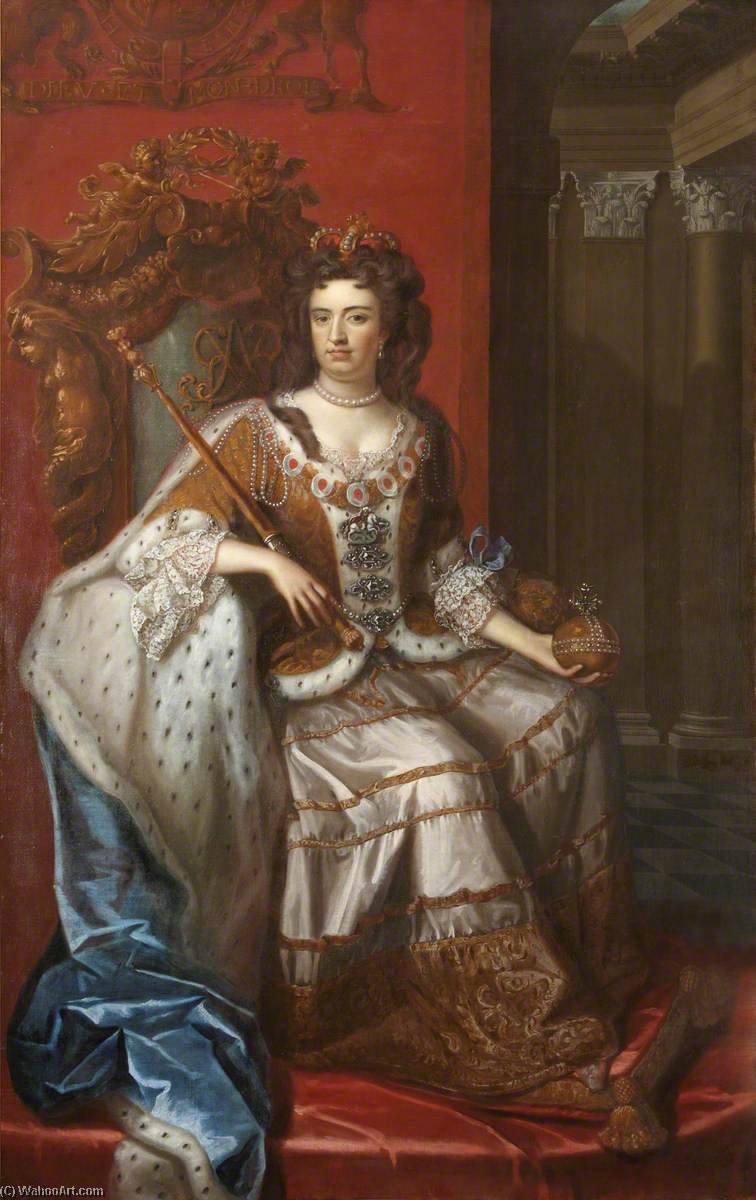
Queen Anne (1665–1714)
Tehnik reprodukcije
Velikost reprodukcije
-

Izbor vrhunskih umetnikov
Več podrobnosti, dovršenosti in dodatnega časa za izdelavo
-

Okvir za reprodukcijo
-
-
Za umetniška dela ali reprodukcije, ki so po katerikoli strani širše od 105 cm (približno 41 palč), bo okvir poslan v razstavljeni obliki kot komplet. Ta metoda zagotavlja varno dostavo in preprečuje poškodbe med transportom.
Potrebna je profesionalna montaža – to ni izdelek za DIY izdelavo.
Komplet mora sestaviti in platno napeti izkušen profesionalni okvirjest, pri čemer bo uporabil lepil za les (ni vključeno), klešče za napetje platna in spone, da bi ohranil pravokotnost letev med sušenjem lepila. Nepravilna montaža ali neenakomerna napetost platna lahko trajno poškoduje umetniško del in
 Za umetniška dela ali reprodukcije, ki so po katerikoli strani širše od 105 cm (približno 41 palč), bo okvir poslan v razstavljeni obliki kot komplet. Ta metoda zagotavlja varno dostavo in preprečuje poškodbe med transportom.
Vključene so vse letve iz masivnega lesa, natančno izrezane po meri.
Montaža poteka s priloženimi vijaki, vendar je za kotiče potrebna lepil za les, ki ga ni v kompletu in ga mora zagotoviti vaš okvirnik.
Za uporabo so potrebna profesionalna orodja, ki niso vključena: klešče za napinjanje platna (napetnik) in sponke za ohranjanje pravokotnosti letev med sušenjem lepila.
Pomembno:
Za stike v kotih potrebujete lepil za les, nosilce je treba z

Značka z imenom
-
-

Zaščitni lak
Sijajni lak (poudarja barve ter zagotavlja zaščito pred svetlobo in vlago)
-

Prilagodi svoje umetniško delo
Primeri možnih prilagoditev: zamenjava obraza s fotografijo kupca; dodajanje hišnega ljubljenčka (npr. zamenjava mačke s psom); vključitev skritega sporočila v ozadje; sprememba krajšave ali elementov ozadja.
-

Hitra dostava
Mednarodna dostava () v 3/4 tednih namesto običajnih 5 tednov. (7 november). Brez kompromisov pri kakovosti.
-
Hitra dostava
Globalna dostava () v 5 tednih. (14 november).
Vključeno v ceno
Skupna cena
€ 268
Možnost stekla je na voljo le za velikosti pod 110 cm
Vključeno v vsako naročilo
- Brezplačna ekspresna dostava po vsem svetu
- Visokokakovostno laneno platno
- Popolno zavarovanje pošiljke
- Garancija povračila carine in uvoznih davkov
- Garancija popolnega barvnega ujemanja
- 100-dnevna politika vračil (le v primeru okvar)
- Garancija 100% povračila denarja
- Popust pri večjem naročilu


 Predogled v realnem okolju
 Pošlji
 Deli
Deli
 Podrobnosti o delu
 Priročnik

 Prenesi sliko
 Podobni izdelki
 Rentgenski posnetek
 Predvajaj diaporama
 Vprašanja in odgovori
 Statistika
V številkah
- 29izbira okvirjev
- standardne velikosti, v svojih lastnih proporcijah
- 5teden dni za slikanje in dostavo
O originalnem delu

- 240.0 x 148.0 cm


Thomas Murray
1663 - 1734
Kratek pregled o Thomas Murray
- Full Name: Thomas Murray
- Nationality: Scottish
- Date Of Birth: 1663
- Date Of Death: 1734
- Place Of Birth: Scotland
- Notable Artworks:
- Captain William Dampier
- Sir John Pratt
- Christopher, duke of Albemarle
- Artistic Movement Or Style: Portrait Painting
- Artists Who Influenced This Artist: ['John Riley']
- Artists Or Movements Influenced By This Artist: ['Dutch Golden Age']
Biografija umetnika
Early Life and Apprenticeship
Thomas Murray, born in Scotland in 1663, emerged during a period of significant artistic transition. While details surrounding his early upbringing remain somewhat elusive, it is known that he initially received instruction from a member of the esteemed De Critz family—a lineage renowned for their limner work and heraldic painting. This foundational training likely instilled in Murray a meticulous attention to detail and an appreciation for refined technique. However, recognizing the burgeoning demand for portraiture, his artistic path soon led him to London and the studio of John Riley, arguably the most successful portraitist of the late 17th century England. Riley’s workshop was a hub of activity, catering to the aristocracy and gentry, and Murray quickly absorbed the prevailing style—a focus on capturing likeness with an emphasis on facial features, often leaving the broader composition and background details to assistants. This division of labor was common at the time, but it shaped Murray's early career trajectory.
A Flourishing Portrait Practice
Following Riley’s death in 1691, Murray inherited not only his studio space but also a substantial clientele. He rapidly established himself as a prominent portrait painter, becoming highly sought after by noble patrons and individuals of standing. The early years of the 18th century saw him consistently engaged in commissions, painting members of Parliament, military figures, and other influential personalities. His style, while initially derivative of Riley’s, gradually developed its own distinct character—a refined elegance coupled with a remarkable ability to convey personality through subtle nuances of expression. Murray's success wasn’t solely attributable to his artistic skill; he cultivated a reputation for being courteous, diligent, and attentive to the needs of his sitters, fostering strong relationships that secured repeat business and valuable referrals.
Royal Commissions and Artistic Recognition
A pivotal moment in Murray’s career arrived in 1703 when he received the prestigious commission to paint Queen Anne for the Society of the Middle Temple. This portrait, a testament to his growing reputation, solidified his position among the leading artists of the day. The work exemplifies his mastery of capturing regal bearing and dignified composure. Beyond this significant royal commission, Murray continued to receive commissions from prominent figures, including William Dampier, the renowned explorer, whose portrait showcases his ability to depict character and experience. He was a prolific artist, producing numerous portraits that now grace both public institutions and private collections.
The Uffizi Self-Portrait and Later Life
In 1708, Murray embarked on a journey to Italy, a common practice for aspiring artists seeking inspiration from the Old Masters. During his visit to Florence, he contributed a self-portrait to the esteemed Uffizi Gallery—a gesture that underscored his ambition and desire for recognition within the broader European art world. This portrait, like many of his others, was subsequently engraved, further disseminating his image and style. Despite achieving considerable financial success – it is reported he left £40,000 upon his death in 1734—Murray’s later life was marked by a degree of irony. He had reportedly complained of poverty throughout his career, yet amassed a substantial fortune through shrewd investments alongside his painting practice. His will stipulated the erection of a monument with a bust in Westminster Abbey, but only if it did not prove too costly. Ultimately, his nephew deemed the cost prohibitive and instead buried him in St. Paul’s, Covent Garden, leaving the grand memorial unrealized.
Legacy and Historical Significance
Thomas Murray occupies a fascinating position within the history of British portraiture. He was not an innovator in the same vein as Van Dyck or Reynolds, but he was a highly skilled craftsman who successfully catered to the tastes of his era. His portraits offer valuable insights into the social and political landscape of early 18th-century England, capturing the likenesses of individuals who shaped the nation’s destiny. While often described as a “face painter,” relying on assistants for broader compositional elements, Murray's ability to imbue his sitters with personality and dignity remains undeniable. His work serves as a compelling reminder of the importance of portraiture in documenting history and preserving the memory of those who came before. His contribution lies not in revolutionizing artistic technique but in consistently delivering high-quality portraits that met the demands of a discerning clientele, securing his place as one of Scotland’s most successful portrait painters.