

 Preverite v realnem okolju
 Pošlji kot čestitko
 Deli
Deli
 Podrobnosti
 Priročnik

 Prenesi
 Podobni artefakti
 Rentgenski posnetek
 Predvajaj diaporama
 Statistika
Eye Love Monogram


 Preberi več
Umetniška dela, prikazana na tej strani, so zaščitena z avtorskimi pravicami, kar pomeni, da po zakonu ne moremo ustvarjati ali prodajati identičnih reprodukcij. Ta zaščita se izvaja v skladu z mednarodnimi sporazumi, kot so Bernska konvencija in po nacionalnih zakonih, vključno s tistimi, ki jih določa Zakon o avtorskih pravicah ZDA – naslov 17.
Ta način v celoti upošteva zakonodajo o avtorskih pravicah, saj ne vključuje kopiranja ali podvajanja zaščitena umetniškega dela. Namesto tega gre za kreativno preinterpretacijo – novo sliko, ki je navdihnjen rezultat originala, vendar ni z njim identična.
Giclée tisk / Umetniški tisk
Giclée ali platnati odtis muzejske kakovosti z hitro proizvodnjo in prilagodljivimi možnostmi končne obdelave. ( Naročite ročno slikano reprodukcijo Preklop na digitalno sliko)




P118B €10

P118H €10

P118W €10

P438Z €10

P508JH €12

P508YH €12

P805H €10

P805Z €10

P919BZ €10

P919G €10

P919XJ €10

P959ZH €10

P968JZ €12

W106C €8

W218G €10

W218JH €8

W218Y €10

W307PJ €10

W316G €10

W316PJ €8

W316Y €10

W398PJ €8

W4111J €10

W500HY €15

W500JH €15

W692G €12

W849H €8

W940BG €15

W953PJ €8




Izberite eno od naših vnaprej določenih velikosti, ki ustrezajo prvotnim proporcijam umetničkega dela.

Svoje dimenzije lahko vnesete sami, da bodo ustrezne za določen okvir ali prostor. Če izbrana velikost ne bo skladna z razmerji izvirne slike, bomo umetniško delo orezali ali podaljšali s pomočjo ogledalnega odraza ali barvno polnega roba. Pred začetkom proizvodnje vam bomo poslali digitalni predogled za potrditev.
Upoštevajte, da predogled na zaslonu ne prikazuje dejanskega orezovanja ali podaljševanja. Le digitalni predogled bo natančno prikazal končno kompozicijo.
Čeprav so na voljo prilagojene velikosti, priporočamo izbiro dimenzije s predhodno določenega seznama, da ohranite prvotna razmerja.
Globalna dostava () v 2 tednih namesto standardnih 4/5 tednov. (11 oktober)

Brezplačna ekspresna dostava po vsem svetu

Visokokakovostno laneno platno

Popolno zavarovanje pošiljke

Garancija povračila carine in uvoznih davkov

Garancija popolnega barvnega ujemanja

Politika vračila v 100 dneh (le v primeru okvar)

Garancija 100% povračila denarja

Popust pri večjem naročilu
 Možnost stekla je na voljo le za velikosti pod 110 cm

Eye Love Monogram
Giclée tisk / Umetniški tisk
Velikost reprodukcije
-


Skupna cena
€ 69
Eye Love Monogram: A Pop Art Echo of Japanese Tradition
Takashi Murakami’s “Eye Love Monogram” is more than just a visually arresting composition; it's a vibrant collision of influences, a testament to the artist’s unique approach to bridging traditional Japanese aesthetics with contemporary pop culture. Initially presented as a digital print, this artwork embodies the core tenets of Murakami’s ‘Superflat’ theory – a deliberate flattening of perspective and a celebration of surface decoration reminiscent of pre-modern Japanese art. The stark black background immediately commands attention, acting as a dramatic stage for the explosion of color and pattern that dominates the canvas. It's a bold move, contrasting sharply with the often layered complexities found in Western fine art, reflecting Murakami’s desire to strip away perceived hierarchies and embrace a more democratic visual language.
The artwork’s composition is meticulously structured yet undeniably playful. A central, radiant yellow circle – a motif frequently associated with Murakami's ‘Mr. DOB’ persona – anchors the piece, its red core hinting at both energy and underlying tension. Surrounding this focal point are four-pointed floral designs, rendered in a stylized manner that draws heavily from traditional Japanese motifs but avoids strict adherence to any specific school of painting. These blossoms aren’t realistic; instead, they possess an almost cartoonish quality, contributing significantly to the artwork's overall sense of joyful exuberance. Scattered throughout the composition are smaller circles and repeating patterns, creating a dynamic rhythm that guides the viewer’s eye across the surface. The deliberate symmetry, combined with the seemingly chaotic arrangement of elements, speaks to Murakami’s fascination with both order and disruption – a key characteristic of his artistic practice.
Decoding the Palette and Technique
The color palette is undeniably arresting—a riot of saturated hues against the enveloping black. Bright yellows, reds, greens, pinks, blues, and oranges coalesce to create an intensely vibrant visual experience. This deliberate use of bold colors isn’t merely decorative; it's a strategic choice that echoes the flattened aesthetic of Superflat. Murakami intentionally avoids subtle gradations or nuanced shading, opting instead for clean, defined lines and areas of solid color. The technique suggests a digital print process, lending the artwork a crispness and clarity that contrasts with the often softer textures associated with traditional oil painting. The lack of visible texture reinforces this sense of immediacy and directness – it’s an image designed to grab attention and evoke emotion instantly.
Symbolism and Emotional Resonance
Beyond its purely visual appeal, “Eye Love Monogram” is rich in symbolic potential. The central yellow circle with a red core can be interpreted as representing perception or awareness—the ‘eye’ itself. Murakami frequently employs this motif to explore themes of identity, self-representation, and the relationship between art and popular culture. The stylized floral designs, while drawing inspiration from Japanese traditions, also carry layers of meaning. Flowers are universally associated with beauty, life, and renewal, but their simplified forms here suggest a deliberate distancing from naturalism, aligning with the Superflat aesthetic. The overall feeling evoked is one of joyful playfulness—a celebration of color, pattern, and the blurring of boundaries between high and low art.
Murakami’s Legacy: A Contemporary Master
Takashi Murakami's work stands as a pivotal moment in contemporary art, bridging the gap between traditional Japanese aesthetics and global pop culture trends. His exploration of Superflat, combined with his masterful manipulation of color, pattern, and symbolism, has cemented his position as one of the most influential artists working today. “Eye Love Monogram” exemplifies this unique vision—a vibrant, dynamic artwork that invites viewers to contemplate the relationship between art, identity, and the ever-evolving landscape of contemporary culture. Reproductions offered by OriginalUniqueArt.com allow you to bring this captivating piece into your own space, experiencing its energy and symbolism firsthand.
Vprašanja in odgovori
Ali je "Eye Love Monogram" avtorja Tašika Murakami v javni lastini?
"Eye Love Monogram" avtorja Tašika Murakami je v še vedno pod avtorsko pravico. Ta status določa način, kako se lahko reproducira slika dela.
Z kakšno tehniko je izdelano "Eye Love Monogram"?
Tašika Murakami je za delo "Eye Love Monogram" uporabil/a tehniko Acrylic On Canvas. Ta tehnika opredeljuje materialno naravo izvirnega dela.
Ali lahko naročim oljno reprodukcijo dela "Eye Love Monogram"?
Ročno slikane kopije dela "Eye Love Monogram" avtorja Tašika Murakami so na voljo na spletnem mestu ta spletna stran: ročno slikana oljna reprodukcija na lnenem platnu, naročite jih lahko preko ta stran.
Kje lahko kupim tiskanino dela "Eye Love Monogram" avtorja Tašika Murakami?
Tisk dela "Eye Love Monogram" avtorja Tašika Murakami lahko naročite neposredno na ta stran: umjetnička grafika na bombažnem platnu ali arhivskem papirju za platno.
Kdo je umetnik za "Eye Love Monogram"?
"Eye Love Monogram" pripisujemo Tašika Murakami.
Ali obstaja informativni list o delu "Eye Love Monogram" avtorja Tašika Murakami za študente?
Za delo "Eye Love Monogram" avtorja Tašika Murakami je na voljo stran Vodnik: natisljiv informativni list o umetninah, zasnovan za uporabo v šolskih prostorih in za učence.
Kakšno vzdušje in čustvo izraža "Eye Love Monogram" avtorja Tašika Murakami?
"Eye Love Monogram" avtorja Tašika Murakami izraža Joyful občutek znotraj splošnega Playful vzdušja.
Biografija umetnika
A Universe of Superflat: The World of Takashi Murakami
Born in Tokyo in 1962, Takashi Murakami emerged as a pivotal figure in contemporary art, challenging conventional boundaries and forging a unique aesthetic language that resonates globally. His journey began with a childhood fascination for anime and manga, initially fueling aspirations to work within the animation industry. This early passion would profoundly shape his artistic vision, but his formal training took an unexpected turn when he enrolled at Tokyo University of the Arts. Though intending to hone skills applicable to animation, Murakami ultimately gravitated towards Nihonga, the traditional Japanese painting style steeped in centuries-old techniques and philosophical underpinnings. He excelled, earning a Ph.D., yet found himself increasingly disillusioned by its insular nature and rigid adherence to established norms. This dissatisfaction sparked a period of exploration, leading him to venture beyond tradition and embrace the dynamic possibilities of contemporary art.From Critique to Creation: The Genesis of Superflat
Murakami’s initial artistic explorations were rooted in social critique and satire, evident in projects like the Osaka Mixer Project (1992) and the Randoseru project (1991). These early works demonstrated a keen awareness of societal structures and a willingness to challenge them through art. A crucial turning point arrived with the introduction of “Mr. DOB,” a recurring motif that evolved into a form of self-portraiture, embodying both personal identity and broader cultural anxieties. The year 1994 proved transformative; a fellowship from the Asian Cultural Council facilitated his participation in the PS1 International Studio Program in New York City. Exposure to Western contemporaries like Anselm Kiefer and Jeff Koons broadened his perspective and ignited new creative avenues. It was during this period that the concept of “Superflat” began to crystallize, culminating in his groundbreaking 2000 exhibition at MOCA Los Angeles. Superflat wasn’t merely an aesthetic style; it was a theoretical framework positing a historical continuity of flattened imagery within Japanese art—from the elegant simplicity of Ukiyo-e woodblock prints to the vibrant dynamism of manga and anime. Murakami argued that post-war Japanese society had experienced a “flattening” of social classes, blurring distinctions between high and low culture, and this phenomenon was reflected in the visual landscape.Influences and Themes: A Tapestry of Culture
Murakami’s artistic universe is built upon a rich tapestry of influences. The stylized characters and vibrant color palettes of anime and manga are immediately apparent, lending his work a playful yet unsettling quality. He draws inspiration from the Pop Art movement, particularly its embrace of mass-produced imagery and consumer culture references, but infuses it with a distinctly Japanese sensibility. The flat perspective and bold compositions found in his paintings echo the legacy of Ukiyo-e, traditional Japanese woodblock prints renowned for their exquisite craftsmanship and evocative depictions of everyday life. A central theme in Murakami’s work is the complex relationship between consumerism and commercialization. He deliberately blurs the lines between fine art and commercial products, creating merchandise like plush toys and t-shirts—a provocative gesture that challenges traditional notions of artistic value and authorship. His exploration extends to Japanese subcultures, particularly otaku culture, incorporating elements of anime, manga, video games, and a fascination with all things cute or kawaii.Achievements and Legacy: A Global Impact
Takashi Murakami’s impact on the art world is undeniable. He founded Kaikai Kiki Co., Ltd., not only as a platform for his own work but also as a nurturing environment for younger artists, overseeing various projects and fostering a collaborative spirit. The Geisai art fair, which he organized, provided an invaluable launching pad for emerging Japanese talent. His exhibitions in major galleries and institutions worldwide have cemented his international recognition, while collaborations with luxury brands like Louis Vuitton—designing iconic handbags adorned with his signature motifs—have further blurred the boundaries between high art and commercial design. His work is now held in prominent museum collections globally, solidifying his status as a leading contemporary artist. Murakami’s “Superflat” theory has profoundly impacted contemporary art discourse, offering a fresh perspective on Japanese artistic traditions and post-war culture. He challenged conventional notions of artistic value by integrating commercial elements into his practice, influencing the development of Pop Art and consumer culture in art. His work helped introduce Japanese subcultures to a global audience, fostering cross-cultural understanding and appreciation. Takashi Murakami’s innovative approach continues to inspire countless artists and shape the landscape of contemporary art for generations to come.Notable Works and Continued Evolution
Murakami's oeuvre is remarkably diverse, encompassing painting, sculpture, animation, and fashion. Tan tan bo, a large-scale painting depicting a young girl surrounded by fantastical creatures, exemplifies his signature style – vibrant colors, flattened perspective, and a blend of cute and unsettling imagery. The world of sphere, created after the 2011 Tohoku earthquake and tsunami, represents a shift towards more introspective themes, exploring notions of interconnectedness and resilience in the face of tragedy. His iconic Flowers Have Bloomed series, featuring smiling flowers with vibrant petals, has become synonymous with his artistic brand. Beyond these celebrated works, Murakami continues to push boundaries, experimenting with new mediums and technologies. He’s embraced digital art, creating NFTs and exploring virtual worlds, demonstrating a commitment to staying at the forefront of contemporary innovation. His recent projects often delve into themes of mythology, spirituality, and the human condition, revealing a depth beyond the surface-level pop aesthetic that initially defined his career. He remains a prolific artist, constantly evolving and challenging expectations, solidifying his position as one of the most influential figures in the 21st-century art world.
Tašika Murakami
1962 - , Slovenija
Ključne informacije
- Datum Rojstva: 1. februar 1962
- Državljanstvo: Japonski
- Kraj Rojstva: Tokio, Japan
- Polno Ime: Takashi Murakami
- Pomembna Dela:
- Tan tan bo
- The world of sphere
- Flowers Have Bloomed
- Umetniki Pod Vplivom:
- Pop Art
- Sodobna umetnost
- Umetniški Smer: Superflat, Neo-Pop
- Vplivi Umetnikov:
- Anselm Kiefer
- Jeff Koons
Sorodni članki
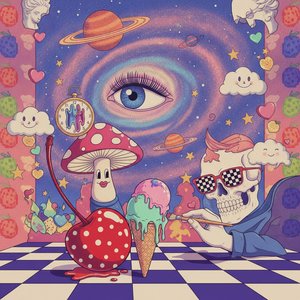
Pop Surrealism Unveiled: The Sophisticated Intersection of Vibrant Pop Art and Dreamlike Subconscious Landscapes
Explore the captivating world of Pop Surrealism. Discover how vibrant Pop Art meets dreamlike subconscious imagery through the works of masters like Jeff Soto and Ryan Heshka. An expert guide for discerning collectors seeking to understand this profound contemporary art movement.
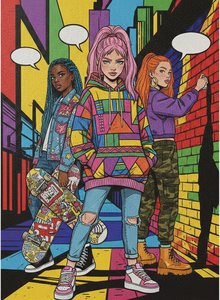
Bold & Iconic: Eye-Catching Pop Art Featuring Young Girls – A Visual Journey Through Contemporary Street Style
Discover the electric energy of Pop Art featuring young girls. Explore a visual journey through bold, iconic street art styles, from neo-pop aesthetics to high-impact dopamine decor designed to transform your space with vibrant, contemporary culture.
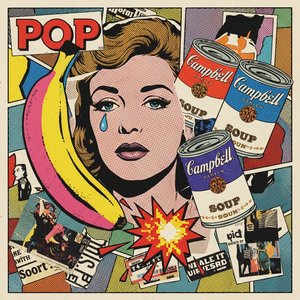
Challenging Conventions: Pop Art's Origins, Evolution & Enduring Legacy
Explore the fascinating history of Pop Art, from its rebellious origins to its enduring influence on contemporary artists. Discover key figures like Warhol & Lichtenstein and learn about collecting this iconic movement.

Geek-Chic Interiors: The Definitive Guide to Decorating with Sophisticated Pop Culture Art
Elevate your home with our expert guide to Geek-Chic interiors. Discover how to seamlessly integrate sophisticated pop culture art and hand-painted masterpieces into luxury decor for a refined, modern aesthetic.
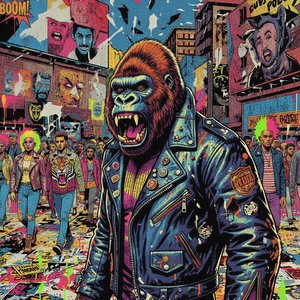
Aggressive Pop Art: The High-Impact Movement Redefining Street Style and Urban Design
Discover how Aggressive Pop Art is shattering minimalism to redefine urban design. Explore the high-impact trends of Neo-Pop, street style aesthetics, and bold graphic movements shaping modern interiors and contemporary culture.