Predogled v realnem okolju
 Pošlji
 Deli
Deli
 Podrobnosti o delu
 Priročnik

 Prenesi sliko
 Podobni izdelki
 Rentgenski posnetek
 Predvajaj diaporama
 Q&A
Q&A Statistika
The Last Judgment (detail) (17)


 Preberi več
Giclée tisk / Umetniški tisk
Giclée ali platnati odtis muzejske kakovosti z hitro proizvodnjo in prilagodljivimi možnostmi končne obdelave. ( Kupite ročno slikano delo Preklop na digitalno sliko)




P118B €10

P118H €10

P118W €10

P438Z €10

P508JH €12

P508YH €12

P805H €10

P805Z €10

P919BZ €10

P919G €10

P919XJ €10

P959ZH €10

P968JZ €12

W106C €8

W218G €10

W218JH €8

W218Y €10

W307PJ €10

W316G €10

W316PJ €8

W316Y €10

W398PJ €8

W4111J €10

W500HY €15

W500JH €15

W692G €12

W849H €8

W940BG €15

W953PJ €8




Izberite eno od naših vnaprej določenih velikosti, ki ustrezajo prvotnim proporcijam umetničkega dela.

Vnesite širino in višino, ki jih potrebujete za svoj okvir ali steno. Tiskanje se lahko le odreže, vendar ga ni mogoče narediti večjega od slike, zato format z drugačno obliko pomeni izgubo dela slike. Pred tiskanjem vam pošljemo digitalni predogled za potrditev. Slika, prikazana na tej strani, ne prikazuje dejanskega izrezka — le predogled to omogoča.
Globalna dostava () v 2 tednih namesto standardnih 4/5 tednov. (2 november)

Brezplačna ekspresna dostava po vsem svetu

Visokokakovostno laneno platno

Popolno zavarovanje pošiljke

Garancija povračila carine in uvoznih davkov

Garancija popolnega barvnega ujemanja

100-dnevna politika vračil (le v primeru okvar)

Garancija 100% povračila denarja

Popust pri večjem naročilu
 Možnost stekla je na voljo le za velikosti pod 110 cm

The Last Judgment (detail) (17)
Giclée tisk / Umetniški tisk
Velikost reprodukcije
-


Skupna cena
€ 71
The Weight of Judgment: Rogier van der Weyden’s “The Last Judgment” – A Descent into Emotion
Rogier van der Weyden's "The Last Judgment," a pivotal detail from the monumental Polyptych housed in Beaune, France, isn’t merely a depiction of divine retribution; it’s a visceral exploration of human despair and the terrifying weight of mortality. Completed around 1446-47, this fragment captures a moment suspended between earthly suffering and eternal consequence – a scene rendered with an unprecedented level of psychological realism for its time. Van der Weyden, already renowned for his emotionally charged portraits, elevates the theological subject matter to a profoundly human experience, forcing the viewer to confront their own potential fate.
The image itself is dominated by a group of figures caught in varying states of anguish and terror. Naked bodies writhe and scream, not with violent defiance, but with a palpable sense of helplessness and regret. The composition isn’t one of triumphant judgment; instead, it's a chaotic swirl of souls being drawn towards an unseen abyss. Notice the subtle shifts in expression – the wide-eyed horror, the desperate pleas, the resigned acceptance – each conveying a unique narrative of individual guilt and sorrow. Van der Weyden masterfully utilizes color to heighten this emotional intensity: the stark contrast between the pale flesh of the damned and the darker hues surrounding them emphasizes their separation from salvation.
A Masterclass in Anatomical Detail and Emotional Resonance
Van der Weyden’s technical skill is immediately apparent. He was a goldsmith before becoming a painter, and this training instilled within him an unwavering dedication to meticulous detail – a trait that shines through in every brushstroke. The musculature of the figures is rendered with astonishing accuracy, reflecting his deep understanding of human anatomy. However, it's not merely anatomical precision that defines his style; it’s the way he uses form to convey emotion. The strained muscles, the contorted faces, and the desperate gestures all contribute to a powerful sense of drama and immediacy.
The background, a turbulent expanse of clouds, serves as a visual metaphor for the chaos and uncertainty of judgment day. These aren’t idealized heavens; they are dark, ominous, and filled with an unsettling energy. The use of atmospheric perspective – the subtle blurring of details in the distance – further enhances the sense of depth and drama. Van der Weyden's innovative approach to depicting light and shadow creates a truly immersive experience for the viewer, drawing them into the heart of this harrowing scene.
Symbolism and Spiritual Weight: The Polyptych’s Broader Context
"The Last Judgment" is but one panel within the larger Beaune Polyptych, commissioned by Nicolas Rolin, a wealthy Burgundian chancellor seeking salvation for himself and his family. The entire polyptych functions as a visual sermon, guiding viewers through the stages of human existence and ultimately towards divine grace. The reverse side of this panel, depicting the Annunciation, offers a stark contrast – a scene of hope and new beginnings, highlighting the cyclical nature of life and death.
The central figure, Christ, seated on a rainbow, embodies both judgment and mercy. His gaze is direct and unwavering, yet there’s also an expression of profound sorrow as he witnesses the suffering of humanity. The scales held by Michael, the Archangel, represent the weighing of souls – a potent symbol of divine justice. The inclusion of saints like Saint Sebastian and Saint Lawrence, each bearing the marks of their martyrdom, reinforces the theme of sacrifice and redemption. This polyptych wasn’t intended to be passively observed; it was designed to provoke contemplation and inspire a deep sense of spiritual awareness.
Bringing “The Last Judgment” Home: A OriginalUniqueArt Reproduction
OriginalUniqueArt offers meticulously crafted, hand-painted reproductions of Rogier van der Weyden's "The Last Judgment" that capture the essence of this extraordinary artwork. Using traditional oil painting techniques and archival-quality materials, our artists recreate Van der Weyden’s masterful details and emotional depth with unparalleled accuracy. Whether you seek a stunning addition to your art collection or a captivating centerpiece for your interior design scheme, a OriginalUniqueArt reproduction provides an authentic and enduring representation of this iconic masterpiece. Explore the full artwork on our website to discover the perfect size and canvas option for your space.
Vprašanja in odgovori
Ali je delo "The Last Judgment (detail) (17)" avtorja Roger Van Der Weyden v javni lastini?
"The Last Judgment (detail) (17)" avtorja Roger Van Der Weyden je v javni domeni (v javni domeni – avtorska pravica je zastarela). Ta status določa način, kako se lahko slika dela reproducira.
Kje lahko kupim digitalno sliko dela "The Last Judgment (detail) (17)" avtorja Roger Van Der Weyden?
"The Last Judgment (detail) (17)" je na voljo kot prenos digitalne slike visoke ločljivosti, ki ga lahko kupite neposredno na njegovi strani Visokoresolucijska digitalna slika.
Kdo je ustvaril "The Last Judgment (detail) (17)" in leta kdaj?
Roger Van Der Weyden je ustvaril "The Last Judgment (detail) (17)" leta 1446.
Biografija umetnika
Rogier van der Weyden: Mojster čustev in inovativne tehnike
V zgodnji severnoevropski renesansi, med leti okoli 1400 in 1464, je izstopal Rogier van der Weyden, slikar, ki je s svojo umetnostjo za vedno spremenil prizorišče flamskega slikarstva. Rojen v Tournaiu, današnji Belgiji, je bil sprva vajenec zlatarstva, kar mu je zagotovilo izjemno natančnost in občutljivost do detajlov – lastnosti, ki so se pozneje odražale v njegovem umetniškem delu. Njegova zgodnja potovanje ga je pripeljalo do mojstrstva v cehu svetega Luke v Tournaiu, nato pa k službi pri Filipu Dobrem, vojvodi Burgundije, kjer je cvetela njegova kariera in se razvijal njegov edinstven slog.
Van der Weyden ni bil le slikar; bil je inovator. Odstopal od strogih konvencij svojih predhodnikov, kot je Robert Campin, in se usmerjal k bolj naravnemu in čustveno izraznemu stilu. Njegova paleta barv je bila izjemno bogata, s slojevitimi glazurenki ustvarjal svetlobne učinke, ki so bili revolucionarni za njegovo obdobje. Najpomembnejše pa je bilo njegovo sposobnost, da prenaša globoke emocije – *pathos* – v svoja dela. To ni dosegel z dramatičnimi gestami ali pretiranimi izrazi, temveč s subtilnimi nuanсами na obrazih in telesih svojih likov, ustvarjajoč občutek tihega trpljenja ali globoke žalosti. Njegovi portreti so bili izjemni – ne le zaradi natančne reprodukcije anatomije, ampak tudi zaradi sposobnosti, da zajamejo psihološko stanje posameznika, pri čemer je ohranjal dostojanstvo in skoraj skulpturalno lepoto.
Od Tournaija do mednarodne slave: Razvoj umetniškega sloga
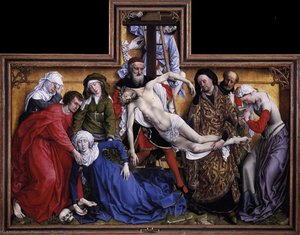
Van der Weydenovo delo se je hitro razširilo po Evropi, zlasti v Italijo in Španijo, kjer je navdušilo s svojo inovativnostjo in čustvenim izrazom. Njegov slog se je razvijal skozi leta, od prvih del, ki so še nosila vpliv Roberta Campina, do kasnejših mojstrovin, kot je *Snemanje s križa*, ki velja za eno najvplivnejših nizozemskih slik o Kristusovem trpljenju. Ta slika, zdaj shranjena v muzeju Prado v Madridu, prikazuje dramatičen trenutek, ko Jožef iz Arimateje in Nikodem spuščata Kristusovo telo s križa, obdani z žalujočo množico. Kompozicija je preprosta, a močna, s poudarkom na čustvenem vplivu dogodka.
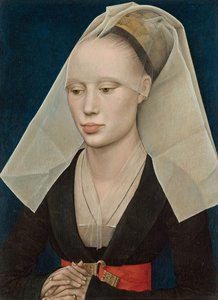
Njegova dela so bila pogosto izjemno velika oltarja, kot je *Bladelinski triptih*, ki prikazujejo kompleksne prizore z bogato podrobnostmi. V teh delih se je van der Weyden izkazal za mojstra perspektive in svetlobe, ustvarjajoč iluzijo globine in prostorske resničnosti. Pomembno mesto v njegovem opusu zaseda tudi portretiranje, kjer je s svojo natančnostjo in sposobnostjo zajemanja značaja ustvaril portrete, ki še danes dihajo življenje. Med njimi izstopa *Portret neznane dame*, ki prikazuje žensko v gotskem slogu, z subtilnimi nuanсами izraza, ki razkrivajo njeno notranjost.
Dediščina in vpliv: Umetnik, ki je oblikoval severno renesanso
Rogier van der Weyden je umrl leta 1464, a njegova umetnost je živela naprej. Čeprav je bila njegova slava v 17. stoletju nekoliko osenčena, je bila sredi 19. stoletja ponovno odkrita in mu priznala mesto med največjimi flamskimi mojstri. Danes ga uvrščamo skupaj z Janom van Eyckom in Robertom Campinom kot eno od treh ključnih oseb zgodnje flamske renesanse, ki so s svojo inovativnostjo in umetniškim talentom postavili temelje za razvoj severne evropske umetnosti. Njegov vpliv je bil izjemen – navdihnil je številne generacije slikarjev in pripomogel k dvigu statusa umetnika v družbi. Van der Weyden ni bil le mojster tehnike, temveč tudi čustven genij, ki je s svojo umetnostjo za vedno spremenil pogled na svet.
Pomembna dela
- Snemanje s križa (okoli 1435)
- Portret neznane dame (okoli 1460)
- Stoječa Madona (okoli 1430-1432)
- Bladelinski triptih (okoli 1432-1434)
- St Luke Drawing the Madonna (okoli 1445-1450)
Roger Van Der Weyden
1400 - 1464 , Belgija
Hitri podatki
- Datum Rojstva: okoli 1400
- Kraj Rojstva (Mesto In Država): Tournai, Belgija
- Nacionalnost: Belgijski
- Polno Ime: Rogier van der Weyden
- Umetniki, Ki So Vplivali Na Njega:
- Robert Campin
- Jan van Eyck
- Umetniki/Stilovi, Ki So Bili Pod Njegovim Vplivom:
- Italijanska renesansa
- Španski slikarstvo
- Umetniški Slog: Zgodnje Nizozemsko slikarstvo
- Znani Umetnine:
- Stoječa Madona
- Snemanje s križa
- Portret neznane ženske
- Bladelin Triptih
Sorodni članki

Rembrandt van Rijn: 25 Mojstrovin za Popestritev Vašega Doma | OriginalUniqueArt
Odkrijte 25 mojstrovin Rembrandta van Rijna! Preberite zgodbe o portretih, svetlobi in nizozemskem baroku. Kvalitetne reprodukcije slik za vaš dom na OriginalUniqueArt.com. Raziskajte celotno zbirko online.
Early Netherlandish Masters: 10 Paintings That Revolutionized Art & Decor
Journey into the Early Netherlandish Renaissance! Explore 10 iconic paintings by Jan van Eyck, Rogier van der Weyden & more. Discover stunning detail, symbolism, and oil painting techniques. Find museum-quality art reproductions for your home at OriginalUniqueArt.com.

Early Netherlandish Masters: 10 Paintings That Revolutionized Art & Decor
Journey into the world of Early Netherlandish painting! Explore 10 masterpieces by Jan van Eyck, Rogier van der Weyden & more. Discover stunning detail, symbolism & Renaissance art for your home decor. Find museum-quality reproductions on OriginalUniqueArt.com

Hugo van der Goes: Devotion, Innovation & the Psychological Depth of Early Netherlandish Painting
Explore the revolutionary art of Hugo van der Goes – a master of Early Netherlandish painting renowned for his dramatic realism, psychological depth & profound influence on Renaissance artists. Discover his iconic works and lasting legacy.

Rogier van der Weyden: Emotion, Innovation & the Early Netherlandish Renaissance
Explore the revolutionary art of Rogier van der Weyden, a pivotal figure of the Early Netherlandish Renaissance. Discover his emotional realism, innovative compositions, and lasting impact on painting history.