Preklop na tiskanine
 Preberi več







































 Za umetniška dela ali reprodukcije, ki so po katerikoli strani širše od 105 cm (približno 41 palč), bo okvir poslan v razstavljeni obliki kot komplet. Ta metoda zagotavlja varno dostavo in preprečuje poškodbe med transportom.


A Symphony of Sorrow: The Eternal Grace of Rogier van der Weyden’s Pietà
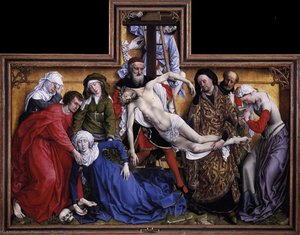
In the quiet stillness of the mid-15th century, a profound transformation occurred in the landscape of Northern European art, moving away from stylized icons toward a visceral, breathing reality. At the heart of this movement stands Rogier van der<|image>Weyden’s Pietà, a masterpiece that does not merely depict a biblical event but invites the viewer into a sacred space of shared mourning. Completed around 1450, this oil on oak panel serves as a monumental testament to human suffering and divine compassion. The scene captures the heavy, heartbreaking moment where the Virgin Mary cradles the lifeless body of her son, Jesus Christ, after his descent from the cross. It is a composition that transcends time, offering a window into the soul of the Early Netherlandish period.
The technical brilliance of van der Weyden is nothing short of extraordinary, reflecting his early training as a goldsmith. This background is evident in the meticulous precision with which he renders every fold of fabric and every glint of light. The artist employs a sophisticated use of chiaroscuro, creating dramatic contrasts between deep, velvety shadows and luminous highlights that sculpt the figures with a three-dimensional presence. His mastery over the oil medium allows for an almost tactile quality; one can sense the weight of Christ’s limp limbs and the heavy, textured drapery of Mary’s robes. This sculptural approach to painting provides a grounded, tangible reality to the ethereal subject matter, making the divine tragedy feel intimately human.
The Language of Devotion and Detail
Beyond its technical prowess, the Pietà is a masterclass in psychological realism and symbolic depth. While many contemporary works relied on rigid, symbolic gestures, van der Weyden pioneered an emotional language that speaks directly to the viewer's empathy. The facial expressions are not merely masks of grief but nuanced studies of sorrow, characterized by a quiet, dignified agony. Every element of the composition is designed to evoke compassio—the shared suffering of the Virgin with her son. The way the figures are arranged creates a sense of enclosed, intimate space, drawing the observer into a private moment of lamentation.
For the discerning collector or interior designer, this artwork offers more than just aesthetic beauty; it provides a focal point of profound contemplative power. The subtle interplay of light and shadow makes it a versatile piece for high-end environments, capable of anchoring a room with its historical gravity and somber elegance. Whether placed in a gallery setting or as a centerpiece in a curated collection of Renaissance reproductions, the Pietà commands attention through its ability to evoke a sense of peace, reverence, and timelessness. It remains an enduring icon of the International Gothic style, bridging the gap between the medieval devotion of the past and the humanistic realism of the burgeoning Renaissance.
Vprašanja in odgovori
Priporočena prostor za "Pieta" avtorja Roger Van Der Weyden?
Priporočena prostorina za "Pieta" avtorja Roger Van Der Weyden je Dnevna soba. Ta predlog je lahko seveda prilagojen vašemu notranjemu opremanju.
Kaj prikazuje "Pieta" avtorja Roger Van Der Weyden in kakšno vzdušje ustvarja?
"Pieta" avtorja Roger Van Der Weyden združuje religijska ikonografija, devica marija, jezus krist, sočutje, memento mori, srednjovečna umetnost, čustvena izraznost, vpliv renesanse z Dramatičnost vzdušjem.
Kje se "Pieta" uvršča med ponavljajoče se teme v delih umetnika Roger Van Der Weyden?
"Pieta" prikazuje religijska ikonografija, devica marija, jezus krist, sočutje, memento mori, srednjovečna umetnost, čustvena izraznost, vpliv renesanse, medtem ko so v čustva in pobožnost človeka, srednjovečna kristjanska tradicija, simbolična predstavitev vere, čudovito del z čustveno globino, ikonografska slika religijske umetnosti zabeležene teme umetnika Roger Van Der Weyden. Primerjava obeh razkriva, kako se to delo povezuje z običajnimi motivi umetnika.
 Predogled v realnem okolju
 Pošlji
 Deli
Deli
 Podrobnosti o delu
 Priročnik

 Prenesi sliko
 Podobni izdelki
 Rentgenski posnetek
 Predvajaj diaporama
 Vprašanja in odgovori
 Statistika