
 Predogled
 Pošlji
 Deli
Deli
 Podrobnosti o delu

 Prenesi
 Podobni izdelki
 Rentgenski posnetek
 Predvajaj diaporama
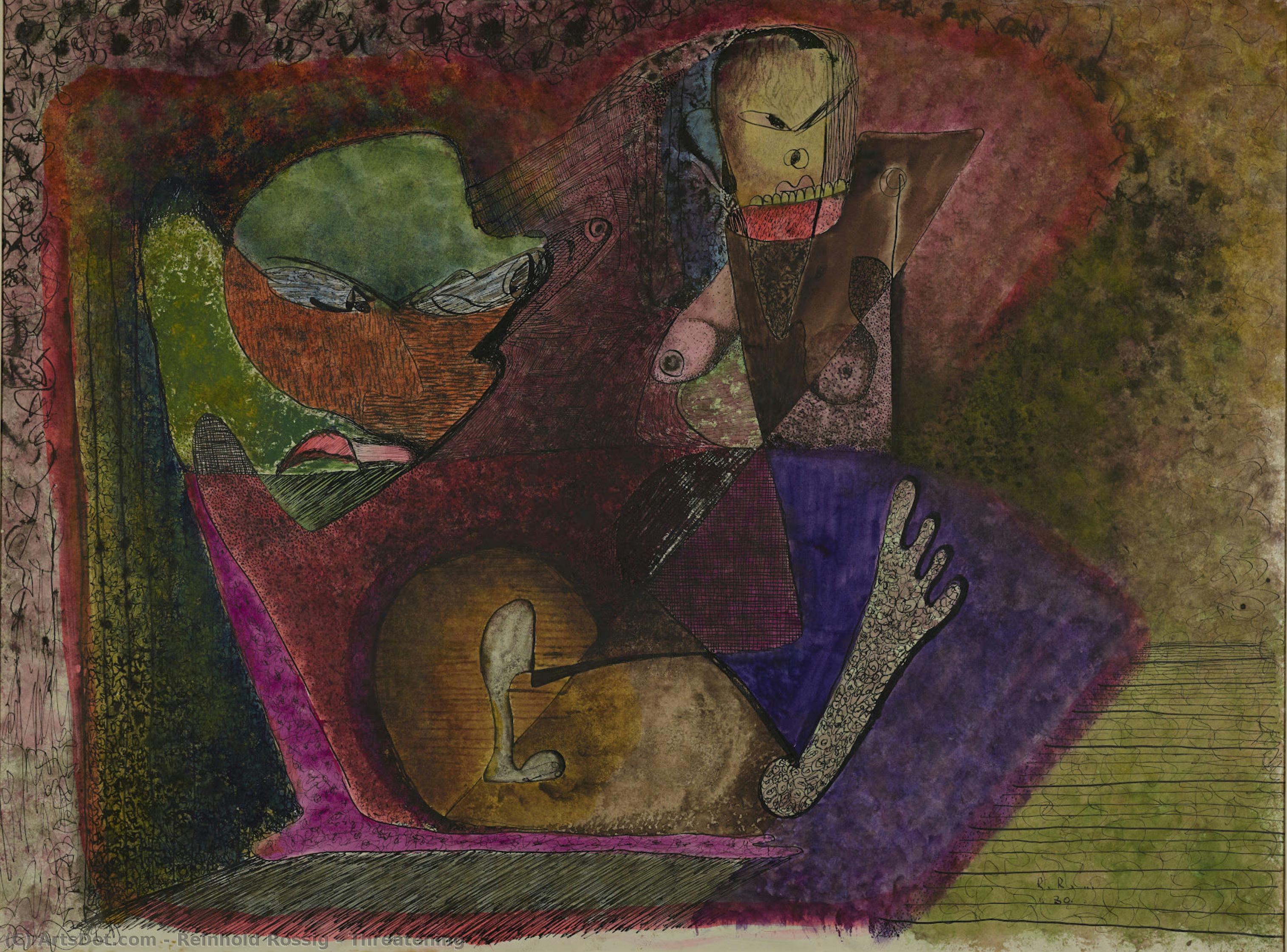
Threatening
 Surrealism
 1930
1930 44.0 x 59.0 cm
 Bauhaus Dessau Stiftung
 Razviljaj več
Giclée tisk / Umetniški tisk
Giclée ali platnati odtis muzejske kakovosti z hitro proizvodnjo in prilagodljivimi možnostmi končne obdelave. ( Kupi ročno naslikano sliko Kupi digitalno sliko)




































Izberite eno od naših vnaprej določenih velikosti, ki ustrezajo prvotnim proporcijam umetničkega dela.

Svoje dimenzije lahko vnesete sami, da bodo ustrezne za določen okvir ali prostor. Če izbrana velikost ne bo skladna z razmerji izvirne slike, bomo umetniško delo orezali ali podaljšali s pomočjo ogledalnega odraza ali barvno polnega roba. Pred začetkom proizvodnje vam bomo poslali digitalni predogled za potrditev.
Upoštevajte, da predogled na zaslonu ne prikazuje dejanskega orezovanja ali podaljševanja. Le digitalni predogled bo natančno prikazal končno kompozicijo.
Čeprav so na voljo prilagojene velikosti, priporočamo izbiro dimenzije s predhodno določenega seznama, da ohranite prvotna razmerja.
Globalna dostava () v 2 tednih namesto standardnih 4/5 tednov. (19 avgust)

Brezplačna ekspresna dostava po vsem svetu

Visokokakovostno laneno platno

Popolno zavarovanje pošiljke

Garancija povračila carine in uvoznih davkov

Garancija popolnega ujemanja barv

60-dnevna politika vračanja (le v primeru napak)

Garancija 100% povračila denarja

Popust pri večjem naročilu
 Možnost stekla je na voljo le za velikosti pod 110 cm

Threatening
Giclée tisk / Umetniški tisk
Velikost reprodukcije
-


Skupna končna cena
$ 80
Biografija umetnika
The Visionary Lines of Reinhold Rossig
To encounter the work of Reinhold Rossig is to step into a world where the boundaries between graphic precision and emotional abstraction dissolve. Though his name may not be as widely whispered in mainstream galleries as some of his contemporaries, his artistic legacy offers a profound window into the shifting soul of twentieth-century Germany. Born in 1903, Rossig’s life spanned one of the most turbulent eras in human history, and his art serves as a silent witness to the transition from the experimental fervor of the Weimar Republic to the heavy, ideologically charged atmosphere of the German Democratic Republic (GDR).
Rossig’s early development was marked by an extraordinary versatility that allowed him to navigate multiple artistic languages. His formative years were deeply intertwined with the avant-garde movements of his time; notably, his work reflects the rigorous pedagogical influences of the Bauhaus era. One can see traces of this discipline in his 1929 watercolor, a color wheel exercise derived from the lessons of Wassily Kandinsky. This period of his life was characterized by an exploration of pure form, typography, and the mathematical beauty of color, establishing him as a master of graphic design long before he became a chronicler of social landscapes.
From Graphic Precision to Social Narrative
As the political landscape of Germany shifted, so too did the focus of Rossig’s brush and pencil. While his early career was defined by the sharp, minimalist compositions of modern graphic design—such as his striking posters for The Threepenny Opera—his later works began to pulse with a more visceral, human energy. He moved beyond the purely aesthetic to engage with the weight of existence. In his oil paintings and graphite drawings, there is an unmistakable tension between the structured world of industrial progress and the psychological fragility of the individual.
His ability to capture the essence of German life is perhaps most evident in his depictions of the post-war era. Whether rendering the nostalgic, sun-drenched street scenes of Dresden-Gruna or the imposing, soot-stained industrial landscapes of factory smokestacks, Rossig possessed a unique talent for finding beauty within the mundane and the monumental alike. His work often oscillates between two poles:
- The Observational: Meticulous graphite drawings that document the textures of urban life and the quiet dignity of everyday architecture.
- The Expressive: Surreal, abstract expressionist pieces like Threatening or 10 Years of GDR, where vibrant colors and chaotic interiors reflect the underlying anxieties of a society living under intense political scrutiny.
A Legacy of Complexity and Contrast
The historical significance of Reinhold Rossig lies in his refusal to be confined by a single movement. He was an artist who could master the rigid geometry of a typographical exercise one moment and evoke the haunting, claustrophobic atmosphere of political repression the next. His work Police Terror (1933) stands as a chilling testament to the era's darkness, utilizing oil on canvas to confront the viewer with the visceral reality of state violence.
Ultimately, Rossig’s oeuvre is a tapestry of contradictions: light and shadow, order and chaos, individual and state. He remains a vital figure for collectors and historians alike, offering a nuanced perspective on the German experience through a lens that is both deeply personal and broadly historical. Through his mastery of graphite, watercolor, and oil, he ensured that the fleeting emotions and enduring structures of his era would be preserved in a permanent, evocative artistic record.

reinhold rossig
Germany
Hitri podatki
- Artistic Movement Or Style: Graphite Pencil
- Date Of Death: Living
- Full Name: Reinhold Rossig
- Nationality: German
- Notable Artworks:
- Threatening
- The Threepenny Opera in the Komödienhaus
- Original 1931 graphite drawing
- Place Of Birth: Germany
Sorodni članki

Absolutni Izrazi: 10 Mojstrin Del, Ki So Definirali Gibanje
Odkrijte 10 mojstrin del abstraktnega ekspresionizma! Pollock, Rothko & De Kooning - zgodbe za kulise ikoničnih umetnin. Inspirirajte se in poiščite reprodukcije na OriginalUniqueArt.com!

Kandinsky's Masterpieces: 25 Paintings That Define Abstract Art | OriginalUniqueArt
Journey through Wassily Kandinsky's 25 most iconic abstract paintings. Explore his revolutionary use of color, form & spiritual expressionism. Find museum-quality Kandinsky reproductions and elevate your home decor with OriginalUniqueArt.com. Discover all masterpieces on OriginalUniqueArt.com!

Geometrična Abstraktna Umetnost: 10 Mojstrovin za Vaš Dom | OriginalUniqueArt.com
Odkrijte 10 mojstrovin geometrične abstrakcije! Mondrian, Malevich, Kandinsky in drugi. Zgodbe umetnikov, tehnike ter navdih za vaš dom. Kvalitetne reprodukcije slik na OriginalUniqueArt.com. Raziskajte celotno zbirko online!

Beyond Representation: Exploring the Emotional Landscape of Abstract Expressionism
Explore the profound emotional world of Abstract Expressionism with OriginalUniqueArt. Discover key artists like Pollock & Rothko, learn about collecting, and find museum-quality reproductions to inspire your space.
The Soul of Color: A Journey into the Emotional Resonance of Lyrical Abstraction
Embark on a cultural journey through Lyrical Abstraction. Explore how masters like Kandinsky used color and motion to translate emotion into visual poetry. Discover the profound beauty of abstract expressionism and learn to curate emotional resonance in your own art collection.

