High Renaissance · 1518
Jacob's Dream (Raffaello Sanzio, 1518)
Raffaello Sanzio (1483–1520) je izdelal Jacob's Dream. Zajema obdobje iz leta 1518. Spada v smer High Renaissance. Izdelano je iz Fresco.
- 1518
- Fresco

 Ročno izdelano oljno slikarstvo
 Pošlji
 Deli
 Informacijski list


 Prenesi sliko
 Podobni izdelki
 Predvajaj diaporama
 Vprašanja in odgovori

 Statistika
Jacob's Dream, na kratek
- Naslov
- Jacob's Dream
- Avtor
- Raffaello Sanzio (1483–1520)
- Umetnik, rojen v
- Urbino, Italija
- Datum
- 1518
- Tehnika
- Fresco
- Gibanje
- High Renaissance
- Obdobje
- Renaissance
- Tema
- biblical narrative, dream imagery, religious symbolism, angel ascension, italian renaissance, jacob's vision
Kaj prikazuje Jacob's Dream?
A Vision of Divine Ascent: The Celestial Majesty of Raphael’s Jacob’s Dream
In the heart of the High Renaissance, amidst the intellectual fervor of Rome, Raphael Sanzio captured a moment of profound spiritual transcendence in his 1518 masterpiece, Jacob’s Dream. Originally conceived for the prestigious Loggia of the Palazzo Nuovo under the patronage of Pope Leo X, this fresco is far more than a mere biblical illustration; it is a breathtaking window into the divine. The scene breathes with the life of Genesis, depicting the patriarch Jacob as he rests upon a stone altar, caught in the liminal space between sleep and revelation. As he lies in contemplative repose, his eyes are drawn upward to witness a celestial procession: angels ascending and descending a heavenly ladder, bridging the gap between the earthly realm and the infinite heavens.
Raphael’s technical mastery is on full display through his sophisticated use of sfumato and linear perspective, techniques that lend the composition an almost palpable atmospheric depth. By subtly blurring edges and layering pigments with remarkable luminosity, he creates an illusionistic space that pulls the viewer into the dreamscape. The movement within the painting is masterfully orchestrated; the dynamic upward trajectory of the angels creates a sense of rhythmic energy, while the presence of birds circling above Jacob’s head serves as a poignant metaphor for divine messengers. Every brushstroke contributes to a sense of weightlessness and grace, making the ethereal quality of the dream feel strikingly real.
Symbolism and the Humanist Spirit
Beyond its visual splendor, Jacob’s Dream is a profound meditation on the human condition and our yearning for spiritual enlightenment. The stone altar upon which Jacob rests serves as a symbol of humility and groundedness, representing the physical world from which all spiritual aspiration begins. The ascending angels embody the movement of grace—the soul's upward climb toward God. This interplay between the heavy, terrestrial elements and the light, celestial figures reflects the core tenets of Renaissance humanism: the belief that through intellect, faith, and beauty, humanity can reach toward the divine. For the discerning collector or interior designer, this piece offers a sophisticated narrative of hope, aspiration, and the eternal search for meaning.
The emotional impact of the work lies in its ability to evoke both awe and tranquility. There is a quietude in Jacob’s slumber that invites introspection, yet the vibrant colors and intricate details of the heavenly figures stir the imagination. It is an artwork that commands presence in any space, offering a focal point of intellectual depth and aesthetic elegance. Whether viewed as a historical relic of the papal court or as a timeless symbol of spiritual journeying, Raphael’s vision remains an enduring testament to the power of art to capture the intangible essence of the soul.
Visokoresolucijske slike dela Jacob's Dream

Javna lastnina: umetnik je umrl leta 1520.
Druge velikosti, izrezave in citiranje →Raffaello Sanzio, Jacob's Dream (1518). Javna lastnina
Odgovori na vprašanja o Jacob's Dream
Kdaj je bilo ustvarjeno "Jacob's Dream"?
"Jacob's Dream" izvira iz 1518. Ta datum delo situira v okvir Raffaello Sanzioove kariere in obdobja, v katerem je nastalo.
い哪種媒介是用來創作 "Jacob's Dream" avtorja Raffaello Sanzio 的?
Tehnika za delo "Jacob's Dream" avtorja Raffaello Sanzio je Fresco. Različice imajo za namen natančno prikazati videz te tehnike.
Katere teme se pojavljajo v delu "Jacob's Dream" avtorja Raffaello Sanzio?
Tematika v delu "Jacob's Dream" avtorja Raffaello Sanzio vključuje biblical narrative, dream imagery, religious symbolism, angel ascension, italian renaissance, jacob's vision, classical composition, ki skupaj predstavljajo vsebino umetninškega dela.
Ali je delo "Jacob's Dream" avtorja Raffaello Sanzio v javni lastini?
Status avtorskih pravic za "Jacob's Dream" avtorja Raffaello Sanzio: del je v javni domeni – avtorska pravica je zastarela. To določa, ali se lahko reprodukcije slike izdelujejo prosto.
Kateremu umetniku je "Jacob's Dream" pripisano?
"Jacob's Dream" pripisujemo Raffaello Sanzio.
Kateri umetniški slog pripada "Jacob's Dream"?
Umetnostni smer, ki jo zastopa "Jacob's Dream" avtorja Raffaello Sanzio, je High Renaissance. Ta klasifikacija delo uvršča med sorodne umetnike in umetniška dela.
V katero obdobje kariere Raffaello Sanzio pripada delo "Jacob's Dream"?
"Jacob's Dream" predstavlja Mature Period umetnika Raffaello Sanzio.
Pri katerih letih je Raffaello Sanzio ustvaril/a "Jacob's Dream"?
Raffaello Sanzio je bil/a star/a 35 let, ko je ustvaril/a "Jacob's Dream" leta 1518. Starost je izračunana na podlagi leta rojstva umetnika, 1483.
Kaj pojasnjuje status avtorskih pravic za "Jacob's Dream" avtorja Raffaello Sanzio?
Del "Jacob's Dream" avtorja Raffaello Sanzio je v javni domeni – avtorska pravica je zastarela. Avtorske pravice se izračunajo od smrti umetnika, pri čemer je Raffaello Sanzio umrl leta 1520.
O umetniku, Raffaello Sanzio

1483–1520, Italija
Raffaello Sanzio
Življenje in identiteta Rafaela Rafael, ki ga zgodovina pozna pod večimi imeni, vključno z Raffaello Sanzio, Raffaello Santi in Raffaello Sanzio da Urbino, je bil osrednja figura włoske visoke renesanse. Njegovo življenje je bilo zaznamovano s dvojnim mojstvom v slikarstvu in arhitekturi, s svojo vsestranostjo pa se je brez težav premikoval med intimno razpono portreta in monumentalnimi zahtevami papalskih gradenj. Rodil se je v Urbinu, v Italiji, 6. aprila 1483, v svetu, ki je bil prepojen z intelektualno in umetniško dejavnostjo.
Tudi dela avtorja Raffaello Sanzio
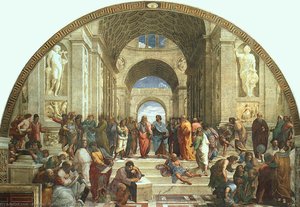 Atenska šola1511
 Sistinska Madonna1513
 Preobrazba1520
 Poročitev Device Marije1504
Eseji o delu Jacob's Dream
 Masterpieces of Perfection: The Top 25 Greatest Artworks by RaphaelImmerse yourself in the grace of the High Renaissance. Explore 25 iconic masterpieces by Raphael, from divine Madonnas to legendary frescoe…
 High Renaissance vs. Mannerism: Harmony and the Shift to TensionMaster the shift from Renaissance harmony to Mannerist tension with our expert art analysis. Discover the evolution of Italian masterpieces…
 25 Masterpieces by Duccio di Buoninsegna: The Dawn of Sienese ArtJourney through the divine beauty of Duccio di Buoninsegna’s greatest works. From the Sienese School to Byzantine elegance, explore 25 time…