
 Predogled v realnem okolju
 Pošlji
 Deli
Deli
 Podrobnosti o delu
 Priročnik

 Prenesi sliko
 Podobni izdelki
 Rentgenski posnetek
 Predvajaj diaporama
 Q&A
Q&A Statistika
The Visit

- 68.0 x 58.0 cm


 Preberi več
Giclée tisk / Umetniški tisk
Giclée ali platnati odtis muzejske kakovosti z hitro proizvodnjo in prilagodljivimi možnostmi končne obdelave. ( Kupite ročno slikano delo Preklop na digitalno sliko)




P118B €10

P118H €10

P118W €10

P438Z €10

P508JH €12

P508YH €12

P805H €10

P805Z €10

P919BZ €10

P919G €10

P919XJ €10

P959ZH €10

P968JZ €12

W106C €8

W218G €10

W218JH €8

W218Y €10

W307PJ €10

W316G €10

W316PJ €8

W316Y €10

W398PJ €8

W4111J €10

W500HY €15

W500JH €15

W692G €12

W849H €8

W940BG €15

W953PJ €8




Izberite eno od naših vnaprej določenih velikosti, ki ustrezajo prvotnim proporcijam umetničkega dela.

Vnesite širino in višino, ki jih potrebujete za svoj okvir ali steno. Tiskanje se lahko le odreže, vendar ga ni mogoče narediti večjega od slike, zato format z drugačno obliko pomeni izgubo dela slike. Pred tiskanjem vam pošljemo digitalni predogled za potrditev. Slika, prikazana na tej strani, ne prikazuje dejanskega izrezka — le predogled to omogoča.
Globalna dostava () v 2 tednih namesto standardnih 4/5 tednov. (1 november)

Brezplačna ekspresna dostava po vsem svetu

Visokokakovostno laneno platno

Popolno zavarovanje pošiljke

Garancija povračila carine in uvoznih davkov

Garancija popolnega barvnega ujemanja

100-dnevna politika vračil (le v primeru okvar)

Garancija 100% povračila denarja

Popust pri večjem naročilu
 Možnost stekla je na voljo le za velikosti pod 110 cm

The Visit
Giclée tisk / Umetniški tisk
Velikost reprodukcije
-


Skupna cena
€ 71
A Moment Frozen in Delft Light
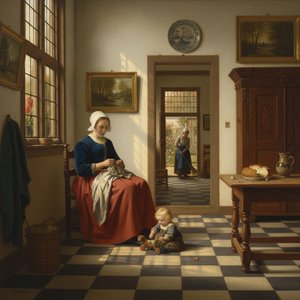
In the quiet, sun-drenched interiors of the seventeenth century, moments of profound connection were often found in the most mundane settings. Pieter de Hooch's "The Visit," painted in 1657, stands as a quintessential emblem of Dutch Baroque artistry—a deceptively simple tableau that speaks volumes about the social fabric and artistic sensibilities of its era. Captured in muted tones of ochre, ivory, and charcoal gray, this masterpiece transports us back to Delft during the zenith of the Dutch Golden Age, offering an intimate glimpse into the daily life of a bourgeois household. The painting’s enduring appeal lies not merely in its visual beauty but also in its masterful execution and subtle symbolic resonance, inviting viewers to step through a doorway into a world of domestic tranquility.
The scene unfolds with a palpable sense of realism, as de Hooch captures a group of individuals gathered around a dining table. There is a quiet drama in the way the figures are positioned; some stand while others sit, their presence suggesting a convivial conversation and shared enjoyment. The table itself is laden with details that ground the scene in reality—multiple wine glasses catch the light, hinting at a celebratory or social meal, while a book rests near one of the guests, perhaps a remnant of a shared intellectual pursuit before dinner began. Even the subtle inclusion of a clock on the wall serves as a poignant reminder of the passage of time, anchoring this fleeting social interaction within the eternal flow of history.
Mastery of Light and Texture
De Hooch's style embodies the Baroque preoccupation with illusionism and chiaroscuro—the dramatic interplay between light and shadow. Unlike the overtly theatrical compositions of his contemporaries, "The Visit" achieves grandeur through the meticulous observation of natural light filtering into a domestic interior. The artist skillfully renders textures with remarkable accuracy; one can almost feel the grain of the worn wooden bench and the crispness of the linen tablecloth. Through subtle gradations of tone, de Hooch sculpts form and conveys a profound sense of depth, drawing the viewer’s eye into the room's corners and through its architectural layers.
This technical precision makes the work an extraordinary subject for high-quality reproductions. For the art collector or interior designer, the painting offers a sophisticated palette that complements a variety of decor styles. Its monochrome-leaning tones of gray and earth colors provide a neutral yet emotionally resonant anchor for a room, bringing a sense of historical weight and calm sophistication to any space. The way de Hooich utilizes light creates an atmospheric quality that can transform a modern living area into a sanctuary of classical elegance.
A Reflection of Golden Age Prosperity
Beyond its aesthetic brilliance, "The Visit" reflects a pivotal moment in Dutch history—the burgeoning prosperity fueled by global trade and exploration. During this era, Delft was a thriving center for craftsmanship and commerce, attracting affluent families eager to establish their social standing through the cultivation of refined domestic environments. De Hooch’s depiction captures the aspirational ideal of bourgeois comfort: a world where peace, plenty, and companionship are the ultimate markers of success.
To possess a reproduction of this work is to invite the spirit of the Dutch Golden Age into one's home. It serves as more than just decoration; it is a window into a vanished era of stability and grace. Whether placed in a sunlit study or a formal dining room, "The Visit" continues to inspire awe through its ability to find the extraordinary within the ordinary, reminding us that true beauty often resides in the quietest moments of human connection.
Vprašanja in odgovori
Kaj ima "The Visit" skupnega z ostalo celotno tvorbino umetnika Pieter De Hooch?
V celotnem delu umetnika Pieter De Hooch se delo "The Visit" prikloni slogu Baroque, ki vključuje tematiko baroque realism, domestic tranquility, dutch society, light’s subtle grace, artistic legacy.
Kako lahko dobim digitalno datoteko dela "The Visit" avtorja Pieter De Hooch?
Digitalno sliko dela "The Visit" avtorja Pieter De Hooch lahko kupite na njegovi strani Visokoresolucijska digitalna slika: prenos digitalne slike visoke ločljivosti.
Kdo je avtor dela "The Visit"?
Avtor dela "The Visit" je Pieter De Hooch. Del je katalogiran pod imenom Pieter De Hooch.
Biografija umetnika
zgodnje življenje in izobraževanje
Pieter de Hooch, izstopajoča osebnost nizozemskega zlate dobe, se je rodil 20. decembra 1629 v Rotterdamu na Nizozemskem. Kot najstarejši iz petih otrok Hendricksa Hendricksza de Hoocha, zdrugarja, in Annetge Pieters, porodnice, je odmakon od zgodovinskih zapisov o svojem zgodnjem obdobju. Verjamemo le, da je svoje umetniško pot preživeti v mestih Rotterdam, Delft in Amsterdam. Njegovo umetniško izobraževanje se je odvijalo v Haarlemu pod mentorstvom pejzažnika Nicolaesa Berchema, ob ይቀobu Ochterveltu. To obdobje je postavilo temelje za njegov prihodnji uspeh kot mojstra tihih domačih scen, ki jih zaznamajo odprta vrata in globina prostora.umetnični slog in teme
De Hoochovo delo prepoznavamo po izjemni pozornosti do detajlov, naturalizmu in virtuozni uporabi svetlobe. Njegove slike pogosto prikazujejo vsakdanje življenje, ki odraža vrednote in aspiracije vzrastajočega srednjega razreda. Odlično pričedo temu slogu je "dvorišče hiše v Delftu" (1658), ki s svojo subtilnostjo prikaže njegovo sposobnost zajema preprostih trenutov vsakdana. Čeprav de Hoochovo delo deli podobne teme in kompozicije z umetnikom, kot je Emanuel de Witte, ga njegova osredotočenost na ljudi in njihove medsebojne odnose loči od drugih. Ta človečnost je jasno vidna v delih, kot sta "dojenje ženske" (1658) in "ženska z dojenčkom v utrinah" (1658), ki dokazujeta njegovo globoko zanimanje za intimo domačega življenja.pomembna dela in dediščina
Med najprepoznavnejša de Hoochova umetniška dosežka lahko štejemo:- "veseli pijalec" (okoli leta 1650)
- "igralci kart v osvetljeni sobi" (1658)
- "ženska, ki pripravlja kruh in maslo za boya" (1661)
muzeji in zbirke
De Hoochova dela so razpršena po številnih prestižnih muzejih, vključno s Koninklijk Museum voor Schone Kunsten v Antwerpenu v Belgiji, ki v svojo zbirko vključuje obsežno evropsko umetnost od 15. do 20. stoletja. Odkrijte več o Pieterju de Hoochu in njegovih delih na OriginalUniqueArt: [https://OriginalUniqueArt.com/@/pieter-de-hooch](https://OriginalUniqueArt.com/@/pieter-de-hooch) /sl/art/show/art-d3b4kt-sl/ (spoznajte vrhunska dela iz Koninklijk Museum voor Schone Kunsten, Belgija)
Pieter De Hooch
1629 - 1694 , Nizozemska
Hitri podatki
- Artistic Movement Or Style: Delftska šola, Nizozemsko zlato dobe
- Artists Or Movements Influenced By This Artist: ['Jan Vermeer']
- Artists Who Influenced This Artist: ['Nicolaes Berchem']
- Date Of Birth: 20. december 1629
- Full Name: Pieter Hendricksz de Hooch
- Nationality: Nizozemski
- Notable Artworks:
- Prazna steklenica
- Ženska, ki bere list
- Igralci kart v osvetljeni sobi
- Ženska, ki pripravlja kruh in maslo
- Place Of Birth: Rotterdam, Nizozemska
Sorodni članki

Golden Light & Dutch Skies: The Timeless Magic of Dutch Golden Age Landscapes
Discover the breathtaking beauty of Dutch Golden Age landscapes. Explore the mastery of light, chiaroscuro, and 17th-century realism through an expert art history lens, celebrating the enduring legacy of the Dutch Masters for discerning collectors and art lovers.

Willem van de Velde the Elder: Master of Maritime Painting & Chronicler of the Dutch Golden Age
Discover the captivating maritime paintings of Willem van de Velde the Elder, a master chronicler of the Dutch Golden Age. Explore his unparalleled realism and lasting influence on naval art history.

Mastering Light & Shadow: A Journey Through the Dutch Golden Age's Luminous Legacy
Embark on a cultural journey through the Dutch Golden Age. Explore the masterful interplay of light and shadow in 17th-century masterpieces, from Rembrandt to Vermeer, and discover how this era of profound realism continues to inspire fine art collectors today.
Pieter de Hooch: Illuminating Dutch Domestic Life & Golden Age Charm
Explore the captivating world of Pieter de Hooch, a master of Dutch Golden Age painting. Discover his innovative use of light, intimate domestic scenes, and lasting influence on art history. Learn more at OriginalUniqueArt.

10 Mojstrovin Nizozemske Zlate dobe: Umjetnost, ki je definirala svojo dobo
Odkrijte 10 mojstrovin Nizozemske zlate dobe! Rembrandt, Vermeer & več – spoznajte zgodbe za temi ikoničnih umetnin. Inspirirajte se za notranji dizajn in poiščite reprodukcije na OriginalUniqueArt.com!
