

 Predogled
 Pošlji
 Deli
Deli
 Podrobnosti o delu

 Prenesi
 Podobni izdelki
 Rentgenski posnetek
 Predvajaj diaporama
Poppies


 Razviljaj več
Giclée tisk / Umetniški tisk
Giclée ali platnati odtis muzejske kakovosti z hitro proizvodnjo in prilagodljivimi možnostmi končne obdelave. ( Kupi ročno naslikano sliko Kupi digitalno sliko)




































Izberite eno od naših vnaprej določenih velikosti, ki ustrezajo prvotnim proporcijam umetničkega dela.

Svoje dimenzije lahko vnesete sami, da bodo ustrezne za določen okvir ali prostor. Če izbrana velikost ne bo skladna z razmerji izvirne slike, bomo umetniško delo orezali ali podaljšali s pomočjo ogledalnega odraza ali barvno polnega roba. Pred začetkom proizvodnje vam bomo poslali digitalni predogled za potrditev.
Upoštevajte, da predogled na zaslonu ne prikazuje dejanskega orezovanja ali podaljševanja. Le digitalni predogled bo natančno prikazal končno kompozicijo.
Čeprav so na voljo prilagojene velikosti, priporočamo izbiro dimenzije s predhodno določenega seznama, da ohranite prvotna razmerja.
Globalna dostava () v 2 tednih namesto standardnih 4/5 tednov. (18 avgust)

Brezplačna ekspresna dostava po vsem svetu

Visokokakovostno laneno platno

Popolno zavarovanje pošiljke

Garancija povračila carine in uvoznih davkov

Garancija popolnega ujemanja barv

60-dnevna politika vračanja (le v primeru napak)

Garancija 100% povračila denarja

Popust pri večjem naročilu
 Možnost stekla je na voljo le za velikosti pod 110 cm

Poppies
Giclée tisk / Umetniški tisk
Velikost reprodukcije
-


Skupna končna cena
$ 80
Opis zbirateljskega predmeta
A Brief Overview of the Artist and Painting
Phillip Leslie Hale, an American artist, created the captivating oil on panel painting titled Poppies in 1895. This beautiful piece is currently housed at the Colby College Museum of Art in the United States.Composition and Elements
The painting depicts a serene scene of a woman walking through a field of vibrant red poppies, wearing a blue dress and carrying a handbag. The presence of two birds flying above her adds an element of movement and nature to the composition. The dominant red hue of the flowers creates a lively atmosphere, drawing the viewer's attention to the central figure.Artistic Style and Influences
Phillip Leslie Hale was influenced by various artistic movements, including Impressionism and Post-Impressionism. His style is characterized by the use of bold colors and expressive brushstrokes, evident in Poppies. The painting's composition and color palette reflect the artist's ability to capture the beauty of everyday life.Comparison with Other Works
Similar themes and styles can be seen in other paintings featuring poppies. For example, Georges Lemmen's "Poppies" also showcases a field of vibrant flowers, while Philip Evergood's "How Lovely the Poppies" presents a more abstract representation of the subject.Conclusion
Phillip Leslie Hale's Poppies is a stunning example of late 19th-century American art. The painting's captivating composition, bold colors, and serene atmosphere make it a valuable addition to any art collection. For those interested in acquiring a handmade oil painting reproduction of this masterpiece, visit OriginalUniqueArt.com for high-quality reproductions.To learn more about the artist and his works, refer to the following resources: * Phillip Leslie Hale on Wikipedia * Phillip Leslie Hale's "Poppies" on OriginalUniqueArt.com
Biografija umetnika
Philip Leslie Hale: Bridging Academia and Monet’s Vision
Phillip Leslie Hale (1865-1931) stands as a pivotal figure in American Impressionism, an artist who skillfully blended rigorous academic training with the revolutionary aesthetic principles championed by Claude Monet. Born in Boston, Massachusetts, on September 22nd, 1865, Hale’s artistic journey began amidst a family steeped in intellectual pursuits – his father, Edward Everett Hale, was a reverend and prominent writer, and his sister, Ellen Day Hale, herself an accomplished artist. This familial environment undoubtedly fostered a passion for creativity and observation that would define his lifelong career.- Early Education & Training: Hale’s formative years were spent at the School of the Museum of Fine Arts in Boston under the tutelage of Edmund Tarbell, establishing a foundation in traditional painting techniques. However, he quickly sought expansion beyond these boundaries, enrolling at New York’s Art Students League where influential mentors like Kenyon Cox and J. Alden Weir honed his artistic sensibilities.
- Parisian Influence: Recognizing the transformative potential of European art movements, Hale embarked on a pivotal expedition to Paris in 1887, immersing himself in the vibrant artistic milieu of Impressionism. Spending five formative years abroad, he particularly absorbed Monet’s groundbreaking approach to capturing fleeting moments of light and color – an influence that would permeate his subsequent works.
A Painter's Palette: Style and Technique
Hale’s distinctive style is characterized by a luminous quality—a hallmark of Impressionism—where light dominates the canvas, shaping colors and creating atmospheric depth. He meticulously employed brushstrokes to convey texture and movement, mirroring the dynamism of nature itself. Unlike many of his contemporaries who adhered strictly to academic conventions, Hale embraced Monet's innovative techniques, prioritizing subjective perception over precise representation. This approach is vividly evident in paintings such as “Garden Party” (1913), a masterful depiction of a leisurely afternoon gathering bathed in dappled sunlight—a testament to Hale’s ability to translate Impressionist ideals into compelling visual narratives.- Monet's Legacy: Hale’s dedication to Monet’s method is palpable, particularly in his use of broken color and layering techniques. These innovations allowed him to capture the ephemeral beauty of landscapes and interiors with unparalleled sensitivity.
- Notable Works: Among Hale’s celebrated compositions are “The Crimson Rambler” (1908), an expansive landscape brimming with rich hues and textural nuances, showcased at the Pennsylvania Academy of Fine Arts in Philadelphia. This painting exemplifies Hale's commitment to portraying natural grandeur while simultaneously conveying a profound emotional resonance.
Academic Roots & Artistic Mentorship
Despite his embrace of Impressionism’s expressive freedom, Hale maintained connections with academic traditions through his teaching positions at the Museum School of Boston and the Metropolitan Museum of Art. He nurtured the talents of aspiring artists like Mary Bradish Titcomb, fostering a legacy of artistic excellence. His influence extended beyond the classroom; he championed innovative approaches to art education, emphasizing observation and experimentation alongside foundational skills.- Publications & Scholarship: Hale’s intellectual curiosity manifested in his scholarly pursuits, culminating in “Jan Vermeer of Delft” (1913)—the inaugural monograph dedicated to Vermeer published in the United States—a pioneering effort that solidified his reputation as a respected Vermeer scholar and contributed significantly to the dissemination of Vermeer's artistic vision.
Legacy & Recognition
Phillip Leslie Hale’s contributions to American Impressionism are recognized through exhibitions at institutions like the Pennsylvania Academy of Fine Arts, the Metropolitan Museum of Art, and Somerville College. His enduring influence continues to inspire artists today, cementing his place as a significant figure in the history of art—a painter who successfully reconciled artistic innovation with intellectual rigor, leaving behind a body of work that embodies both beauty and profound insight.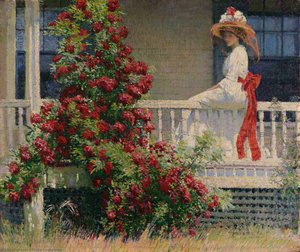
phillip leslie hale
1865 - 1931
Hitri podatki
- Artistic Movement Or Style: Impressionism
- Artists Or Movements Influenced By This Artist: ['Boston School painting']
- Artists Who Influenced This Artist:
- Claude Monet
- Edmund Tarbell
- Date Of Birth: 1865
- Date Of Death: 1931
- Full Name: Phillip Leslie Hale
- Nationality: American
- Notable Artworks:
- The Crimson Rambler
- Garden Party
- Place Of Birth: Boston, Massachusetts
Sorodni članki

The Soul of Impressionism: Why Oil on Canvas Captures Eternal Light and Timeless Emotion
Discover the enchanting alchemy of Impressionism. Explore how the mastery of oil on canvas, through glazing and impasto, captures eternal light and emotion. Perfect for lovers of Monet and Van Gogh seeking the profound depth of hand-painted fine art.

The Enduring Legacy of Oil on Canvas: Technique, History & Aesthetic Impact
Explore the rich history & techniques of oil painting – from Renaissance masters to Impressionism. Discover pigments, layering methods, and why this timeless medium endures. Expert insights for artists & art enthusiasts.

Oil on Canvas: A Historical & Technical Exploration of a Timeless Artistic Medium
Explore the rich history & enduring techniques of oil painting on canvas. Discover the science behind its longevity, conservation practices, and contemporary relevance. Expert insights for art enthusiasts.
The Timeless Beauty of Oil on Panel: Capturing Light and Texture through the Impressionist Lens
Discover the exquisite depth of oil on panel. Explore how Impressionist masters captured light and texture through tactile brushwork, and learn how to bring these museum-quality, hand-painted masterpieces into your home with expert curation.

The Enduring Power of Painting: A Historical & Contemporary Exploration of Form and Emotion
Explore the rich history & enduring techniques of oil painting with OriginalUniqueArt. Discover masterpieces, learn about art collecting, and find authentic handmade reproductions crafted by skilled artists.

