Preklop na tiskanine
 Preberi več







































 Za umetniška dela ali reprodukcije, ki so po katerikoli strani širše od 105 cm (približno 41 palč), bo okvir poslan v razstavljeni obliki kot komplet. Ta metoda zagotavlja varno dostavo in preprečuje poškodbe med transportom.


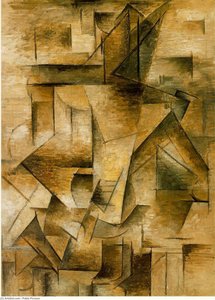
A Portrait of Turmoil: Unveiling Picasso’s ‘Portrait of Dora Maar’
Pablo Picasso's *Portrait of Dora Maar* isn’t merely a representation; it’s a raw, almost unsettling glimpse into the heart of a complex relationship and the anxieties simmering beneath the surface of 1937. This oil on canvas (92 x 65 cm), currently residing in the Musée d'art Moderne de la Ville de Paris, pulsates with an intensity born from Picasso’s tumultuous personal life and his groundbreaking exploration of form and emotion. It’s a painting that demands attention, inviting viewers to confront not just a likeness, but the very nature of perception and psychological depth.The Muse and Her Master: A Relationship Defined by Passion and Pain
Dora Maar was far more than simply a model for Picasso; she was a vibrant artist in her own right – a photographer and painter deeply rooted in Surrealist principles. Their nine-year entanglement, beginning in 1936, was a whirlwind of intellectual sparring, passionate love affairs, and ultimately, profound emotional devastation. Picasso’s initial encounter with Maar at the legendary Les Deux Magots café in Paris ignited an immediate fascination, drawn to her sharp intelligence and spirited independence. However, this intense connection existed alongside his long-standing affair with Marie-Thérèse Walter, creating a dynamic of jealousy and tension that is palpably woven into the fabric of the painting itself. The interplay between these two women – their contrasting personalities and artistic visions – fuels the unsettling power of *Portrait of Dora Maar*.Deconstructing Form: A Surrealist Vision
Picasso’s mastery of Surrealism shines brilliantly in this work, though it's firmly rooted in his established Cubist vocabulary. The composition is strikingly unconventional; Dora is seated with a deliberate sense of dislocation, her form fragmented and seemingly adrift. Picasso’s revolutionary technique – presenting both the profile *and* frontal view of her face simultaneously – creates a powerful duality. One eye meets the viewer directly, brimming with an almost unnerving intensity, while the other seems to gaze inward, lost in contemplation or perhaps, despair. The use of sharp, broken lines and angular shapes contributes significantly to this sense of unease and instability, mirroring the emotional turmoil at the heart of the portrait. It’s a deliberate rejection of traditional representational norms, pushing the boundaries of perception and inviting viewers to actively participate in constructing meaning.Symbolism Woven into Canvas
The painting is rich with symbolic layers that invite deeper interpretation. Dora's relaxed posture contrasts dramatically with the ‘prison-like’ structure of her chair – a dark, imposing object that suggests confinement and restriction. The rigid horizontal lines of the background further reinforce this sense of entrapment. Her brightly painted red fingernails offer a small, defiant flash of color amidst the predominantly somber palette, perhaps symbolizing a flicker of resistance or passion. Picasso himself offered chilling insight into his perspective on women, stating they are “suffering machines,” and that elements within his paintings – like the chair – represent "old age and death." This statement adds a disturbing layer to the interpretation, suggesting a power dynamic and a pessimistic view of female existence. The subtle inclusion of a bee-like form near her ear is also noteworthy, potentially symbolizing industry or even a stinging presence in Picasso’s life.Historical Echoes: A Reflection of Troubled Times
Created in 1937 – the same year as his monumental *Guernica* – *Portrait of Dora Maar* exists within a profoundly significant historical context. The painting reflects the growing political unrest and the looming shadow of World War II, capturing the anxieties and uncertainties of the era. It’s not simply a portrait; it's a visual document of a world on the brink, mirroring the fractured state of both individual psyches and global politics. The somber mood and fragmented forms resonate with the sense of impending doom that permeated Europe at the time.- Style: Surrealism, Cubism
- Technique: Oil on canvas
- Dimensions: 92 x 65 cm
- Current Location: Musée d'art Moderne de la Ville de Paris, France
Vprašanja in odgovori
Kako lahko prenesem sliko dela "Portret Dore Maar" avtorja Pablo Picasso?
Digitalno sliko dela "Portret Dore Maar" avtorja Pablo Picasso lahko prenesete na strani za prenos umetninine Prenos digitalne slike: prenos digitalne slike visoke ločljivosti.
V kateri letnici in v katerem umetnostnem slogu je nastalo "Portret Dore Maar"?
"Portret Dore Maar" je bila ustvarjena leta 1937 v okviru pokreta Kubizem. Letnico in umetniški slog pripisujemo zgodovini umetnosti, kar delu daje pravi kontekst.
Kaj predstavlja "Portret Dore Maar"?
Tematika v delu "Portret Dore Maar" avtorja Pablo Picasso vključuje portret, surrealizem, picasso, dora maar, kubizem, tovornost, psihološko, fragmentirano, ki skupaj predstavljajo vsebino umetninškega dela.
 Predogled v realnem okolju
 Pošlji
 Deli
Deli
 Podrobnosti o delu
 Priročnik

 Prenesi sliko
 Podobni izdelki
 Rentgenski posnetek
 Predvajaj diaporama
 Vprašanja in odgovori
 Statistika