
() ·
Slika, izdelana ročno posebej zanj
Ročno izdelana oljna reprodukcija
Ročno slikano olje na platnu v vaši izbiri velikosti in okvirja, izdelano po naročilu naših umetnikov. ( Preklop na tiskanine Preklop na digitalno sliko)
Biografija umetnika
Discover Orcagna, a pivotal Italian painter & sculptor (c.1308-1368). Master of Florence, renowned for Orvieto's mosaics & cathedral designs. Explore his legacy!
 Preberi več
od ·
Poglavje 1
Katere velikosti naj bi bila?
Drleč po drslenici spremenite velikost; slika na levi strani prikazuje okvir v njegovi dejanski širini. Razmerja originala so ohranjena.
Izberite eno od naših vnaprej določenih velikosti, ki ustrezajo prvotnim proporcijam umetničkega dela.

Vnesite širino in višino, ki jih potrebujete, da se slika prilega vašemu okviru ali steni. Ker je delo ročno slikano, lahko umetnik pri različnih oblikih slik pri robovih doda malo več barve ali pa jih malo odreže — izberite sami. Pred začetkom slikanja vam pošljemo digitalni predogled za potrditev. Slika, prikazana na tej strani, ni končni rezultat — le predogled prikazuje dejansko podobo.
Poglavje 2
Na kakšen način naj bo dostavljeno?
Izberite robove platna
Izberite svoj okvir

Beli rob €1

zamegljen rob €1

Razširjen rob €1

P118B €10

P118H €10

P118W €10

P438Z €10

P508JH €12

P508YH €12

P805H €10

P805Z €10

P919BZ €10

P919G €10

P919XJ €10

P959ZH €10

P968JZ €12

W106C €8

W218G €10

W218JH €8

W218Y €10

W307PJ €10

W316G €10

W316PJ €8

W316Y €10

W398PJ €8

W4111J €10

W500HY €15

W500JH €15

W692G €12

W849H €8

W940BG €15

W953PJ €8

H24-GOLD €30

H24-SILVER €30

H36-GOLD €45

H36-SILVER €45
V okviru
Okvirni rob: . Celotna velikost z okvirjem: .
Poglavje 3
Kdo to slika in ali bi se moralo kaj spremeniti?
Po oddaji naročila bo ekipa OriginalUniqueArt.com stranki po e-pošti poslala navodila in zagotovila predogled makete
Mednarodna dostava () v 3/4 tednih namesto običajnih 5 tednov. (18 november). Brez kompromisov pri kakovosti.
Poglavje 4
Zadnji dotiki
Zvešča, kot v muzeju?
Podrobnosti o gravirani bronasti plošči
This elegant plaque features the artist's name and the title of the artwork, finely engraved for a timeless presentation.
It is made from bronze with a refined, elegant finish. The text is precisely laser-engraved for a sharp and permanent result. Measuring 9x2 cm, the plaque is compact yet easy to read. It's built to be durable and scratch-resistant, offering a professional, museum-quality look. Mounting is simple thanks to the included adhesive backing.
Podrobnosti o transparentni akrilni plošči
The plaque includes essential engraved details such as the artist's name, the title of the artwork, the date it was created, the type of media used-like oil on canvas or watercolor-a brief description of the piece, and a QR code that links to the complete artwork information.
It is crafted from clear acrylic, offering a sleek, modern appearance. The text is UV-engraved in black to ensure strong visual contrast. With a size of 10x15 cm, it ensures optimal readability. It comes equipped with two metal hooks for secure wall mounting. The plaque is designed to be weather-resistant, making it suitable for various environments, and it includes interactive features that work seamlessly with smartphone scanning.
Podrobnosti o črni akrilni plošči
This elegant plaque includes engraved information such as the artist's name, the title of the artwork, the date it was created, the type of media used (like oil on canvas or watercolor), a short description of the artwork, and a QR code for quick access to more information.
The plaque itself is made from refined black acrylic with a premium finish. The text is laser-engraved in white for high contrast and readability. Its size is 10x15 cm, designed to be easy to read. It comes with two metal hooks for professional mounting. The design is sleek and fits any interior style. It is also weather-resistant and durable, with built-in digital integration for mobile compatibility.
Zaščitni lak?
Kdaj jo potrebujete?
Poglavje 5
Vaša slika, natako kot ste jo naročili

Hell (fragment)
Tehnik reprodukcije
Velikost reprodukcije
-

Izbor vrhunskih umetnikov
Več podrobnosti, dovršenosti in dodatnega časa za izdelavo
-

Okvir za reprodukcijo
-
-
Za umetniška dela ali reprodukcije, ki so po katerikoli strani širše od 105 cm (približno 41 palč), bo okvir poslan v razstavljeni obliki kot komplet. Ta metoda zagotavlja varno dostavo in preprečuje poškodbe med transportom.
Potrebna je profesionalna montaža – to ni izdelek za DIY izdelavo.
Komplet mora sestaviti in platno napeti izkušen profesionalni okvirjest, pri čemer bo uporabil lepil za les (ni vključeno), klešče za napetje platna in spone, da bi ohranil pravokotnost letev med sušenjem lepila. Nepravilna montaža ali neenakomerna napetost platna lahko trajno poškoduje umetniško del in
 Za umetniška dela ali reprodukcije, ki so po katerikoli strani širše od 105 cm (približno 41 palč), bo okvir poslan v razstavljeni obliki kot komplet. Ta metoda zagotavlja varno dostavo in preprečuje poškodbe med transportom.
Vključene so vse letve iz masivnega lesa, natančno izrezane po meri.
Montaža poteka s priloženimi vijaki, vendar je za kotiče potrebna lepil za les, ki ga ni v kompletu in ga mora zagotoviti vaš okvirnik.
Za uporabo so potrebna profesionalna orodja, ki niso vključena: klešče za napinjanje platna (napetnik) in sponke za ohranjanje pravokotnosti letev med sušenjem lepila.
Pomembno:
Za stike v kotih potrebujete lepil za les, nosilce je treba z

Značka z imenom
-
-

Zaščitni lak
Sijajni lak (poudarja barve ter zagotavlja zaščito pred svetlobo in vlago)
-

Prilagodi svoje umetniško delo
Primeri možnih prilagoditev: zamenjava obraza s fotografijo kupca; dodajanje hišnega ljubljenčka (npr. zamenjava mačke s psom); vključitev skritega sporočila v ozadje; sprememba krajšave ali elementov ozadja.
-

Hitra dostava
Mednarodna dostava () v 3/4 tednih namesto običajnih 5 tednov. (18 november). Brez kompromisov pri kakovosti.
-
Hitra dostava
Globalna dostava () v 5 tednih. (25 november).
Vključeno v ceno
Skupna cena
€ 267
Možnost stekla je na voljo le za velikosti pod 110 cm
Vključeno v vsako naročilo
- Brezplačna ekspresna dostava po vsem svetu
- Visokokakovostno laneno platno
- Popolno zavarovanje pošiljke
- Garancija povračila carine in uvoznih davkov
- Garancija popolnega barvnega ujemanja
- 100-dnevna politika vračil (le v primeru okvar)
- Garancija 100% povračila denarja
- Popust pri večjem naročilu


 Predogled v realnem okolju

 Pošlji
 Deli
 Podrobnosti o delu
 Priročnik


 Prenesi sliko
 Podobni izdelki
 Rentgenski posnetek
 Predvajaj diaporama
 Vprašanja in odgovori
 Statistika
V številkah
- 1345leto risevanja
- 29izbira okvirjev
- standardne velikosti, v svojih lastnih proporcijah
- 5teden dni za slikanje in dostavo
O originalnem delu


Orcagna
1315 - 1368, Italy
Kratek pregled o Orcagna
- Full Name: Andrea di Cione di Arcangelo
- Nationality: Italian
- Date Of Birth: 1310
- Date Of Death: 1368
- Place Of Birth: Florence, Italy
- Notable Artworks:
- Triptych with Virgin
- Expulsion of Duke Athens
- Strozzi Altarpiece
- Orvieto Mosaics
- Tabernacle Orsanmichele
- Artistic Movement Or Style: Gothic-Late Gothic
- Artists Who Influenced This Artist:
- Giotto
- Bernardo Daddi
- Artists Or Movements Influenced By This Artist:
- Jacopo di Cione
- Nardo di Cione
Biografija umetnika
Andrea di Cione: The Architect of Florentine Vision
The name Orcagna—a moniker bestowed upon him by local artisans—encompasses a remarkable figure in the history of Italian art: Andrea di Cione, a painter, sculptor, architect, and master craftsman who dominated the artistic landscape of Florence during the latter half of the 14th century. Born around 1308 within the bustling heart of the city, Orcagna’s life was inextricably linked to its burgeoning wealth, political intrigue, and fervent religious devotion—elements that profoundly shaped his distinctive style and enduring legacy. His story isn't one of solitary genius, but rather a testament to collaborative artistry, meticulous planning, and an unwavering commitment to both technical mastery and expressive power.
Orcagna’s early life remains shrouded in some mystery, though it is believed he apprenticed under the renowned sculptor Andrea Pisano. This formative experience instilled within him a deep appreciation for classical forms and a sophisticated understanding of three-dimensional space—qualities that would later manifest in his monumental marble tabernacle for Orsanmichele. However, Orcagna’s artistic trajectory quickly diverged from his master's, developing a distinctly Florentine style characterized by dramatic figures, vibrant colors, and an innovative approach to composition. He was formally admitted into the painter’s guild in 1343-44 and later joined the stonemasons’ guild in 1352, demonstrating his versatility and ambition across multiple artistic disciplines.
The Grandeur of Orvieto: Mosaic Master
Orcagna's most celebrated achievement undoubtedly lies in his contribution to the magnificent façade of the cathedral in Orvieto. Commissioned in 1358, this project demanded a level of technical skill and artistic vision that pushed Orcagna to the very limits of his abilities. He oversaw the creation of an extensive mosaic decoration, including a breathtaking rose window—a masterpiece of Byzantine-inspired design that exemplifies the lavishness and spiritual intensity characteristic of the period. The mosaics themselves are characterized by their rich palette, intricate detailing, and powerful emotional impact, reflecting Orcagna’s mastery of color theory and his ability to imbue religious subjects with palpable drama.
The scale of this undertaking was immense, requiring meticulous planning and coordination. Orcagna's role extended beyond mere execution; he served as a consultant, guiding the work of numerous skilled artisans and ensuring that every element harmonized within the overall design. The Orvieto mosaics stand as a testament to his organizational prowess and his ability to synthesize diverse artistic talents into a cohesive whole.
The Sculptural Triumph: Orsanmichele’s Tabernacle
Perhaps Orcagna's most enduring legacy resides in the monumental marble tabernacle he designed and oversaw for the Orsanmichele, a former confraternity hall now serving as a public art gallery. Completed between 1352 and 1359, this architectural marvel is a complex and ambitious undertaking that showcases Orcagna’s exceptional skill as an architect and sculptor. The tabernacle's intricate façade is adorned with a multitude of sculpted figures—a veritable encyclopedia of biblical narratives, allegorical symbols, and classical motifs. Each figure is rendered with remarkable detail and expressive power, reflecting Orcagna’s deep understanding of human anatomy and his ability to convey complex emotions through gesture and expression.
The tabernacle's design incorporates a sophisticated system of arches, vaults, and niches, creating a dynamic interplay of light and shadow. The use of color—particularly the vibrant hues of the inlaid marble—further enhances its visual impact. Orcagna’s work on Orsanmichele demonstrates his mastery of both architectural form and sculptural technique, solidifying his reputation as one of Florence's most accomplished artists.
A Legacy of Innovation
Orcagna’s influence extended far beyond the immediate commissions he undertook. His innovative approach to composition—characterized by dynamic figures, dramatic lighting, and a heightened sense of realism—helped to shape the course of Florentine painting in the late 14th century. He bridged the gap between the Gothic traditions inherited from his predecessors and the emerging Renaissance style, paving the way for future generations of artists. His work served as an inspiration to many of Florence’s leading painters, including Jacopo di Cione, his brother, who continued Orcagna's artistic legacy after his death in 1368.
Orcagna’s untimely death at the age of sixty is a poignant reminder of the fragility of life and the immense loss suffered by the Florentine art world. Despite his relatively short career, he left behind a remarkable body of work that continues to captivate audiences today—a testament to his extraordinary talent, unwavering dedication, and enduring vision.
Sorodni članki

Masterpieces of Light: The Top 25 Artworks by Duccio di Buoninsegna
Journey through the divine elegance of Duccio di Buoninsegna. Explore 25 iconic Sienese masterpieces, from the Maestà to the Rucellai Madonna. Find inspiration for museum-quality art reproductions and timeless decor. Discover all masterpieces on OriginalUniqueArt.com.

Decoding the Veil: Symbolism in Art – A Comprehensive Exploration of Meaning & Interpretation
Explore the rich world of art symbolism! Uncover hidden meanings in masterpieces from Renaissance allegories to modern movements. A comprehensive guide for enthusiasts & collectors.

Fra Angelico: 25 Mojstrovin Renesančne Elegance za Vaš Dom | OriginalUniqueArt
Odkrijte 25 čudovitih mojstrovin Fra Angelica – renesančnih fresk, angelčkov in verskih slik. Preučite zgodovino umetnosti in okrasite dom z reprodukcijami vrhunske kakovosti. Raziščite celotno kolekcijo na OriginalUniqueArt.com!
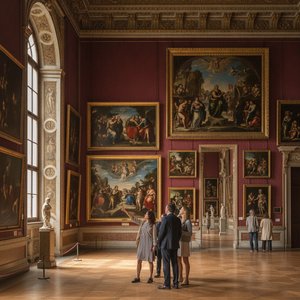
25 Must-See Masterpieces at Venice's Gallerie dell'Accademia
Embark on a journey through Venice's soul with 25 iconic masterpieces from Gallerie dell'Accademia. From Titian to Tintoretto, explore the luminous colors and timeless stories of the Venetian Renaissance. Find museum-quality inspiration for your decor. Discover all masterpieces on OriginalUniqueArt.com