

 Preverite v realnem okolju
 Pošlji kot čestitko
 Deli
Deli
 Podrobnosti
 Priročnik

 Prenesi
 Podobni artefakti
 Rentgenski posnetek
 Predvajaj diaporama
 Statistika
Gethsemane
 Oil On Board
- Neo-Romanticism
 1926
1926- Modern
 42.0 x 32.0 cm
 Bergen Kunstmuseum
 Preberi več
Giclée tisk / Umetniški tisk
Giclée ali platnati odtis muzejske kakovosti z hitro proizvodnjo in prilagodljivimi možnostmi končne obdelave. ( Naročite ročno slikano reprodukcijo Preklop na digitalno sliko)




P118B €10

P118H €10

P118W €10

P438Z €10

P508JH €12

P508YH €12

P805H €10

P805Z €10

P919BZ €10

P919G €10

P919XJ €10

P959ZH €10

P968JZ €12

W106C €8

W218G €10

W218JH €8

W218Y €10

W307PJ €10

W316G €10

W316PJ €8

W316Y €10

W398PJ €8

W4111J €10

W500HY €15

W500JH €15

W692G €12

W849H €8

W940BG €15

W953PJ €8




Izberite eno od naših vnaprej določenih velikosti, ki ustrezajo prvotnim proporcijam umetničkega dela.

Vnesite širino in višino, ki jih potrebujete za svoj okvir ali steno. Tiskanje se lahko le odreže, vendar ga ni mogoče narediti večjega od slike, zato format z drugačno obliko pomeni izgubo dela slike. Pred tiskanjem vam pošljemo digitalni predogled za potrditev. Slika, prikazana na tej strani, ne prikazuje dejanskega izrezkov — le predogled to omogoča.
Globalna dostava () v 2 tednih namesto standardnih 4/5 tednov. (21 oktober)

Brezplačna ekspresna dostava po vsem svetu

Visokokakovostno laneno platno

Popolno zavarovanje pošiljke

Garancija povračila carine in uvoznih davkov

Garancija popolnega barvnega ujemanja

Politika vračila v 100 dneh (le v primeru okvar)

Garancija 100% povračila denarja

Popust pri večjem naročilu
 Možnost stekla je na voljo le za velikosti pod 110 cm

Gethsemane
Giclée tisk / Umetniški tisk
Velikost reprodukcije
-


Skupna cena
€ 70
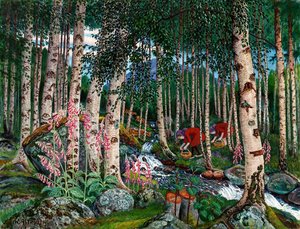
A Visionary Encounter in the Norwegian Garden
In the quiet, evocative depths of Nikolai Astrup’s 1926 masterpiece, Gethsemane, the boundaries between biblical history and the intimate landscapes of Norway begin to dissolve. While the title refers to the sacred garden in Jerusalem where Christ faced his darkest hour, Astrup performs a profound act of artistic localization. He transports this monumental moment of spiritual agony into the familiar, lush surroundings of the parsonage garden in Ålhus. This is not merely a religious illustration; it is a dreamlike fusion of the divine and the terrestrial. The viewer is invited into a space where the heavy atmosphere of the crucifixion narrative meets the verdant, mystical textures of the West Norwegian landscape, creating a scene that feels both ancient and deeply personal.
The composition breathes with a sense of quiet drama, capturing a moment of profound transition. As the eye wanders through the painting, one encounters a scene that oscillates between a somber historical event and a visionary hallucination. The presence of figures—some appearing caught in the weight of the narrative, others seemingly lost in a trance-like state—suggests a world where the veil between reality and the supernatural is perilously thin. This sense of mystery is heightened by the scattered birds that drift through the sky and perch upon the landscape, acting as silent witnesses to the unfolding drama. For the collector or designer, this piece offers more than just a subject; it offers an atmosphere of contemplative depth that can anchor a room with its soulful, introspective energy.
Technique and the Language of Light
Astrup’s technical mastery is evident in his use of oil on cardboard, a medium that allows for a rich, concentrated application of pigment. His style, rooted in Neo-Romanticism, eschews clinical realism in favor of an intense, emotive color palette. The textures are tactile and layered, reflecting the artist's lifelong obsession with the "visual language" of his homeland. He employs light not just to illuminate form, but to evoke mood; the shadows are deep and heavy, yet they are pierced by a spectral luminosity that suggests the presence of a divine vision. This interplay of light and shadow creates a rhythmic movement across the canvas, guiding the viewer through the dense foliage and toward the heart of the spiritual struggle.
The brushwork possesses a certain raw, organic vitality that mirrors the ruggedness of the Norwegian fjords. There is no sterile perfection here; instead, there is a deliberate, expressive quality that celebrates the natural world's untamed spirit. For those seeking to incorporate fine art into a sophisticated interior, a high-quality reproduction of Gethsemane provides a centerpiece of immense character. The painting’s ability to command attention through its complex textures and brooding tones makes it an ideal choice for spaces designed for reflection, such as libraries, study alcoves, or quiet sitting rooms where the interplay of history and nature can be fully appreciated.
A Legacy of Spiritual and National Identity
To understand Gethsemane is to understand Nikolai Astrup’s broader mission: to capture the very soul of Norway. By situating a universal Christian narrative within his own local topography, he elevates the Norwegian landscape to a stage for the eternal. This technique of "sacralizing" the everyday—turning a simple garden patch into a site of cosmic significance—is what makes his work so enduringly powerful. The painting serves as a bridge between the theological and the topographical, making the profound accessible through the familiar.
For the discerning art lover, owning a reproduction of this work is an opportunity to possess a fragment of this visionary legacy. It is a piece that invites continuous re-examination, revealing new layers of symbolism and emotion with every viewing. Whether one is drawn to its historical weight, its masterful use of color, or its ability to evoke the misty, magical atmosphere of a Norwegian night, Gethsemane remains a breathtaking testament to the power of art to transform the world we see into a world we feel.
Vprašanja in odgovori
Ali je delo "Gethsemane" avtorja Nikolaj Astrup v javni lastini in zakaj?
Status avtorske pravice za "Gethsemane" - v javni domeni – njegova avtorska pravica je zastarela - izhaja iz smrti umetnika v letu 1928.
Katere teme se pojavljajo v delu "Gethsemane" avtorja Nikolaj Astrup?
"Gethsemane" avtorja Nikolaj Astrup prikazuje: biblical scene, religious, jesus christ, gethsemane, norway landscape, night scene, visionary.
Kakšen je zgodovinski pomen dela "Gethsemane"?
Zgodovinsko gledano je "Gethsemane" Neo-Romanticism skladina iz širšega obdobja Modern.
Biografija umetnika
Nikolai Astrup: Vizionarski Vestlandet
Nikolai Astrup (1880 – 1928) predstavlja edinstko figuro v norveški zgodovini umetnosti – slikarja, katerega globoka povezanost z naravninami in tradicijo regije Vestlandet je utrdila njegovo mesto med najbolj značilnimi neoromantičnimi umetniki svojega časa. Astrup, rojen v Bremangerju, v pokraj Sogn og Fjordane, se je v svoji otroški dobi vzgojal med nepremaganimi fjordi in mirnimi dolinami, kar je temeljito oblikovalo njegovo umetniško občutljivost. To ga je usmerilo v slog, ki ga odlikajo intenzivne barvne palete in neomajna predanost prikazovanju vsakdana življenja na podeželju Norveške. Njegova dediščina ne leže v estetsko privlačnih platnah, temveč tudi v njegovih pionirskih prizadevanjih za zajemanje »naravnega vizualnega jezika«, ki je priklicoval na tradicije in folklor njegove domovine.- Zgodnje življenje in izobraževanje: Astrupove formative leta je zaznamovala družinska pobožnost, ki jo je vgradil njegov oče, Christian Astrup, župnik, ki ga je spodbujal k teološkim študijem. Kljub prvotnim nagnjenjem k duhovništi je Astrupova strast do risanja in slikanja končno vodila k zapustitvi katedralske šole v Trondheimu, da bi svoje umetniške ambicije uresničil v Kristianii (Oslo), kjer je pod mentorstvom Harriet Backer izpiljal svoje znanje.
- Parizski vplivi: Kratek čas preživet v Parizu je Astrupa izpostavil vzrojevnemu gibanju avantgarde, kar je spodbudilo povezave z drugimi umetniki, kot je bil Christian Krohg, ter bogato razumovanje impresionističnih tehnik. To obdobje je utrdilo njegovo predanost eksperimentiranju in razširilo njegove umetniške horizonte.
- Vrnitev v Jølster in umetniška razvoj: Ob vrnitvi v svoj rodni dom v Jølster leta 1902 je Astrup ustanovil družino s svojo ženo, Engel Sunde, z katero je imel osem otrok. Težke življenjske okoliščine in ekonomski izzivi so spodbudili njegovo umetniško zanosnost ter ga spodbudili k popolni potopnosti v prikaz okolice – pokrajine, ki je služila kot neprestani vir navdih. Astrupov umetniški slog je takoj prepoznaven: njegove platne prevladujejo drzne barvne kombinacije, kar odraža zavestno zavračanje akademskih konvencij. Namesto utiščenih tonov je izbral živahne barve, pri čemer je prednostno postavil ekspresivno barvo za izražanje čustev in zajemanje svetlobne kakovosti svetlobe Vestlandeta. Njegova tehnika je združevala impresionistično črtanje z elementi simbolizma, kar je prineslo dela, ki so tehnično dovršena in hkrati prežeta z globoko psihološko plastjo. Ponavljajoči se motivi – drevesa, postopen gibanje figur v podeželskih dejavnostah – odražajo njegovo fascinacijo nad zajemanjem bistva norveške kulture in identitete.
- Pomembne izložbe: Astrupov umetniški ugled se je postopoma gradil skozi tri pomembne izložbe v Kristianii (1905), Bergenu (1908) in Oslu (1911). Te predstave so dobile kritično priznanje in ga uveljavile kot vodilni glas na norveški umetniški sceni.
- Glavna dosežki in dediščina: Trajen prispevek Astrupa k norveški umetnosti leži v njegovem neomajnem iskanju umetniške avtentičnosti – predanosti prikazovanju lepote in duha Vestlandeta z nepopustljivo poštenostjo. Njegove slike še danes odmevajo, saj služijo kot močna simbola narodne dediščine in utelmočajo ideale neoromantizma. Njegova najslavnejša dela vključujejo »Zlomljenega skavata« in »Golo drevo«, skladbi, ki exemplificirajo njegov edinstven pristop k slikanju pokrajine. Ta platna niso le prikazi narave; so meditacije o temah osamljenosti, odpornosti in harmonije med človekom in naravo – temah, ki še vedno očarajo obč beholdstvo po vsem svetu. Umetniška vizija Nikolaja Astrupa ostaja spomenik transformativne moči opazovanja in trajne lepote norveške tradicije.
Nikolaj Astrup
1880 - 1928 , Norveška
Ključne informacije
- Artistic Movement Or Style: Neo-romantizem
- Artists Or Movements Influenced By This Artist: ['Skandinavska umetnost']
- Artists Who Influenced This Artist: ['Christian Krohg']
- Date Of Birth: 1880
- Date Of Death: 1928
- Full Name: Nikolai Johannes Astrup
- Nationality: Norveški
- Notable Artworks:
- Žolodni skrinjaš
- Goli drevesa
- Dekle pri spinjanju
- Place Of Birth: Bremanger, Norveška
Sorodni članki

Johan Christian Dahl: Pioneering Norwegian Romantic Landscape Painting
Explore the life & art of Johan Christian Dahl, Norway's first great Romantic painter. Discover his iconic landscapes, cultural impact, and lasting legacy with OriginalUniqueArt.

Romantična pokrajina: 10 mojstrovin, ki so definirale gibanje | Umetnost za vaš dom z OriginalUniqueArt.com
Odkrijte 10 mojstrovin romantizma v slikarstvu! Caspar David Friedrich, Turner in drugi. Preučite zgodbe, tehnike in čustva teh ikoničnih krajinskih slik. Kvalitetne reprodukcije za vaš dom na OriginalUniqueArt.com

John Constable: 25 Mojstrovskih Del Angelskega Krajinarja | OriginalUniqueArt.com
Odkrijte 25 mojstrovskih del Johna Constabla, angleškega slikarja romantizma. Preučite zgodbe za ikoničnimi krajinami, tehniko in lepoto narave. Kvalitetne reprodukcije slik na OriginalUniqueArt.com – idealno za dekoracijo doma!

Evocations of Place: A Historical Journey Through Landscape Art
Explore the rich history of landscape art with OriginalUniqueArt. Discover renowned artists, movements like Impressionism & Romanticism, and expert guidance for collecting timeless pieces. Find your perfect serene escape today!

The Sublime and the Picturesque: Exploring Emotion & Nature in Romantic Landscape Painting
Explore the emotional power of Romantic landscape painting! Discover the sublime & picturesque traditions, key artists like Friedrich & Cole, and find your perfect artwork at OriginalUniqueArt.