() ·
Slika, izdelana ročno posebej zanj
Ročno izdelana oljna reprodukcija
Ročno slikano olje na platnu v vaši izbiri velikosti in okvirja, izdelano po naročilu naših umetnikov. ( Preklop na tiskanine Preklop na digitalno sliko)
Biografija umetnika
Explore Morgan Russell (1886-1953), a pioneering American artist & co-founder of Synchromism. Discover his abstract paintings, color theories & modernist legacy. #Synchromism #AbstractArt #AmericanModernism
 Preberi več
od ·
Poglavje 1
Katere velikosti naj bi bila?
Drleč po drslenici spremenite velikost; slika na levi strani prikazuje okvir v njegovi dejanski širini. Razmerja originala so ohranjena.
Izberite eno od naših vnaprej določenih velikosti, ki ustrezajo prvotnim proporcijam umetničkega dela.

Vnesite širino in višino, ki jih potrebujete, da se slika prilega vašemu okviru ali steni. Ker je delo ročno slikano, lahko umetnik pri različnih oblikih slik pri robovih doda malo več barve ali pa jih malo odreže — izberite sami. Pred začetkom slikanja vam pošljemo digitalni predogled za potrditev. Slika, prikazana na tej strani, ni končni rezultat — le predogled prikazuje dejansko podobo.
Poglavje 2
Na kakšen način naj bo dostavljeno?
Izberite robove platna
Izberite svoj okvir

Beli rob €1

zamegljen rob €1

Razširjen rob €1

P118B €10

P118H €10

P118W €10

P438Z €10

P508JH €12

P508YH €12

P805H €10

P805Z €10

P919BZ €10

P919G €10

P919XJ €10

P959ZH €10

P968JZ €12

W106C €8

W218G €10

W218JH €8

W218Y €10

W307PJ €10

W316G €10

W316PJ €8

W316Y €10

W398PJ €8

W4111J €10

W500HY €15

W500JH €15

W692G €12

W849H €8

W940BG €15

W953PJ €8

H24-GOLD €30

H24-SILVER €30

H36-GOLD €45

H36-SILVER €45
V okviru
Okvirni rob: . Celotna velikost z okvirjem: .
Poglavje 3
Kdo to slika in ali bi se moralo kaj spremeniti?
Po oddaji naročila bo ekipa OriginalUniqueArt.com stranki po e-pošti poslala navodila in zagotovila predogled makete
Mednarodna dostava () v 3/4 tednih namesto običajnih 5 tednov. (14 november). Brez kompromisov pri kakovosti.
Poglavje 4
Zadnji dotiki
Zvešča, kot v muzeju?
Podrobnosti o gravirani bronasti plošči
This elegant plaque features the artist's name and the title of the artwork, finely engraved for a timeless presentation.
It is made from bronze with a refined, elegant finish. The text is precisely laser-engraved for a sharp and permanent result. Measuring 9x2 cm, the plaque is compact yet easy to read. It's built to be durable and scratch-resistant, offering a professional, museum-quality look. Mounting is simple thanks to the included adhesive backing.
Podrobnosti o transparentni akrilni plošči
The plaque includes essential engraved details such as the artist's name, the title of the artwork, the date it was created, the type of media used-like oil on canvas or watercolor-a brief description of the piece, and a QR code that links to the complete artwork information.
It is crafted from clear acrylic, offering a sleek, modern appearance. The text is UV-engraved in black to ensure strong visual contrast. With a size of 10x15 cm, it ensures optimal readability. It comes equipped with two metal hooks for secure wall mounting. The plaque is designed to be weather-resistant, making it suitable for various environments, and it includes interactive features that work seamlessly with smartphone scanning.
Podrobnosti o črni akrilni plošči
This elegant plaque includes engraved information such as the artist's name, the title of the artwork, the date it was created, the type of media used (like oil on canvas or watercolor), a short description of the artwork, and a QR code for quick access to more information.
The plaque itself is made from refined black acrylic with a premium finish. The text is laser-engraved in white for high contrast and readability. Its size is 10x15 cm, designed to be easy to read. It comes with two metal hooks for professional mounting. The design is sleek and fits any interior style. It is also weather-resistant and durable, with built-in digital integration for mobile compatibility.
Zaščitni lak?
Kdaj jo potrebujete?
Poglavje 5
Vaša slika, natako kot ste jo naročili

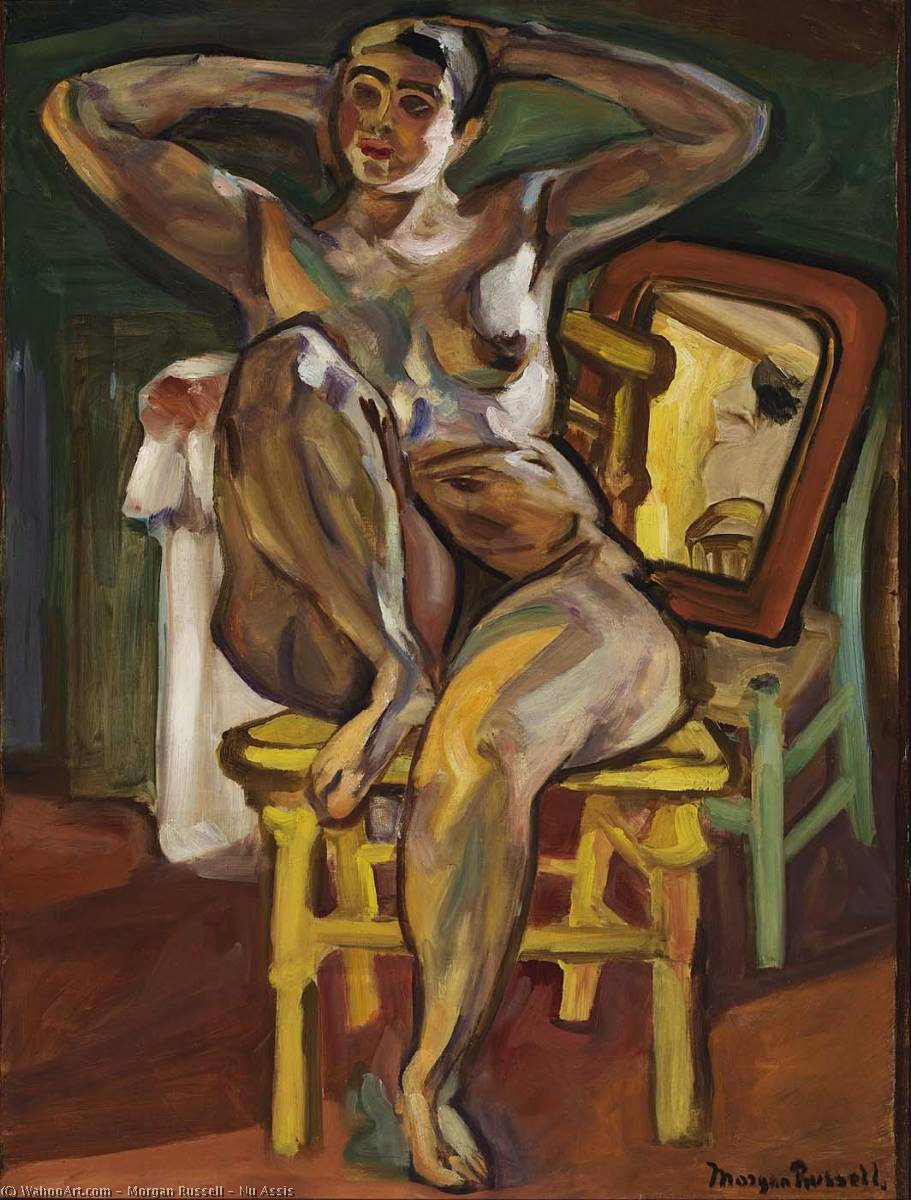
Nu Assis
Tehnik reprodukcije
Velikost reprodukcije
-

Izbor vrhunskih umetnikov
Več podrobnosti, dovršenosti in dodatnega časa za izdelavo
-

Okvir za reprodukcijo
-
-
Za umetniška dela ali reprodukcije, ki so po katerikoli strani širše od 105 cm (približno 41 palč), bo okvir poslan v razstavljeni obliki kot komplet. Ta metoda zagotavlja varno dostavo in preprečuje poškodbe med transportom.
Potrebna je profesionalna montaža – to ni izdelek za DIY izdelavo.
Komplet mora sestaviti in platno napeti izkušen profesionalni okvirjest, pri čemer bo uporabil lepil za les (ni vključeno), klešče za napetje platna in spone, da bi ohranil pravokotnost letev med sušenjem lepila. Nepravilna montaža ali neenakomerna napetost platna lahko trajno poškoduje umetniško del in
 Za umetniška dela ali reprodukcije, ki so po katerikoli strani širše od 105 cm (približno 41 palč), bo okvir poslan v razstavljeni obliki kot komplet. Ta metoda zagotavlja varno dostavo in preprečuje poškodbe med transportom.
Vključene so vse letve iz masivnega lesa, natančno izrezane po meri.
Montaža poteka s priloženimi vijaki, vendar je za kotiče potrebna lepil za les, ki ga ni v kompletu in ga mora zagotoviti vaš okvirnik.
Za uporabo so potrebna profesionalna orodja, ki niso vključena: klešče za napinjanje platna (napetnik) in sponke za ohranjanje pravokotnosti letev med sušenjem lepila.
Pomembno:
Za stike v kotih potrebujete lepil za les, nosilce je treba z

Značka z imenom
-
-

Zaščitni lak
Sijajni lak (poudarja barve ter zagotavlja zaščito pred svetlobo in vlago)
-

Prilagodi svoje umetniško delo
Primeri možnih prilagoditev: zamenjava obraza s fotografijo kupca; dodajanje hišnega ljubljenčka (npr. zamenjava mačke s psom); vključitev skritega sporočila v ozadje; sprememba krajšave ali elementov ozadja.
-

Hitra dostava
Mednarodna dostava () v 3/4 tednih namesto običajnih 5 tednov. (14 november). Brez kompromisov pri kakovosti.
-
Hitra dostava
Globalna dostava () v 5 tednih. (21 november).
Vključeno v ceno
Skupna cena
€ 267
Možnost stekla je na voljo le za velikosti pod 110 cm
Vključeno v vsako naročilo
- Brezplačna ekspresna dostava po vsem svetu
- Visokokakovostno laneno platno
- Popolno zavarovanje pošiljke
- Garancija povračila carine in uvoznih davkov
- Garancija popolnega barvnega ujemanja
- 100-dnevna politika vračil (le v primeru okvar)
- Garancija 100% povračila denarja
- Popust pri večjem naročilu


 Predogled v realnem okolju
 Pošlji
 Deli
Deli
 Podrobnosti o delu
 Priročnik

 Prenesi sliko
 Podobni izdelki
 Rentgenski posnetek
 Predvajaj diaporama
 Vprašanja in odgovori
 Statistika
V številkah
- 1925leto risevanja
- 29izbira okvirjev
- standardne velikosti, v svojih lastnih proporcijah
- 5teden dni za slikanje in dostavo
O originalnem delu

- 73.0 x 55.0 cm


Morgan Russell
1886 - 1953, United States
Kratek pregled o Morgan Russell
- Full Name: Morgan Russell
- Nationality: American
- Date Of Birth: 1886
- Date Of Death: 1953
- Place Of Birth: New York City
- Notable Artworks:
- Untitled
- Nu Assis
- Artistic Movement Or Style: Synchromism
- Artists Who Influenced This Artist:
- Percyval Tudor-Hart
- Stanton Macdonald-Wright
- Artists Or Movements Influenced By This Artist: ['Cubism']
Biografija umetnika
The Architect of Color: The Life and Legacy of Morgan Russell
Born into the vibrant, burgeoning energy of New York City on January 25, 1886, Morgan Russell emerged as a transformative force in the landscape of American Modernism. His journey was never merely about the application of pigment to canvas, but rather an architectural pursuit of light and form. Before he became a master of abstract color, Russell’s early inclinations leaned toward the structural precision of architecture and the tactile depth of sculpture. Studying at the Art Students League under the guidance of figures like Arthur Lee and James Earle Fraser, he developed a profound sensitivity to materiality and volume. This sculptural foundation would later become the secret engine behind his most famous innovation, allowing him to treat color not as a surface decoration, but as a structural element capable of creating depth and movement within a two-dimensional plane.
The trajectory of Russell’s career was irrevocably altered by his encounters with the European avant-garde. Supported by the visionary patronage of Gertrude Vanderbilt Whitney, Russell traveled to Paris and Rome, immersing himself in the very heart of the modern revolution. In the legendary salons of Gertrude Stein, he moved among the giants of the era—Picasso, Rodini, and Matisse. These encounters were more than mere social engagements; they were intellectual crucibles. While absorbing the rhythmic fragmentation of Cubism and the emotive power of Fauvism, Russell began to seek a way to synthesize these disparate influences into a uniquely American voice. His time in Paris allowed him to witness the birth of new visual languages, yet he remained driven by a desire to find a method where color could function with the same harmonic complexity as a musical symphony.
The Birth of Synchromism and the Symphony of Sight
In 1912, alongside his collaborator Stanton Macdonald-Wright, Russell co-founded Synchromism, one of the first truly abstract movements in American art. The name itself—derived from the Greek for "with color"—encapsulated their radical mission: to orchestrate colors in a way that mimicked the temporal and emotional progression of music. This was not merely an aesthetic choice but a philosophical rebellion against the stagnant traditions of academic realism. Russell’s "synchromies" sought to move beyond representation, using rhythmic arrangements of hues to evoke sensation and structure. He believed that just as a composer arranges notes to create tension and resolution, a painter could use color temperature and saturation to direct the eye and build a sense of sculptural weight.
The technical brilliance of Russell’s work lies in this very intersection of color and construction. His paintings often possess an unexpected muscularity; even in his most abstract compositions, one can sense the influence of his early sculptural training. He utilized contrasting color relationships to create "optical" forms that seem to push forward or recede into space, effectively painting with light. This approach challenged the viewer to experience art as a dynamic, living entity rather than a static image. Through Synchromism, Russell and Macdonald-Wright provided an essential bridge between European experimentation and the development of a distinct American modernism, proving that abstraction could be both intellectually rigorous and viscerally powerful.
A Lasting Impression on Modernist History
Though the height of the Synchromist movement flourished in the 1910s and 1920s, Morgan Russell’s impact resonated far beyond this period. His ability to marry the structural logic of architecture with the fluid emotion of color helped pave the way for subsequent generations of abstract painters. He remained a pivotal figure in the evolution of modern art, constantly refining his understanding of how visual elements interact to create meaning. His legacy is defined by several key contributions:
- The Innovation of Color Theory: He pioneered the idea that color could serve as a primary structural tool, independent of representational subject matter.
- Cross-Disciplinary Synthesis: By blending sculptural form, architectural logic, and musical rhythm, he expanded the boundaries of what a painting could achieve.
- Founding American Abstraction: As a co-founder of Synchromism, he helped establish an early foothold for abstract expression in the United States, moving the center of gravity away from purely European traditions.
- Intellectual Rigor: His work bridged the gap between the visceral experience of art and the complex philosophical inquiries regarding perception and space.
Today, when we look at the works of Morgan Russell, we see more than just beautiful arrangements of pigment; we see the blueprints of a revolution. He remains a testament to the power of the avant-garde spirit—a man who looked at the world not as a collection of objects to be copied, but as a symphony of light and form waiting to be conducted.
Sorodni članki

Amedeo Modigliani: 25 Mojstrovinskih Del za Vaš Dom | OriginalUniqueArt
Odkrijte 25 mojstrovinskih del Amedea Modiglianija! Portreti, nude, in ikonične slike tega italijanskega slikarja. Navdih za vaš dom z reprodukcijami vrhunske kakovosti na OriginalUniqueArt.com.

Masterpieces of Motion: The Top 25 Artworks by Sir Alfred James Munnings
Experience the vibrant spirit of British equestrian art through the top 25 masterpieces by Sir Alfred James Munnings. From impressionistic landscapes to iconic horse portraits, explore timeless stories and museum-quality reproductions for your decor. Discover all masterpieces on OriginalUniqueArt.com.

25 Masterpieces by Amedeo Modigliani: The Soul of Modern Portraiture
Explore 25 iconic Modigliani masterpieces and their soulful stories. Discover the full collection online at OriginalUniqueArt.com.

Masterpieces of Motion: The Top 25 Artworks by Sir Alfred James Munnings
Immerse yourself in the vibrant world of Sir Alfred James Munnings. Explore 25 iconic equestrian masterpieces capturing the soul of the British countryside through impressionistic light and motion. Find museum-quality reproductions for your decor. Discover all masterpieces on OriginalUniqueArt.com.