
 Predogled
 Pošlji
 Deli
Deli
 Podrobnosti o delu

 Prenesi
 Podobni izdelki
 Rentgenski posnetek
 Predvajaj diaporama
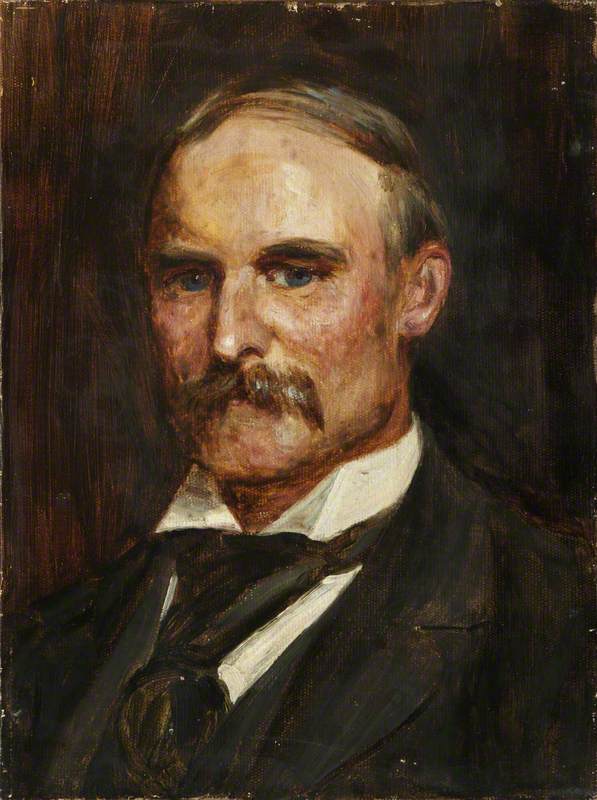
George Wood
 1905
1905 33.0 x 23.0 cm
 Pembroke College
 Razviljaj več
Giclée tisk / Umetniški tisk
Giclée ali platnati odtis muzejske kakovosti z hitro proizvodnjo in prilagodljivimi možnostmi končne obdelave. ( Kupi ročno naslikano sliko Kupi digitalno sliko)




































Izberite eno od naših vnaprej določenih velikosti, ki ustrezajo prvotnim proporcijam umetničkega dela.

Svoje dimenzije lahko vnesete sami, da bodo ustrezne za določen okvir ali prostor. Če izbrana velikost ne bo skladna z razmerji izvirne slike, bomo umetniško delo orezali ali podaljšali s pomočjo ogledalnega odraza ali barvno polnega roba. Pred začetkom proizvodnje vam bomo poslali digitalni predogled za potrditev.
Upoštevajte, da predogled na zaslonu ne prikazuje dejanskega orezovanja ali podaljševanja. Le digitalni predogled bo natančno prikazal končno kompozicijo.
Čeprav so na voljo prilagojene velikosti, priporočamo izbiro dimenzije s predhodno določenega seznama, da ohranite prvotna razmerja.
Globalna dostava () v 2 tednih namesto standardnih 4/5 tednov. (26 avgust)

Brezplačna ekspresna dostava po vsem svetu

Visokokakovostno laneno platno

Popolno zavarovanje pošiljke

Garancija povračila carine in uvoznih davkov

Garancija popolnega ujemanja barv

60-dnevna politika vračanja (le v primeru napak)

Garancija 100% povračila denarja

Popust pri večjem naročilu
 Možnost stekla je na voljo le za velikosti pod 110 cm

George Wood
Giclée tisk / Umetniški tisk
Velikost reprodukcije
-


Skupna končna cena
$ 80
Biografija umetnika
Marmaduke C. William Flower: A Yorkshire Visionary
Marmaduke C. William Flower (c. 1849 – 1910) stands as a singular figure in the annals of Victorian portraiture, an artist whose meticulous observation and masterful technique captured not merely likenesses but also the very essence of his subjects. Primarily focused on the prominent figures of Yorkshire society, Flower possessed a rare ability to translate the dignity of the era onto canvas. Born into a noble lineage, his upbringing instilled within him a profound appreciation for detail and precision—qualities that would become the indelible hallmarks of his artistic endeavors. While biographical records remain somewhat sparse, scholarly research suggests he honed his skills initially in Newcastle upon Tyne before establishing himself as a resident artist in York, where he cultivated lasting connections with the city's intellectual and academic elite.
The breadth of Flower’s work is perhaps best understood through his intimate connection to the academic and industrial leaders of his time. His portfolio serves as a visual record of Victorian progress, featuring portraits of influential figures such as Professor John James Hummel, the first Professor of Dyeing at Yorkshire College, and Obadiah Nussey, a pivotal chairman in the textile industries. Through these commissions, Flower did more than paint faces; he documented the architects of Northern England's industrial and educational landscape. His approach was deeply influenced by a burgeoning fascination with scientific observation and anatomy. Unlike many contemporaries who sought to present an idealized or softened version of beauty, Flower relentlessly pursued anatomical accuracy, painstakingly reconstructing facial features to achieve an unparalleled realism that reflected his deep intellectual curiosity about the human form.
Technique, Style, and the Art of Realism
Flower’s artistic style was profoundly shaped by the prevailing trends of the late 19th century, yet he possessed a distinctive vision that transcended mere imitation. His canvases are celebrated for their subtle gradations of tone and rich textures, achieved through a painstaking layering of oil paints. This meticulous technique allowed him to convey not only the surface appearance of his subjects but also the underlying musculature and bone structure, lending his portraits a lifelike, sculptural quality. This dedication to precision extended beyond the human face into his broader artistic output.
In addition to his celebrated portraiture, Flower demonstrated a profound sensitivity to the natural world through his landscape paintings. His work in this genre mirrored the same meticulous attention to detail found in his portraits, capturing the rugged beauty of the Yorkshire countryside with an observant eye. This duality in his work—the ability to navigate both the structured, formal world of the academic portrait and the organic, sprawling essence of the English landscape—highlights his versatility as a painter. His legacy remains that of a master observer, an artist who used the medium of oil to bridge the gap between scientific accuracy and emotional resonance.
Key aspects of his artistic contribution include:
- Anatomical Precision: A commitment to capturing the true physical structure of his subjects through rigorous observation.
- Social Documentation: Providing a vital historical record of Yorkshire's intellectual, academic, and industrial leaders.
- Mastery of Oil Technique: Utilizing complex layering to create depth, texture, and realistic light effects.
- Landscape Sensitivity: Translating the character of the Yorkshire terrain with the same care applied to his human subjects.

marmaduke c william flower
1849 - 1910
Hitri podatki
- Artistic Movement Or Style: Victorian Portraiture
- Artists Or Movements Influenced By This Artist: ['Romanticism']
- Artists Who Influenced This Artist: ['Sir Thomas Lawrence']
- Date Of Death: 1910
- Full Name: Marmaduke C. William Flower
- Nationality: British
- Notable Artworks: ['Mayor John Atkinson Grimshaw']
- Place Of Birth: Yorkshire

