Color Field
Horizontal Vision (Mark Rothko)
Mark Rothko (1903–1970) je izdelal Horizontal Vision. Spada v smer Color Field. Izdelano je iz Oil On Canvas.
- Oil On Canvas

 Predogled v realnem okolju

 Ročno izdelano oljno slikarstvo
 Pošlji
 Deli
 Informacijski list


 Prenesi sliko
 Podobni izdelki
 Rentgenski posnetek
 Predvajaj diaporama
 Vprašanja in odgovori

 Statistika
Horizontal Vision, na kratek
- Naslov
- Horizontal Vision
- Avtor
- Mark Rothko (1903–1970)
- Umetnik, rojen v
- Daugavpils, Latvija
- Tehnika
- Oil On Canvas
- Gibanje
- Color Field
- Obdobje
- Modern
- Tema
- color blocks, geometric shapes, red hue, minimalism, emotional resonance, bowl composition
Kaj prikazuje Horizontal Vision?
A Symphony of Crimson and Light
To stand before Mark Rothko’s “Horizontal Vision” is to step away from the clamor of the physical world and enter a sanctuary of pure, unadulterated emotion. Painted in 1946, this masterpiece serves as a profound cornerstone of the Abstract Expressionist movement, a period when artists sought to strip away the superficiality of representation to uncover the raw essence of the human condition. The canvas does not present a landscape or a figure; instead, it offers a meditative expanse where color itself becomes the protagonist. Through its layered, luminous rectangles, the work invites a silent dialogue between the viewer and the infinite, making it an unparalleled centerpiece for any collection dedicated to contemplative beauty.
The composition is deceptively simple, yet its complexity lies in the subtle vibrations of its palette. Rothko utilizes a mesmerizing arrangement of horizontal bands—deep crimsons, warm oranges, and muted yellows—that seem to float upon one another. There are no hard edges here; rather, the boundaries between colors are soft and atmospheric, achieved through his signature technique of “gypsy staining.” By applying thin, translucent washes of pigment, Rothko allowed each layer to bleed into the next, creating a sense of breathing depth. This meticulous layering produces a hazy, ethereal glow, as if the light is emanating from within the canvas itself rather than reflecting off its surface.
The Architecture of Emotion and Spirit
Beyond its visual splendor, “Horizontal Vision” is steeped in the spiritual and historical tensions of the post-World War II era. Emerging from a period of global trauma, Rothko sought to bypass the rational mind and speak directly to the primal soul. Influenced by the meditative stillness of Zen Buddhism, his work functions as a visual prayer. The tension between the warm, advancing reds and the receding shadows creates a rhythmic pulse, a visual heartbeat that draws the eye into a state of deep reflection. For the collector or interior designer, this painting offers more than mere decoration; it provides an emotional anchor, a way to infuse a space with a sense of profound stillness and intellectual weight.
For those seeking to integrate such a powerful work into a modern environment, a high-quality reproduction allows the transformative power of Rothko’s vision to become a permanent fixture of the home. Whether placed in a minimalist gallery-style living room or a quiet study, the painting acts as a window into an internal landscape. It challenges the viewer to look past the surface and find meaning in the absence of form, proving that even in the lack of recognizable imagery, there is a wealth of narrative, history, and soul to be discovered.
Visokoresolucijske slike dela Horizontal Vision
Zaščitovano z avtorskimi pravicami: ti datoteke so namenjene osebni referenci, ne paovojilu za ponovno objavo.
Mark Rothko, Horizontal Vision.
Odgovori na vprašanja o Horizontal Vision
S katero tehniko je bila izdelana skladba "Horizontal Vision" avtorja Mark Rothko?
Mark Rothko je za delo "Horizontal Vision" uporabil/a tehniko Oil On Canvas. Ta tehnika opredeljuje materialno naravo izvirnega dela.
Kaj prikazuje "Horizontal Vision" avtorja Mark Rothko?
"Horizontal Vision" avtorja Mark Rothko prikazuje: color blocks, geometric shapes, red hue, minimalism, emotional resonance, bowl composition, rothko style.
Ali je "Horizontal Vision" v javni domeni?
Status avtorskih pravic za "Horizontal Vision" avtorja Mark Rothko: del je še vedno pod avtorsko zaščito. To določa, ali se lahko reprodukcije slike izdelujejo prosto.
Kateremu umetniku je "Horizontal Vision" pripisano?
"Horizontal Vision" pripisujemo Mark Rothko.
V kateri umetniški smer pripadajo "Horizontal Vision" avtorja Mark Rothko?
Umetnostni smer, ki jo zastopa "Horizontal Vision" avtorja Mark Rothko, je Color Field. Ta klasifikacija delo uvršča med sorodne umetnike in umetniška dela.
V katero obdobje umetnostnega razvoja Mark Rothko pripada delo "Horizontal Vision"?
"Horizontal Vision" predstavlja Mature umetnika Mark Rothko.
Zakaj je status avtorske pravice za "Horizontal Vision" prav takšen, kot je?
"Horizontal Vision" avtorja Mark Rothko je še vedno pod avtorsko zaščito. Avtorske pravice se izračunajo od smrti umetnika, ki je umrl leta 1970.
Kaj ima "Horizontal Vision" skupnega z ostalo celotno tvorbino umetnika Mark Rothko?
V celotnem delu umetnika Mark Rothko se delo "Horizontal Vision" prikloni slogu Color Field, ki vključuje tematiko color field expression, existential minimalism, emotional depth exploration, rothko’s formal legacy, central composition motif.
Ali je "Horizontal Vision" tipično za dela, ki jih je Mark Rothko običajno ustvarjal?
"Horizontal Vision" prikazuje color blocks, geometric shapes, red hue, minimalism, emotional resonance, bowl composition, rothko style, medtem ko so v color field expression, existential minimalism, emotional depth exploration, rothko’s formal legacy, central composition motif zabeležene teme umetnika Mark Rothko. Primerjava obeh razkriva, kako se to delo povezuje z običajnimi motivi umetnika.
O umetniku, Mark Rothko

1903–1970, Latvija
Mark Rothko
Mark Rothko: Barva, Čustvo in Iskanje Duše Mark Rothko, rojen kot Markus Yakovlevič Rotkovič v Daugavpilsu, Latviji, leta 1903, je bil slikar, katerega življenje in delo sta globoko prepleteni z iskanjem smisla, čustvene izraznosti in duhovne transcendence. Že zgodnja leta so bila zaznamovana s negotovostjo in strahovi, ki so jih prinašali antisemitizem in politična nestabilnost v njegovem rodu. Emigracija v Portland, Oregon, leta 1913 je predstavljala kulturni šok, a hkrati tudi začetek potovanja, ki ga je vodilo k umetnosti kot sredstvu za raziskovanje človeške duše. Čeprav je študiral na Yaleu, se je Rothko kmalu odločil slediti svoji strasti in se preselil v New York, kjer je obiskoval Art Students League.
Tudi dela avtorja Mark Rothko
 Bel Center1950
 No.1 (Royal Red and Blue)
 Št. 61 (Rjava in modra)1953
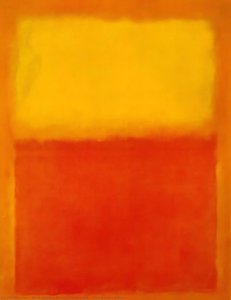 Orangeja in rumena1956
Eseji o delu Horizontal Vision
 The Architecture of Emotion: A Connoisseur’s Guide to the Chromatic Sublimity of Mark RothkoExplore the profound emotional landscapes of Mark Rothko. An expert editorial on Color Field painting, decoding the spiritual depth, techni…
 Beyond the Canvas: A Definitive Guide to Abstract Expressionism, Action Painting, and Color Field MastersExplore the profound history of Abstract Expressionism, from the visceral energy of Action Painting to the serene depth of Color Field mast…
 Color & Emotion: The Top 25 Masterpieces by Mark RothkoImmerse yourself in the profound emotion of Mark Rothko's greatest works. Explore 25 iconic Abstract Expressionist masterpieces, from color…