
 Predogled v realnem okolju
 Pošlji
 Deli
Deli
 Podrobnosti o delu
 Priročnik

 Prenesi sliko
 Podobni izdelki
 Rentgenski posnetek
 Predvajaj diaporama
 Vprašanja in odgovori
 Statistika
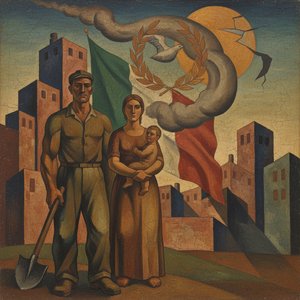
Il lavoratore

- 202.0 x 325.0 cm


 Preberi več
Umetniška dela, prikazana na tej strani, so zaščitena z avtorskimi pravicami, kar pomeni, da po zakonu ne moremo ustvarjati ali prodajati identičnih reprodukcij. Ta zaščita se izvaja v skladu z mednarodnimi sporazumi, kot so Bernska konvencija in po nacionalnih zakonih, vključno s tistimi, ki jih določa Zakon o avtorskih pravicah ZDA – naslov 17.
Ta način v celoti upošteva zakonodajo o avtorskih pravicah, saj ne vključuje kopiranja ali podvajanja zaščitenga umetniškega dela. Namesto tega gre za kreativno preinterpretacijo – novo sliko, ki je navdihnjen rezultat originala, vendar ni z njim identična.
Giclée tisk / Umetniški tisk
Giclée ali platnati odtis muzejske kakovosti z hitro proizvodnjo in prilagodljivimi možnostmi končne obdelave. ( Kupite ročno slikano delo Preklop na digitalno sliko)




P118B €10

P118H €10

P118W €10

P438Z €10

P508JH €12

P508YH €12

P805H €10

P805Z €10

P919BZ €10

P919G €10

P919XJ €10

P959ZH €10

P968JZ €12

W106C €8

W218G €10

W218JH €8

W218Y €10

W307PJ €10

W316G €10

W316PJ €8

W316Y €10

W398PJ €8

W4111J €10

W500HY €15

W500JH €15

W692G €12

W849H €8

W940BG €15

W953PJ €8




Izberite eno od naših vnaprej določenih velikosti, ki ustrezajo prvotnim proporcijam umetničkega dela.

Vnesite širino in višino, ki jih potrebujete za svoj okvir ali steno. Tiskanje se lahko le odreže, vendar ga ni mogoče narediti večjega od slike, zato format z drugačno obliko pomeni izgubo dela slike. Pred tiskanjem vam pošljemo digitalni predogled za potrditev. Slika, prikazana na tej strani, ne prikazuje dejanskega izrezka — le predogled to omogoča.
Globalna dostava () v 2 tednih namesto standardnih 4/5 tednov. (4 november)

Brezplačna ekspresna dostava po vsem svetu

Visokokakovostno laneno platno

Popolno zavarovanje pošiljke

Garancija povračila carine in uvoznih davkov

Garancija popolnega barvnega ujemanja

100-dnevna politika vračil (le v primeru okvar)

Garancija 100% povračila denarja

Popust pri večjem naročilu
 Možnost stekla je na voljo le za velikosti pod 110 cm

Il lavoratore
Giclée tisk / Umetniški tisk
Velikost reprodukcije
-


Skupna cena
€ 72
A Monumental Vision of Labor and Solitude
In the profound depths of Mario Sironi’s Il Lavoratore, we encounter more than a mere preparatory study; we witness a monumental dialogue between the individual and the weight of history. Created as a preparatory cartoon for the massive mosaic commissioned for the 1936 Milan Triennial, this work serves as a powerful window into the socio-political soul of Fascist Italy. Yet, beneath the surface-level nod to Mussolini’s vision of a disciplined, industrious citizenry, lies a much more intimate and haunting exploration of the human condition. The painting captures a solitary figure, rendered with a gravity that transcends its original political intent, embodying a sense of profound isolation and the quiet, enduring struggle for meaning amidst the relentless march of industrial progress.
The composition is masterfully structured to command the viewer's attention, utilizing a verticality that emphasizes the weight of the subject. A single figure dominates the space, positioned in a posture that oscillates between humble submission and defiant endurance. Through Sironi’s lens, the act of labor is stripped of its romanticized glory and instead presented as an existential state—a moment of stillness within a world of shifting shadows. For the discerning collector or interior designer, this piece offers a commanding presence, bringing a sense of historical weight and intellectual depth to any curated space.
The Alchemy of Shadow and Form
Technically, Il Lavoratore is a triumph of early Modernist expression, showcasing Sironi’s departure from the luminous, fragmented light of his Divisionist roots toward something far more substantial and somber. The artist employs a palette dominated by earthy ochres, deep blacks, and rich golds, creating a chiaroscuro effect that breathes life into the geometric forms. There is a palpable sense of impasto here; the visible, thick brushstrokes suggest a tactile reality, as if the paint itself were labored over with the same intensity as the subject it depicts.
The style leans heavily into the metaphysical and the expressionistic, where shapes are simplified into powerful, architectural blocks. The lines defining the figure and the surrounding environment are not sharp or clinical but possess a smoky, blurred quality that contributes to a claustrophobic, almost dreamlike atmosphere. This lack of traditional linear perspective flattens the space, forcing the viewer to confront the emotional volume of the figure rather than getting lost in a receding landscape. The interplay of light, appearing to descend from above, casts dramatic shadows that carve out the musculature and the heavy folds of the composition, lending the work an almost sculptural permanence.
Symbolism and the Emotional Resonance
To gaze upon Il Lavoratore is to engage with a complex tapestry of symbolism. The outstretched arms of the figure can be interpreted as a gesture of both vulnerability and strength—a reaching out toward a connection that remains perpetually out of grasp. Sironi, influenced by the psychological depth of Giorgio de Chirico, uses these massive, immobile forms to evoke a sense of timelessness and melancholy. The geometric rigidity of the background elements contrasts sharply with the organic, albeit stylized, form of the human body, mirroring the tension between the individual spirit and the cold, industrial structures of modern society.
For those seeking to incorporate art into a sophisticated interior, this reproduction offers an unparalleled emotional impact. It is a piece that invites contemplation, acting as a focal point that stimulates conversation about identity, resilience, and the passage of time. Whether placed in a quiet study or a grand gallery, Il Lavoratore radiates a somber elegance, making it an exquisite choice for those who appreciate art that speaks to the complexities of the human experience through a lens of monumental beauty.
Vprašanja in odgovori
Katera so priporočena prostora za izpostavo dela "Il lavoratore", glede na njegovo barvno paleto?
Z raznobojno paleto Earthy je delo "Il lavoratore" avtorja Mario Sironi priporočljivo za Living Room, pri čemer so ključni vlož v ta predlog prav barvne tonine.
Kje lahko kupim ročno slikano reprodukcijo dela "Il lavoratore" avtorja Mario Sironi?
"Il lavoratore" je na voljo kot ročno slikana oljna reprodukcija na lnenem platnu. Naročilo lahko oddate na njegovi strani Ročno slikana reprodukcija, kjer lahko izbirate med različnimi velikostmi.
Ali je "Il lavoratore" v javni domeni?
V zvezi z avtorskimi pravicami je "Il lavoratore" v še vedno pod avtorsko zaščito.
Biografija umetnika
Življenje in izobraževanje Maria Sironija
Mario Sironi se je rodil 12. maja 1885 v Sassariju na Sardiniji, Italija. Njegov oče je bil inženir, mati pa je imela umetniško družino; njegov ded po materini strani, Ignazio Villa, je bil cenjen arhitekt in kipar, kar mu je omogočilo zgodnji stik z umetnostjo. Sprva se je v Rimu posvetil študiju inženirstva, a ga je leta 1903 opustil po živčnem zlomu. Ta trenutek je predstavljal prelomnico v njegovem življenju in usmeritev k slikarstvu. Formalno umetniško izobraževanje je začel na Scuola Libera del Nudo pri Accademia di Belle Arti di Roma, kjer je spoznal svojega prvega pomembnega učitelja, Giacoma Ballo.Umetniški razvoj in vplivi
Njegova zgodnja dela so bila močno pod vplivom divizionizma, tehnike, ki poudarja ločene barve za ustvarjanje svetlobe – to se odraža v delih kot je “Študent”. Kratek čas je eksperimentiral s futurizmom okoli leta 1914 in razstavljal v Galleria Sprovieri v Rimu. Vendar pa se je hitro oddaljil od njegove osredotočenosti na hitrost in dinamiko. Ključni prelom je nastal po prvi svetovni vojni, ko je razvil slog, za katerega so značilne masivne, negibljive oblike in geometrijske figure. Na to so vplivale izkušnje med vojno in naraščajoče občutje osamljenosti. Pomembni vplivi so bili Giacomo Balla (zgodnje usmerjanje), Giorgio de Chirico & Carlo Carrà (vpliv metafizičnega slikarstva na obliko) ter elementi neoklasicizma in primitivističnega klasicizma.Novecento Italiano in zrel slog
Leta 1922 je Sironi postal eden od ustanovnih članov gibanja Novecento Italiano – vrnitve k redu v povojnem evropskem slikarstvu, ki poudarja jasnost in tradicijo. Njegov zreli slog se odlikuje z:- Poudarkom na geometrijskih oblikah in poenostavljenih formah.
- Namenoma okornim estetskim izrazom v poznejših delih.
- Temami osamljenosti, odtujenosti in človekovega obstoja.
- Raziskovanjem industrijskih pokrajin in življenja delavskega razreda.
Politične povezave in poznejše življenje
Sironi je bil privrženec Benita Mussolinija in je prispeval obsežno v fašistične publikacije z več kot 1700 risbami. Verjel je v integracijo umetnosti in arhitekture, prizadeval se je za ustvarjanje monumentalnih del za javne prostore – kar odraža ideale fašističnega režima. Po drugi svetovni vojni so njegove povezave s fašizmom povzročile upad priljubljenosti in kritične pohvale. Večinoma se je umaknil iz javnega življenja in do smrti ustvarjal v relativni osami.Pomembni dosežki in zgodovinski pomen
Sironijevo delo predstavlja pomemben prispevek k italijanskemu modernizmu, ki premosti vrzel med futurizmom in kasnejšimi umetnostnimi smernicami. Njegovo raziskovanje tem kot sta osamljenost in odtujenost je odmevalo z anksioznostjo 20. stoletja. Kljub kontroverzam glede njegovih političnih povezav so bila njegova dela predstavljena na pomembnih mednarodnih razstavah, vključno s Centre Georges Pompidou (1981) in Royal Academy, London (1989). Umrl je 13. avgusta 1961 v Milanu. Njegova zapuščina leži v njegovi edinstveni stilski sintezi in močnih prikazih človekovega obstoja v hitro spreminjajočem se svetu.
Mario Sironi
1885 - 1961 , Italija
Hitri podatki
- Datum Rojstva: 12. maj 1885
- Datum Smrti: 13. avgust 1961
- Državljanstvo: Italijan
- Kraj Rojstva: Sassari, Italija
- Polno Ime: Mario Sironi
- Pomembna Dela:
- La Lampada (1919)
- Venere (1921-1923)
- Solitudine (1925)
- Umetniški Smer: Modernizem, Novecento Italiano
- Vplivi Umetnikov:
- Giacomo Balla
- Giorgio de Chirico
Sorodni članki

Beyond Branding: Leveraging Art for Strategic Corporate Relationships & Stakeholder Engagement
Elevate corporate relationships with strategic art gifting. Discover how personalized artwork builds brand loyalty, fosters stakeholder engagement & delivers measurable ROI. Expert guidance and seamless procurement.
Mario Sironi: A Poetic of Modern Italian Identity Through Symbolism & Social Commentary
Explore the profound works of Mario Sironi, a key figure in Italian Modernism. Discover his evolution from Futurism to Metaphysical painting and his powerful social commentary. Learn about his legacy at OriginalUniqueArt.

Elevating Corporate Events Through Artful Gifting: A Concierge Service for Personalized Artwork Selection and Delivery
Elevate your corporate events with personalized artwork! Our art concierge service offers curated collections & bespoke commissions for lasting impressions. Expert guidance, secure delivery & legal compliance guaranteed.

Beyond Swag: Why Personalized Art is the Ultimate High-Impact Corporate Gift
Discover why personalized fine art is the ultimate high-impact corporate gift. Move beyond commodity swag to cultivate lasting prestige and brand loyalty through bespoke, hand-painted masterpieces designed for executives and discerning clients.

Umetnost kot izraz hvaležnosti: Personalizirana darila za trajno spoznavanje in krepitev odnosov v korporativnem okolju
Odkrijte moč personaliziranih poslovnih daril za gradnjo trdnih odnosov! Kvalitetna, unikatna in trajnostna darila z izrazom hvaležnosti. Strokovne nasvete in ideje za vsako priložnost.
