

 Preverite v realnem okolju
 Pošlji kot čestitko
 Deli
Deli
 Podrobnosti
 Priročnik

 Prenesi
 Podobni artefakti
 Rentgenski posnetek
 Predvajaj diaporama
 Statistika
Print sample
 Acrylic On Canvas
- WallArt
- Fortuny Aesthetic
 1907
1907- 19th Century
 49.0 x 34.0 cm
 Palazzo Fortuny
 Preberi več
Ročno izdelana oljna reprodukcija
Ročno slikano olje na platnu v vaši izbiri velikosti in okvirja, izdelano po naročilu naših umetnikov. ( Preklop na tiskanine Preklop na digitalno sliko)




P118B €10

P118H €10

P118W €10

P438Z €10

P508JH €12

P508YH €12

P805H €10

P805Z €10

P919BZ €10

P919G €10

P919XJ €10

P959ZH €10

P968JZ €12

W106C €8

W218G €10

W218JH €8

W218Y €10

W307PJ €10

W316G €10

W316PJ €8

W316Y €10

W398PJ €8

W4111J €10

W500HY €15

W500JH €15

W692G €12

W849H €8

W940BG €15

W953PJ €8




Izberite eno od naših vnaprej določenih velikosti, ki ustrezajo prvotnim proporcijam umetničkega dela.

Vnesite širino in višino, ki jih potrebujete, da se slika prilega vašemu okviru ali steni. Ker je delo ročno slikano, lahko umetnik pri različnih oblikih slik pri robovih doda malo več barve ali pa jih malo odreže — izberite sami. Pred začetkom slikanja vam pošljemo digitalni predogled za potrditev. Slika, prikazana na tej strani, ni končni rezultat — le predogled prikazuje dejansko podobo.
Po oddaji naročila bo ekipa OriginalUniqueArt.com stranki po e-pošti poslala navodila in predogled digitalnega predogleda.
Mednarodna dostava () v 3/4 tednih namesto običajnih 5 tednov. (22 oktober). Brez kompromisov pri kakovosti.

Brezplačna ekspresna dostava po vsem svetu

Visokokakovostno laneno platno

Popolno zavarovanje pošiljke

Garancija povračila carine in uvoznih davkov

Garancija popolnega barvnega ujemanja

Politika vračila v 100 dneh (le v primeru okvar)

Garancija 100% povračila denarja

Popust pri večjem naročilu
 Možnost stekla je na voljo le za velikosti pod 110 cm

Print sample
Tehnika reprodukcije
Velikost reprodukcije
-


Skupna cena
€ 262
A Study in Color and Illusion: Mariano Fortuny’s “Print Sample”
This captivating artwork, titled "Print sample," offers an intimate glimpse into the revolutionary world of Mariano Fortuny – a figure as adept at theatrical innovation as he was at painting. Measuring 49 x 34 cm, this 1907 print embodies Fortuny’s meticulous approach to light and color, a cornerstone of his artistic legacy. The composition itself is deceptively simple: a square canvas dominated by a rich red background, punctuated by four overlapping circles of varying blues. Yet, within this apparent restraint lies a profound exploration of visual perception and the techniques that would define Fortuny's enduring fame.
The Genius of the Fortuny Cyclorama
Mariano Fortuny’s genius wasn’t confined to easel painting; it extended into the realm of theatrical design. Born in Reus, Spain, in 1871, he inherited a passion for art from his father, a genre painter who tragically died when Mariano was just three years old. This early loss propelled the family to Paris, where Mariano’s mother exposed him to the luxurious world of textiles and fabrics – an influence that would profoundly shape his artistic vocabulary. Fortuny's most significant contribution came with the development of the “cyclorama dome,” a semi-hemispherical structure designed to bathe theatrical scenes in indirect light, creating an illusion of vastness and seamlessly blending painted backdrops with the actual stage. This technique, detailed in his treatise "Eclairage Scenique," was born from his meticulous study of reflected light – a concept that he applied equally to his still-life paintings.
Technique and Materiality
Created using print media in 1907, “Print sample” demonstrates Fortuny’s mastery of color mixing and layering. The varying shades of blue within the circles aren't simply painted; they are achieved through a sophisticated understanding of how light interacts with different surfaces – a principle he meticulously documented. The use of multiple layers, characteristic of his technique, creates a shimmering depth that draws the viewer into the artwork. The slight overlap of the circles isn’t merely an aesthetic choice; it's a deliberate manipulation of perspective, echoing Fortuny’s broader interest in creating illusions and challenging traditional notions of representation. The piece speaks to his innovative approach to materials, utilizing print media to achieve effects previously only attainable through oil paint.
Symbolism and Emotional Resonance
"Print sample" can be interpreted as a meditation on the nature of perception itself. Fortuny’s relentless pursuit of creating believable illusions – whether in theatrical settings or paintings – suggests a fascination with the power of the mind to construct reality. The circles, seemingly simple forms, become imbued with a sense of mystery and contemplation. Displayed at the Palazzo Fortuny in Venice, this artwork serves as a tangible link to a visionary artist who fundamentally altered the landscape of both art and theatre. It’s a testament to his dedication to innovation and his profound understanding of how light, color, and form can evoke powerful emotions.
Vprašanja in odgovori
Kako "Print sample" uravновеža svetlo in temno?
"Print sample" ima v celoti brilliant, njegova luminanca pa znaša Luminous.
Kakšen je format dela "Print sample"?
Format dela "Print sample" je Portrait. To je koristno pri načrtovanju postavitve reprodukcije.
V katero umetnostno smernico in v katero dobo je uvrščeno delo "Print sample" avtorja Mariano Fortuny?
V delu "Print sample" avtorja Mariano Fortuny se gibanje Fortuny Aesthetic srečuje z obdobjem Moderna doba.
Biografija umetnika
Zgodnje življenje in navdih
Mariano Fortuny, španski modni oblikovalec, se je rodil 11. maja 1871 v Granadi, Španija. Njegov oče, Mariano Fortuny y Marsal, je bil slikar žanrskih slik, ki je umrl, ko je bil Mariano star komaj tri leta. Ta dogodek je povzročil preselitev družine v Pariz, Francijo, kjer ga je mati seznanila z različnimi tekstilijami in tkaninami, ki so kasneje vplivale na njegovo ustvarjalnost. Že kot otrok je pokazal izjemno nadarjenost za umetnost, saj je bil sposoben slikati, fotografirati, kipariti, načrtovati arhitekturo in oblikovati osvetlitev gledaliških odrov. Njegova zgodnja izpostavljenost različnim umetniškim disciplinam je položila temelje za njegovo kasnejšo multidisciplinarno kariero.Umetniški talenti in inovacije
Mariano Fortuny je že v mladosti pokazal umetniški talent, ki se je odražal v spretnosti slikanja, fotografije, kiparstva, arhitekture, jedkanja in gledališke osvetlitve. Med letoma 1901 in 1934 je patentiral več kot dvajset izumov, ki so revolucionirno spremenili svet gledališke scenografije. Razvil je fortunijev cikloramski kupoli, četrtkrožne strukture iz mavca ali platna, ki so uporabljale posredno osvetlitev za ustvarjanje brezšivnega prehoda med prizori. Njegov traktat "Eclairage scenique" (1904) je opisal njegovo odkritje odbijanja svetlobe od različnih površin in spreminjanja njene barve, intenzitete in lastnosti. Fortunyjeva inovativnost ni bila omejena le na tehnične rešitve; iskal je načine za ustvarjanje atmosfere in iluzije, ki bi gledalca popolnoma potopile v predstavo.Pomembni prispevki in sodelovanja
Mariano Fortuny si je pridobil široko priznanje v dvajsetih letih 20. stoletja. Sodeloval je s pomembnimi osebnostmi, med njimi:- Richard Wagner, nemški skladatelj, katere opere so navdihnile Fortunyja za slikanje prizorov.
- Slavna operna hiša La Scala v Milanu, kjer je namestil svojo kupolo in jo prilagodil večjemu gledališču ter izumil sesalni ventilator za ohranjanje njene napetosti.
Zapuščina in poznejše življenje
Mariano Fortuny je umrl 3. maja 1949 v Benetkah, Italija. Njegovo delo je navdihnilo francoskega romanopisca Marcel Prousta, njegovo življenje pa je upodobljeno v romanu "Fortuny" Pere Gimferrerja. Fortunyjeva zapuščina še danes vpliva na svet gledališke scenografije in modne industrije. Njegova inovativna uporaba tekstilij, osvetlitve in arhitekture je spremenila način, kako doživljamo predstave in oblačila.- Raziščite več o izumih in dizajnu Mariana Fortunyja na zbirki OriginalUniqueArt.
- Odkrijte vpliv njegovega dela na gledališko osvetlitev v Muzeju uničenem z ognjem (Združene države), zgodbi o nesrečnem dogodku, ki je oblikoval ameriško umetniško zgodovino, na voljo na blogu OriginalUniqueArt.
Izbrane slike Mariana Fortunyja in drugih umetnikov
- Mariano Fortuny: Teagown (Muzej lepih umetnosti, Boston, Združene države), na voljo na zbirki OriginalUniqueArt.
- Marc Chagall: Study to 'Song of Songs IV' (Naivna umetnost / Primitivizem), na voljo na zbirki OriginalUniqueArt.
- Pablo Picasso: Clarinet (Analitični kubizem, olje na platnu), na voljo na zbirki OriginalUniqueArt.
- Vincent van Gogh: Tree Roots (50 x 100 cm, Postimpresionizem, olje na platnu), na voljo na zbirki OriginalUniqueArt.

Mariano Fortuny
1871 - 1949 , Španija
Ključne informacije
- Datum Rojstva: 11. maj 1871
- Datum Smrti: 3. maj 1949
- Državljanstvo: Španec
- Kraj Rojstva: Granada, Španija
- Polno Ime: Mariano Fortuny y Marsal
- Pomembna Dela:
- Teagown
- Portret Henriette Fortuny
- Umetniki Pod Vplivom: ['Marcel Proust']
- Umetniški Smer: Orientalizem
- Vplivi Umetnikov: ['Richard Wagner']
Sorodni članki
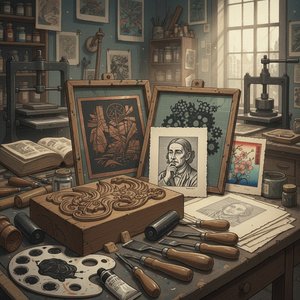
The Enduring Legacy of Printmaking: Techniques, Themes & Artistic Innovation Across Centuries
Explore the rich history of printmaking with OriginalUniqueArt. Discover techniques from intaglio to lithography, learn about collecting valuable prints & find museum-quality reproductions. Expert insights for art enthusiasts and collectors.

Giclée Prints: Archival Quality & Aesthetic Nuances for the Discerning Collector
Explore the world of giclée prints with OriginalUniqueArt. Learn about archival quality, aesthetic nuances & investment potential. Expert guidance for discerning art collectors seeking museum-quality reproductions and lasting value.

The Enduring Legacy of Fine Art Prints: Technique, History & Aesthetic Impact
Explore the rich history & techniques of fine art prints. Discover investment potential, assess authenticity, and learn how to preserve your collection with expert guidance. Trusted insights for discerning collectors.

Mariano Fortuny: A Fusion of Art, Fashion & Design – Exploring a Venetian Innovator's Legacy
Explore the captivating world of Mariano Fortuny – artist, designer & innovator. Discover his revolutionary textiles, iconic Delphos gown, and lasting influence on art, fashion & interiors. A collector's guide to a Venetian master.

Echoes of Time: Exploring the Enduring Appeal & Historical Context of Vintage Art Prints
Explore the captivating world of vintage art prints! Discover their history, collecting tips & enduring appeal. Expert insights on chromolithography and building a legacy collection with OriginalUniqueArt.
