Text size

() ·

A painting made for you, by hand

Chess Game

Ročno izdelana oljna reprodukcija

Ročno slikano olje na platnu v vaši izbiri velikosti in okvirja, izdelano po naročilu naših umetnikov. ( Preklop na tiskanine Preklop na digitalno sliko)

Opis zbirateljskega predmeta

Experience Marcel Duchamp's 'The Chess Game,' a captivating post-impressionist oil painting from 1910. Explore themes of boredom, social constraints & Cubism at OriginalUniqueArt.com.

Biografija umetnika

Marcel Duchamp: revolucionarni umetnik, ki je izzval definicijo umetnosti s Dadaizmom in readymade objekti, kot je 'Fountain'. Raziščite njegove ikonične dela in filozofski vpliv!

from ·

Chapter 1

How large should it be?

Slide to change the size; the picture on the left shows the frame at its real width. The proportions of the original are kept.

Standardna velikost
po meri
CM
INCH

Izberite eno od naših vnaprej določenih velikosti, ki ustrezajo prvotnim proporcijam umetničkega dela.

širina
višina

Vnesite širino in višino, ki jih potrebujete, da se slika prilega vašemu okviru ali steni. Ker je delo ročno slikano, lahko umetnik pri različnih oblikih slik pri robovih doda malo več barve ali pa jih malo odreže — izberite sami. Pred začetkom slikanja vam pošljemo digitalni predogled za potrditev. Slika, prikazana na tej strani, ni končni rezultat — le predogled prikazuje dejansko podobo.

Chapter 2

How should it arrive?

Choose the edges of the stretched canvas

Choose your frame

Corner sample of the WhiteWrap canvas edge finish, stretched on masivno drevo bars
White €1
Corner sample of the BlurSideWrap canvas edge finish, stretched on masivno drevo bars
Blurside €1
Corner sample of the ExtendedWrap canvas edge finish, stretched on masivno drevo bars
Extended €1
Corner sample of the P118B picture frame: izoblit polistiren, 5 cm wide and 3 cm thick
P118B €10
Corner sample of the P118H picture frame: izoblit polistiren, 5 cm wide and 3 cm thick
P118H €10
Corner sample of the P118W picture frame: izoblit polistiren, 5 cm wide and 3 cm thick
P118W €10
Corner sample of the P438Z picture frame: izoblit polistiren, 5.5 cm wide and 3.5 cm thick
P438Z €10
Corner sample of the P508JH picture frame: izoblit polistiren, 7 cm wide and 3.5 cm thick
P508JH €12
Corner sample of the P508YH picture frame: izoblit polistiren, 7 cm wide and 3.5 cm thick
P508YH €12
Corner sample of the P805H picture frame: izoblit polistiren, 5 cm wide and 3.5 cm thick
P805H €10
Corner sample of the P805Z picture frame: izoblit polistiren, 5 cm wide and 3.5 cm thick
P805Z €10
Corner sample of the P919BZ picture frame: izoblit polistiren, 7 cm wide and 3.5 cm thick
P919BZ €10
Corner sample of the P919G picture frame: izoblit polistiren, 7 cm wide and 3.5 cm thick
P919G €10
Corner sample of the P919XJ picture frame: izoblit polistiren, 7 cm wide and 3.5 cm thick
P919XJ €10
Corner sample of the P959ZH picture frame: izoblit polistiren, 5 cm wide and 3 cm thick
P959ZH €10
Corner sample of the P968JZ picture frame: izoblit polistiren, 6 cm wide and 4 cm thick
P968JZ €12
Corner sample of the W106C picture frame: masivno drevo, 5 cm wide and 3 cm thick
W106C €8
Corner sample of the W218G picture frame: masivno drevo, 5 cm wide and 3 cm thick
W218G €10
Corner sample of the W218JH picture frame: masivno drevo, 5 cm wide and 3 cm thick
W218JH €8
Corner sample of the W218Y picture frame: masivno drevo, 5 cm wide and 3 cm thick
W218Y €10
Corner sample of the W307PJ picture frame: masivno drevo, 6 cm wide and 3 cm thick
W307PJ €10
Corner sample of the W316G picture frame: masivno drevo, 6 cm wide and 3 cm thick
W316G €10
Corner sample of the W316PJ picture frame: masivno drevo, 6 cm wide and 3 cm thick
W316PJ €8
Corner sample of the W316Y picture frame: masivno drevo, 6 cm wide and 3 cm thick
W316Y €10
Corner sample of the W398PJ picture frame: masivno drevo, 5 cm wide and 3 cm thick
W398PJ €8
Corner sample of the W4111J picture frame: masivno drevo, 6.5 cm wide and 3.5 cm thick
W4111J €10
Corner sample of the W500HY picture frame: masivno drevo, 7 cm wide and 5 cm thick
W500HY €15
Corner sample of the W500JH picture frame: masivno drevo, 7 cm wide and 5 cm thick
W500JH €15
Corner sample of the W692G picture frame: masivno drevo, 8 cm wide and 4 cm thick
W692G €12
Corner sample of the W849H picture frame: masivno drevo, 5 cm wide and 3 cm thick
W849H €8
Corner sample of the W940BG picture frame: masivno drevo, 7.5 cm wide and 4.5 cm thick
W940BG €15
Corner sample of the W953PJ picture frame: masivno drevo, 6 cm wide and 3.5 cm thick
W953PJ €8
Corner sample of the H24-GOLD picture frame: gravirano leseno okvopje z gessoem, 10 cm wide and 6 cm thick
H24-GOLD €30
Corner sample of the H24-SILVER picture frame: gravirano leseno okvopje z gessoem, 10 cm wide and 6 cm thick
H24-SILVER €30
Corner sample of the H36-GOLD picture frame: gravirano leseno okvopje z gessoem, 15 cm wide and 6.5 cm thick
H36-GOLD €45
Corner sample of the H36-SILVER picture frame: gravirano leseno okvopje z gessoem, 15 cm wide and 6.5 cm thick
H36-SILVER €45
Predogled okvirja
V okviru

Moulding: . Overall size with the frame: .

Chapter 3

Who paints it, and should anything change?

Examples of what can be changed: Replace face with customer photo; Add pet (e.g., replace cat with dog); Include hidden message in background; Change background landscape or elements.
After order, OriginalUniqueArt.com team will email client for instructions and provide a mockup preview

Mednarodna dostava () v 3/4 tednih namesto običajnih 5 tednov. (1 november). Brez kompromisov pri kakovosti.

Chapter 4

The finishing touches

A nameplate, as in a museum?

Podrobnosti o gravirani bronasti plošči

This elegant plaque features the artist's name and the title of the artwork, finely engraved for a timeless presentation.

It is made from bronze with a refined, elegant finish. The text is precisely laser-engraved for a sharp and permanent result. Measuring 9x2 cm, the plaque is compact yet easy to read. It's built to be durable and scratch-resistant, offering a professional, museum-quality look. Mounting is simple thanks to the included adhesive backing.

Podrobnosti o transparentni akrilni plošči

The plaque includes essential engraved details such as the artist's name, the title of the artwork, the date it was created, the type of media used-like oil on canvas or watercolor-a brief description of the piece, and a QR code that links to the complete artwork information.

It is crafted from clear acrylic, offering a sleek, modern appearance. The text is UV-engraved in black to ensure strong visual contrast. With a size of 10x15 cm, it ensures optimal readability. It comes equipped with two metal hooks for secure wall mounting. The plaque is designed to be weather-resistant, making it suitable for various environments, and it includes interactive features that work seamlessly with smartphone scanning.

Podrobnosti o črni akrilni plošči

This elegant plaque includes engraved information such as the artist's name, the title of the artwork, the date it was created, the type of media used (like oil on canvas or watercolor), a short description of the artwork, and a QR code for quick access to more information.

The plaque itself is made from refined black acrylic with a premium finish. The text is laser-engraved in white for high contrast and readability. Its size is 10x15 cm, designed to be easy to read. It comes with two metal hooks for professional mounting. The design is sleek and fits any interior style. It is also weather-resistant and durable, with built-in digital integration for mobile compatibility.

A protective varnish?

When do you need it?

Chapter 5

Your painting, as you ordered it

Chess Game

Tehnik reprodukcije

Velikost reprodukcije

-

Izbor vrhunskih umetnikov

Več podrobnosti, dovršenosti in dodatnega časa za izdelavo

-

Okvir za reprodukcijo

-

-

Za umetniška dela ali reprodukcije, ki so po katerikoli strani širše od 105 cm (približno 41 palč), bo okvir poslan v razstavljeni obliki kot komplet. Ta metoda zagotavlja varno dostavo in preprečuje poškodbe med transportom.

Potrebna je profesionalna montaža – to ni izdelek za DIY izdelavo.
Komplet mora sestaviti in platno napeti izkušen profesionalni okvirjest, pri čemer bo uporabil lepil za les (ni vključeno), klešče za napetje platna in spone, da bi ohranil pravokotnost letev med sušenjem lepila. Nepravilna montaža ali neenakomerna napetost platna lahko trajno poškoduje umetniško del in ni pokrita z našo garancijo.

  • Vključene so vse letve iz masivnega lesa, natančno izrezane po meri.

  • Montaža poteka s priloženimi vijaki, vendar je za kotiče potrebna lepil za les, ki ga ni v kompletu in ga mora zagotoviti vaš okvirnik.

  • Za uporabo so potrebna profesionalna orodja, ki niso vključena: klešče za napinjanje platna (napetnik) in sponke za ohranjanje pravokotnosti letev med sušenjem lepila.

Pomembno:
Za stike v kotih potrebujete lepil za les, nosilce je treba z spenjačami držati, dokler se lepil popolnoma ne suši, za zategovanje platna na sestavljenem okvirju pa potrebujete spenjače za platno. Noben od teh pripomočkov ni vključen v komplet. Pred naročilom te velikosti, prosimo, poskrbite za izkušenega profesionalnega okvirja.

Značka z imenom

-

-

Zaščitni lak

Sijajni lak (poudarja barve ter zagotavlja zaščito pred svetlobo in vlago)

-

Prilagodi svoje umetniško delo

Primeri možnih prilagoditev: zamenjava obraza s fotografijo kupca; dodajanje hišnega ljubljenčka (npr. zamenjava mačke s psom); vključitev skritega sporočila v ozadje; sprememba krajšave ali elementov ozadja.

-

Hitra dostava

Mednarodna dostava () v 3/4 tednih namesto običajnih 5 tednov. (1 november). Brez kompromisov pri kakovosti.

-

Hitra dostava

Globalna dostava () v 5 tednih. (8 november).

Vključeno v ceno

Skupna cena

€ 267

Skupna cena € 267

Možnost stekla je na voljo le za velikosti pod 110 cm

Included with every order

  • Brezplačna ekspresna dostava po vsem svetu
  • Visokokakovostno laneno platno
  • Popolno zavarovanje pošiljke
  • Garancija povračila carine in uvoznih davkov
  • Garancija popolnega barvnega ujemanja
  • 100-dnevna politika vračil (le v primeru okvar)
  • Garancija 100% povračila denarja
  • Popust pri večjem naročilu

A Game of Shadows: Marcel Duchamp’s “The Chess Game”

Marcel Duchamp's "The Chess Game," painted in 1910, isn’t merely a depiction of a game; it’s a meticulously crafted tableau of ennui, social constraint, and the burgeoning anxieties of modern life. Housed within the walls of the Philadelphia Museum of Art, this oil on canvas invites viewers into a world where strategic decisions collide with unspoken tensions, all rendered in Duchamp's signature post-impressionist style – a deliberate departure from the naturalistic focus of his predecessors. The painting’s power lies not just in its visual elements but in the complex web of symbolism it weaves, reflecting the intellectual currents of early 20th-century Europe and hinting at Duchamp’s revolutionary approach to art itself.

Duchamp's artistic journey leading up to "The Chess Game" was marked by a restless experimentation. Initially drawn to Cubism – evident in his earlier work, *Portrait of Chess Players* – he soon found himself increasingly dissatisfied with the purely formal concerns of the movement. He sought to capture not just the appearance of objects but their underlying essence, their emotional weight. This pursuit led him toward Dadaism and ultimately, Conceptual Art, where the idea behind a work often superseded its physical form. “The Chess Game” embodies this shift, prioritizing atmosphere and psychological suggestion over straightforward representation.

  • Post-Impressionist Influence: Duchamp’s use of bold colors – particularly the muted greens and browns that dominate the scene – is characteristic of post-impressionism. However, he employs these colors not to faithfully reproduce reality but to evoke a specific mood: one of quiet desperation and stifled energy.
  • Gustave Flaubert's Echoes: The painting’s pervasive sense of boredom and restlessness directly reflects the themes explored by Gustave Flaubert in *Madame Bovary*. Duchamp, deeply influenced by Flaubert’s exploration of female dissatisfaction and the limitations imposed upon women in 19th-century society, uses the chess game as a metaphor for life itself – a strategic battle fought within restrictive social boundaries.
  • Brotherly Portraiture: The inclusion of Duchamp's brothers, Raymond and Jacques Villon, alongside their wives, Yvonne and Gaby, is particularly significant. Their postures—hunched over the chessboard, Yvonne reclining languidly on the grass, Gaby nervously fiddling with a tea set—suggest a subtle power dynamic. The exclusion of the women from the game underscores the societal constraints placed upon them at the time, highlighting their limited roles and unspoken frustrations.

The Scene Unfolds: A Garden of Contemplation

The setting itself is crucial to understanding the painting’s emotional impact. It's a meticulously rendered garden scene, yet one devoid of warmth or vitality. The furniture—a table laden with cups, bowls, and spoons—suggests a comfortable domesticity, but it’s juxtaposed against the palpable sense of unease. The chessboard, positioned at the center of the composition, becomes a potent symbol: a battlefield where men engage in intellectual warfare while women are relegated to the periphery. The careful arrangement of objects – the strategically placed cups and bowls, the precise positioning of the chairs – creates a visual rhythm that mirrors the strategic thinking required for success in chess, yet simultaneously underscores the artificiality of the situation.

Symbolism and the Chessboard as Metaphor

Beyond its immediate depiction, “The Chess Game” is rich with symbolic meaning. The chessboard itself represents life’s complexities – a series of choices, strategies, and potential outcomes. The players, engrossed in their game, are trapped within this metaphorical landscape, navigating challenges and making decisions that shape their destinies. Duchamp's brothers, as the dominant figures at the table, embody the masculine ideals of the era—intellectual prowess, strategic thinking, and a perceived control over their own lives. The exclusion of the women suggests a critique of patriarchal structures and the limited opportunities available to women in that society. Yvonne’s semi-recumbent position speaks to a sense of passive acceptance, while Gaby's nervous fidgeting hints at suppressed anxieties.

Artistic Significance and Reproduction

“The Chess Game” stands as a pivotal work in Duchamp’s artistic development, demonstrating his early experimentation with post-impressionism and foreshadowing his later embrace of Cubism and Conceptual Art. It's a remarkably prescient painting, capturing the anxieties and social tensions of its time while simultaneously anticipating the radical shifts that would transform the art world in the 20th century. OriginalUniqueArt.com offers meticulously crafted oil painting reproductions of this captivating masterpiece, ensuring that every detail—from the subtle nuances of color to the intricate textures of the furniture—is faithfully recreated. These handmade reproductions provide a tangible connection to Duchamp’s revolutionary vision, allowing art enthusiasts and collectors alike to experience the power and beauty of “The Chess Game” in their own homes.
  • High-Quality Reproduction: Our skilled artists use traditional oil painting techniques to meticulously recreate Duchamp's original work, capturing its unique atmosphere and emotional depth.
  • Authentic Materials: We employ only the finest pigments and canvases to ensure that our reproductions are durable and visually stunning.
  • A Window into Modernity: Own a piece of art history and gain a deeper understanding of Duchamp’s artistic vision.

Explore more post-impressionist masterpieces and discover the beauty of handmade art at Marcel Duchamp: Chess Game and The Chess Game on OriginalUniqueArt.com.

Vprašanja in odgovori

Kje se "Chess Game" uvršča med ponavljajoče se teme v delih umetnika Marcel Dušan?

Med zastavljenimi temami umetnika Marcel Dušan – ki jih zastopajo post-impressionism, flaubert’s ennui, cubist elements, distorted forms, early experimentation, chess game series, dada precursors, exploring modern life – prinaša "Chess Game" lastno pozornost na chess, game, boredom, women, exclusion, flaubert, garden, strategy.

Katera velikost reprodukcije se priporoča za "Chess Game" avtorja Marcel Dušan?

Priporočena velikost tiska za "Chess Game" avtorja Marcel Dušan je Medium.

Kakšen je format dela "Chess Game"?

"Chess Game" avtorja Marcel Dušan je Landscape kompozicija. Pred izbiro velikosti tiska je priporočljivo preveriti njene proporcije.

More about this painting

Predogled v realnem okolju Predogled v AR Preklop na tiskanine Preklop na digitalno sliko Pošlji
Podrobnosti o delu Priročnik Dodaj v priljubljene Prenesi sliko Podobni izdelki Rentgenski posnetek Predvajaj diaporama Q&A Statistika

In numbers

  • 1910the year it was painted
  • 29frames to choose from
  • standard sizes, in its own proportions
  • 5weeks to paint and deliver it

About the original

Dimenzije
114.0 x 146.0 cm
Marcel Dušan

Marcel Dušan

1887 - 1968, Francija

Quick facts about Marcel Dušan

  • Datum Rojstva: 28. julij 1887
  • Kraj Rojstva: Blainville, Francija
  • Nacionalnost: Francosko-ameriška
  • Podobni Umetniki:
    • Konceptualna umetnost
    • Pop Art
    • Minimalizem
  • Polno Ime: Marcel Duchamp
  • Umetniški Slog:
    • Kubizem
    • Dadaizem
    • Konceptualna umetnost
  • Znani Deli:
    • Fountain
    • L.H.O.O.Q.
    • The Large Glass

Biografija umetnika

Marcel Duchamp: Umetniški Revolucionar in Izpodbijanje Konvencij

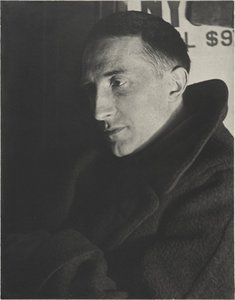
Marcel Duchamp, rojen kot Henri-Robert-Marcel Duchamp v Blainville-Crevonu, Normandiji, leta 1887, je bil več kot le slikar; bil je filozofski provokator, ki je temeljito spremenil pot modne umetnosti. Njegovo zgodnje življenje, čeprav se zdi konvencionalno – negovano v družini, ki je cenila umetniško izražanje, pri čemer sta oba brata sledila uspešnim karieram kot umetnika – je napovedovalo prihajajočo ikono klašt. Duchamp je sprva nadaljeval formalno usposabljanje, obvladal tradicionalne tehnike in eksperimentiral s postimpresionističnimi slogi. Vendar ta akademska podlaga ni služila kot cilj sam po sebi, temveč kot odskočna deska za vprašanje same narave umetnosti, njene namembnosti in definicije. Ni želel le prikazati sveta; je hotel izzvati, kako ga dojemamo, in kaj predstavlja umetniško vrednost. Ta nemiren intelektualni navdušenje bi postalo opredalna značilnost njegove plodne kariere.

Od Kubizma do Dadaizma: Zavrnitev Konvencij

Duchampova umetniška pot je bila zaznamovana s stalno evolucijo, namenitnim odvrglom uvelavljenih norm. Njegov začetni stik z kubizmom, očitna v delih kot je *Portret šahistov* (1911), je pokazal zanimanje za razdrobljene oblike in več perspektiv – odstop od tradicionalne reprezentacije. Vendar pa je hitro presegel izključno estetske skrbi, pri čemer je ugotavljal, da preprosto prestrukturiranje vizualnih elementov ni dovolj za naslovitev globih vprašanj, ki so se mu vrtela po glavi. Groza prve svetovne vojne je spodbudila to nezadovoljstvo, kar ga je pripeljalo do sprejetja dadaizma, gibanja, ki se je rodilo iz razočaranosti in zavrnitve logike, razuma in tradicionalnih umetniških vrednosti. V okviru dadaističnega gibanja je Duchamp res začel rušiti konvencionalne ideje o umetnosti. Ni želel ustvarjati lepih predmetov; hotel je spodbujati misli, izzivati ​​predpostavke in razkriti arbitrarnost estetske presoje. V tem obdobju se je rodovala njegova najradikalnejša inovacija: 'readymade'.

Readymades in Subverzija Umetnosti

Uvedba readymades – navadnih izdelanih predmetov, izbranih in predstavljenih kot umetnost – je bil Duchampov najbolj pomemben prispevek k 20. stoletju. To niso bili le najdeni predmeti; bile so namenjene udeležitve v umetniški subverziji. Z uporabo vsakdanjega predmeta, kot je stranišče (*Fountain*, 1917), ga podpisal z "R. Mutt" in poslal na razstavo umetnosti, je Duchamp izzval samo definicijo umetniškega znanja in avtorstva. Je roke umetnika ustvarile delo ali idejo umetnika? To vprašanje je postalo središčno za njegovo prakso in položilo temelj za konceptualno umetnost. Druga pomembna readymade, kot je *L.H.O.O.Q.* (1919), reprodukcija slike Mona Lise na kartončku, ki jo je poslikal z brko in gornjiškom, so bile šaljive, a ostre kritike umetnostne zgodovine in uvelavljenih kulturnih ikon. Ta dela niso bila namenjena občudovanju zaradi estetskih lastnosti; bili so namenjeni spodbujanju razprav in prisiliti gledalce, da ponovno premislijo o tem, kaj šteje za umetnost. Duchamp je verjel, da bi morala umetnost bivati ​​v umu, ne le v očesu.

Zapuščina in Trajna Vpliv

Vpliv Marcela Duchampa na prihodnje generacije umetnikov je nemerljiv. Temeljito je spremenil naše razumevanje umetnosti, tlakoval pot gibanjem, kot so konceptualna umetnost, minimalizem, pop art in številne druge. Njegov poudarek na ideji umetnika – konceptu za delom – namesto njegovih estetskih lastnosti še danes navdihuje umetnike.
  • Kubizem: Zgodnje raziskovanje razdrobljenih oblik in prostorske reprezentacije.
  • Dadaizem: Zavrnitev logike, razuma in tradicionalnih umetniških vrednosti v odziv na prvo svetovno vojno.
  • Konceptualna umetnost: Poudarek ideje za umetniškim delom namesto njegovih estetskih lastnosti.
Njegovo delo še naprej sproža razprave in izziva gledalce, da ponovno premislijo o svojih predpostavkah o ustvarjalnosti in umetniškem izražanju. Duchamp ni bil le umetnik; bil je filozof, provokator in revolucionar, ki si je upal vprašati vse. Ostaja osrednja figura v razpravah o naravi umetnosti in njenem odnosu do družbe, njegova zapuščina močno odzvanja v sodobni svetovni umetnosti. *The Large Glass* (1915-1923), s svojo kompleksno simboliko in skrivnostnim slikovjem, je priča njegovemu intelektualnemu rigorju in trajnega vpliva. Delo Duchampa ne gre za zagotavljanje odgovorov; gre za zastavljane vprašanja – vprašanja, ki nas še danes izzivajo in navdihujejo.

Ključni podatki

  • Dimensions: 114 x 146 cm
  • Artistic style: Cubist influence
  • Year: 1910
  • Influences: Flaubert
  • Location: Philadelphia Museum
  • Movement: Post-Impressionism

Umetniški kviz

Pri vsakem vprašanju je na voljo le eden pravilen odgovor.

Vprašanje 1:
What artistic movement is Marcel Duchamp primarily associated with in this painting?
Vprašanje 2:
The scene depicted in 'The Chess Game' primarily reflects which theme?
Vprašanje 3:
Which literary work heavily influenced Duchamp's interpretation of the scene in 'The Chess Game'?
Vprašanje 4:
What is the significance of the exclusion of Yvonne and Gaby from the chess game in the painting?
Vprašanje 5:
The chessboard itself serves as a metaphor for what concept within the painting?