Cubist Sculpture · 1914
Bottlerack (Marcel Duchamp, 1914)
Marcel Duchamp (1887–1968) je izdelal Bottlerack. Zajema obdobje iz leta 1914. Spada v smer Cubist Sculpture. Izdelano je iz Found Object Art. Dimenzije so 59 × 37 cm.
- 1914
- Found Object Art
- 59 × 37 cm

 Ročno izdelano oljno slikarstvo
 Pošlji
 Deli
 Informacijski list


 Prenesi sliko
 Podobni izdelki
 Predvajaj diaporama
 Vprašanja in odgovori

 Statistika
Bottlerack, na kratek
- Naslov
- Bottlerack
- Avtor
- Marcel Duchamp (1887–1968)
- Umetnik, rojen v
- Blainville-Crevon, Francija
- Datum
- 1914
- Tehnika
- Found Object Art
- Dimenzije
- 59 × 37 cm
- Gibanje
- Cubist Sculpture
- Obdobje
- Modern
- Tema
- metal sculpture, industrial art, geometric form, conceptual art, shelf structure, hook arrangement
Kaj prikazuje Bottlerack?
The Radical Simplicity of the Everyday
In the early twentieth century, a profound shift occurred in the landscape of modern art, one that moved away from the pursuit of traditional beauty toward a deeper, more intellectual engagement with reality. At the heart of this revolution stands Marcel Duchamp’s Bottlerack, a work created in 1914 that continues to challenge our very definition of what an artwork can be. On its surface, the piece presents a deceptively simple subject: a stack of metal shelves or racks, reminiscent of industrial utility rather than high art. Yet, within this mundane structure lies the seed of a conceptual explosion. By selecting a mass-produced object and elevating it to the status of sculpture, Duchamp bypassed the need for traditional virtuosity, instead inviting us to find profound meaning in the most commonplace of items.
The sculpture embodies the rebellious spirit of Dadaism, an avant-garde movement that emerged as a visceral reaction against the chaos and perceived irrationality of the era. Through the lens of this piece, we see the rejection of established aesthetic conventions in favor of a new, provocative logic. The technique employed—primarily the use of steel tubing and hooks—emphasizes a stark, industrial materiality. There is no attempt to hide the object's utilitarian origins; rather, Duchamp celebrates its geometric precision and structural honesty. This deliberate choice underscores his rejection of "retinal art"—art intended only to please the eye—and instead directs our attention toward the intellectual act of selection and the transformative power of the artist's gaze.
Symbolism and the Birth of the Readymade
Beyond its physical presence, Bottlerack carries a heavy symbolic weight that resonates through the decades. It serves as a primary example of the "readymade," a term Duchamp used to describe ordinary manufactured goods that become art through the mere act of choice and repositioning. The stack of hooks acts as a metaphor for the artist’s intervention into the realm of the everyday, asserting that creativity can be found in appropriation and conceptual thought rather than just skillful execution. This piece is not merely a rack; it is a declaration of independence from the constraints of representation, a monument to the idea that art can exist entirely outside the boundaries of beauty or narrative.
For the modern collector or interior designer, a high-quality reproduction of Bottlerack offers more than just a visual accent; it provides a conversation piece that evokes feelings of detachment, curiosity, and intellectual rigor. The sculpture’s stark lines and industrial aesthetic lend themselves beautifully to contemporary spaces, where they can act as a focal point of minimalist sophistication. To display this work is to invite the spirit of Duchamp into one's environment—to celebrate the beauty of structure and to honor the revolutionary moment when the boundaries between life and art were forever dissolved.
Visokoresolucijske slike dela Bottlerack
Protected by copyright: these files are for personal reference, not a licence to republish.
Marcel Duchamp, Bottlerack (1914).
Odgovori na vprašanja o Bottlerack
Kateri je datum nastanka dela "Bottlerack" avtorja Marcel Duchamp?
"Bottlerack" izvira iz 1914. Ta datum delo situira v okvir Marcel Duchampove kariere in obdobja, v katerem je nastalo.
い哪種媒介是用來創作 "Bottlerack" avtorja Marcel Duchamp 的?
"Bottlerack" je izdelano z uporabo tehnike Found Object Art.
Kakšnih je originalnih dimenzij "Bottlerack"?
Originalne dimenzije dela "Bottlerack" znašajo 59 x 37 cm. Prvotne mere so koristna referenca pri izbiri velikosti reprodukcije.
Katere teme se pojavljajo v delu "Bottlerack" avtorja Marcel Duchamp?
"Bottlerack" avtorja Marcel Duchamp prikazuje: metal sculpture, industrial art, geometric form, conceptual art, shelf structure, hook arrangement, dada aesthetic.
Ali je delo "Bottlerack" avtorja Marcel Duchamp v javni lastini?
V zvezi z avtorskimi pravicami je "Bottlerack" v še vedno pod avtorsko zaščito.
Kdo je ustvaril "Bottlerack"?
Delo "Bottlerack" je ustvaril Marcel Duchamp. Informacije na tej strani opisujejo izvirno delo umetnika Marcel Duchamp.
V kateri umetniški smer spada "Bottlerack" avtorja Marcel Duchamp?
"Bottlerack" avtorja Marcel Duchamp pripada gibanju Cubist Sculpture. To gibanje zagotavlja slogovni kontekst dela.
V katero obdobje umetnostnega razvoja Marcel Duchamp pripada delo "Bottlerack"?
"Bottlerack" predstavlja Dada Era umetnika Marcel Duchamp.
Koliko je bil Marcel Duchamp star ob ustvarjanju dela "Bottlerack" leta 1914?
Ko je bilo delo "Bottlerack" ustvarjeno leta 1914, je bil Marcel Duchamp – rojen leta 1887 – star 27 let.
O umetniku, Marcel Duchamp

1887–1968, Francija
Marcel Duchamp
Življenje in umetnost Marcela Duchampa Rojen 28. julija 1887 v Blainville-sur-Mer v Normandiji, je se Marcel Duchamp v svet, kjer je jezt za ustvarjanje globoko vdel v njegovo krvi, vstopil kot človek, ki bo spremenil vse. Bil je četrti od sedmih otrok, ki so se rodili v domu Eugena in Lucie Duchamp; bil to hiša ustvarjalcev in razmišljalcev. Njegovi bratje, Jacques Villon in Raymond Duchamp-Villon, ter sestra Suzanne Duchamp-Crotti, so vsi delili to ustvarjalno nemirnost in izbrali življenjski slog umetnikov.
Tudi dela avtorja Marcel Duchamp
 Akt, ki se spušča po stopnicah, št. 21912
 Žalostni mladenič v vlaku1911
 Given: 1. Slap, 2. Gaz za osvetlitev1966
 Štcevnica1917
Eseji o delu Bottlerack
 Industrial Revolution on Canvas: 10 Artworks That Define a Modern AestheticExplore 10 iconic artworks capturing the Industrial Revolution’s grit & beauty. From Monet to Manet, discover realism, impressionism & powe…
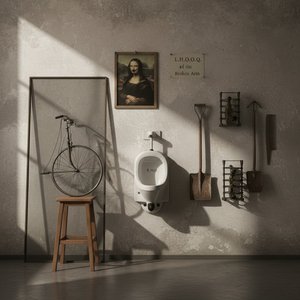 Marcel Duchamp: Challenging Conventions & Redefining Art in the 20th CenturyExplore the revolutionary art of Marcel Duchamp! Discover how his Dadaist readymades challenged artistic conventions & redefined modern art…
 The Radical Evolution of the Bottle in Still Life: From Cubist Deconstruction to Pop Art BoldnessTrace the evolution of bottle still life from Cubism to Pop Art with expert insight. Explore how masters redefined everyday objects now.