

 Pošlji kot čestitko
 Deli
Deli
 Podrobnosti
 Priročnik

 Prenesi
 Podobni artefakti
 Predvajaj diaporama
 Statistika
4 Seated Figures


 Preberi več
Umetniška dela, prikazana na tej strani, so zaščitena z avtorskimi pravicami, kar pomeni, da po zakonu ne moremo ustvarjati ali prodajati identičnih reprodukcij. Ta zaščita se izvaja v skladu z mednarodnimi sporazumi, kot so Bernska konvencija in po nacionalnih zakonih, vključno s tistimi, ki jih določa Zakon o avtorskih pravicah ZDA – naslov 17.
Ta način v celoti upošteva zakonodajo o avtorskih pravicah, saj ne vključuje kopiranja ali podvajanja zaščitena umetniškega dela. Namesto tega gre za kreativno preinterpretacijo – novo sliko, ki je navdihnjen rezultat originala, vendar ni z njim identična.
Giclée tisk / Umetniški tisk
Giclée ali platnati odtis muzejske kakovosti z hitro proizvodnjo in prilagodljivimi možnostmi končne obdelave. ( Naročite ročno slikano reprodukcijo Preklop na digitalno sliko)




































Izberite eno od naših vnaprej določenih velikosti, ki ustrezajo prvotnim proporcijam umetničkega dela.

Vnesite širino in višino, ki jih potrebujete za svoj okvir ali steno. Tiskanje se lahko le odreže, vendar ga ni mogoče narediti večjega od slike, zato format z drugačno obliko pomeni izgubo dela slike. Pred tiskanjem vam pošljemo digitalni predogled za potrditev. Slika, prikazana na tej strani, ne prikazuje dejanskega izrezkov — le predogled to omogoča.
Globalna dostava () v 2 tednih namesto standardnih 4/5 tednov. (26 oktober)

Brezplačna ekspresna dostava po vsem svetu

Visokokakovostno laneno platno

Popolno zavarovanje pošiljke

Garancija povračila carine in uvoznih davkov

Garancija popolnega barvnega ujemanja

Politika vračila v 100 dneh (le v primeru okvar)

Garancija 100% povračila denarja

Popust pri večjem naročilu
 Možnost stekla je na voljo le za velikosti pod 110 cm

4 Seated Figures
Giclée tisk / Umetniški tisk
Velikost reprodukcije
-


Skupna cena
€ 70
Magdalena Abakanowicz’s “4 Seated Figures”: A Meditation on Vulnerability and Collective Experience
The sculpture "4 Seated Figures" by Magdalena Abakanowicz, created in 2002, stands as a testament to the artist's profound exploration of human psychology and her masterful manipulation of textile sculpture—a medium she revolutionized. More than just aesthetically striking, this piece delves into complex themes of anonymity, resilience, and the enduring legacy of trauma, reflecting Abakanowicz’s own harrowing memories of wartime Poland.The Artist’s Vision: Beyond Formal Aesthetics
Magdalena Abakanowicz (1930-2017) emerged from a formative period marked by significant political upheaval—the Nazi occupation and subsequent Soviet rule—experiences that instilled within her an unwavering commitment to artistic freedom and a deep empathy for the human condition. Her academic training at Warsaw and Sopot academies initially steered her toward Socialist Realism, but Abakanowicz swiftly rejected its propagandistic constraints, prioritizing instead a deeply personal vision rooted in confronting difficult truths about history and identity. This conviction informs every aspect of her oeuvre, including “4 Seated Figures,” where she abandons conventional sculptural conventions to prioritize emotional resonance over technical precision.Technique and Material: Bark-Like Texture and Resin Binding
Abakanowicz’s innovative approach to textile sculpture distinguishes "4 Seated Figures" from many contemporary works. Rather than carving or modeling traditional materials, she employs a technique that mimics the texture of tree bark—a deliberate choice reflecting her fascination with natural forms and their inherent vulnerability. The sculptures themselves are created by pressing burlap soaked in resin and glue into plaster molds derived from human models crafted in the late 1970s. This process yields a surface reminiscent of weathered wood, conveying a sense of exposed musculature and hinting at underlying skeletal structure—a visual metaphor for fragility and resilience.Historical Context: Witnessing Trauma and Embracing Anonymity
The sculpture’s genesis is inextricably linked to Abakanowicz's personal history. She recounted witnessing her mother being shot in the hands during a Nazi raid on their home in Poland, an event that profoundly shaped her worldview and instilled within her a visceral understanding of suffering and resistance. Recognizing the universality of human experience—the shared vulnerability inherent in our existence—Abakanowicz deliberately eschewed gendered or racial distinctions in her figures. As she herself stated, “They are naked, exposed, and vulnerable, just as we all are.” This deliberate anonymity underscores Abakanowicz’s belief that art should transcend specific identities to communicate fundamental truths about the human condition.Symbolism: Exploring Resilience Amidst Decay
The "4 Seated Figures" embody a powerful symbolic representation of endurance amidst inevitable decay—a concept central to Abakanowicz's artistic philosophy. The sculptures’ posture conveys stillness and contemplation, yet simultaneously communicates an underlying tension—the suggestion that these figures are grappling with internal struggles. The bark-like texture serves as a visual reminder of the natural world’s cyclical processes of growth, decline, and renewal, mirroring the human experience of confronting adversity and maintaining inner strength. Ultimately, “4 Seated Figures” invites viewers to contemplate the complexities of existence and to appreciate the beauty found within vulnerability—a timeless message conveyed with remarkable artistic subtlety.Vprašanja in odgovori
Ali je "4 Seated Figures" avtorja Magdalena Abakanowicz portretna, krajinska ali kvadratna kompozicija?
Delo "4 Seated Figures" avtorja Magdalena Abakanowicz ima Landscape format. Format opisuje proporcije kompozicije.
Ali uporablja "4 Seated Figures" avtorja Magdalena Abakanowicz močne kontraste ali nežne harmonije?
Barvna kompozicija dela "4 Seated Figures" avtorja Magdalena Abakanowicz združuje Balanced kontrast z Balanced Harmony harmonijo.
S kakšnimi aliznami ali alternativnimi imeni je znan/a Magdalena Abakanowicz?
Magdalena Abakanowicz je znana tudi pod imenom Abakanowicz.
Biografija umetnika
The Weaver of Human Shadows: The Life and Legacy of Magdalena Abakanowicz
To encounter the work of Magdalena Abakanowicz is to step into a visceral landscape where the boundaries between organic matter and human emotion dissolve. Born Marta Magdalena Abakanowicz in 1930 in the quiet, noble estate of Falenty, Poland, her early life was shadowed by the profound traumas of the twentieth century. The Nazi occupation of her homeland during World War II was not merely a historical backdrop but a formative crucible; witnessing the resilience and resistance of her family instilled in her a lifelong preoccupation with the themes of survival, vulnerability, and the collective struggle of the human spirit. This early exposure to the fragility of existence would later manifest in sculptures that feel as though they are breathing, decaying, and enduring all at once.
Her artistic education took place within the rigid confines of the Academy of Fine Arts in Sopot and Warsaw during the 1950s, a period dominated by the suffocating aesthetic of Socialist Realism. This state-imposed doctrine demanded art that served as propaganda, yet Abakanowicz found a way to subvert these constraints through the medium of fiber. By turning away from the hard, didactic lines of traditional sculpture and toward the soft, tactile world of textiles, she began to develop a language that was entirely her own. She moved beyond the decorative, transforming woven strands into monumental, three-scale entities that challenged the very definition of what sculpture could be.
The Revolution of the Abakans
In the 1960s, Abakanowicz achieved international renown through the creation of her "abakans"—massive, organic forms crafted from interwoven jute and hessian. These were not mere tapestries hung upon a wall; they were woven forms that descended from ceilings like heavy, biological organisms. These works pioneered a new form of installation art, creating immersive environments that functioned as both objects and spaces. The texture of the coarse fibers, combined with their ambiguous, hollow shapes, evoked a sense of primordial life and existential dread. To walk among the abakans was to navigate a forest of textile shadows, reflecting the anxieties of a generation living under the watchful eye of communist surveillance.
As her career progressed into the 1970s, Abakanowicz’s focus shifted from the purely abstract toward the figurative, though never without maintaining her signature sense of ambiguity. She began to create fragmented, headless, and limb-less human forms that appeared as if they were emerging from—or being consumed by—the earth itself. These sculptures, often cast in bronze, wood, or clay, spoke to the loss of individuality within a mass society. Her ability to use materials like stone and metal to mimic the softness of flesh or the roughness of bark allowed her to explore the human condition with an unflinching, almost haunting honesty.
A Monumental Legacy
The significance of Abakanowicz’s contribution to contemporary art cannot be overstated. She bridged the gap between the traditional craft of weaving and the avant-garde movements of Postminimalism, proving that "soft" materials could carry the weight of profound political and philosophical inquiry. Her influence stretched far beyond the borders of Poland, as she served as a professor in Poznań and later as a visiting professor at UCLA, sharing her radical vision with a global audience.
Her achievements are marked by numerous prestigious accolades, including:
- The Herder Prize (1979), recognizing her cultural impact.
- The Leonardo da Vinci World Award of Arts (1999), celebrating her mastery of form.
- The Lifetime Achievement Award from the International Sculpture Center (2005), cementing her status as a titan of the medium.
Today, her work remains a haunting presence in the world's most esteemed institutions, from the Tate Modern to the National Museum of Women in the Arts. Whether through the towering, hollowed-out figures of her public installations or the intimate, textured surfaces of her early textiles, Magdalena Abakanowicz continues to remind us of our shared capacity for both immense strength and profound fragility. She remains an artist who did not merely represent the human form, but captured its very essence—the struggle to remain whole in a world that seeks to fragment us.

Magdalena Abakanowicz
1930 - 2017 , Poland
Ključne informacije
- Full Name: Marta Magdalena Abakanowicz
- Nationality: Polish
- Date Of Birth: 1930
- Date Of Death: 2017
- Place Of Birth: Falenty, Poland
- Notable Artworks:
- Agora
- Birds of Knowledge
- Artistic Movement Or Style: Constructivism & Socialist Realism
- Artists Who Influenced This Artist: ['Minimalism']
- Artists Or Movements Influenced By This Artist: ['Contemporary Fiber Art']
Sorodni članki

The Enduring Form: Exploring Themes & Techniques in Sculpture Across Historical Periods
Explore the rich history of sculpture from ancient masterpieces to contemporary innovations. Discover key techniques, influential artists & investment potential for discerning art collectors.
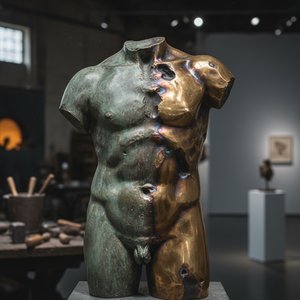
Trajna Dedščina Bronaste Skulpture: Zgodovina, Tehnike in Sodobne Interpretacije
Odkrijte bogato zgodovino bronaste skulpture, tehniko izgubljenega voska in sodobne interpretacije. Strokovni vpogledi za zbiratelje in ljubitelje umetnosti. Kvalitetna analiza, restavracija in vrednotenje.

Bronze Sculptures That Defined Art History | OriginalUniqueArt
Journey through art history with our Top 10 bronze sculptures! Explore masterpieces by Rodin, Michelangelo & more. Discover stories behind iconic statues and find museum-quality reproductions for your home decor at OriginalUniqueArt.com.

The Enduring Form: Sculpture Across History, Technique & Emotional Resonance
Explore the rich history of sculpture with OriginalUniqueArt. Discover key techniques, influential artists & investment potential for discerning collectors. Expert insights into valuing and collecting timeless masterpieces.

Bronze Age to Modern Masters: 10 Sculptures That Redefined Art | OriginalUniqueArt
Journey through art history with 10 legendary bronze sculptures – from Michelangelo's David to Rodin’s Thinker. Explore the stories, techniques & timeless beauty of these masterpieces. Find museum-quality reproductions & elevate your home decor on OriginalUniqueArt.com.