
 Predogled v realnem okolju
 Pošlji
 Deli
Deli
 Podrobnosti o delu
 Priročnik

 Prenesi sliko
 Podobni izdelki
 Rentgenski posnetek
 Predvajaj diaporama
 Vprašanja in odgovori
 Statistika
Portrait of Anna Codde

- 86.0 x 66.0 cm


 Preberi več
Giclée tisk / Umetniški tisk
Giclée ali platnati odtis muzejske kakovosti z hitro proizvodnjo in prilagodljivimi možnostmi končne obdelave. ( Kupite ročno slikano delo Preklop na digitalno sliko)




P118B €10

P118H €10

P118W €10

P438Z €10

P508JH €12

P508YH €12

P805H €10

P805Z €10

P919BZ €10

P919G €10

P919XJ €10

P959ZH €10

P968JZ €12

W106C €8

W218G €10

W218JH €8

W218Y €10

W307PJ €10

W316G €10

W316PJ €8

W316Y €10

W398PJ €8

W4111J €10

W500HY €15

W500JH €15

W692G €12

W849H €8

W940BG €15

W953PJ €8




Izberite eno od naših vnaprej določenih velikosti, ki ustrezajo prvotnim proporcijam umetničkega dela.

Vnesite širino in višino, ki jih potrebujete za svoj okvir ali steno. Tiskanje se lahko le odreže, vendar ga ni mogoče narediti večjega od slike, zato format z drugačno obliko pomeni izgubo dela slike. Pred tiskanjem vam pošljemo digitalni predogled za potrditev. Slika, prikazana na tej strani, ne prikazuje dejanskega izrezka — le predogled to omogoča.
Globalna dostava () v 2 tednih namesto standardnih 4/5 tednov. (5 november)

Brezplačna ekspresna dostava po vsem svetu

Visokokakovostno laneno platno

Popolno zavarovanje pošiljke

Garancija povračila carine in uvoznih davkov

Garancija popolnega barvnega ujemanja

100-dnevna politika vračil (le v primeru okvar)

Garancija 100% povračila denarja

Popust pri večjem naročilu
 Možnost stekla je na voljo le za velikosti pod 110 cm

Portrait of Anna Codde
Giclée tisk / Umetniški tisk
Velikost reprodukcije
-


Skupna cena
€ 72
A Window into the Dutch Renaissance: The Portrait of Anna Codde
Maerten van Heemskerck’s “Portrait of Anna Codde,” painted in 1529, isn't merely a likeness; it’s a meticulously crafted tableau vivant – a snapshot of life within the burgeoning world of early Dutch Renaissance society. More than just a portrait, this work offers a rare glimpse into the domestic sphere, revealing a woman engaged in a timeless activity: spinning wool. The scene unfolds with quiet dignity and understated elegance, capturing not only Anna’s physical appearance but also her role as a skilled artisan and devoted wife – a common yet increasingly valued ideal within the Dutch merchant class of the era.
The painting immediately draws the eye to Anna herself, seated comfortably in a simple chair. Her long, flowing hair is partially arranged, suggesting a deliberate effort towards presentation, while her gaze is direct and engaging, inviting the viewer into her world. The spindle she holds isn’t just an object of craft; it's a symbol of domesticity, industry, and the woman’s vital contribution to the household economy. Her dress, though modest in style, speaks volumes about her status – a subtle indication of wealth and refinement. Notice the careful attention to detail in the rendering of her hands, demonstrating Heemskerck’s mastery of capturing texture and form.
The Painter's Palette: Technique and Style
Heemskerck’s style is immediately recognizable as a masterful blend of Italian Renaissance ideals with distinctly Dutch sensibilities. The influence of Jan van Scorel, his former teacher, is evident in the use of light and shadow – a technique known as *chiaroscuro* – which creates a sense of depth and volume within the composition. However, Heemskerck departs from the purely idealized forms often found in Italian portraits, opting for a more naturalistic approach that reflects the growing interest in portraying individuals with greater realism.
The painting’s color palette is restrained yet sophisticated, dominated by earthy tones – browns, ochres, and muted greens – which evoke the textures of the wool and the surrounding domestic environment. The background, featuring a chair and a clock on the wall, provides context without overwhelming the central figure. Heemskerck's skill lies not just in depicting individual features but also in creating a harmonious whole, where every element contributes to the overall narrative.
A Portrait of an Era: Historical Context
“Portrait of Anna Codde” was painted during a period of significant social and economic transformation in the Netherlands. The rise of merchant families like the Coddes fueled a burgeoning economy and a growing emphasis on wealth, status, and family lineage. Portraits became increasingly important as a means of documenting these achievements and solidifying one’s place within society. The inclusion of domestic scenes like this one was not uncommon; it served to portray the subject as both a successful businesswoman and a devoted wife – qualities highly valued in 16th-century Dutch culture.
Furthermore, the painting reflects the growing interest in secular portraiture during this time. While religious subjects remained important, artists began experimenting with depicting everyday life and capturing the personalities of their patrons. The meticulous detail and realistic portrayal of Anna Codde demonstrate Heemskerck’s commitment to portraying his subject with honesty and dignity.
Symbolism and Emotional Resonance
Beyond its technical merits, “Portrait of Anna Codde” is rich in symbolism. The spinning wheel represents not only her craft but also the woman's role as a provider for her household – a vital contribution to the family’s well-being. The clock on the wall serves as a reminder of time and the passage of life, subtly emphasizing the importance of cherishing each moment. The birds in the background, one near the top right corner and another towards the bottom left of the painting, may represent good fortune or simply add to the idyllic scene.
Ultimately, “Portrait of Anna Codde” is a poignant reminder of a bygone era – a time when domesticity was intertwined with prosperity and artistry. It’s a testament to Heemskerck's skill as a painter and his ability to capture not just a likeness but also the essence of a human being within her historical context. Reproductions of this captivating work offer a beautiful window into the heart of the Dutch Renaissance.
Vprašanja in odgovori
Ali je "Portrait of Anna Codde" avtorja Maerten Van Heemskerck slika, risba ali grafika?
"Portrait of Anna Codde" avtorja Maerten Van Heemskerck je razvrščeno v kategorijo WallArt. Ta kategorija opisuje vrsto umetniškega dela, da je original.
Kje lahko vidim originalno delo "Portrait of Anna Codde" avtorja Maerten Van Heemskerck?
Originalno delo "Portrait of Anna Codde" lahko vidite v muzeju Rijksmuseum, Amsterdam, Nizozemska.
Ali je delo "Portrait of Anna Codde" avtorja Maerten Van Heemskerck v javni lastini?
"Portrait of Anna Codde" avtorja Maerten Van Heemskerck je v javni domeni (v javni domeni – avtorska pravica je zastarela). Ta status določa način, kako se lahko slika dela reproducira.
Biografija umetnika
zgodba o zgodnji in izobraževanju
Maerten van Heemskerck, eden izmed najbolj izstopajočih nizozemskih portretistov in slikarjev religioznih motivov, se je rodil 1. junija leta 1498 v vasi Heemskerk v severni Holandiji. Njegova umetnična pot se je začela pod mentorstvom Corneliussa Willemsza v Haarlemu, nato pa je sledil kratek čas v Delftu pri Janu Lucaszu. Končno je postal učenec Jana van Scorela, pri čemer je prevzel slog svojega učitelja, ki je bil močno prežet z italijanskim vplivom.ključni trenutki njegove kariere
- Delo, ki ga je ustvaril Maerten van Heemskerck, zaznamuje inovativna zlitje nizozemskih in italijanskih vplivov, kar se jasno raz年生vija v njegovem znamenitem družinskem portretu, ki velja za prvo delo tovrstne vrste v dolgi zaporedini nizozemskih družinskih slik.
- Njegova sodelovanja z umetniki, kot so Antonio da Sangallo mlajši, Battista Franco in Francesco de' Rossi (Il Salviati), pri ponovni okrasitvi Porta San Sebastiano v Rimu — triumfalnega luka v čast štvertnega Karla — izkazujejo njegovo izjemno hitrost pri izvajanju scen in dekorativnih slik.
- Heemskerckove risbe klasičnih skulptur in arhitekture, ki so danes shranjene v dveh zvezkih v Kupferstichkabinett Berlin, dokazno prikazujejo njegovo vrhunsko veščino pri zajemanju samega bistva italijanske umetnosti.
znamena dela in dediščina
- Donator in sveta Marija Magdalena (ogled na OriginalUniqueArt)
- Devica in sveti Janez Evangelist (ogled na OriginalUniqueArt)
- Samson, ki razbija stebre templja, Maarten van Heemskerck (ogled na OriginalUniqueArt)
zaključek
Maerten van Heemskerckov globok vpliv na svet umetnosti je nepodvden. Njegova dela, ki so zdaj del številnih muzejskih zbirk, vključno z Rijksmuseumom, še vedno navdihujejo umetnike in ljubitelje umetnosti. Za raziskovanje več njegovih vrhunskih del obiščite stran Maertena van Heemsckercka na OriginalUniqueArt. Za globlje razumevanje njegovega življenja in dela pa si preberite njegovo biografijo na Wikipediji.
Maerten Van Heemskerck
1498 - 1574 , Nizozemska
Hitri podatki
- Artistic Movement Or Style: Manierizem
- Artists Who Influenced This Artist:
- Jan van Scorel
- Antonio da Sangallo mlajši
- Date Of Birth: 1. jun 1498
- Date Of Death: 1. oktober 1574
- Full Name: Maerten Jacobsz van Heemskerck
- Nationality: Nizozemski
- Notable Artworks:
- Javlenje nad mrtim Kristom
- Pieter Jan Foppeszoon in njegova družina
- Krist kot človek bolečinj
- Place Of Birth: Heemskerk, Nizozemska
Sorodni članki

Maerten van Heemskerck: Bridging Mannerism & Renaissance Ideals
Explore the captivating world of Maerten van Heemskerck, a pivotal Dutch Renaissance painter bridging Mannerism & Italian influence. Discover his masterpieces and legacy with OriginalUniqueArt.

Willem van de Velde the Elder: Master of Maritime Painting & Chronicler of the Dutch Golden Age
Discover the captivating maritime paintings of Willem van de Velde the Elder, a master chronicler of the Dutch Golden Age. Explore his unparalleled realism and lasting influence on naval art history.

Jan van Goyen: Master of Dutch Landscape & Atmospheric Perspective
Discover Jan van Goyen, the master of Dutch landscape painting. Explore his subtle technique, atmospheric realism & lasting influence on art history. Learn about this 17th-century pioneer at OriginalUniqueArt.
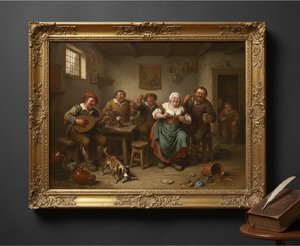
Adriaen van Ostade: A Master of Dutch Genre Painting & Social Commentary
Explore the life & work of Adriaen van Ostade, a leading Dutch Golden Age painter. Discover his realistic genre scenes, social commentary, and lasting influence on art history. Learn more at OriginalUniqueArt.

Rembrandt van Rijn: 25 Mojstrovin za Popestritev Vašega Doma | OriginalUniqueArt
Odkrijte 25 mojstrovin Rembrandta van Rijna! Preberite zgodbe o portretih, svetlobi in nizozemskem baroku. Kvalitetne reprodukcije slik za vaš dom na OriginalUniqueArt.com. Raziskajte celotno zbirko online.