Predogled v realnem okolju
 Pošlji
 Deli
Deli
 Podrobnosti o delu
 Priročnik

 Prenesi sliko
 Podobni izdelki
 Rentgenski posnetek
 Predvajaj diaporama
 Vprašanja in odgovori
 Statistika
The Judgment of Paris

- 35.0 x 24.0 cm


 Preberi več
Giclée tisk / Umetniški tisk
Giclée ali platnati odtis muzejske kakovosti z hitro proizvodnjo in prilagodljivimi možnostmi končne obdelave. ( Kupite ročno slikano delo Preklop na digitalno sliko)




P118B €10

P118H €10

P118W €10

P438Z €10

P508JH €12

P508YH €12

P805H €10

P805Z €10

P919BZ €10

P919G €10

P919XJ €10

P959ZH €10

P968JZ €12

W106C €8

W218G €10

W218JH €8

W218Y €10

W307PJ €10

W316G €10

W316PJ €8

W316Y €10

W398PJ €8

W4111J €10

W500HY €15

W500JH €15

W692G €12

W849H €8

W940BG €15

W953PJ €8




Izberite eno od naših vnaprej določenih velikosti, ki ustrezajo prvotnim proporcijam umetničkega dela.

Vnesite širino in višino, ki jih potrebujete za svoj okvir ali steno. Tiskanje se lahko le odreže, vendar ga ni mogoče narediti večjega od slike, zato format z drugačno obliko pomeni izgubo dela slike. Pred tiskanjem vam pošljemo digitalni predogled za potrditev. Slika, prikazana na tej strani, ne prikazuje dejanskega izrezka — le predogled to omogoča.
Globalna dostava () v 2 tednih namesto standardnih 4/5 tednov. (3 november)

Brezplačna ekspresna dostava po vsem svetu

Visokokakovostno laneno platno

Popolno zavarovanje pošiljke

Garancija povračila carine in uvoznih davkov

Garancija popolnega barvnega ujemanja

100-dnevna politika vračil (le v primeru okvar)

Garancija 100% povračila denarja

Popust pri večjem naročilu
 Možnost stekla je na voljo le za velikosti pod 110 cm

The Judgment of Paris
Giclée tisk / Umetniški tisk
Velikost reprodukcije
-


Skupna cena
€ 72
A Moment of Divine Contest: Lucas Cranach’s “The Judgment of Paris”
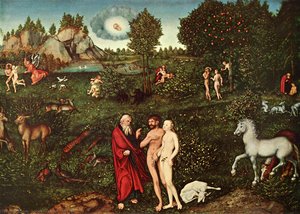
Lucas Cranach the Elder's "The Judgment of Paris," painted around 1530, isn’t merely a depiction of a classical myth; it’s a vibrant tableau brimming with psychological tension and Renaissance artistry. Housed within the Metropolitan Museum of Art in New York, this oil on panel offers a rare glimpse into the mind of a master navigating the complexities of religious reform and courtly patronage. Cranach, born in Kronach, Germany, skillfully blends Northern European realism with the idealized beauty favored by his patrons, creating an image that resonates far beyond its mythological subject matter.
The scene unfolds with arresting immediacy: Paris, a young prince radiating both arrogance and vulnerability, sits poised on the ground, the fate of Olympus resting upon his decision. Around him gather a cluster of elegantly nude women – not simply passive figures, but active participants in this pivotal moment. Their postures are subtly varied, reflecting their individual reactions to the goddesses vying for Paris’s favor: Juno, goddess of marriage and strategic alliances; Minerva, patron of wisdom and warfare; and Venus, the embodiment of love and beauty. Cranach's meticulous attention to detail is evident in the rendering of each woman’s form – the delicate curve of a shoulder, the subtle play of light on skin, all executed with a precision that speaks volumes about his technical mastery.
The Dance of Symbols: Interpreting Cranach’s Composition
Beyond the immediate narrative, “The Judgment of Paris” is rich in symbolic language. The two magnificent horses flanking the scene are particularly noteworthy. One, positioned to the left, embodies strength and martial prowess – a clear reference to Minerva. Its powerful musculature and alert stance suggest the potential for conflict and conquest. Conversely, the horse on the right, more graceful and subtly adorned, represents Venus’s influence: beauty, allure, and the promise of pleasure. The arrangement isn't arbitrary; it establishes a visual dialogue between these competing forces, mirroring the complex dynamics at play in Paris’s choice.
The background, dominated by a simple tree, serves as a grounding element, anchoring the scene within the natural world – a deliberate contrast to the idealized figures and divine drama unfolding before us. The bowls and cups held by some of the women aren't just props; they symbolize offerings, gestures of respect, and perhaps even veiled attempts to sway Paris’s judgment. Even the positioning of the figures contributes to the overall composition, creating a dynamic flow that draws the viewer’s eye across the panel.
A Renaissance Master at Work: Technique and Context
Cranach's style in "The Judgment of Paris" is firmly rooted in the Northern Renaissance tradition. He employs a masterful use of color – rich, saturated hues that imbue the scene with warmth and vitality. The figures are rendered with remarkable realism, yet they retain an idealized quality characteristic of Renaissance portraiture. Cranach’s skill lies not just in his technical proficiency but also in his ability to infuse his paintings with psychological depth. He captures the subtle nuances of emotion – Paris's uncertainty, the women’s anticipation – creating a scene that feels remarkably alive.
Painted during a period of profound social and religious change, “The Judgment of Paris” reflects the anxieties and aspirations of its time. Cranach served as an artist to Frederick III, Elector of Saxony, a position that afforded him access to powerful circles but also exposed him to the growing currents of Protestantism. His work often navigated the delicate balance between Catholic orthodoxy and emerging humanist ideals. This painting stands as a testament to his versatility and his ability to synthesize these diverse influences into a cohesive and compelling artistic vision.
Bringing Cranach’s Masterpiece Home: Reproductions for Every Space
OriginalUniqueArt offers meticulously crafted, hand-painted reproductions of Lucas Cranach the Elder's “The Judgment of Paris,” allowing you to experience the artistry and emotional power of this iconic work in your own home. Our reproductions faithfully capture the original’s vibrant colors, intricate details, and psychological depth, ensuring that you possess a stunning piece of art history. Whether adorning a formal salon or adding a touch of Renaissance drama to a contemporary space, a OriginalUniqueArt reproduction of “The Judgment of Paris” is a timeless investment – a celebration of artistic skill and enduring beauty.
Vprašanja in odgovori
Kakšna je tehnika in velikost originalnega dela "The Judgment of Paris" avtorja Lucas Cranach Starejši?
"The Judgment of Paris" je izdelano z uporabo tehnike Oil On Panel in v svoji prvotni obliki meri 35 x 24 cm.
Kdo je avtor dela "The Judgment of Paris"?
"The Judgment of Paris" pripisujemo Lucas Cranach Starejši.
Pod kakšnimi drugimi imeni je znan/a Lucas Cranach Starejši?
Drugi imeni, ki so zabeležena za ustvarjalca dela "The Judgment of Paris", imenovanega Lucas Cranach Starejši, vključujejo Lucas Müller, Lucas Cranach Der Ältere, Lucas Cranach Der Jüngere.
Biografija umetnika
A Renaissance Master of Saxony: The Life and Art of Lucas Cranach the Elder
Lucas Cranach the Elder, born in Kronach, Germany around 1472, stands as a pivotal figure of the German Renaissance. His life unfolded during a period of immense religious and political upheaval, and his art became inextricably linked to both the burgeoning Protestant Reformation and the opulent courts he served. Initially trained by his father, Hans Maler, Cranach’s early artistic development remains somewhat shrouded in mystery, though influences from South German masters are evident in his evolving style. He quickly distinguished himself not merely as a skilled craftsman but as an artist capable of capturing psychological depth alongside technical precision – qualities that would soon draw the attention of powerful patrons. In 1504, he entered the service of Frederick III, Elector of Saxony, a relationship that would define much of his career and provide him with both stability and access to influential circles. This appointment as court painter in Wittenberg wasn’t simply about producing decorative works; it placed Cranach at the very heart of one of the most transformative movements in European history.Early Life and Artistic Training
Information regarding Lucas Cranach's formative years is scarce, reflecting a common characteristic of Renaissance artists whose personal histories were often deliberately obscured to enhance their artistic reputations. However, scholarly research suggests that he received his initial artistic education from his father, Hans Maler—a respected painter known for his frescoes in churches throughout Bavaria and Saxony. Like many artists of his time, Cranach’s training encompassed not only painting techniques but also humanist scholarship, fostering a broader intellectual understanding crucial to navigating the complexities of Renaissance culture. While precise details about his early stylistic influences remain elusive, evidence indicates connections with South German masters—particularly Matthias Grünewald—whose expressive use of color and dramatic compositions foreshadowed many innovations that would characterize Cranach’s mature oeuvre.Service to Frederick III and Wittenberg
Cranach's ascension to prominence began in 1504 when he was appointed court painter to Frederick III, Elector of Saxony—a patronage that proved remarkably fruitful both artistically and politically. Wittenberg, Frederick’s seat of power and the epicenter of Luther’s Reformation movement, became Cranach’s artistic laboratory—a space where he honed his skills, experimented with new ideas, and engaged directly in shaping the visual culture of a nation undergoing radical transformation. This appointment wasn't merely about fulfilling a contractual obligation; it demanded an artist capable of conveying Luther’s theological convictions through compelling imagery—a task Cranach undertook with unwavering dedication and artistic brilliance. He produced no fewer than eleven portraits of Luther, each meticulously crafted to embody the reformer’s moral authority and intellectual conviction. These weren’t simply likenesses; they were carefully constructed images designed to project strength, piety, and erudition – essential qualities for a leader challenging papal dogma.The Reformation Art: Symbolism and Narrative
Lucas Cranach's contribution to the Reformation extended far beyond portraiture. He spearheaded the production of woodcuts and engravings that disseminated Protestant doctrines widely—a feat unparalleled in its scope and impact. These prints weren’t merely didactic illustrations; they were artistic statements imbued with symbolic meaning—reflecting a profound shift away from Catholic iconography toward a more personal engagement with scripture. Cranach's depictions of biblical scenes moved decisively away from traditional representations, emphasizing direct confrontation with God’s word and fostering a deeper spiritual connection between the viewer and faith. The Annunciation to Joachim exemplifies this innovative approach—radiating joy and optimism as it portrays Mary receiving the divine messenger—a visual testament to Luther's belief in predestination and divine grace. Cranach skillfully employed color, composition, and symbolism to convey complex theological concepts—demonstrating that art could serve as a powerful vehicle for religious persuasion.Style and Technique: A Legacy of Elegance and Precision
Lucas Cranach the Elder’s artistic style is instantly recognizable—characterized by elongated figures with graceful proportions, vibrant hues, and meticulous attention to detail. His technique involved a masterful blend of oil painting, woodcut, and engraving—allowing him to reach a vast audience through both original artworks and affordable prints. The workshop established by Cranach became renowned for its distinctive aesthetic—reflecting the humanist ideals prevalent in Renaissance Germany. Cranach’s mastery of perspective and chiaroscuro—the interplay of light and shadow—created dramatic visual effects that heightened the emotional impact of his paintings. Stag Hunt of Elector Friedrich III the Wise stands as a paragon of Northern Renaissance style—capturing the dynamism of the hunt while simultaneously conveying the noble status of its patron—a testament to Cranach’s ability to synthesize artistic innovation with humanist conviction. His portraits are equally compelling, distinguished by their psychological insight and refined execution—demonstrating that an artist could convey profound emotion through subtle gestures and nuanced expressions.Concluding Reflections: An Enduring Influence
Lucas Cranach the Elder died in 1553, leaving behind a monumental artistic legacy that continues to inspire admiration and scholarly inquiry today. He was arguably the most influential painter of his era—a master of portraiture, a visionary interpreter of religious themes, and a shrewd businessman who understood the transformative potential of visual communication. His work transcends mere stylistic imitation; it embodies the spirit of the Renaissance—characterized by intellectual curiosity, humanist conviction, and artistic daring. Cranach’s enduring influence can be discerned in the works of countless subsequent artists—who adopted his techniques and embraced his aesthetic sensibilities—solidifying his place as one of the foremost figures of European art history. From the iconic portraits of Martin Luther to the captivating mythological scenes—Cranach's oeuvre remains a beacon of artistic excellence—a testament to the power of imagination, skill, and unwavering dedication to conveying profound human experience.
Lucas Cranach Starejši
1472 - 1553 , Nemčija
Hitri podatki
- Artistic Movement Or Style: German Renaissance
- Artists Who Influenced This Artist: ['Hans Maler']
- Date Of Birth: 1472
- Full Name: Lucas Cranach the Elder
- Nationality: German
- Notable Artworks:
- Stag Hunt
- Self-Portrait
- Annunciation to Joachim
- Place Of Birth: Kronach, Germany
Sorodni članki
The Northern Renaissance: A Masterclass in Hyper-Realism, Oil Innovation, and Symbolic Depth
Explore the profound mastery of Northern Renaissance art. Discover the technical brilliance of Flemish oil painting, the intricate symbolism of Bosch and Bruegel, and the revolutionary realism that redefined European art history through an expert historical lens.

The Enduring Power of Painting: A Historical & Contemporary Exploration of Form and Emotion
Explore the rich history & enduring techniques of oil painting with OriginalUniqueArt. Discover masterpieces, learn about art collecting, and find authentic handmade reproductions crafted by skilled artists.

Trajnost platna v umetnosti: Tehnike, zgodovina in sodobne metode ohranjanja
Odkrijte zgodovino platna, tehnike ohranjanja in najnovejše metode konzerviranja slik. Izvedite več o vplivu oljne barve na trajnost umetniških del ter nasvetih strokovnjakov za dolgotrajno lepoto vaših dragocenosti.

The Enduring Legacy of Oil on Canvas: Technique, History & Aesthetic Impact
Explore the rich history & techniques of oil painting – from Renaissance masters to Impressionism. Discover pigments, layering methods, and why this timeless medium endures. Expert insights for artists & art enthusiasts.

Oil on Canvas: A Historical & Technical Exploration of a Timeless Artistic Medium
Explore the rich history & enduring techniques of oil painting on canvas. Discover the science behind its longevity, conservation practices, and contemporary relevance. Expert insights for art enthusiasts.