Berlin Secession · 1900
Salome, Second Version (Lovis Corinth, 1900)
Lovis Corinth (1858–1925) je izdelal Salome, Second Version. Zajema leto 1900. Spada v umetniško smer Berlin Secession. Izdelano je iz Acrylic On Canvas. Del se nahaja v muzeju Museum der bildenden Künste v mestu Leipzig, Nemčija. Dimenzije so 127 × 148 cm.
- 1900
- Acrylic On Canvas
- 127 × 148 cm
- Museum der bildenden Künste, Leipzig

 Predogled v realnem okolju

 Ročno izdelano oljno slikarstvo
 Pošlji
 Deli
 Informacijski list za tjači


 Prenesi sliko
 Podobni izdelki
 Rentgenski posnetek
 Predvajaj diaporama
 Vprašanja in odgovori

 Statistika
Salome, Second Version, na kratek
- Naslov
- Salome, Second Version
- Umetnik
- Lovis Corinth (1858–1925)
- Umetnik, rojen v
- Tauwade, Ruska federacija
- Datum
- 1900
- Tehniko
- Acrylic On Canvas
- Dimenzije
- 127 × 148 cm
- Kje je razstavljeno
- Museum der bildenden Künste, Leipzig, Nemčija
- Gibanje
- Berlin Secession
- Obdobje
- 19th Century
- Tema
- salome, herodias, dance, tragedy, execution, biblical
Kaj prikazuje Salome, Second Version?
A Descent into Shadow and Desire: Lovis Corinth’s ‘Salome, Second Version’
Lovis Corinth's “Salome, Second Version,” painted in 1900, isn’t merely a depiction of the biblical tale; it’s a visceral exploration of power, betrayal, and the unsettling allure of darkness. This arresting canvas, currently residing within the Museum der Bildenden Künste in Leipzig, immediately commands attention with its dramatic composition and intensely expressive palette. Corinth, a pivotal figure bridging Impressionism and Expressionism, masterfully eschews traditional romanticism, instead presenting a Salome far removed from the idealized figures of earlier portrayals. Instead of a passive object of desire, she emerges as a complex, almost defiant presence – a woman caught in the throes of her own ambition and haunted by the consequences of her actions.
The painting’s genesis lies within the turbulent artistic landscape of early 20th-century Berlin. Corinth, having moved there from Munich, found himself at the heart of a vibrant, often contentious, art scene. The Secession group, with its emphasis on freedom and innovation, provided a fertile ground for his evolving style. “Salome” reflects this period’s fascination with psychological depth and emotional intensity – a departure from the polished surfaces of academic painting. Corinth deliberately chose to revisit the legend, not as a straightforward narrative illustration, but as an opportunity to delve into the character's inner turmoil and the moral ambiguity at the heart of the story.
The Dance and its Discontents: Technique and Composition
Corinth’s technique is immediately striking. He employs a bold, almost frenetic brushstroke – thick impasto applied with visible energy – that imbues the canvas with a sense of movement and urgency. The colors are rich and saturated, dominated by deep reds, purples, and blacks, creating an atmosphere of dramatic intensity. The composition itself is carefully constructed to draw the viewer into the scene. Salome, positioned centrally, dominates the foreground, her body tilted forward in a pose that suggests both vulnerability and calculated seduction. The figures surrounding her – the servant bearing the head, the watchful woman with the fan, and the shadowy men – are rendered with varying degrees of detail, contributing to the painting’s overall sense of unease and disorientation.
- Brushwork: Thick, expressive strokes create a dynamic and unsettling effect.
- Color Palette: Dominated by deep reds, purples, and blacks, evoking drama and shadow.
- Composition: Salome is centrally positioned, drawing the viewer's eye and emphasizing her role as the focal point of the scene.
Symbolism and Interpretation: A Portrait of Moral Ambiguity
Beyond the literal depiction of the biblical story, “Salome” is laden with symbolic meaning. The dance itself represents a dangerous allure – a seductive invitation to transgression. The severed head on the platter isn’t simply a gruesome trophy; it's a potent symbol of ambition and the destructive consequences of unchecked desire. Corinth deliberately avoids offering a clear moral judgment, instead presenting a complex portrait of a woman driven by both her own desires and the manipulative influence of her mother. The inclusion of the fan-bearing woman, often interpreted as Herodias, adds another layer of intrigue, suggesting a conspiracy at play – a deliberate orchestration of events that leads to John the Baptist’s demise.
Furthermore, the painting can be viewed through the lens of the burgeoning feminist movement of the time. Salome's defiant gaze and her unapologetic embrace of her sexuality challenged traditional notions of female virtue and presented a powerful image of female agency – albeit one ultimately consumed by tragedy. Corinth’s decision to portray her as a figure of both beauty and menace reflects the complex and often contradictory attitudes towards women in early 20th-century society.
Emotional Resonance: A Timeless Exploration of Human Darkness
“Salome, Second Version” continues to resonate with viewers today because it taps into fundamental human emotions – desire, betrayal, guilt, and the haunting awareness of our own mortality. Corinth’s masterful use of color, composition, and symbolism creates a painting that is both visually arresting and psychologically profound. It's not a comfortable image; it confronts us with the darker aspects of human nature and reminds us that even in moments of apparent beauty and pleasure, there can be a lurking sense of unease and impending doom. Reproductions of this powerful work offer a glimpse into Corinth’s artistic genius and provide an opportunity to contemplate the timeless themes explored within its shadowed depths.
V katerem muzeju se nahaja Salome, Second Version?
Museum der bildenden Künste
Leipzig, Nemčija
Dedstvo, utkano v čas: Duša umetniškega srca Leipziga V živahni kulturni pokrajini saksonske Nemčije stoji institucija, ki služi precej več kot le skladišču vrhunskih podob; je živo spomenstvo človekove odpornosti in trajne moči ustvarjalnosti. Museum der bildenden Künste (MdbK) v Leipzigu vključuje sedem stoletij umetniškega truda, pričevujoč o zgodovini, ki se razteza od poznega srednjega veka do najnovejših trendov sodobne prakse. Zastavljena leta 1837 kot Leipzigsko društvo za umetnost, je pot muzeja bila pot globokih preobrazb, zaznamovana s senčami uničenja in bledom ponovnega rojstva.
 Umetniška dela: 'Življenjske faze' (1835) od Caspara David Friedricha, osupljujoča romantična krajina, ki prikazuje pomiritev na morju, atmosfersko svetlobo in simbolne teme človeške življenjske poti. Idealno za zbiratelje umetnosti.Caspar David Friedrich, 1835
 Otok smrti (verzija 5)Arnold Böcklin, 1886
 ObjavljenjeEl Greco, 1610
Visokoresolucijske slike dela Salome, Second Version
Javna lastnina: umetnik je umrl leta 1925.
Lovis Corinth, Salome, Second Version (1900), Museum der bildenden Künste. Domen javne lastnine
Odgovori na vprašanja o Salome, Second Version
Kje je danes razstavljeno "Salome, Second Version" avtorja Lovis Corinth?
Originalno delo "Salome, Second Version" lahko vidite v muzeju Museum der bildenden Künste, Leipzig, Nemčija.
V letu katerega je bilo ustvarjeno delo "Salome, Second Version" avtorja Lovis Corinth?
"Salome, Second Version" avtorja Lovis Corinth je nastalo leta 1900.
Z kakšno tehniko je izdelano "Salome, Second Version"?
Lovis Corinth je za delo "Salome, Second Version" uporabil/a tehniko Acrylic On Canvas. Ta tehnika opredeljuje materialno naravo izvirnega dela.
Kakšnih je originalnih dimenzij "Salome, Second Version"?
Dimenzije originalnega dela "Salome, Second Version" avtorja Lovis Corinth so 127 x 148 cm.
Katere teme se pojavljajo v delu "Salome, Second Version" avtorja Lovis Corinth?
Tematika v delu "Salome, Second Version" avtorja Lovis Corinth vključuje salome, herodias, dance, tragedy, execution, biblical, figures, ki skupaj predstavljajo vsebino umetninškega dela.
Ali je "Salome, Second Version" v javni domeni?
"Salome, Second Version" avtorja Lovis Corinth je v javni domeni (v javni domeni – avtorska pravica je zastarela). Ta status določa način, kako se lahko slika dela reproducira.
Kdo je avtor dela "Salome, Second Version"?
"Salome, Second Version" pripisujemo Lovis Corinth.
V kateri umetniški smer pripadajo "Salome, Second Version" avtorja Lovis Corinth?
Umetnostni smer, ki jo zastopa "Salome, Second Version" avtorja Lovis Corinth, je Berlin Secession. Ta klasifikacija delo uvršča med sorodne umetnike in umetniška dela.
V katero obdobje Lovis Corinthove kariere spada delo "Salome, Second Version"?
V okviru kariere umetnika Lovis Corinth delo "Salome, Second Version" pripada obdobju Berlin Secession Era, kar omogoča primerjavo z ostalimi umetnikovimi deli.
O umetniku, Lovis Corinth

1858–1925, Ruska federacija
Lovis Corinth
Življenje, oblikovano s črtami: Svet Lovisa Cornitha Lovis Corinth, rojen kot Franz Heinrich Louis 21. julija 1858 v pruski provinciji Vzhodna Pruska, je bil나 lik, ki je utelesil turbulentni prehod med umetnostni svet 19. in začetka 20. stoletja.
O umetniku Lovis Corinth Znomeni dela umetnika Lovis Corinth
Tudi dela avtorja Lovis Corinth
 V mesnici1893
 Wilhelmine with a Ball1915
 Portrait of the Painter Paul Eugène Gorge1908
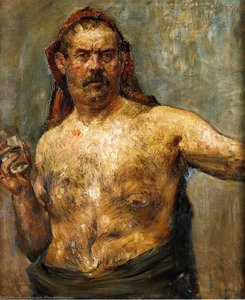 Self Portrait with a Glass1907
Eseji o delu Salome, Second Version
 Lovis Corinth: Bridging Impressionism & Expressionism – A Study of Artistic EvolutionExplore the fascinating artistic journey of Lovis Corinth, a pivotal figure bridging Impressionism & Expressionism. Discover his evolution,…
 The Soul of the Brushstroke: Why Textured Impasto Defines the Magic of Impressionist MasterpiecesDiscover the tactile magic of Impressionism. Explore how the impasto technique breathes life into masterpieces through texture and light. E…
 Unveiling the Dreamer: The 25 Most Iconic Masterpieces by Gustave MoreauStep into the dreamlike world of Gustave Moreau. Explore 25 iconic Symbolist masterpieces, from mythic legends to opulent textures. Find in…