
 Preverite v realnem okolju
 Pošlji kot čestitko
 Deli
Deli
 Podrobnosti
 Priročnik

 Prenesi
 Podobni artefakti
 Rentgenski posnetek
 Predvajaj diaporama
 Statistika
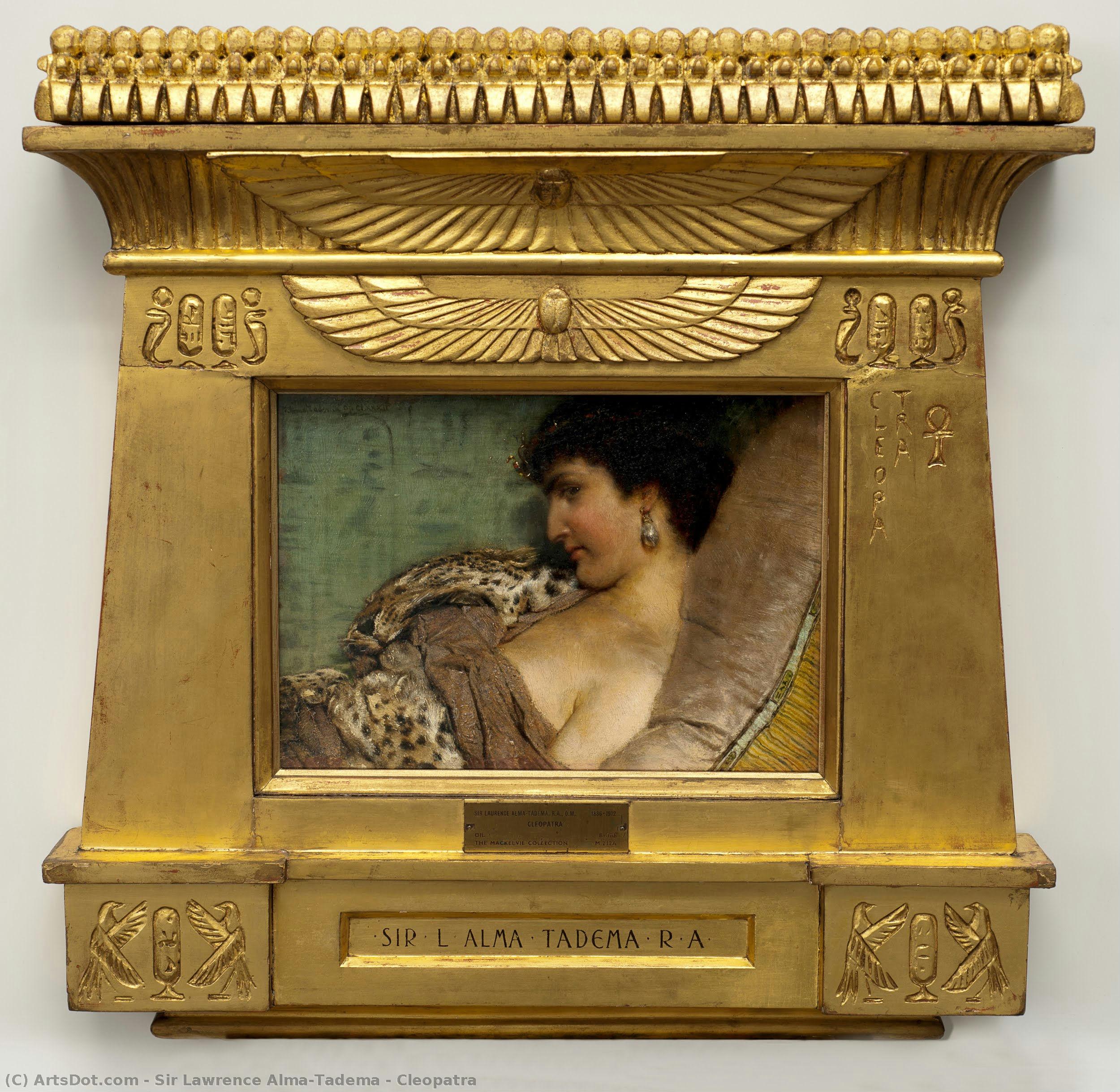
Cleopatra
 Acrylic On Canvas
- WallArt
- Victorian Romanticism
 1877
1877 46.0 x 44.0 cm
 Auckland Art Gallery Toi o Tāmaki
 Preberi več
Get a print-ready file that goes far beyond the web preview. Every digital image we sell comes from a high-resolution master in our stock database — usually 5,000 to 15,000 pixels wide — so you can print large, crop tightly, or reproduce fine detail with confidence.
No file leaves our studio untouched. A digital expert checks the colors against the original painting and corrects them if needed, then improves clarity and detail with professional retouching tools — always staying faithful to the artist's brushwork and style. The result is an image that looks like the painting, not like a filtered scan.
You approve before you're done: our expert sends the image by e-mail within 72 hours for your review. Not satisfied? Ask for improvements or corrections, or request a refund if the quality falls short.
This is the quality relied on by publishers, design studios, galleries and print shops.
Digitalna slika
Prenesite datoteko visoke ločljivosti za osebno uporabo, tiskanje in kreativne projekte. ( Preklop na tiskanine Naročite ročno slikano reprodukcijo)
Vključeno v vsako naročilo digitalne slike
Zagotovljena strokovna digitalna dostava
Z izbiro OriginalUniqueArt.com ne prejmete le slike – prejmete profesionalno urejeno digitalno umetniško delo, izdelano z največjo natančnostjo in zavestno podprto z garancijo za zadovoljstvo. Tukaj je vse, kar bo z vašim naročilom samodejno priloženo:

Hitra dostava po e-pošti
Vaša digitalna slika visoke ločljivosti bo na vaš e-naslov poslana v roku 72 ur od zaklopa naročila – pripravljena za takojšnjo uporabo.

Digitalna datoteka z uporabo AI
Vaše umetniško delo je strokovno optimizirano z uporabo naprednih orodij umetne inteligence in ročne obdelave, kar zagotavlja največjo stopnjo podrobnosti, jasnosti in barvne natančnosti.

Brezplačna doletna ponovna dostava
Ste datoteko zaradi nespremietne napake izgubili ali izbrisali? Ni težav – vam jo bomo ponovno poslali kadar koli in brezplačno.

Brez uvoznih pristojbin – vedno
Svoje umetniško del uživajte takoj, brez carin, davkov ali stroškov dostave – digitalni prenosi so vedno brezdavčni.

Zagotovilo natančnosti barv
Z uporabo profesionalnih orodij in procesov upravljanja barv zagotavljamo, da vaša digitalna slika čim bolj natančno odraža prvotne barve.

100-dnevna garancija zadovoljstva
Če niste zadovoljni s svojo digitalno sliko, jo bomo uredili ali vam v 100 dneh povrnili 100% denarja – brez kakršnih koli vprašanj.

100% Garancija povračila denarja
Niste zadovoljni? Zagotavljamo vam popoln povračilo sredstev v 100 dneh po prejemu digitalne datoteke – brez dodatnih vprašanj.

Popusti pri večjih naročilih
Kupite 3 slike, prihranite 10% - Kupite 5 slik, prihranite 15% - Kupite 10+ slik, prihranite 20%. Odlično za kreativne projekte, galerije in agencije.
A Portrait of Power and Intrigue: Exploring Alma Tadema’s Cleopatra
Lawrence Alma-Tadema's "The Meeting of Antony and Cleopatra," completed in 1877, transcends mere depiction; it embodies the opulent drama of Shakespeare’s iconic tale. More than just a visual record of history, this monumental oil painting delves into psychological complexities and artistic innovation—a testament to Tadema’s mastery of capturing both grandeur and subtle emotion. The artwork's enduring fascination stems from its meticulous attention to detail and its ability to convey the palpable tension between ambition and desire.- Subject Matter: The scene portrays Antony and Cleopatra seated at a banquet table, immediately after Cleopatra unveils her audacious gesture—dissolving an earring in wine as a challenge to Antony’s prowess. This moment encapsulates the crux of Shakespeare's narrative and Tadema brilliantly translates it onto canvas.
- Style & Technique: Tadema adhered rigorously to academic conventions, prioritizing realism and meticulous observation. His technique involved layering thin glazes over toned ground, achieving remarkable luminosity and capturing the textures of fabrics—the sumptuous silks and velvets adorning Cleopatra’s attire are particularly noteworthy. The artist skillfully employs chiaroscuro – dramatic contrasts between light and dark – to sculpt the figures and heighten the theatrical atmosphere.
- Historical Context: Painted during the Victorian era, “The Meeting” reflects a fascination with classical antiquity and Roman decadence. Tadema meticulously researched historical costumes and interiors, striving for accuracy that would impress discerning audiences. The painting speaks to anxieties about social morality alongside an appreciation for beauty and luxury—a characteristic blend of Victorian sensibilities.
- Symbolism: Cleopatra’s gesture is laden with symbolic significance. It represents her defiance of convention and her calculated manipulation of Antony's ego, highlighting her intelligence and cunning. The wine symbolizes indulgence and the ephemeral nature of pleasure, mirroring the doomed romance at its core. Furthermore, the opulent setting underscores the vast disparity between power and vulnerability.
- Emotional Impact: Tadema’s masterful composition compels viewers to contemplate the psychological dynamics between Antony and Cleopatra. The gaze exchanges convey unspoken desires and anxieties—a subtle yet powerful portrayal of human emotion. The painting evokes a sense of grandeur, mystery, and ultimately, tragedy, cementing its place as one of Alma-Tadema's most celebrated achievements.
A Closer Examination: Detail and Composition
The artist’s dedication to realism is evident in every brushstroke. Observe the painstaking rendering of Cleopatra’s jewelry—the pearl earring, painstakingly dissolved in wine—a symbol of her audacious challenge. Tadema's use of color palettes contributes significantly to the painting's mood; cool blues and greens dominate the background, contrasting sharply with the warm hues of Antony’s robes and Cleopatra’s skin tones. The positioning of the figures—Cleopatra seated centrally, Antony slightly angled—creates a dynamic interplay between dominance and vulnerability.Alma Tadema’s Legacy: Influence and Recognition
Lawrence Alma-Tadema remains an influential figure in Victorian art history. His meticulous approach to depicting classical subjects established him as a pioneer of academic painting, influencing generations of artists. Despite fading popularity during the 20th century, Tadema's work experienced a revival in recent decades, appreciated for its artistic merit and its ability to transport viewers back to a bygone era. Reproductions of “The Meeting” continue to adorn homes and galleries worldwide—a testament to the painting’s enduring beauty and narrative power.Exploring Reproduction Options
OriginalUniqueArt offers high-quality reproductions of Alma Tadema's "The Meeting of Antony and Cleopatra," meticulously crafted to capture the essence of the original masterpiece. Choose from a range of sizes and framing options to elevate your interior décor and immerse yourself in the captivating world of Victorian art history. Discover the timeless allure of this iconic painting today!Vprašanja in odgovori
Kdo je avtor in v kateri letnici je nastalo "Cleopatra"?
Lawrence Alma Tadema je ustvaril "Cleopatra" leta 1877.
Ali je "Cleopatra" avtorja Lawrence Alma Tadema v javni lastini?
"Cleopatra" avtorja Lawrence Alma Tadema je v v javni domeni – njegova avtorska pravica je zastarela. Ta status določa način, kako se lahko reproducira slika dela.
Katera postavitev ustreza formatu dela "Cleopatra" avtorja Lawrence Alma Tadema?
Z obliko Square se reprodukcija dela "Cleopatra" priporoča za Living Room.
Biografija umetnika
Early Life and Artistic Training
Lourens Alma Tadema, later Lawrence Alma Tadema, was born in Dronryp, Friesland, Netherlands, on January 8, 1836. His father, Pieter Jiltes Tadema, a village notary, had three sons by his first marriage, and his mother, Hinke Dirks Brouwer, was the half sister of Pieter’s first wife. The Tadema family moved to Leeuwarden in 1838 where Pieter's position as a notary would be more lucrative. His father died when Laurens was four, leaving his mother with five children: Laurens, his sister, and three boys from his father’s first marriage. Hinke Brouwer had artistic leanings, and decided that drawing lessons should be incorporated into the children’s education. He received his first art training with a local drawing master hired to teach his older half-brothers. It was intended that Laurens would become a lawyer; but in 1851 he suffered a physical and mental breakdown. Diagnosed as consumptive; given only a short time to live, he was allowed to spend his remaining days at his leisure, drawing and painting. Left to his own devices he regained his health and decided to pursue a career as an artist. In 1852 he entered The Royal Academy of Antwerp where he studied early Dutch and Flemish masters, alongside absorbing the meticulous detail demanded by historical accuracy. During Laurens’ four years as a registered student at the Academy, he won several respectable awards. Before leaving school, towards the end of 1855, he became assistant to the painter Louis Jan de Taeye, whose courses in history and historical costume he had greatly enjoyed at the Academy. De Taeye introduced him to books that influenced his desire to portray Merovingian subjects early in his career. He was encouraged to depict historic accuracy in his paintings, a trait for which the artist became known. Laurens Tadema took this criticism very seriously, and it led him to improve his technique and to become the world’s foremost painter of marble and variegated granite.Exploring Antiquity: Merovingian Mysteries and Egyptian Visions
Laurens Alma Tadema's artistic trajectory began with explorations of Merovingian themes—the Frankish dynasty that ruled after the fall of the Western Roman Empire. These early works, though demonstrating his burgeoning talent for historical detail and narrative composition, didn’t achieve the widespread acclaim he would later find. He was encouraged to depict historic accuracy in his paintings, a trait for which the artist became known. However Merovingian subjects did not have a wide international appeal, so he switched to themes of life in ancient Egypt, then to the classical world of Greece and Rome. This transition wasn't arbitrary; it reflected a growing public appetite for romanticized visions of antiquity, fueled by archaeological discoveries and a Victorian fascination with moral lessons drawn from the past. He was encouraged to depict historic accuracy in his paintings, a trait for which the artist became known. It is perhaps in this series that Laurens Tadema moved by the deepest feeling and the strongest spirit of romance. He was encouraged to depict historic accuracy in his paintings, a trait for which the artist became known.The Architect of Atmosphere: Detail and Light
What truly set Alma Tadema apart was his unparalleled ability to create atmosphere. He wasn’t just painting objects; he was capturing the very *feeling* of sunlight on marble, the coolness of mosaic floors underfoot, the gentle murmur of fountains in a Roman atrium. This mastery stemmed from an obsessive attention to detail and a deep understanding of materials. He meticulously researched ancient architecture, furniture, and clothing, ensuring that every element within his compositions was historically plausible. But beyond accuracy, he possessed a remarkable talent for rendering light and texture. He wasn’t just painting surfaces; he was simulating the way light interacted with them—the dappled shade beneath olive trees, the shimmering glow of candlelight in a darkened room. This dedication to verisimilitude wasn’t merely about technical skill; it was about creating an illusion of reality so convincing that viewers felt transported to another time and place. He even went as far as to build miniature models of the settings he intended to paint, ensuring perfect perspective and architectural accuracy.Victorian Fame and Legacy
Alma Tadema enjoyed immense popularity during his lifetime, becoming a household name and receiving numerous accolades, including knighthood in 1899. However, following his death in 1912, his work fell into relative obscurity. The changing tastes of the early 20th century favored more modernist styles, and Alma Tadema’s meticulous realism seemed out of step with the prevailing artistic trends. It wasn't until the 1960s that a renewed appreciation for his art began to emerge. Scholars and collectors rediscovered the beauty and technical brilliance of his paintings, recognizing him as a master of Victorian art and a significant figure in the history of classical representation. Today, his works are highly sought after by museums and private collectors worldwide, and his influence can be seen in contemporary artists who strive for similar levels of detail and atmospheric realism. He wasn’t just an artist; he was a cultural phenomenon, creating a visual language that continues to resonate today.
Lawrence Alma Tadema
1836 - 1912 , Nizozemska
Kratek pregled
- Artistic Movement Or Style: Viktorijanska umetnost
- Artists Or Movements Influenced By This Artist: ['Romantizem']
- Artists Who Influenced This Artist: ['Louis Jan de Taeye']
- Date Of Birth: 8. januarja 1836
- Date Of Death: 25. junija 1912
- Full Name: Lourens Alma Tadema
- Nationality: Nizozemska
- Notable Artworks:
- Živi kamen
- Želiš mi govoriti več?
- Pogled iz vogala
- Place Of Birth: Dronryp, Nizozemska