Baroque
St. Peter (José de Ribera)
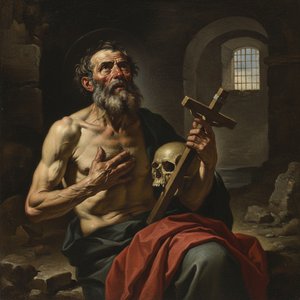
José de Ribera (1591–1652) je izdelal St. Peter. Spada v smer Baroque. Izdelano je iz Oil On Canvas. Del se nahaja v muzeju Muzej Prado v mestu Madrid, Španija.
- Oil On Canvas
- Muzej Prado, Madrid

 Predogled v realnem okolju

 Ročno izdelano oljno slikarstvo
 Pošlji
 Deli
 Priročnik


 Prenesi sliko
 Podobni izdelki
 Rentgenski posnetek
 Predvajaj diaporama
 Vprašanja in odgovori

 Statistika
St. Peter: ključne informacije
- Naslov
- St. Peter
- Avtor
- José de Ribera (1591–1652)
- Umetnik, rojen v
- Xàtiva, Španija
- Tehnika
- Oil On Canvas
- Kje je videti
- Muzej Prado, Madrid, Španija
- Gibanje
- Baroque
- Obdobje
- Early Modern
- Tema
- man, beard, book, keys, cloak, brown
Kaj prikazuje St. Peter?
The Portrait of St. Peter by Jusepe de Ribera
In this oil painting on canvas, Jusepe de Ribera presents us with a portrait of St. Peter. The subject, a central figure among the apostles of Jesus and recognized as the first Pope, is rendered with a profound sense of presence. Ribera focuses on the man himself, capturing the weight of his role and the character of his lived experience. There is a quiet intensity in the way the figure is presented, inviting a closer look at the weathered details of his countenance.
The work is a significant example of the Baroque style. Through this approach, the artist emphasizes the spiritual and human dimensions of the apostle. The depiction avoids idealization, opting instead for a directness that feels immediate. By focusing on the specific attributes of the saint, Ribera allows the subject to command the space, presenting a figure that is both a religious icon and a man of flesh and bone.
Composition and Visual Elements of the Portrait
The composition is built upon a stable pyramidal structure, with the head of St. Peter forming the apex of the form. He is presented from the waist up, his body turned slightly toward the viewer's left. In his right hand, he holds a book and a set of keys, objects that anchor the figure within the frame. This arrangement directs the eye upward toward his weathered features, creating a sense of quiet, grounded presence.
A strong light source enters from the left, illuminating his face and upper body while casting the rest of the figure into deep shadow. This light creates a sharp contrast against a background that is nearly black, pushing the subject forward into the viewer's space. The color palette is restrained, dominated by warm earth tones—ochre, brown, and gold—which emphasize the textures of his skin and the heavy folds of his clothing.
Technique and Artistic Style of the Work
The work is defined by a profound use of tenebrism, where the subject emerges from a nearly black background into a sharp, focused light. This dramatic chiaroscuro creates a sense of volume, pulling the figure forward and emphasizing the physical presence of the man. Such a heavy interplay of light and shadow reflects the influence of Caravaggio, grounding the religious subject in a palpable, earthly reality. The light source, positioned to the left, carves out the contours of the face and the weathered texture of the skin, casting deep shadows that heighten the emotional weight of the portrait.
Ribera’s approach to the medium is tactile and deliberate. He employs a technique of layering paint to build up depth, allowing the viewer to sense the physical weight of the drapery and the coarse nature of the beard. Visible brushstrokes are not hidden; instead, they contribute to the overall effect, lending a sense of immediacy to the rendering of the fabric and the aged features. Strong, defined lines delineate the eyes, nose, and mouth, providing a structural clarity that balances the more fluid, organic shapes of the figure. The result is a composition that feels both intensely personal and physically substantial.
Other Works by Jusepe de Ribera
The artist's exploration of this particular subject matter is reflected in several other significant pieces within our collection and major institutions. We hold St. Simeon 1 in our catalog, a work that speaks to the same profound human experience found in this portrait. Another notable piece in our collection is The Repentance of Saint Peter, which is currently housed in the Museum of Fine Arts, Lyon.
Beyond our own holdings, Ribera's preoccupation with the themes of remorse and spiritual weight is evident in other historical examples. The work known as Penitent St. Peter, dated about 1630, is held at the Kunsthistorisches Museum in Vienna. This piece shares a similar intensity in its depiction of the apostle's character. Additionally, The Tears of Saint Peter, which dates to 1612, is part of the collection at the Metropolitan Museum of Art in New York. These works collectively illustrate the artist's ability to capture the complexities of faith and the physical reality of the human condition through his characteristic use of light and shadow.
V katerem muzeju se nahaja St. Peter?
Muzej Prado
Madrid, Španija
Zgodovina Muzeja Prado Korenine Muzeja Prado so tesno povezane z špansko kraljevsko zbirko, katere zgodovina sega vse do 18. stoletja. To, kar se je začelo kot vizija za naturalno zgodovino v kabinetu pod Ferdinandom VII., se je sčasoma spremenilo v posvečeno svetišče slikarstva in kiparstva.


St. Peter v visoki ločljivosti
José de Ribera, St. Peter, Muzej Prado. Javna lastnina
Digitalni strokovnjak preveri barve v primerjavi z originalnim slikarstvom in popravlja datoteko, da bi dosledno odražala umetnikovo črtico.
Kupite sliko visoke ločljivostiVprašanja o St. Peter
Kje je danes razstavljeno "St. Peter" avtorja José de Ribera?
Originalno delo "St. Peter" avtorja José de Ribera se nahaja v muzeju Muzej Prado, Madrid, Španija. Reprodukcija omogoča, da ta sklad prikazujete tudi v svojem domu.
Z kakšno tehniko je izdelano "St. Peter"?
"St. Peter" je izdelano z uporabo tehnike Oil On Canvas.
Katere teme se pojavljajo v delu "St. Peter" avtorja José de Ribera?
Tematika v delu "St. Peter" avtorja José de Ribera vključuje man, beard, book, keys, cloak, brown, gold, skin, ki skupaj predstavljajo vsebino umetninškega dela.
Ali je delo "St. Peter" avtorja José de Ribera v javni lastini?
Status avtorskih pravic za "St. Peter" avtorja José de Ribera: del je v javni domeni – avtorska pravica je zastarela. To določa, ali se lahko reprodukcije slike izdelujejo prosto.
Kdo je ustvaril "St. Peter"?
Delo "St. Peter" je ustvaril José de Ribera. Informacije na tej strani opisujejo izvirno delo umetnika José de Ribera.
V kateri umetniški smer spada "St. Peter" avtorja José de Ribera?
"St. Peter" avtorja José de Ribera pripada gibanju Baroque. To gibanje zagotavlja slogovni kontekst dela.
V katero obdobje umetnostnega razvoja José de Ribera pripada delo "St. Peter"?
V okviru kariere umetnika José de Ribera delo "St. Peter" pripada obdobju Mature Period, kar omogoča primerjavo z ostalimi umetnikovimi deli.
Kaj pojasnjuje status avtorskih pravic za "St. Peter" avtorja José de Ribera?
Status avtorske pravice za "St. Peter" – v javni domeni – avtorska pravica je zastarela – izhaja iz smrti umetnika v letu 1652.
Ali je "St. Peter" ostalo v domovini svojega avtorja?
Da – umetniško delo se nahaja v državi izvenca. Delo "St. Peter" se nahaja v državi Španija, medtem ko je José de Ribera rojen/a v državi Španija.
O umetniku, José de Ribera

1591–1652, Španija
José de Ribera
Življenje v senci in svetlobi Jusepe de Ribera, znan tudi kot Lo Spagnoletto – “Mali Španec” – je bil izjemna osebnost baročne dobe, slikar čigar platna so pulzirala z dramatično intenzivnostjo in neomilostnim realizmom. Rojstni kraj mu je bila Xàtiva v Španiji leta 1591. Njegova pot ga je od valencijanskih korenin popeljala daleč, končno pa se je uveljavil kot eden najpomembnejših slikarjev 17. stoletja v Neaplju, mestu tedaj pod špansko vladavino.
Tudi dela avtorja José de Ribera
 Magdalena Ventura z možem in sinom1631
 Čevljevanje
 St. Onuphrius1637
 The Duel of Women (The Duel of Isabella de Carazzi and Diambra de Pettinella)1636
Eseji o delu St. Peter
 Mastering the Shadows: The Dramatic Power of Chiaroscuro and Tenebrism in Baroque Fine ArtExplore the profound drama of chiaroscuro and tenebrism. Discover how masters like Caravaggio used light and shadow to sculpt emotion and v…
 Masterpieces of Light: The Top 25 Artworks by Duccio di BuoninsegnaJourney through the divine elegance of Duccio di Buoninsegna. Explore 25 iconic Sienese masterpieces, from the Maestà to the Rucellai Madon…
 Jusepe de Ribera: Dramatic Realism & Spiritual Intensity in the Spanish Golden AgeExplore the powerful Baroque paintings of Jusepe de Ribera, master of tenebrism and dramatic realism. Discover his spiritual intensity, inf…