
 Predogled v realnem okolju
 Pošlji
 Deli
Deli
 Podrobnosti o delu
 Priročnik

 Prenesi sliko
 Podobni izdelki
 Rentgenski posnetek
 Predvajaj diaporama
 Q&A
Q&A Statistika
Violin and Guitar

- 60.0 x 81.0 cm


 Preberi več
Giclée tisk / Umetniški tisk
Giclée ali platnati odtis muzejske kakovosti z hitro proizvodnjo in prilagodljivimi možnostmi končne obdelave. ( Kupite ročno slikano delo Preklop na digitalno sliko)




P118B €10

P118H €10

P118W €10

P438Z €10

P508JH €12

P508YH €12

P805H €10

P805Z €10

P919BZ €10

P919G €10

P919XJ €10

P959ZH €10

P968JZ €12

W106C €8

W218G €10

W218JH €8

W218Y €10

W307PJ €10

W316G €10

W316PJ €8

W316Y €10

W398PJ €8

W4111J €10

W500HY €15

W500JH €15

W692G €12

W849H €8

W940BG €15

W953PJ €8




Izberite eno od naših vnaprej določenih velikosti, ki ustrezajo prvotnim proporcijam umetničkega dela.

Vnesite širino in višino, ki jih potrebujete za svoj okvir ali steno. Tiskanje se lahko le odreže, vendar ga ni mogoče narediti večjega od slike, zato format z drugačno obliko pomeni izgubo dela slike. Pred tiskanjem vam pošljemo digitalni predogled za potrditev. Slika, prikazana na tej strani, ne prikazuje dejanskega izrezka — le predogled to omogoča.
Globalna dostava () v 2 tednih namesto standardnih 4/5 tednov. (3 november)

Brezplačna ekspresna dostava po vsem svetu

Visokokakovostno laneno platno

Popolno zavarovanje pošiljke

Garancija povračila carine in uvoznih davkov

Garancija popolnega barvnega ujemanja

100-dnevna politika vračil (le v primeru okvar)

Garancija 100% povračila denarja

Popust pri večjem naročilu
 Možnost stekla je na voljo le za velikosti pod 110 cm

Violin and Guitar
Giclée tisk / Umetniški tisk
Velikost reprodukcije
-


Skupna cena
€ 71
A Fragmented Harmony: Juan Gris’s “Violin and Guitar”
Juan Gris’s “Violin and Guitar,” painted in 1913, isn't merely a still life; it’s a meticulously constructed exploration of perception and the very nature of representation. Emerging from the fertile ground of early Cubism, this work embodies the movement’s revolutionary shift away from traditional perspective and towards a fractured, multi-faceted view of reality. More than just depicting musical instruments, Gris offers us a glimpse into his innovative approach to visual language – a deliberate dismantling and reassembling of form that speaks volumes about the artist's intellectual rigor and artistic vision.
The canvas is dominated by the assertive presence of a guitar and violin, rendered with an almost startling degree of realism despite their fragmented composition. However, these recognizable objects are not presented in a straightforward manner. Instead, they’re broken down into geometric planes – sharp angles, interlocking rectangles, and subtly curved lines—that suggest multiple viewpoints simultaneously. This is the hallmark of Synthetic Cubism, where elements from various perspectives are layered upon one another to create an illusion of depth and volume within a flattened space. The background, hinted at through a suggestion of a window and curtain, further reinforces this sense of spatial ambiguity, inviting the viewer to actively participate in constructing the image.
The Language of Cubism: Deconstruction and Reconstruction
Gris’s approach is deeply rooted in the principles pioneered by Picasso and Braque. He embraced the analytical cubist method – a process of dissecting objects into their constituent parts, analyzing them from multiple angles, and then reconstructing them on the canvas. Yet, “Violin and Guitar” marks a significant departure from the purely analytical style. It’s a prime example of Synthetic Cubism, where pre-existing elements—fragments of color, texture, and form—are collaged together to create a new, unified image. The use of *papier collé*, or pasted paper, is subtly present in the background, adding another layer of complexity and visual interest.
Noticeably absent is the dense, monochromatic palette often associated with early Cubism. Instead, Gris employs a vibrant and carefully considered color scheme – cool blues and grays juxtaposed against warm reds and greens. These colors aren’t merely decorative; they contribute to the overall sense of dynamism and visual tension within the composition. The deliberate use of contrasting hues draws attention to specific areas of the painting, guiding the viewer's eye through the intricate network of lines and shapes.
Symbolism and Emotional Resonance
While “Violin and Guitar” is undeniably a formal masterpiece, it also carries a subtle layer of symbolic meaning. Music itself has long been associated with harmony, emotion, and creativity. The instruments depicted—the violin and guitar—represent these concepts in tangible form. The fragmentation of the objects can be interpreted as reflecting the complexities of human experience – the way we perceive reality through multiple lenses and the challenges of integrating disparate elements into a cohesive whole.
Furthermore, the painting’s overall mood is one of quiet contemplation. The muted colors, the fragmented forms, and the sense of spatial ambiguity create an atmosphere of detachment and introspection. It's not a celebratory or overtly emotional work; rather, it invites the viewer to engage in a process of careful observation and interpretation. The deliberate lack of strong shadows contributes to this feeling of flatness and abstraction, emphasizing the painting’s formal qualities over its representational ones.
A Legacy of Innovation
“Violin and Guitar” stands as a pivotal work in Juan Gris's artistic development and a cornerstone of Cubist innovation. It demonstrates his mastery of geometric form, his innovative use of color, and his ability to create complex visual narratives through seemingly simple compositions. Gris’s unique approach—combining rigorous analytical study with a poetic sensibility—established him as one of the most influential artists of the 20th century, leaving an indelible mark on the development of modern art.
Vprašanja in odgovori
Kdo je avtor in v kateri letnici je nastalo "Violin and Guitar"?
Juan Gris je ustvaril "Violin and Guitar" leta 1913.
Katera je prevladujoča barvna tonina dela "Violin and Guitar" avtorja Juan Gris?
Prevladujoča barva dela "Violin and Guitar" avtorja Juan Gris je Green to Violet Spectrum, ki predstavlja osnovni ton palete.
Kakšna velikost in orientacija sta priporočeni za tiskanje dela "Violin and Guitar" avtorja Juan Gris?
Velikost Medium, orientacija Portrait: to je priporočena nastavitev tiska za "Violin and Guitar" avtorja Juan Gris.
Biografija umetnika
Španski vizionar kubizma: Življenje in umetnost Juana Grisa
Umetnik, ki se je leta 1887 v Madridu rodil kot José Victoriano González-Pérez, se je odpravil na pot, ki ga je postavila med najpomembnejše zastopnike umetnosti začetka 20. stoletja. Njegova prvotna pot se ni takoj usmerjala v platno in čopič; študiral je inženiring na šoli za umetnost in znanost, s čimer je pokazal analitičen um, ki bo kasneje globoko vplivnal na njegov umetniški pristop. Še v teh oblikovalnih letih se je iskrala kreativna iskra – prispevanje risic v lokalne revije je nakazovalo prihajajoči vizualni talent. Prav leta 1av 1905 je sprejel pseudonim Juan Gris, ime, ki je odmevalo z novim občutkom identitete in smisla, ko je začel formalno študirati slikarstvo pod vodstvom Joséja Moreno Carboneroja. To je označilo ključni preobrat, ki ga je usmeril na pot umetniške inovativnosti.Parizsko prebujanje in objem kubizma
Leta 1906 se je zgodil preobrazben temeljni preselitev v Pariz, mesto, ki je takrat utripalo z umetniško energijo. Gris se je potopil v to živahno okolje in vzpostavil prijateljstva z velikani, kot so Henri Matisse, Georges Braque in Fernand Léger. Sprva se je ukvarjal s satirično ilustracijo za publikacije, kot je L'Assiette au Beurre, pri čemer je izpiloval svoje opazovalne veščine in razvijal prodoren smisel za vizualno duhovitost. Vendar pa se je magnetni privlačnost Pabla Picassa izkazala za posebej vplivno. Okoli leta 1910 se je Gris resneje posvetil slikarstvu, odhajajoč od karikature proti razvijajočemu se jeziku kubizma. To ni bilo zgolj imitiranje; začel je z iskanjem bistva oblike in prostora, v iskanju novega vizualnega reda. Njegova zgodnja raziskovanja so bila zaznamovana z namerno odločitvijo za odstop od tradicionalne predstavitve, saj je sprejel abstrakcijo kot sredstvo za zajemanje globinske strukture realnosti.Dediščina in trajni vpliv
Prispevek Juana Grisa k kubizmu presega zgolj slogovno inovacijo; v gibanje je prinesel edinstično intelektualno globino in strukturno jasnost. Prešel je analitično fazo k bolj organiziranemu in sintetičnemu pristopu, poudarjajoč red in natančnost. Njegovo del je globoko vplival na puristični slog, ki sta ga zastopala Amédée Ozenfant in Charles Edouard Jeanneret (Le Corbusier), s poudarkom na vrnitvi k klasičnim načelom oblike in kompozicije. Grisov poudarek na geometričnih oblikah, harmoničnih barvnih paletah in integraciji vsakdanjih predmetov v njegovo umetnost ga je uveljavil kot ključno figuro v umetnosti 20. stoletja. Njegova dediščina še vedno navdihuje umetnike danes, saj dokazuje trajno moč kubizma in vizionarski genij Juana Grisa – španskega mojstra, ki je preoblikoval naše razumevanje percepcije in predstavitve.
Juan Gris
1887 - 1927 , Španija
Hitri podatki
- Datum Rojstva: 23. marec 1887
- Datum Smrti: 11. maj 1927
- Državljanstvo: Španec
- Kraj Rojstva: Madrid, Španija
- Polno Ime: José Victoriano González-Pérez
- Pomembna Dela:
- Kitara pred morjem
- Poklon Pablu Picassu
- Mlinar
- Portret gospe Josette Gris
- Umetniki Pod Vplivom:
- Purizem
- Amédée Ozenfant
- Le Corbusier
- Umetniški Smer: Kubizem, Sintetični kubizem
- Vplivi Umetnikov:
- Pablo Picasso
- Henri Matisse
- Georges Braque
Sorodni članki
Redefining Nature: A Collector's Guide to the Geometric Beauty of Cubist Landscapes
Explore the revolutionary world of Cubist landscapes. Discover how masters like Picasso and Braque redefined nature through geometric beauty, and learn expert tips for curating these transformative masterpieces in your modern home collection.

Geometrična Abstraktna Umetnost: 10 Mojstrovin za Vaš Dom | OriginalUniqueArt.com
Odkrijte 10 mojstrovin geometrične abstrakcije! Mondrian, Malevich, Kandinsky in drugi. Zgodbe umetnikov, tehnike ter navdih za vaš dom. Kvalitetne reprodukcije slik na OriginalUniqueArt.com. Raziskajte celotno zbirko online!
Cubist Expression: A Professional Guide to Integrating Geometric Abstraction into Modern Hospitality Design
Elevate hospitality interiors with Cubist art. Our expert guide explores integrating geometric abstraction into hotel design through high-quality, large-scale oil reproductions and custom multi-panel commissions tailored for professional designers and procurement managers.
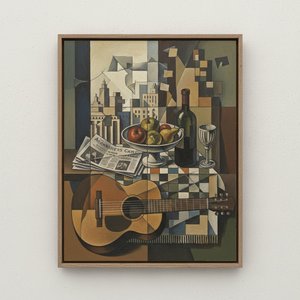
Juan Gris: Cubist Deconstruction & Synthesis – A Comprehensive Exploration
Explore the revolutionary art of Juan Gris – a master of Cubism. Discover his unique approach to deconstruction, vibrant Synthetic Cubist works, and lasting influence on modern art. Expert analysis for collectors.
Deconstructing Identity: A Comprehensive Exploration of Cubist Portraiture
Explore the revolutionary world of Cubist portraiture with our comprehensive guide. Discover Picasso, Braque, Gris & the movement's impact on modern art. Expert analysis for collectors and enthusiasts.


