
() ·
Slika, izdelana ročno posebej zanj
Ročno izdelana oljna reprodukcija
Ročno slikano olje na platnu v vaši izbiri velikosti in okvirja, izdelano po naročilu naših umetnikov. ( Preklop na tiskanine Preklop na digitalno sliko)
Biografija umetnika
John Wesley (1928-2022): American painter blending Pop Art & Surrealism with precise style, exploring themes of humor, trauma, and the unconscious.
 Preberi več
od ·
Poglavje 1
Katere velikosti naj bi bila?
Drleč po drslenici spremenite velikost; slika na levi strani prikazuje okvir v njegovi dejanski širini. Razmerja originala so ohranjena.
Izberite eno od naših vnaprej določenih velikosti, ki ustrezajo prvotnim proporcijam umetničkega dela.

Vnesite širino in višino, ki jih potrebujete, da se slika prilega vašemu okviru ali steni. Ker je delo ročno slikano, lahko umetnik pri različnih oblikih slik pri robovih doda malo več barve ali pa jih malo odreže — izberite sami. Pred začetkom slikanja vam pošljemo digitalni predogled za potrditev. Slika, prikazana na tej strani, ni končni rezultat — le predogled prikazuje dejansko podobo.
Poglavje 2
Na kakšen način naj bo dostavljeno?
Izberite robove platna
Izberite svoj okvir

Beli rob €1

zamegljen rob €1

Razširjen rob €1

P118B €10

P118H €10

P118W €10

P438Z €10

P508JH €12

P508YH €12

P805H €10

P805Z €10

P919BZ €10

P919G €10

P919XJ €10

P959ZH €10

P968JZ €12

W106C €8

W218G €10

W218JH €8

W218Y €10

W307PJ €10

W316G €10

W316PJ €8

W316Y €10

W398PJ €8

W4111J €10

W500HY €15

W500JH €15

W692G €12

W849H €8

W940BG €15

W953PJ €8

H24-GOLD €30

H24-SILVER €30

H36-GOLD €45

H36-SILVER €45
V okviru
Okvirni rob: . Celotna velikost z okvirjem: .
Poglavje 3
Kdo to slika in ali bi se moralo kaj spremeniti?
Po oddaji naročila bo ekipa OriginalUniqueArt.com stranki po e-pošti poslala navodila in zagotovila predogled makete
Poglavje 4
Mednarodna dostava () v 3/4 tednih namesto običajnih 5 tednov. (24 november). Brez kompromisov pri kakovosti.
Zadnji dotiki
Zvešča, kot v muzeju?
Podrobnosti o gravirani bronasti plošči
This elegant plaque features the artist's name and the title of the artwork, finely engraved for a timeless presentation.
It is made from bronze with a refined, elegant finish. The text is precisely laser-engraved for a sharp and permanent result. Measuring 9x2 cm, the plaque is compact yet easy to read. It's built to be durable and scratch-resistant, offering a professional, museum-quality look. Mounting is simple thanks to the included adhesive backing.
Podrobnosti o transparentni akrilni plošči
The plaque includes essential engraved details such as the artist's name, the title of the artwork, the date it was created, the type of media used-like oil on canvas or watercolor-a brief description of the piece, and a QR code that links to the complete artwork information.
It is crafted from clear acrylic, offering a sleek, modern appearance. The text is UV-engraved in black to ensure strong visual contrast. With a size of 10x15 cm, it ensures optimal readability. It comes equipped with two metal hooks for secure wall mounting. The plaque is designed to be weather-resistant, making it suitable for various environments, and it includes interactive features that work seamlessly with smartphone scanning.
Podrobnosti o črni akrilni plošči
This elegant plaque includes engraved information such as the artist's name, the title of the artwork, the date it was created, the type of media used (like oil on canvas or watercolor), a short description of the artwork, and a QR code for quick access to more information.
The plaque itself is made from refined black acrylic with a premium finish. The text is laser-engraved in white for high contrast and readability. Its size is 10x15 cm, designed to be easy to read. It comes with two metal hooks for professional mounting. The design is sleek and fits any interior style. It is also weather-resistant and durable, with built-in digital integration for mobile compatibility.
Zaščitni lak?
Kdaj jo potrebujete?
Poglavje 5
Vaša slika, natako kot ste jo naročili

Balkans
Tehnik reprodukcije
Velikost reprodukcije
-

Izbor vrhunskih umetnikov
Več podrobnosti, dovršenosti in dodatnega časa za izdelavo
-

Okvir za reprodukcijo
-
-
Za umetniška dela ali reprodukcije, ki so po katerikoli strani širše od 105 cm (približno 41 palč), bo okvir poslan v razstavljeni obliki kot komplet. Ta metoda zagotavlja varno dostavo in preprečuje poškodbe med transportom.
Potrebna je profesionalna montaža – to ni izdelek za DIY izdelavo.
Komplet mora sestaviti in platno napeti izkušen profesionalni okvirjest, pri čemer bo uporabil lepil za les (ni vključeno), klešče za napetje platna in spone, da bi ohranil pravokotnost letev med sušenjem lepila. Nepravilna montaža ali neenakomerna napetost platna lahko trajno poškoduje umetniško del in
 Za umetniška dela ali reprodukcije, ki so po katerikoli strani širše od 105 cm (približno 41 palč), bo okvir poslan v razstavljeni obliki kot komplet. Ta metoda zagotavlja varno dostavo in preprečuje poškodbe med transportom.
Vključene so vse letve iz masivnega lesa, natančno izrezane po meri.
Montaža poteka s priloženimi vijaki, vendar je za kotiče potrebna lepil za les, ki ga ni v kompletu in ga mora zagotoviti vaš okvirnik.
Za uporabo so potrebna profesionalna orodja, ki niso vključena: klešče za napinjanje platna (napetnik) in sponke za ohranjanje pravokotnosti letev med sušenjem lepila.
Pomembno:
Za stike v kotih potrebujete lepil za les, nosilce je treba z

Značka z imenom
-
-

Zaščitni lak
Sijajni lak (poudarja barve ter zagotavlja zaščito pred svetlobo in vlago)
-

Prilagodi svoje umetniško delo
Primeri možnih prilagoditev: zamenjava obraza s fotografijo kupca; dodajanje hišnega ljubljenčka (npr. zamenjava mačke s psom); vključitev skritega sporočila v ozadje; sprememba krajšave ali elementov ozadja.
-

Hitra dostava
Mednarodna dostava () v 3/4 tednih namesto običajnih 5 tednov. (24 november). Brez kompromisov pri kakovosti.
-
Hitra dostava
Globalna dostava () v 5 tednih. (1 december).
Vključeno v ceno
Skupna cena
€ 268
Možnost stekla je na voljo le za velikosti pod 110 cm
Vključeno v vsako naročilo
- Brezplačna ekspresna dostava po vsem svetu
- Visokokakovostno laneno platno
- Popolno zavarovanje pošiljke
- Garancija povračila carine in uvoznih davkov
- Garancija popolnega barvnega ujemanja
- 100-dnevna politika vračil (le v primeru okvar)
- Garancija 100% povračila denarja
- Popust pri večjem naročilu


 Predogled v realnem okolju

 Pošlji
 Deli
 Podrobnosti o delu
 Priročnik


 Prenesi sliko
 Podobni izdelki
 Rentgenski posnetek
 Predvajaj diaporama
 Vprašanja in odgovori
 Statistika
V številkah
- 29izbira okvirjev
- standardne velikosti, v svojih lastnih proporcijah
- 5teden dni za slikanje in dostavo
O originalnem delu

To umetniško delo je zaščiteno z avtorskimi pravicami
Umetniška dela, prikazana na tej strani, so zaščitena z avtorskimi pravicami, kar pomeni, da po zakonu ne moremo ustvarjati ali prodajati identičnih reprodukcij. Ta zaščita se izvaja v skladu z mednarodnimi sporazumi, kot so Bernska konvencija in po nacionalnih zakonih, vključno s tistimi, ki jih določa Zakon o avtorskih pravicah ZDA – naslov 17.
Kot spoštljiva in zakonita alternativa ponujamo prilagojena, ročno slikana umetniška dela, navzornena na original. Naši sposobni in profesionalni umetniki skrbno preučijo stil, vzdušje in umetniško bistvo originala, da ustvarijo novo, edinstveno delo, ki vzbudi enak občutek – pri čemer ostaja popolnoma nova, samostojna izvirna stvar.
Ta način v celoti upošteva zakonodajo o avtorskih pravicah, saj ne vključuje kopiranja ali podvajanja zaščitenga umetniškega dela. Namesto tega gre za kreativno preinterpretacijo – novo sliko, ki je navdihnjen rezultat originala, vendar ni z njim identična.

John Wesley
1928 - 2022, United States
Kratek pregled o John Wesley
- Full Name: John Wesley
- Nationality: American
- Date Of Birth: 1928
- Date Of Death: 2022
- Place Of Birth: Los Angeles, United States of America
- Notable Artworks: ['Searching for Bumstead']
- Artistic Movement Or Style: Pop Art, Surrealism
- Artists Who Influenced This Artist: ['Andy Warhol']
- Artists Or Movements Influenced By This Artist:
- Pop Art
- Surrealism
Biografija umetnika
A Life Painted in Paradox: The World of John Wesley
John Wesley, who passed away in February 2022 at the age of 93, remains a quietly compelling figure in American art—an artist whose work defies easy categorization. Born in Los Angeles in 1928, his life spanned nearly a century of artistic evolution, yet he forged a path distinctly his own, blending elements of Pop Art’s accessibility with the enigmatic depths of Surrealism. Wesley wasn't interested in belonging to movements; rather, he absorbed influences and transmuted them into a visual language that was both precise and profoundly personal. His paintings aren’t bombastic statements but intimate explorations—coolly observed scenes populated by recurring motifs, rendered in a limited palette of pastel blues, pinks, and greens. This deliberate restraint is key to their power; it creates an atmosphere of detached contemplation, inviting the viewer into a world that feels both familiar and subtly unsettling. The impact of a childhood trauma – discovering his father’s death from a stroke at age five – resonated throughout his life and work, manifesting as a quiet introspection and a fascination with themes of loss and memory.
From Blueprints to Brushstrokes: Early Influences and Artistic Development
Wesley's journey to becoming a painter was unconventional. Before dedicating himself fully to art, he worked as an illustrator for Northrop Aircraft, meticulously translating technical blueprints into simplified drawings. This experience instilled in him a precision of line and form that would become hallmarks of his style. Later, a stint as a postal clerk provided another unexpected source of inspiration—the imagery found on stamps and employee badges began to appear in his artwork, subtly woven into the compositions. These early experiences weren’t merely jobs; they were formative lessons in visual communication, shaping his compositional approach and establishing a unique vocabulary of symbols. He acknowledged the influence of Pop artists like Andy Warhol, recognizing their impact on the art world, but he resisted being solely defined by that label. Wesley's work possessed a deeper psychological current, an undercurrent of dreamlike imagery and unexpected juxtapositions that aligned him more closely with the spirit of Surrealism, even as he eschewed strict adherence to its tenets. His signature style emerged gradually—clean lines, solid shapes, repetitive motifs like animals, women, and portraits, often arranged in compositions reminiscent of comic strips.
“Searching for Bumstead” and Major Recognition
Perhaps the most poignant expression of Wesley’s personal history is found in his “Searching for Bumstead” series. This body of work delves into themes of loss and trauma through depictions of empty interiors, spaces imbued with a sense of absence and longing. The title itself hints at an elusive search—a quest to recapture something lost, perhaps the comforting presence of his father. These paintings aren’t overtly emotional; they are characterized by a cool detachment that amplifies their underlying sadness. Wesley's talent didn’t go unnoticed. His first solo exhibition in 1963 at The Robert Elkon Gallery garnered critical acclaim, including a particularly insightful review from Donald Judd, who praised the “cool, psychological oddness” of his work. This early recognition paved the way for further opportunities, most notably his inclusion in Documenta 5 in Kassel in 1972—a significant milestone that brought his art to an international audience. However, it was his relationship with Donald Judd that proved particularly pivotal. Judd invited Wesley to participate in a residency at the Chinati Foundation in Marfa, Texas, culminating in the creation of a permanent John Wesley Gallery dedicated to showcasing his work. This gallery stands as a testament to Judd’s belief in Wesley's artistic vision and ensures that his art will continue to be appreciated for generations to come. His work has also been exhibited at MoMA PS1, Stedelijk Museum Amsterdam, and the Whitney Museum of American Art, solidifying his place within the canon of contemporary art. He received a Guggenheim Fellowship in 1976 and a National Endowment for the Arts grant in 1989, further acknowledging his contributions to the field.
A Legacy Beyond Categorization
John Wesley’s historical significance lies not only in his artistic achievements but also in his refusal to be easily categorized. He challenged conventional boundaries, resisting simple labels like Pop Art or Minimalism and carving out a unique space for himself within contemporary art history. His paintings offer a wry and insightful exploration of the American subconscious—themes of trauma, sexuality, innocence, and the complexities of modern life are subtly woven into his compositions. He wasn’t interested in providing answers; he was more concerned with posing questions. Wesley's work is characterized by a deadpan humor, a sense of irony that prevents it from becoming overly sentimental or didactic. The permanent gallery at the Chinati Foundation serves as a lasting tribute to his artistic vision, ensuring that audiences worldwide will continue to encounter and engage with his enigmatic and compelling paintings. He leaves behind a body of work that is both intellectually stimulating and emotionally resonant—a testament to the power of art to explore the depths of human experience.
Sorodni članki
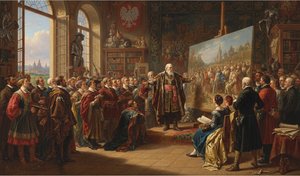
Jan Matejko: Historical Narrative & National Identity in 19th-Century Polish Painting
Explore the powerful historical paintings of Jan Matejko, Poland's national artist. Discover his iconic works & learn how he shaped Polish identity in the 19th century. High-quality reproductions available.

The Visual Language of Fame: How Pop Art Reconstructs Modern Legends
Explore how Pop Art uses graphic reduction to turn modern legends into universal symbols. Discover the power of visual fame now.