Preklop na tiskanine
 Preberi več







































 Za umetniška dela ali reprodukcije, ki so po katerikoli strani širše od 105 cm (približno 41 palč), bo okvir poslan v razstavljeni obliki kot komplet. Ta metoda zagotavlja varno dostavo in preprečuje poškodbe med transportom.


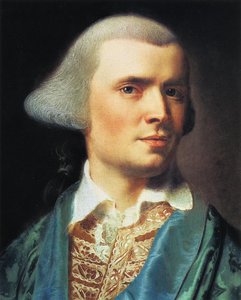
Mrs. George Watson (Elizabeth Oliver): A Neo-Classical Portrait of Refined Grace
John Singleton Copley’s “Mrs. George Watson (Elizabeth Oliver),” completed in 1765, stands as a cornerstone of American Neoclassical portraiture – a testament to the burgeoning artistic identity taking shape across the Atlantic. This exquisite painting, measuring 101 x 126 cm and executed in oil on canvas, transcends mere representation; it’s an immersive experience of elegance, poised serenity, and the subtle complexities of early 18th-century society. Copley, a Boston native born in 1738, was a true innovator, bridging the gap between European artistic traditions and the developing sensibilities of his American contemporaries. His meticulous attention to detail – evident in the delicate folds of Elizabeth Oliver’s pink silk gown adorned with white lace, the realistic rendering of her flowers, and the carefully considered composition – speaks volumes about his dedication to capturing not just a likeness, but the very soul of his subject.
Neo-Classicism: Echoes of Antiquity
Copley’s work is firmly rooted in the principles of Neo-Classicism, a style that swept through Europe and America during this period. Inspired by the art and architecture of ancient Greece and Rome, Neo-Classicism championed order, balance, and moral virtue. Notice how Copley employs clean lines, symmetrical proportions, and a restrained palette to evoke a sense of timeless beauty and intellectual seriousness. The composition itself – Elizabeth Oliver standing beside a wall, a symbol of domesticity and societal status – aligns perfectly with the movement’s emphasis on idealized forms and rational thought. This wasn't simply about depicting a fashionable woman; it was about presenting an image of refined virtue, reflecting the values prized within the upper echelons of colonial society.
Technique and Detail: Copley’s Masterful Brushwork
Copley's technical skill is immediately apparent in the painting’s remarkable detail. He employed a technique known as “impasto,” applying thick layers of paint to create texture and depth, particularly noticeable in the fabric of Elizabeth Oliver’s dress. The subtle gradations of light and shadow – achieved through careful observation and masterful brushwork – lend a luminous quality to the portrait, enhancing the subject's beauty and creating an illusion of three-dimensionality. The artist’s ability to capture the sheen of silk, the delicate petals of the flowers, and the soft texture of Elizabeth Oliver’s skin demonstrates his profound understanding of materials and their effects under light.
Symbolism and Context: A Window into 1765 Boston
Beyond its aesthetic qualities, “Mrs. George Watson” offers a fascinating glimpse into the social and cultural landscape of 1765 Boston. Elizabeth Oliver’s attire – the pink silk gown, the white lace, the flowers – were all indicators of wealth and status within colonial society. The setting itself, a simple wall, suggests a domestic scene, emphasizing her role as a wife and homemaker. Copley's portrait was commissioned by George Watson, reflecting the importance of social connections and familial alliances in this era. The painting’s eventual acquisition by the Smithsonian American Art Museum underscores its significance not just as an artistic masterpiece, but also as a valuable historical document.
Own a Piece of History: High-Quality Reproductions Available
Experience the timeless beauty and artistry of “Mrs. George Watson (Elizabeth Oliver)” with a meticulously crafted hand-painted reproduction from OriginalUniqueArt.com. Our reproductions are created using traditional techniques, ensuring exceptional detail and color accuracy, faithfully capturing Copley’s original vision. Perfect for adorning your home or office, this artwork is more than just decoration; it's an investment in art history.
Vprašanja in odgovori
Kako si lahko ogledam predogled reprodukcije dela "Mrs.George Watson (Elizabeth Oliver)" avtorja John Singleton Copley?
Za ogled predogleda reprodukcije dela "Mrs.George Watson (Elizabeth Oliver)" avtorja John Singleton Copley odprite stran Predogled dela za to umetniško delo.
Kakšno barvno harmonijo prikazuje "Mrs.George Watson (Elizabeth Oliver)" avtorja John Singleton Copley?
Barve v delu "Mrs.George Watson (Elizabeth Oliver)" avtorja John Singleton Copley odražajo Softly Mixed Palette harmonijo. Harmonija opisuje odnos barv med seboj.
V katero obdobje John Singleton Copleyove kariere spada delo "Mrs.George Watson (Elizabeth Oliver)", glede na datum njegove nastale?
Zaradi datuma "1765" pripada delo "Mrs.George Watson (Elizabeth Oliver)" obdobju Mature Period umetnika John Singleton Copley.
 Predogled v realnem okolju
 Pošlji
 Deli
Deli
 Podrobnosti o delu
 Priročnik

 Prenesi sliko
 Podobni izdelki
 Rentgenski posnetek
 Predvajaj diaporama
 Q&A
Q&A Statistika