

 Predogled
 Pošlji
 Deli
Deli
 Podrobnosti o delu

 Prenesi
 Podobni izdelki
 Rentgenski posnetek
 Predvajaj diaporama
 Statistika
Untitled (454)
 Razviljaj več
Giclée tisk / Umetniški tisk
Giclée ali platnati odtis muzejske kakovosti z hitro proizvodnjo in prilagodljivimi možnostmi končne obdelave. ( Kupi ročno naslikano sliko Preklop na digitalno sliko)




































Izberite eno od naših vnaprej določenih velikosti, ki ustrezajo prvotnim proporcijam umetničkega dela.

Svoje dimenzije lahko vnesete sami, da bodo ustrezne za določen okvir ali prostor. Če izbrana velikost ne bo skladna z razmerji izvirne slike, bomo umetniško delo orezali ali podaljšali s pomočjo ogledalnega odraza ali barvno polnega roba. Pred začetkom proizvodnje vam bomo poslali digitalni predogled za potrditev.
Upoštevajte, da predogled na zaslonu ne prikazuje dejanskega orezovanja ali podaljševanja. Le digitalni predogled bo natančno prikazal končno kompozicijo.
Čeprav so na voljo prilagojene velikosti, priporočamo izbiro dimenzije s predhodno določenega seznama, da ohranite prvotna razmerja.
Globalna dostava () v 2 tednih namesto standardnih 4/5 tednov. (10 september)

Brezplačna ekspresna dostava po vsem svetu

Visokokakovostno laneno platno

Popolno zavarovanje pošiljke

Garancija povračila carine in uvoznih davkov

Garancija popolnega ujemanja barv

Politika vračilo v 100 dneh (le v primeru okvar)

Garancija 100% povračila denarja

Popust pri večjem naročilu
 Možnost stekla je na voljo le za velikosti pod 110 cm

Untitled (454)
Giclée tisk / Umetniški tisk
Velikost reprodukcije
-


Skupna končna cena
$ 80
Biografija umetnika
Early Life and Artistic Foundations
Frank Jeffrey Edson Smart, known universally as Jeffrey Smart, emerged onto the Australian art scene from a childhood steeped in both encouragement and constraint. Born in Adelaide in 1921, his early inclination towards drawing was nurtured by supportive parents who provided him with ample materials – often repurposed posters and calendars became canvases for a budding imagination. Though initially drawn to the precision of architecture, financial realities steered him toward teacher training, a path that nonetheless allowed him to continue developing his artistic skills at the South Australian School of Arts and Crafts. This period was profoundly shaped by the influence of Dorrit Black, a pioneering modernist who introduced Smart to the clean lines and geometric forms that would become hallmarks of his style. His early work reflected this exposure, alongside an engagement with local maritime artist John Giles, painting industrial landscapes around Port Adelaide – scenes that foreshadowed his later preoccupation with urban environments. Even as a young artist, actively participating in the Royal South Australian Society of Arts, Smart demonstrated a unique vision, balancing modernist principles with a distinctly personal sensibility.European Influences and the Forging of a Style
The year 1948 marked a pivotal moment in Smart’s artistic journey: his first extended sojourn to Europe. Studying at La Grande Chaumière in Paris, and later under Fernand Léger at the Académie Montmartre, he immersed himself in the heart of modernist thought. This exposure wasn't merely technical; it was an intellectual awakening. He absorbed the lessons of Cézanne, Piero della Francesca, and Rogier van der Weyden – artists who masterfully manipulated perspective and space to create compelling visual narratives. A subsequent period on the island of Ischia in 1950, shared with fellow Australian painters Donald Friend, Michael Shannon, and Jacqueline Hick, further solidified his artistic direction. It was during this time that Smart began to refine his signature precisionist approach – a style characterized by meticulous detail, geometric forms, and an almost photographic clarity. He wasn’t simply *representing* the world; he was constructing it with deliberate intention, each element carefully placed within a rigorously ordered composition.Return to Australia and a Transcontinental Life
Upon returning to Australia in 1951, Smart seamlessly integrated into the cultural landscape of Sydney. He balanced his artistic pursuits with roles as an art critic for the *Daily Telegraph* and appearances on ABC radio and television, becoming a prominent voice in the Australian art world. His teaching position at East Sydney Technical College (later the National Art School) further cemented his influence on a new generation of artists. However, the pull of Europe remained strong. In 1963, he embarked on a permanent relocation, eventually settling in Tuscany, Italy, where he purchased a rural property called “Posticcia Nuova” near Arezzo. This move wasn’t an abandonment of his Australian identity but rather a broadening of his artistic horizons. The Italian landscape, steeped in history and bathed in Mediterranean light, provided a new context for his explorations of form, space, and the human condition. He continued to exhibit widely in Australia throughout his life, maintaining a strong connection to his homeland while embracing the creative freedom offered by his adopted country.Themes, Technique, and Lasting Legacy
Jeffrey Smart’s paintings are instantly recognizable for their stark beauty and unsettling stillness. His precisionist style isn't merely about technical skill; it’s a means of conveying a particular worldview – one that is often characterized by isolation, alienation, and the dehumanizing aspects of modernity. Urban and industrial landscapes dominate his oeuvre, depicted with an almost clinical detachment. Figures within these scenes are rarely central to the narrative; they appear as detached observers, dwarfed by the imposing structures around them. Smart’s color palette is typically restrained, favoring muted tones and dramatic contrasts that heighten the sense of unease. He famously prioritized “the right shapes in the right colours in the right places” over emotional expression or storytelling, creating paintings that are more about visual experience than narrative content. His work offers a unique perspective on the 20th and 21st centuries, capturing the beauty and anxiety of a rapidly changing world with remarkable clarity and precision. He is considered one of Australia’s most important artists, his iconic imagery resonating deeply with audiences both at home and abroad. His autobiography, “Not Quite Straight,” published in 1996, provides invaluable insights into his life and artistic development. Smart's legacy endures not only through his paintings, which are held in major collections worldwide, but also through the enduring power of his vision – a vision that continues to challenge and captivate viewers today.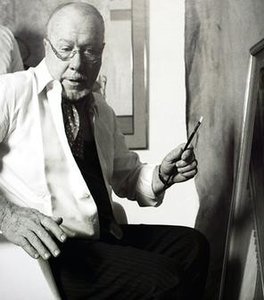
Jeffrey Smart
1921 - 2013 , Australia
Hitri podatki
- Artistic Movement Or Style: Precisionism
- Artists Who Influenced This Artist:
- Cézanne
- Piero della Francesca
- Rogier van der Weyden
- Date Of Birth: 1921
- Date Of Death: 2013
- Full Name: Jeffrey Smart
- Nationality: Australian
- Notable Artworks:
- Untitled (448)
- Untitled (727)
- Untitled (406)
- Place Of Birth: Adelaide, Australia