Preverite v realnem okolju
 Pošlji kot čestitko
 Deli
Deli
 Podrobnosti
 Priročnik

 Prenesi
 Podobni artefakti
 Rentgenski posnetek
 Predvajaj diaporama
 Statistika
Dead Roe
 Oil On Canvas
- WallArt
- Rococo Painting
 1721
1721 193.0 x 260.0 cm
 Wallace Collection
 Preberi več
Ročno izdelana oljna reprodukcija
Ročno slikano olje na platnu v vaši izbiri velikosti in okvirja, izdelano po naročilu naših umetnikov. ( Preklop na tiskanine Preklop na digitalno sliko)




P118B €10

P118H €10

P118W €10

P438Z €10

P508JH €12

P508YH €12

P805H €10

P805Z €10

P919BZ €10

P919G €10

P919XJ €10

P959ZH €10

P968JZ €12

W106C €8

W218G €10

W218JH €8

W218Y €10

W307PJ €10

W316G €10

W316PJ €8

W316Y €10

W398PJ €8

W4111J €10

W500HY €15

W500JH €15

W692G €12

W849H €8

W940BG €15

W953PJ €8




Izberite eno od naših vnaprej določenih velikosti, ki ustrezajo prvotnim proporcijam umetničkega dela.

Vnesite širino in višino, ki jih potrebujete, da se slika prilega vašemu okviru ali steni. Ker je delo ročno slikano, lahko umetnik pri različnih oblikih slik pri robovih doda malo več barve ali pa jih malo odreže — izberite sami. Pred začetkom slikanja vam pošljemo digitalni predogled za potrditev. Slika, prikazana na tej strani, ni končni rezultat — le predogled prikazuje dejansko podobo.
Po oddaji naročila bo ekipa OriginalUniqueArt.com stranki po e-pošti poslala navodila in predogled digitalnega predogleda.
Mednarodna dostava () v 3/4 tednih namesto običajnih 5 tednov. (21 oktober). Brez kompromisov pri kakovosti.

Brezplačna ekspresna dostava po vsem svetu

Visokokakovostno laneno platno

Popolno zavarovanje pošiljke

Garancija povračila carine in uvoznih davkov

Garancija popolnega barvnega ujemanja

Politika vračila v 100 dneh (le v primeru okvar)

Garancija 100% povračila denarja

Popust pri večjem naročilu
 Možnost stekla je na voljo le za velikosti pod 110 cm

Dead Roe
Tehnika reprodukcije
Velikost reprodukcije
-


Skupna cena
€ 262
Jean-Baptiste Oudry’s “Dead Roe”: A Study in Baroque Elegance and Hunterly Reflection
Jean-Baptiste Oudry's "Dead Roe," completed in 1721, is more than a simple hunting scene; it’s a meticulously crafted tableau of observation, restraint, and the poignant beauty found within mortality. Housed within the Wallace Collection in London, this oil on canvas painting offers a rare glimpse into the Rococo sensibilities of a master artist who skillfully blended naturalism with aristocratic patronage. Oudry, born in Paris in 1686, inherited an artistic lineage from his father, Jacques Oudry, a renowned painter and art dealer, establishing a foundation of observation and technical skill that would define his own career.
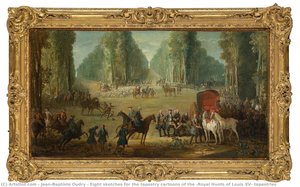
The composition immediately draws the eye to the central figure: a roe deer, lying prone on its side. The animal’s posture—head resting upon a weathered rock—conveys a sense of quiet resignation, almost serene in death. Oudry's rendering is remarkably detailed; one can discern the subtle textures of the fur, the delicate veins beneath the skin, and the precise curve of each bone. This commitment to realism was characteristic of Oudry’s work, particularly his depictions of animals, reflecting a deep understanding of anatomy and a keen eye for capturing their inherent grace. The muted palette—primarily browns, grays, and ochres—further enhances the scene's somber mood, emphasizing the deer’s lifelessness while simultaneously highlighting the surrounding landscape.
The Context of the Hunt: Aristocracy and Observation
“Dead Roe” exists within a specific historical context – the era of the French aristocracy and their elaborate hunts. These pursuits were not merely sporting events; they represented status, skill, and connection to the natural world. Oudry’s commission reflects this patronage system, providing him with the opportunity to showcase his artistic abilities while catering to the tastes of wealthy clients. The painting is a testament to the meticulous observation required by these hunts – the artist had to accurately depict not only the animal but also the setting, the equipment, and the participants. Oudry’s skill in capturing this detail elevates “Dead Roe” beyond a simple hunting scene; it becomes a carefully constructed narrative of a specific social ritual.
Interestingly, the presence of the black dog, lying attentively beside the fallen deer, adds another layer to the composition. This animal, often associated with the hunt, isn’t depicted as actively involved in the kill but rather as a silent observer, perhaps reflecting on the cycle of life and death. The two birds perched above, seemingly undisturbed by the scene below, contribute to an overall sense of detachment—a subtle commentary on the fleeting nature of beauty and the inevitability of decay.
Symbolism and Emotional Resonance
Beyond its realistic depiction, “Dead Roe” is rich in symbolic meaning. The deer itself can be interpreted as a representation of vulnerability and mortality, while the hunter’s absence underscores the transient nature of human control over the natural world. Oudry masterfully uses light and shadow to create depth and drama, drawing attention to key elements within the composition—the deer's lifeless form, the texture of the rock, and the details of the surrounding landscape. The painting evokes a sense of melancholy and contemplation, prompting viewers to consider themes of loss, beauty, and the interconnectedness of life and death.
The work’s enduring appeal lies in its ability to capture not just a moment in time but also a complex emotional state. It's a reminder that even within scenes of apparent grandeur and aristocratic leisure, there exists a profound awareness of mortality—a quiet reflection on the delicate balance between life and death, hunter and hunted.
A Legacy of Naturalism: Oudry’s Influence
Jean-Baptiste Oudry’s “Dead Roe” stands as a pivotal work in his oeuvre and a significant example of Rococo art. His meticulous attention to detail, combined with his ability to capture the essence of both animal and human subjects, established him as one of the most celebrated artists of his time. The painting's influence can be seen in subsequent generations of artists who sought to emulate Oudry’s naturalistic style and his masterful use of light and shadow. Reproductions of “Dead Roe” continue to resonate with art lovers today, offering a window into a bygone era and a testament to the enduring power of artistic observation.
Vprašanja in odgovori
Kakšno vzdušje prinaša "Dead Roe" avtorja Jean-Baptiste Oudry v prostor?
Z svojo Calm vzdušnostjo je delo "Dead Roe" primerno za Living Room.
Kdo je ustvaril "Dead Roe" in v kakšnem slogu je izvedeno?
"Dead Roe" je ustvaril Jean-Baptiste Oudry v slogu Rococo Painting. Umetnik in umetniška smer opredeljata tradicijo dela.
Katera postavitev ustreza formatu dela "Dead Roe" avtorja Jean-Baptiste Oudry?
Format (Landscape) in priporočena prostor (Living Room) sta dve zapisani podrobnosti glede postavitve za "Dead Roe" avtorja Jean-Baptiste Oudry.
Biografija umetnika
Jean-Baptiste Oudry: Življenje v umetnosti
Zgodnje življenje in izobraževanje
- Rod: 17. marca 1686 v Parizu, Francija.
- Oudry je prišel iz umetniške družine; njegov oče, Jacques Oudray, je bil slikar in prodajalec umetnosti. Njegova mati, Nicole Papillon, je bila sorodna grafiku Jean-Baptiste-Michelu Papillonu.
- Svojo pot je začel z izobraževanjem na Académie de Saint-Luc, kjer je med letoma 1707 in 1712 študiral pod mentorstvom Nicolasa de Largillièreja. To temeljno obdobje je oblikovalo njegove zgodnje veščine portretiranja in opazovanja narave.
- V svojem razvoju je hitro napredoval, saj je leta 1714 postal pomožni profesor na Académie de Saint-Luc, do leta 1717 pa že polni profesor.
Umetniški razvoj in slog
- Čeprav se je sprva osredotočal na portretno slikarstvo, je Oudry postopoma razširil svoj repertoar, ki je vključeval tudi živ slik, zlasti sadja in živali, ter religiozne temate.
- Njegov slog se je razvijal proti rokoko, ki ga odlikuje eleganca, naturalizem ter igriva prikazovanje aristokratskega življenja in prostega časa.
- Oudryjeva neustrašna pozornost do detajlov in sposobnost zajema tekstur ter značilnosti živali sta postala nedeljna značilnika njegovega dela.
- Dokazal je popolno mojstrstvo tako v slikarstvu kot v oblikovanju, saj je z lahkotnostjo prehajal med ustvarjanjem platn in zasnovanjem tapiserij.
Glavni dosežki in izpostavljena dela
- Pastoralne zabave (Les Amusements Champêtres): Serija tapiserij, zasnovanih za kraljevo tapiserijsko tovarno Beauvais, ki prikazujejo idilične prizore podeželskega življenja in lov.
- Ludvik XV. lovi jelena v gozdu Saint-Germain (1730): To sliko je utrdila Oudryjeva reputacija uradnega slikarja kraljevega lova. Del izvzeta njegovo veščino pri prikazovanju veličastnosti lova in naravnega okolja.
- Kraljev lov Ludvida XV. (Chasses Royales Gobelins): Serija zasnov za tovarno Gobelins, ki je še dodatno utrdila Oudryjevo pomembnost kot oblikovalca tapiserij. _
- Širok nabor portretov ulovljene žrtve, ki jih je naročil kral Ludvik XV., kar dokazuje njegovo strokovnost pri anatomiji živali in kompoziciji mrtve narave.
Vplivi in dediščina
- Vplivavci: Nicolas de Largillière je igral ključno vlogo v Oudryjevem zgodnjem umetniškem razvoju, saj mu je zagotovil temeljito izobraževanje v portretiranju in tehniki.
- Oudryjeva dela so vplivala na naslednje generacije slikarjev živali in oblikovalcev tapiserij. Njegov naturalistični slog in pozornost do detajlov sta postavila nov standard za prikazovanje divjine.
- Pomembno je prispeval k dekorativnim umetnostim francijskega dvora, saj je ustvarjal luksuzne tapiserije, ki so krasile kraljeve prebivališča.
Zgodovinski pomen
- Oudryjeva dela nudijo dragocen vpogled v aristokratsko življenje 18. stoletja in pomen lova kot zabave za francijsko plemištvo.
- Njegove tapiserije veljajo za vrhunska dela francijske dekorativne umetnosti, ki prikazujejo tehnično znanje in umetniško ustvarjalnost tistega obdobja.
- Imenoval je na prestižna mesta znotraj Académie Royale de Peinture et de Sculpture, kar dokazuje njegovo priznanje kot vodilnega umetnika svojega časa.
- Umrl: 30. aprila 1755, in za seboj pustil dediščino izjemnih slik in tapiserij, ki se še danes občudujejo.

Jean-Baptiste Oudry
1686 - 1755 , Francija
Ključne informacije
- Birth Date: 17. marec 1686
- Birth Place: Pariz, Francija
- Death Date: 30. april 1755
- Influenced By: Nicolas de Largillière
- Movement: Rokoko
- Name: Jean-Baptiste Oudry
- Nationality: Francoz
- Notable Works:
- Pastoralni užitki
- Ludvik XV. lovi jelena v gozdu Saint-Germain
Sorodni članki

Baroque vs. Rococo: A Definitive Guide to the Drama of Grandeur and the Elegance of Grace
Explore the profound differences between Baroque drama and Rococo elegance. Our expert guide delves into art history, chiaroscuro, and the evolution of European masterpieces for collectors and enthusiasts seeking deep historical context.

Rokojska mojstrovin: 10 umetnin, ki so definirale eleganco
Odkrijte 10 mojstrovin, ki so definirale rokokoj! François Boucher, Fragonard & Watteau – potopite se v svet elegance, pastelnih barv in prefinjenega sloga. Najboljše umetnine rokokoja na OriginalUniqueArt.com - za navdih in reprodukcije vrhunske kakovosti.
From Grandeur to Grace: Exploring the Evolution of Baroque & Rococo Art
Explore the captivating evolution from Baroque's drama to Rococo's grace! Discover key artists, characteristics & lasting influence of these art movements with expert insights at OriginalUniqueArt.
Jean-Baptiste Pater: Rococo Charm & Ephemeral Beauty of 18th-Century France
Explore the captivating world of Jean-Baptiste Pater, a master of Rococo painting. Discover his elegant *fête galante* scenes and shimmering portraits – a glimpse into 18th-century French aristocracy. Learn about his legacy & find high-quality reproductions.
Drama & Delight: A Journey Through the Grandeur of Baroque and Rococo Art
Embark on a cultural journey through the dramatic grandeur of Baroque and the delicate grace of Rococo art. Discover the history, techniques, and timeless beauty of these magnificent eras with our expert-led exploration of European masterpieces.