

 Preverite v realnem okolju
 Pošlji kot čestitko
 Deli
Deli
 Podrobnosti
 Priročnik

 Prenesi
 Podobni artefakti
 Rentgenski posnetek
 Predvajaj diaporama
 Statistika
Beach at Scheveningen
 Acrylic On Canvas
- WallArt
- Hague School
 1646
1646 92.0 x 108.0 cm
 Museo Thyssen-Bornemisza
 Preberi več
Giclée tisk / Umetniški tisk
Giclée ali platnati odtis muzejske kakovosti z hitro proizvodnjo in prilagodljivimi možnostmi končne obdelave. ( Naročite ročno slikano reprodukcijo Preklop na digitalno sliko)




P118B $10

P118H $10

P118W $10

P438Z $10

P508JH $12

P508YH $12

P805H $10

P805Z $10

P919BZ $10

P919G $10

P919XJ $10

P959ZH $10

P968JZ $12

W106C $8

W218G $10

W218JH $8

W218Y $10

W307PJ $10

W316G $10

W316PJ $8

W316Y $10

W398PJ $8

W4111J $10

W500HY $15

W500JH $15

W692G $12

W849H $8

W940BG $15

W953PJ $8




Izberite eno od naših vnaprej določenih velikosti, ki ustrezajo prvotnim proporcijam umetničkega dela.

Svoje dimenzije lahko vnesete sami, da bodo ustrezne za določen okvir ali prostor. Če izbrana velikost ne bo skladna z razmerji izvirne slike, bomo umetniško delo orezali ali podaljšali s pomočjo ogledalnega odraza ali barvno polnega roba. Pred začetkom proizvodnje vam bomo poslali digitalni predogled za potrditev.
Upoštevajte, da predogled na zaslonu ne prikazuje dejanskega orezovanja ali podaljševanja. Le digitalni predogled bo natančno prikazal končno kompozicijo.
Čeprav so na voljo prilagojene velikosti, priporočamo izbiro dimenzije s predhodno določenega seznama, da ohranite prvotna razmerja.
Globalna dostava () v 2 tednih namesto standardnih 4/5 tednov. (27 september)

Brezplačna ekspresna dostava po vsem svetu

Visokokakovostno laneno platno

Popolno zavarovanje pošiljke

Garancija povračila carine in uvoznih davkov

Garancija popolnega barvnega ujemanja

Politika vračila v 100 dneh (le v primeru okvar)

Garancija 100% povračila denarja

Popust pri večjem naročilu
 Možnost stekla je na voljo le za velikosti pod 110 cm

Beach at Scheveningen
Giclée tisk / Umetniški tisk
Velikost reprodukcije
-


Skupna cena
$ 80
A Tempestuous Embrace: Jan van Goyen’s “Beach at Scheveningen”
Jan Josephszoon van Goyen's "Beach at Scheveningen," painted in 1646, isn’t merely a depiction of a coastal scene; it’s a masterful distillation of the Dutch Golden Age’s fascination with light, atmosphere, and the subtle poetry of everyday life. This painting, now residing within the Van Gogh Museum, offers a captivating glimpse into a rapidly changing world – a world where the raw power of nature coexisted harmoniously with burgeoning mercantile activity and a growing appreciation for the beauty of the Dutch landscape. The scene unfolds on the North Sea coast near The Hague, capturing a dramatic afternoon where the elements collide in a symphony of grey skies, churning waves, and the earthy tones of the beach itself. It’s a moment frozen in time, imbued with both tranquility and an underlying sense of dynamic energy.The Language of Light and Shadow
Van Goyen's genius lies not in dramatic detail or vibrant color – hallmarks of later Romanticism – but rather in his subtle manipulation of light and shadow. He eschewed the opulent palettes favored by many of his contemporaries, instead employing a restrained palette dominated by grays, browns, and greens. This deliberate limitation forces the viewer to engage with the painting on a deeper level, relying on tonal variations and atmospheric perspective to create a sense of depth and realism. The sky, a swirling mass of dark clouds, dominates the composition, casting an ethereal glow upon the sea and the beach below. Notice how the light catches the crests of the waves, transforming them into fleeting ribbons of silver against the somber backdrop. This masterful use of chiaroscuro – the interplay between light and darkness – is a defining characteristic of Van Goyen’s style, lending the scene an almost palpable sense of drama and immediacy.A Window into 17th-Century Life
“Beach at Scheveningen” offers more than just a beautiful landscape; it provides a valuable window into 17th-century Dutch society. The painting depicts a bustling beach scene, populated by fishermen preparing their boats for the day’s catch and families enjoying the seaside. The figures are rendered with remarkable economy – not through detailed portraits but rather through suggestive brushstrokes that convey their presence and activity. A group of women in white bonnets, identifiable as fishwives, stand attentively watching the men working to bring the boat ashore. This scene reflects the importance of the sea to the Dutch economy at the time, highlighting Scheveningen’s role as a vital fishing port. The inclusion of the horse-drawn cart and its team further emphasizes the connection between land and sea – the transport of goods and people that fueled the region's prosperity.Symbolism and Emotional Resonance
Beyond its historical context, “Beach at Scheveningen” resonates with profound symbolic meaning. The turbulent sea can be interpreted as a metaphor for the unpredictable nature of life itself, while the calm beach represents a moment of respite and connection to the natural world. The gathering storm in the sky foreshadows challenges and uncertainties, yet the scene also exudes a sense of resilience – a quiet determination to face whatever may come. The painting’s muted colors and atmospheric perspective evoke a feeling of melancholy and contemplation, inviting viewers to reflect on their own place within the vastness of existence. It's a reminder that even in moments of apparent chaos, there is an underlying beauty and harmony to be found.A Timeless Masterpiece
“Beach at Scheveningen” stands as a testament to Jan van Goyen’s extraordinary talent and his profound understanding of the Dutch landscape. It’s a painting that rewards repeated viewing, revealing new nuances and subtleties with each encounter. Whether admired for its technical brilliance, historical significance, or emotional depth, this work remains a cornerstone of Dutch Golden Age art – a timeless masterpiece that continues to captivate audiences centuries after its creation. Reproductions offer an accessible way to bring this evocative scene into your home, allowing you to experience the tranquility and drama of Van Goyen’s vision firsthand.Biografija umetnika
Jan Josephszoon van Goyen: Življenje v pokrajini
Zgodnje življenje in izobraževanje
- Rod se je 13. januarja 1596 v Leidu na Nizozemskem, Jan Josephszoon van Goyen, in se je izstopil kot ključna figura v slikarstvu nizozemskega zlatega obdobja.
- Prvotno je opravljal učeništvo v Leidu, preden je svoje študije nadgradil pod mentorstvom Esaiasa van de Velde v Haarlemu. Ta temeljiti izobraževalni proces se je izkazal za odločujoč za njegov umetnični razvoj.
Umetnični slog in razvoj
- Van Goyenov slog je takoj prepoznaven zaradi svoje preprostosti, subtilnih tonalnih razlik in uporabe omejene palete – predvsem sivih, rjavih in zelenih tonov.
- Odmaknil se je od bolj barvitih in podrobno izdelanih pokrajin, ki so bile takrat priljubljene, ter pionirsko uvedel bolj realističen in atmosferičen pristop.
- Njegova zgodnja dela kažejo vpliv Van de Veldeja, vendar je hitro razvil svoj lasten, značilen slog, osredotočen na zajemanje bistva nizozemskih pokrajin.
Obilo delo in izstopajoča dela
- Van Goyen je bil neverjetno plodovit umetnik, skozi svojo kariero pa je ustvaril zgolj po ocenkah približno 1.200 slik in več kot 1.000 risk.
- Med najbolj izstopajoča dela spadajo: Rečna pokrajina z vetrencem, ki je bistven primer njegovih tonalnih pokrajin; in Ribiči ob obali jezera, ki prikazujejo njegovo sposobnost slikovanja mirnih vodnih prizorov.
- Pogosto je slikal prizore reka, jezer, senčic in neskončnih neb, s čimer je zajel edinstven značaj nizozemske podeželja.
Vplivi in dediščina
- Čeprav je bil pod vplivom Van de Veldeja, je samo delo samega Van Goyena postalo izjemno vplivno.
- Neposredno je vplival na umetnike, kot je Jan Steen, ki je bil eden njegovih učence.
- Njegov poudarek na realizmu in atmosferičnih učinkih je pavedil pot kasnejšim slikarjem pokrajin.
Finančne težave in pozne življenje
- Kljub svojemu umetniškemu uspehu se je Van Goyen skozi celo življenje soočal s preobsežnimi finančnimi težavami.
- Vključeval se je v različne poslovne podvige, vključno s špekulacijo tulipani (med obdobjem »tulipomane«) in nepremičninskim investiranjem, vendar se je pogosto znašal v globokih dolgih.
- Ob smrti 27. aprilja 1656 v Hainburgu (The Hague) je po navajih dolgoval približno 18.000 gulden.
Zgodovinski pomen
- Van Goyenovo delo velja za stebelj nizozemskega slikarstva zlatega obdobja in pomembno prispevek k razvoju umetnosti pokrajine.
- Zajel je duh 17. stoletnega Hollanda, ki je odražal njegovo naraščajoče bogastvo in povezanost z đấtvo.
- Njegove inovativne tehnike in realistične predstavitve še danes navdihujejo umetnike in očarajo gledalce.

Jan Van Goyen
1596 - 1656 , Nizozemska
Ključne informacije
- Datum Rojstva: 13. januar 1596
- Datum Smrti: 27. april 1656
- Državljanstvo: nederozemsko
- Gibanje: slikarstvo nederškega zlate dobe
- Ime: Jan Josephszoon van Goyen
- Pod Vplivom: Jan Steen
- Pod Vplivom Avtorja: Esaias van de Velde
- Pomembna Dela:
- Rečni pejzaž z vetrencem
- Ribiči ob obali jezera
- Rojno Mesto: Leiden, Nizozemska
Sorodni članki
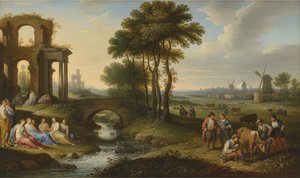
Cornelis van Poelenburch: Bridging Mannerism & the Dutch Baroque Landscape
Discover Cornelis van Poelenburch, a pivotal Dutch Baroque landscape painter bridging Mannerism & Italianate styles. Explore his life, key works, and lasting influence on 17th-century art with OriginalUniqueArt.

Jan van Goyen: Master of Dutch Landscape & Atmospheric Perspective
Discover Jan van Goyen, the master of Dutch landscape painting. Explore his subtle technique, atmospheric realism & lasting influence on art history. Learn about this 17th-century pioneer at OriginalUniqueArt.
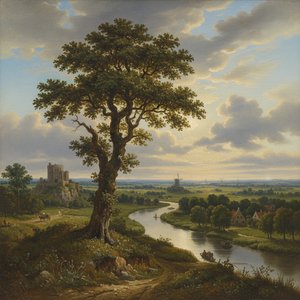
Jacob van Ruisdael: Master of Dutch Landscape & the Evocation of National Identity
Explore the life & work of Jacob van Ruisdael, the preeminent Dutch landscape painter. Discover his technical brilliance, symbolic depth, and lasting influence on art history. Learn about collecting Ruisdael's masterpieces.

Rembrandt van Rijn: 25 Mojstrovin za Popestritev Vašega Doma | OriginalUniqueArt
Odkrijte 25 mojstrovin Rembrandta van Rijna! Preberite zgodbe o portretih, svetlobi in nizozemskem baroku. Kvalitetne reprodukcije slik za vaš dom na OriginalUniqueArt.com. Raziskajte celotno zbirko online.

Golden Light & Dutch Skies: The Timeless Magic of Dutch Golden Age Landscapes
Discover the breathtaking beauty of Dutch Golden Age landscapes. Explore the mastery of light, chiaroscuro, and 17th-century realism through an expert art history lens, celebrating the enduring legacy of the Dutch Masters for discerning collectors and art lovers.