Symbolist Expressionism · 1895
The Skeleton Painter (James Ensor, 1895)
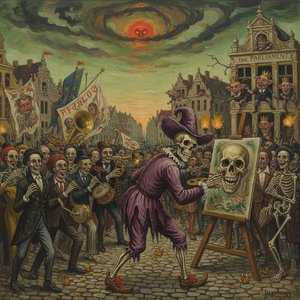
James Ensor (1860–1949) je izdelal The Skeleton Painter. Zajema obdobje iz leta 1895. Spada v smer Symbolist Expressionism. Izdelano je iz Acrylic On Canvas. Del se nahaja v muzeju Koninklijk Museum voor Schone Kunsten v mestu Antverp, Belgija.
- 1895
- Acrylic On Canvas
- Koninklijk Museum voor Schone Kunsten, Antverp

 Predogled v realnem okolju

 Ročno izdelano oljno slikarstvo
 Pošlji
 Deli
 Informacijski list


 Prenesi sliko
 Podobni izdelki
 Rentgenski posnetek
 Predvajaj diaporama
 Vprašanja in odgovori

 Statistika
The Skeleton Painter, na kratek
- Naslov
- The Skeleton Painter
- Avtor
- James Ensor (1860–1949)
- Umetnik, rojen v
- Ostend, Belgija
- Datum
- 1895
- Tehnika
- Acrylic On Canvas
- Kje je videti
- Koninklijk Museum voor Schone Kunsten, Antverp, Belgija
- Gibanje
- Symbolist Expressionism
- Tema
- skeleton, artist, death, masks, paintings, room
Kaj prikazuje The Skeleton Painter?
A Dance with Mortality: James Ensor’s “The Skeleton Painter”
James Ensor's "The Skeleton Painter," completed in 1895, is not merely a painting; it’s an unsettling plunge into the subconscious, a meticulously crafted tableau of morbidity and artistic obsession. The image, rendered with a distinctive and increasingly personal style, immediately confronts the viewer with a scene both bizarre and profoundly familiar – a room overflowing with art, dominated by a central figure: a skeleton diligently wielding a paintbrush. This isn’t a morbid spectacle intended to shock for shock's sake; rather, it’s a complex meditation on life, death, creativity, and the inescapable nature of artistic endeavor. Ensor, born in Ostend, Belgium, in 1860, cultivated an intensely individual vision, one deeply rooted in his upbringing amidst the vibrant chaos of a seaside resort town and fueled by a fascination with masks, disguise, and the theatricality of human experience.
The Artist’s Studio – A Realm of Shadows
The setting itself is crucial to understanding the painting's power. The room is crammed with canvases, each bearing witness to Ensor’s restless hand. A dining table, laden with objects—a clock, a partially consumed meal—suggests an interrupted life, a space where sustenance and creation intertwine. The presence of other skeletons, scattered amongst the chairs and leaning against walls, reinforces the pervasive theme of mortality. These aren't simply decorative elements; they are active participants in the scene, almost as if they’re observing or even contributing to the artist’s work. The inclusion of a cat, curled up near the left edge, adds an element of domesticity and perhaps a subtle critique – a creature of instinct and survival nestled within this world of intellectual pursuit.
Symbolism and Technique: A Palette of Unease
Ensor’s technique is immediately recognizable. He employed a thick, impasto application of paint, building up layers of color to create a tactile surface that seems almost sculptural. The palette is deliberately muted – browns, greys, ochres, and deep blues dominate—contributing to the painting's somber mood. The skeletal figure itself is rendered with remarkable detail, highlighting the fragility of bone while simultaneously conveying a sense of focused determination. Notice how Ensor uses strong diagonals – particularly in the arrangement of the chairs and paintings – to create a feeling of unease and instability. The use of color is not about beauty; it’s about evoking emotion, creating a visual atmosphere of melancholy and contemplation. His style evolved significantly throughout his career, moving away from academic influences towards a highly expressive, often unsettling, approach that anticipated the Symbolist movement.
Ensor's Exploration of Artistic Identity
"The Skeleton Painter" can be interpreted as an exploration of Ensor’s own artistic identity and his relationship to mortality. The skeleton artist represents not just death but also the inevitable end of creative endeavor, the fading of inspiration with time. It speaks to the paradox of the artist – someone who often seems detached from the everyday realities of life, yet is ultimately defined by their engagement with them. Ensor’s own struggles with artistic recognition and his rejection of traditional academic training likely fueled this preoccupation with themes of isolation and the ephemeral nature of existence. The painting isn't a celebration of art; it’s a questioning of its purpose and its ultimate significance in the face of oblivion. It invites us to consider what drives an artist to create, knowing that their work, like their own physical form, will eventually succumb to time.
OriginalUniqueArt offers exquisite, hand-painted reproductions of James Ensor’s “The Skeleton Painter,” allowing you to bring this haunting masterpiece into your home or office. Each reproduction is created with the same meticulous attention to detail and expressive technique as the original, capturing the painting's unique atmosphere and emotional depth. Explore our collection today and experience the unsettling beauty of Ensor’s vision.
V katerem muzeju se nahaja The Skeleton Painter?
Koninklijk Museum voor Schone Kunsten
Antverp, Belgija
Zgodovina in izv rootsi muzeja Koninklijk Museum voor Schone Kunsten je bil ustanovljen leta 1810, njegove korenine pa sega globoko v dediščino Antwerpove guildije svetega Luke, institucije, ki je bila aktivna od konca 14. stoletja do leta 1773. Zbirka muzeja se je začela z umetninami, ki so pripadale tej guildiji, s čimer je vzpostavljena neposredna povezava med trgovinsko preteklostjo mesta in njegovim umetničkim razvojom.


Visokoresolucijske slike dela The Skeleton Painter

Javna lastnina: umetnik je umrl leta 1949.
Druge velikosti, izrezave in citiranje →James Ensor, The Skeleton Painter (1895), Koninklijk Museum voor Schone Kunsten. Javna lastnina
Odgovori na vprašanja o The Skeleton Painter
Kje lahko vidim originalno delo "The Skeleton Painter" avtorja James Ensor?
Originalno delo "The Skeleton Painter" lahko vidite v muzeju Koninklijk Museum voor Schone Kunsten, Antverp, Belgija.
V letu katerega je bilo ustvarjeno delo "The Skeleton Painter" avtorja James Ensor?
"The Skeleton Painter" izvira iz 1895. Ta datum delo situira v okvir James Ensorove kariere in obdobja, v katerem je nastalo.
い哪種媒介是用來創作 "The Skeleton Painter" avtorja James Ensor 的?
Tehnika za delo "The Skeleton Painter" avtorja James Ensor je Acrylic On Canvas. Različice imajo za namen natančno prikazati videz te tehnike.
Katere teme se pojavljajo v delu "The Skeleton Painter" avtorja James Ensor?
Tematika v delu "The Skeleton Painter" avtorja James Ensor vključuje skeleton, artist, death, masks, paintings, room, cat, decay, ki skupaj predstavljajo vsebino umetninškega dela.
Ali je "The Skeleton Painter" v javni domeni?
V zvezi z avtorskimi pravicami je "The Skeleton Painter" v v javni domeni – avtorska pravica je zastarela.
Kateremu umetniku je "The Skeleton Painter" pripisano?
"The Skeleton Painter" pripisujemo James Ensor.
Kateri umetniški slog pripada "The Skeleton Painter"?
"The Skeleton Painter" je del umetniškega sloga Symbolist Expressionism, ki predstavlja umetniško tradicijo, v katero je delo vključeno.
V katero obdobje kariere James Ensor pripada delo "The Skeleton Painter"?
"The Skeleton Painter" pripada Late Period v karieri umetnika James Ensor. Ta razvrstitev povezuje delo z umetnikovim razvojnim obdobjem.
Pri katerih letih je James Ensor ustvaril/a "The Skeleton Painter"?
Ko je bilo delo "The Skeleton Painter" ustvarjeno leta 1895, je bil James Ensor – rojen leta 1860 – star 35 let.
O umetniku, James Ensor

1860–1949, Belgija
James Ensor
Mladost, družina in umetniška izobrazba James Ensor se je rodil 13. aprila 1860 v belgijskem Ostendu. Njegovo dojemanje identitete je oblikovalo specifično kulturno stičišče: njegov oče, James Frederic Ensor, se je rodil v Bruselju v družini Angležev, medtem ko je bila njegova mama, Maria Catherina Haegheman, Belgijanka. Ta dvojna dediščina je postavila temelj za perspektivo, ki je pogosto ostajala zunaj ozkih okvirjev lokalne tradicije.
Tudi dela avtorja James Ensor
 Ulivanje Kristusa v Bruselj1888
 Samoportret z Maskami1899
 Kopalnice v Ostendu
 Skeleti, ki se segrejejo1889

Eseji o delu The Skeleton Painter
 Beauty in Mortality: Capturing the Soul of the Skull through the Luminous Lens of Impressionist ArtExplore the profound beauty of mortality through Impressionism. Discover how masters like Monet and Renoir transformed the Memento Mori tra…
 Psihologija igrivega slikarstva: Humor, nenavadnost in čustveno bogatstvo v umetnostiOdkrijte psihologijo igrivega slikarstva! Raziskujte humor, simbolizem in čustveno bogatstvo umetnosti z OriginalUniqueArt. Navdih za vaš d…
 James Ensor's Grotesque Visions: Social Commentary & Artistic InnovationExplore the unsettling yet captivating world of James Ensor, a pioneer of Expressionism. Discover his satirical masterpieces, symbolic imag…