- Domov

- Tiskanje na platnu
- James Ensor
- Le Ballet fantastique
 Naročite reprodukcijo Kupi digitalno sliko
 Pošlji
 Deli
Deli
 Podrobnosti o delu
 Dodaj v priljubljene

 Prenesi
 Podobni izdelki
 Rentgenski posnetek
 Predvajaj diaporama
Le Ballet fantastique

 Razviljaj več
Giclée tisk / Umetniški tisk
Giclée ali platnati odtis muzejske kakovosti z hitro proizvodnjo in prilagodljivimi možnostmi končne obdelave.




































Izberite eno od naših vnaprej določenih velikosti, ki ustrezajo prvotnim proporcijam umetničkega dela.

Svoje dimenzije lahko vnesete sami, da bodo ustrezne za določen okvir ali prostor. Če izbrana velikost ne bo skladna z razmerji izvirne slike, bomo umetniško delo orezali ali podaljšali s pomočjo ogledalnega odraza ali barvno polnega roba. Pred začetkom proizvodnje vam bomo poslali digitalni predogled za potrditev.
Upoštevajte, da predogled na zaslonu ne prikazuje dejanskega orezovanja ali podaljševanja. Le digitalni predogled bo natančno prikazal končno kompozicijo.
Čeprav so na voljo prilagojene velikosti, priporočamo izbiro dimenzije s predhodno določenega seznama, da ohranite prvotna razmerja.
Globalna dostava () v 2 tednih namesto standardnih 4/5 tednov. (23 julij)

Brezplačna ekspresna dostava po vsem svetu

Visokokakovostno laneno platno

Popolno zavarovanje pošiljke

Garancija povračila carine in uvoznih davkov

Garancija popolnega ujemanja barv

60-dnevna politika vračanja (le v primeru napak)

Garancija 100% povračila denarja

Popust pri večjem naročilu
 Možnost stekla je na voljo le za velikosti pod 110 cm

Le Ballet fantastique
Giclée tisk / Umetniški tisk
Velikost reprodukcije
-


Skupna končna cena
-
Opis zbirateljskega predmeta
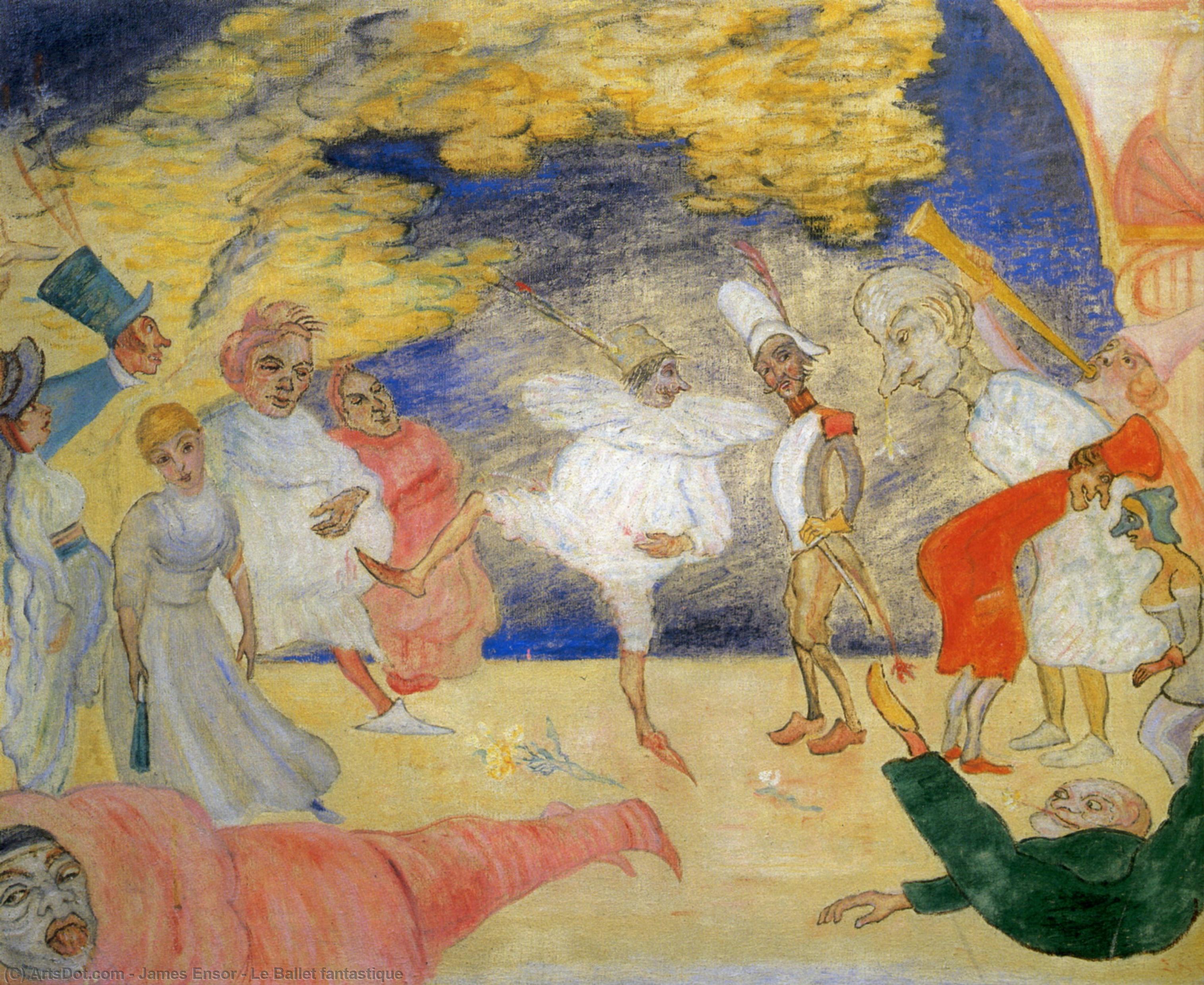
Le Ballet Fantastique: A Descent into Surrealist Expression
James Ensor’s Le Ballet Fantastique isn't merely a painting; it’s an unsettling invitation to confront the anxieties of modernity. Executed in 1896, this monumental oil on canvas resides within the collection of the Wednesbury Museum and Art Gallery, offering visitors a glimpse into the mind of one of Belgium’s most influential artists—a figure who bridged the gap between Symbolism and Expressionism. The artwork's visual language is deliberately jarring, reflecting Ensor’s profound engagement with psychological exploration and his rejection of academic conventions.A Symphony of Distortion and Color
The scene depicts a bizarre gathering – individuals dressed in opulent costumes jostle amidst trees bathed in an unnatural luminescence. Ensor employs a masterful technique characterized by thick impasto brushstrokes and vibrant hues that clash dramatically, creating an atmosphere charged with unease. Unlike the polished surfaces favored by Impressionists, Ensor deliberately disrupts visual harmony, prioritizing emotional impact over realistic representation. The distorted figures—faces frozen in expressions of horror and bewilderment—are rendered with meticulous detail, highlighting the artist’s fascination with capturing inner turmoil. This stylistic choice aligns perfectly with the tenets of Figurative Expressionism, a movement that sought to portray human subjects with visceral intensity.Symbolic Layers Beneath the Surface
Beyond its striking visual aesthetic lies a complex tapestry of symbolism. The masks adorning many of the figures serve as potent reminders of concealment and deception—themes recurrent throughout Ensor’s oeuvre. The trees themselves are depicted in grotesque forms, symbolizing decay and mortality, mirroring the pervasive sense of dread that permeates the composition. Furthermore, the inclusion of objects like a bowl and a book subtly underscores the futility of intellectual pursuits against the backdrop of existential despair. Ensor's deliberate use of these motifs elevates Le Ballet Fantastique beyond a simple depiction of a social event; it becomes a meditation on the human condition—a confrontation with fear, absurdity, and the inescapable awareness of death.Historical Context: Embracing Expressionist Vision
James Ensor’s artistic trajectory was shaped by the burgeoning Expressionist movement, which challenged the prevailing aesthetic sensibilities of its time. Influenced by artists like Edvard Munch and Vincent van Gogh, Ensor sought to express subjective experience rather than objective observation—a radical departure from traditional artistic practices. His exploration of psychological themes resonated deeply with audiences grappling with the anxieties of the fin de siècle, mirroring the broader cultural preoccupation with mortality and disillusionment. The Wednesbury Museum’s acquisition of Le Ballet Fantastique underscores its significance as a cornerstone of Expressionist art history.A Timeless Reflection on Humanity
Le Ballet Fantastique continues to captivate viewers today because it speaks directly to our primal fears—the fear of the unknown, the fear of death, and the fear of losing control. Ensor’s unsettling vision compels us to confront uncomfortable truths about ourselves and our place in the universe. Its enduring power resides not merely in its artistic brilliance but also in its profound psychological depth—a testament to James Ensor's unwavering commitment to exploring the darkest recesses of human consciousness.Biografija umetnika
James Ensor: A Pioneer of Expressionism and Surrealism
James Sidney Edouard Ensor (Ostend, 13 April 1860-19 November 1949) was a Belgian painter and printmaker who stands as one of the most influential figures in the development of Expressionism and Surrealism. Born into an English father and Belgian mother—a duality that profoundly shaped his artistic worldview—Ensor defied convention from the outset, rejecting academic formalism and embracing unsettling imagery rooted in psychological exploration.
Early Influences and Artistic Training
His formative years were marked by exposure to Ostend’s vibrant seaside atmosphere and his parents’ souvenir shop, which stocked exotic objects and carnival masks – stimuli that ignited his imagination and instilled a lifelong fascination with disguise. Ensor pursued formal artistic training at the Académie Royale des Beaux-Arts in Brussels, where he encountered fellow artists like Fernand Khnopff and Theo Van Rysselberghe—connections that fostered intellectual debate and propelled him beyond traditional boundaries.
A Shift Towards Grotesque Visionary Art
Around 1886-1889 Ensor embarked on a transformative stylistic journey, abandoning Impressionistic ideals for Expressionist techniques characterized by bold brushwork and vibrant color palettes. Influenced by Rembrandt’s masterful use of chiaroscuro, Francisco Goya’s unflinching depictions of human suffering, and Japanese woodcuts—a fascination with visual symbolism—Ensor developed a distinctive iconography focused on grotesque figures and unsettling narratives.
Key Masterpieces and Recurring Themes
His most celebrated works – including *Christ's Entry into Brussels* (1888-1889), *The Scandalized Masks* (1883) and *Skeletons Fighting over a Hanged Man* (1891) – exemplify Ensor’s commitment to confronting uncomfortable truths about human psychology and societal hypocrisy. Recurring themes throughout his oeuvre include death, decay, social critique, religious satire, and the boundless potential of imagination—elements that continue to resonate with audiences today.
Legacy and Influence
James Ensor's uncompromising artistic vision solidified his position as a pivotal innovator in modern art, paving the way for Expressionist artists like Edvard Munch and Surrealists like René Magritte. His rejection of academic conventions and embrace of psychological depth profoundly impacted subsequent generations of painters—establishing him as an enduring symbol of artistic rebellion and intellectual courage.

James Ensor
1860 - 1949 , Belgija
Hitri podatki
- Artistic Movement Or Style: Expressionism, Surrealism
- Artists Who Influenced This Artist:
- Pieter Bruegel the Elder
- Francisco Goya
- Whistler
- Date Of Birth: April 13, 1860
- Date Of Death: November 19, 1949
- Full Name: James Sidney Edouard Ensor
- Nationality: Belgian
- Notable Artworks:
- The Scandalized Masks
- Skeletons Fighting...
- Christ's Entry into Brussels
- Place Of Birth: Ostend, Belgium
Sorodni članki

James Abbott McNeill Whistler: 25 Mojstrovskih Del za Navdih v Vašem Domu
Odkrijte 25 mojstrovskih del Jamesa Abbotta McNeilla Whistlerja! Preučite zgodbe, tehnike in navdih za njegove ikonične nocturne, portrete in dela estetizma. Najboljše reprodukcije slik online na OriginalUniqueArt.com – umetnost za vaš dom.

Sir Alfred Munnings' Masterpieces: 25 Paintings That Define Equine Art | OriginalUniqueArt
Explore 25 iconic Sir Alfred Munnings paintings! Discover the beauty of British Impressionism, equine art & rural England. Find museum-quality reproductions and elevate your home decor with OriginalUniqueArt. Explore the full collection online.
25 Mojstrovin Metropolitanskega muzeja: Umetniški biseri za vaš dom | OriginalUniqueArt
Odkrijte 25 ikoničnih umetnin Metropolitanskega muzeja v New Yorku! Preberite zgodbe Van Gogha, Moneta in drugih mojstrov. Reprodukcije slik za vaš dom – ekskluzivno na OriginalUniqueArt.com.
René Magritte: 25 Mojstrovin Surrealizma za Váš Dom | OriginalUniqueArt
Odkrijte 25 mojstrovin René Magritta – ikonične slike surrealizma, polne sanjskih vizij in simbolizma. Umetniški tisk vrhunske kakovosti za vaš dom! Kupite reprodukcije slik na OriginalUniqueArt.com
James Ensor's Grotesque Visions: Social Commentary & Artistic Innovation
Explore the unsettling yet captivating world of James Ensor, a pioneer of Expressionism. Discover his satirical masterpieces, symbolic imagery & lasting influence on modern art. High-quality reproductions available at OriginalUniqueArt.



