Expressionist Orientalism
Chinoiseries (James Ensor)
James Ensor (1860–1949) je izdelal Chinoiseries. Spada v smer Expressionist Orientalism. Izdelano je iz Acrylic On Canvas.
- Acrylic On Canvas

 Predogled v realnem okolju

 Ročno izdelano oljno slikarstvo
 Pošlji
 Deli
 Informacijski list


 Prenesi sliko
 Podobni izdelki
 Rentgenski posnetek
 Predvajaj diaporama
 Vprašanja in odgovori

 Statistika
Chinoiseries, na kratek
- Naslov
- Chinoiseries
- Avtor
- James Ensor (1860–1949)
- Umetnik, rojen v
- Ostend, Belgija
- Tehnika
- Acrylic On Canvas
- Gibanje
- Expressionist Orientalism
- Tema
- chinoiseries, james ensor, masks, figures, exoticism, belgium
Kaj prikazuje Chinoiseries?
A World Within Walls: Unpacking James Ensor’s “Chinoiseries”
James Ensor's "Chinoiseries," painted in 1880, isn’t merely a depiction of an interior scene; it’s a carefully constructed psychological landscape. This captivating work, residing within the Royal Museums of Fine Arts of Belgium in Brussels, offers a glimpse into the artist’s uniquely unsettling and intensely personal vision. Ensor, born in Ostend to an English father and Belgian mother, possessed a sensibility deeply shaped by his upbringing amidst the vibrant chaos of a seaside resort town – a place saturated with masks, curiosities, and a potent sense of theatricality. This early exposure profoundly influenced his artistic trajectory, leading him away from conventional academic training and toward a fiercely independent style that would forever challenge the established norms of art.
The Dance of Form and Feeling: Style and Technique
“Chinoiseries” is a masterclass in Expressionist technique, subtly blended with elements of Orientalism. Ensor’s brushstrokes are not delicate or refined; they are bold, assertive, and often deliberately rough, conveying an underlying sense of unease and emotional intensity. The color palette—dominated by deep blues and greens—creates a claustrophobic atmosphere, intensifying the feeling of being trapped within the confines of the room. Notice how he utilizes contrasting colors – the vibrant reds and yellows of the decorative objects against the somber background – to draw the eye and heighten the drama. The composition itself is deliberately unbalanced, with the figures positioned in ways that disrupt any sense of harmony or stability. This deliberate distortion reflects Ensor’s interest in exploring the darker aspects of human experience.
- Oil on Canvas: The medium lends itself perfectly to Ensor's expressive style, allowing for rich textures and a dynamic application of paint.
- Bold Brushwork: Visible brushstrokes contribute significantly to the painting’s emotional impact.
- Color Palette: Deep blues and greens create an atmosphere of mystery and introspection.
Decoding the Symbols: Orientalism, Masks, and Human Connection
The title itself, “Chinoiseries,” immediately signals Ensor’s fascination with the exotic – specifically, Chinese-inspired motifs. The table laden with porcelain vases, bowls, and cups isn't simply decorative; it represents a deliberate attempt to introduce an element of the ‘other’ into a European setting. This reflects a broader trend in 19th-century art, where artists sought to explore and interpret foreign cultures through visual representation. However, Ensor doesn’t offer a romanticized view of the Orient. Instead, he presents these objects within a context that is unsettling and ambiguous. The two figures present – one standing, the other seated – are deliberately undefined, their faces obscured or averted, suggesting a lack of genuine connection. The cat, perched on the floor, adds another layer of intrigue, embodying mystery and perhaps even a touch of foreboding.
A Portrait of an Artist’s Mind: Context and Legacy
“Chinoiseries” is often compared to the work of Clyfford Still, a pioneer of Abstract Expressionism, due to their shared emphasis on emotional intensity and non-representational forms. However, Ensor's approach is far more rooted in psychological observation than pure abstraction. His paintings are not simply about depicting objects; they’re about conveying feelings – anxiety, isolation, and the unsettling nature of human relationships. The painting’s creation coincided with a period of significant social and artistic change, mirroring the growing anxieties of modern life. It's a testament to Ensor’s ability to capture the complexities of the human condition through a uniquely personal and often disturbing lens. Reproductions of “Chinoiseries” offer a remarkable opportunity to experience this powerful work firsthand, bringing its enigmatic atmosphere into any space.
Explore more captivating works by James Ensor and discover high-quality reproductions at OriginalUniqueArt.com. For deeper insights into the artist’s life and oeuvre, visit his Wikipedia profile: https://en.wikipedia.org/wiki/James_Ensor.
Visokoresolucijske slike dela Chinoiseries

Javna lastnina: umetnik je umrl leta 1949.
Druge velikosti, izrezave in citiranje →James Ensor, Chinoiseries. Javna lastnina
Odgovori na vprašanja o Chinoiseries
S katero tehniko je bila izdelana skladba "Chinoiseries" avtorja James Ensor?
James Ensor je za delo "Chinoiseries" uporabil/a tehniko Acrylic On Canvas. Ta tehnika opredeljuje materialno naravo izvirnega dela.
Kaj prikazuje "Chinoiseries" avtorja James Ensor?
Tematika v delu "Chinoiseries" avtorja James Ensor vključuje chinoiseries, james ensor, masks, figures, exoticism, belgium, carnival, symbolism, ki skupaj predstavljajo vsebino umetninškega dela.
Ali je delo "Chinoiseries" avtorja James Ensor v javni lastini?
"Chinoiseries" avtorja James Ensor je v javni domeni (v javni domeni – avtorska pravica je zastarela). Ta status določa način, kako se lahko slika dela reproducira.
Kdo je ustvaril "Chinoiseries"?
Avtor dela "Chinoiseries" je James Ensor. Del je katalogiran pod imenom James Ensor.
V kateri umetniški smer pripadajo "Chinoiseries" avtorja James Ensor?
Umetnostni smer, ki jo zastopa "Chinoiseries" avtorja James Ensor, je Expressionist Orientalism. Ta klasifikacija delo uvršča med sorodne umetnike in umetniška dela.
V katero obdobje umetnostnega razvoja James Ensor pripada delo "Chinoiseries"?
"Chinoiseries" predstavlja Mature Period umetnika James Ensor.
Zakaj je status avtorske pravice za "Chinoiseries" prav takšen, kot je?
Status avtorske pravice za "Chinoiseries" – v javni domeni – avtorska pravica je zastarela – izhaja iz smrti umetnika v letu 1949.
Kaj ima "Chinoiseries" skupnega z ostalo celotno tvorbino umetnika James Ensor?
"Chinoiseries" pripada Expressionist Orientalism obdobju v ustvarjalnosti umetnika James Ensor, katerega značilne teme vključujejo expressionist distortion, oriental motifs, belgian identity, cultural fusion, masks, hidden emotions, satire, ensor’s unique visual language.
Ali je "Chinoiseries" tipično za dela, ki jih je James Ensor običajno ustvarjal?
Med zastavljenimi temami umetnika James Ensor – ki jih zastopajo expressionist distortion, oriental motifs, belgian identity, cultural fusion, masks, hidden emotions, satire, ensor’s unique visual language – prinaša "Chinoiseries" lastno pozornost na chinoiseries, james ensor, masks, figures, exoticism, belgium, carnival, symbolism.
O umetniku, James Ensor

1860–1949, Belgija
James Ensor
Mladost, družina in umetniška izobrazba James Ensor se je rodil 13. aprila 1860 v belgijskem Ostendu. Njegovo dojemanje identitete je oblikovalo specifično kulturno stičišče: njegov oče, James Frederic Ensor, se je rodil v Bruselju v družini Angležev, medtem ko je bila njegova mama, Maria Catherina Haegheman, Belgijanka. Ta dvojna dediščina je postavila temelj za perspektivo, ki je pogosto ostajala zunaj ozkih okvirjev lokalne tradicije.
Tudi dela avtorja James Ensor
 Ulivanje Kristusa v Bruselj1888
 Samoportret z Maskami1899
 Kopalnice v Ostendu
 Skeleti, ki se segrejejo1889

Eseji o delu Chinoiseries
 Raw Emotion & Bold Strokes: Top 10 Neo-Expressionism MasterpiecesExplore iconic Neo-Expressionist works by Basquiat and Baselitz. Discover museum-quality art at OriginalUniqueArt.com.
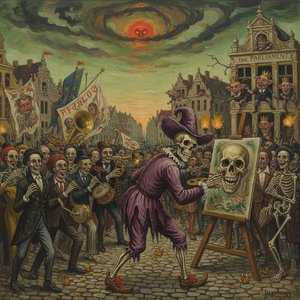 James Ensor's Grotesque Visions: Social Commentary & Artistic InnovationExplore the unsettling yet captivating world of James Ensor, a pioneer of Expressionism. Discover his satirical masterpieces, symbolic imag…
 Capturing the Exotic: A Journey Through the Allure and Complex Legacy of Orientalist ArtExplore the mesmerizing world of Orientalist art. From Napoleon's influence to Renoir's exotic textures, discover the history, beauty, and …