

 Predogled
 Pošlji
 Deli
Deli
 Podrobnosti o delu

 Prenesi
 Podobni izdelki
 Rentgenski posnetek
 Predvajaj diaporama
 Statistika
Cercle du phare et restaurant


 Razviljaj več
Ročno izdelana oljna reprodukcija
Ročno slikano olje na platnu v vaši izbiri velikosti in okvirja, izdelano po naročilu naših umetnikov. ( Preklop na tiskanine Preklop na digitalno sliko)




P118B $10

P118H $10

P118W $10

P438Z $10

P508JH $12

P508YH $12

P805H $10

P805Z $10

P919BZ $10

P919G $10

P919XJ $10

P959ZH $10

P968JZ $12

W106C $8

W218G $10

W218JH $8

W218Y $10

W307PJ $10

W316G $10

W316PJ $8

W316Y $10

W398PJ $8

W4111J $10

W500HY $15

W500JH $15

W692G $12

W849H $8

W940BG $15

W953PJ $8




Izberite eno od naših vnaprej določenih velikosti, ki ustrezajo prvotnim proporcijam umetničkega dela.

Svoje dimenzije lahko vnesete tako, da se prilagodite določenemu okvirju ali prostoru. Če izbrana velikost ne ustreza razmerjem originalne slike, bomo umetniško delo obrezali ali sliko dopolnili z dodatnimi ročno naslikanimi elementi. Pred začetkom proizvodnje vam bo poslan digitalni osnutek v odobritev.
Upoštevajte, da predogled na zaslonu ne odraža dejanskega obrezovanja ali podaljšanja. Le osnutek bo natančno prikazal končno kompozicijo.
Čeprav so na voljo velikosti po meri, priporočamo izbiro dimenzije s preddefiniranega seznama, da ohranimo originalne razmere.
Po oddaji naročila bo ekipa OriginalUniqueArt.com stranki po e-pošti poslala navodila in predogled digitalnega predogleda.
Svetska dostava () za 3/4 nedelje umesto uobičajenih 5 nedelja. (13 september). Bez kompromisa po pitanju kvaliteta.

Brezplačna ekspresna dostava po vsem svetu

Visokokakovostno laneno platno

Popolno zavarovanje pošiljke

Garancija povračila carine in uvoznih davkov

Garancija popolnega ujemanja barv

Politika vračilo v 100 dneh (le v primeru okvar)

Garancija 100% povračila denarja

Popust pri večjem naročilu
 Možnost stekla je na voljo le za velikosti pod 110 cm

Cercle du phare et restaurant
Tehnika reprodukcije
Velikost reprodukcije
-


Skupna končna cena
$ 300
A Vision of Quiet Resilience
In the delicate, translucent layers of James Ensor’s “Cercle du phare et restaurant,” we encounter a world that breathes with a soft, melancholic grace. Painted around 1890, this watercolor masterpiece transcends its humble subject matter—a coastal streetscape—to offer a profound meditation on solitude and the passage of time. At first glance, the viewer is greeted by a tranquil seaside scene, where a lighthouse stands sentinel over a small restaurant nestled among quiet buildings. Yet, there is an unmistakable tension beneath this placid surface; it is a landscape that feels suspended in a moment of eternal waiting, capturing a sense of psychological depth that would eventually position Ensor as a pioneer of the Expressionist movement.
The artist’s technique in this work is nothing short of masterful. Eschewing the heavy, opaque textures often associated with late 19th-century oil painting, Ensor utilizes the ethereal qualities of watercolor to create an atmosphere of dreamlike luminosity. By layering subtle washes of color, he softens the architectural edges of the buildings, allowing them to bleed almost imperceptibly into the surrounding light. This flattened perspective and emphasis on tonal harmony rather than rigid realism invite the observer to look beyond the physical structures and instead feel the temperature and mood of the coastal air. It is a technique that transforms a simple street scene into an evocative, atmospheric experience.
Symbolism and the Shadows of Ostend
To understand the soul of this painting, one must look toward the historical currents flowing through Ensor’s life in Ostend. Growing up in a souvenir shop filled with carnival masks and exotic curiosities, Ensor developed a lifelong fascination with the duality of appearance and reality. While “Cercle du phare et restaurant” lacks the overt, unsettling masks found in his more famous works, the symbolism remains deeply embedded in its composition. The lighthouse serves as a powerful metaphor for guidance and vigilance amidst an encroaching darkness, mirroring Ensor’s own artistic mission to illuminate the hidden truths of the human condition. Meanwhile, the empty restaurant stands as a poignant symbol of human connection—a place designed for gathering that, in this moment, remains hauntingly vacant.
This absence of figures is a deliberate and powerful choice. By removing the bustle of people, Ensor directs our focus toward introspection and the quietude of the landscape itself. This reflects the broader anxieties of the turn of the century—a period of rapid industrialization and social upheaval in Europe. The painting captures that specific, bittersweet feeling of being an observer on the periphery, watching a world that is both beautiful and profoundly lonely. For the collector or the lover of fine art, this piece offers more than just visual beauty; it offers a window into the complex emotional landscape of a man who found profound meaning in the shadows.
An Elegant Addition to the Modern Interior
For the discerning interior designer or art enthusiast, a high-quality reproduction of “Cercle du phare et restaurant” serves as a sophisticated anchor for any curated space. Its muted palette and serene composition make it an incredibly versatile piece, capable of bringing a sense of calm and intellectual depth to a contemporary living room, a quiet study, or a minimalist gallery setting. The artwork does not demand attention through loud colors or jarring imagery; instead, it commands the room through its subtle elegance and the way it invites long, contemplative gazes.
Integrating this work into a home decor scheme allows for a dialogue between historical significance and modern aesthetics. Whether paired with sleek, mid-century furniture or nestled within a more classical, traditional setting, Ensor’s watercolor brings an unmistakable air of prestige and soulful storytelling. It is an investment in atmosphere—a way to surround oneself with the quiet resilience and enduring beauty of one of Belgium's most visionary masters.
Biografija umetnika
James Ensor: A Pioneer of Expressionism and Surrealism
James Sidney Edouard Ensor (Ostend, 13 April 1860-19 November 1949) was a Belgian painter and printmaker who stands as one of the most influential figures in the development of Expressionism and Surrealism. Born into an English father and Belgian mother—a duality that profoundly shaped his artistic worldview—Ensor defied convention from the outset, rejecting academic formalism and embracing unsettling imagery rooted in psychological exploration.
Early Influences and Artistic Training
His formative years were marked by exposure to Ostend’s vibrant seaside atmosphere and his parents’ souvenir shop, which stocked exotic objects and carnival masks – stimuli that ignited his imagination and instilled a lifelong fascination with disguise. Ensor pursued formal artistic training at the Académie Royale des Beaux-Arts in Brussels, where he encountered fellow artists like Fernand Khnopff and Theo Van Rysselberghe—connections that fostered intellectual debate and propelled him beyond traditional boundaries.
A Shift Towards Grotesque Visionary Art
Around 1886-1889 Ensor embarked on a transformative stylistic journey, abandoning Impressionistic ideals for Expressionist techniques characterized by bold brushwork and vibrant color palettes. Influenced by Rembrandt’s masterful use of chiaroscuro, Francisco Goya’s unflinching depictions of human suffering, and Japanese woodcuts—a fascination with visual symbolism—Ensor developed a distinctive iconography focused on grotesque figures and unsettling narratives.
Key Masterpieces and Recurring Themes
His most celebrated works – including *Christ's Entry into Brussels* (1888-1889), *The Scandalized Masks* (1883) and *Skeletons Fighting over a Hanged Man* (1891) – exemplify Ensor’s commitment to confronting uncomfortable truths about human psychology and societal hypocrisy. Recurring themes throughout his oeuvre include death, decay, social critique, religious satire, and the boundless potential of imagination—elements that continue to resonate with audiences today.
Legacy and Influence
James Ensor's uncompromising artistic vision solidified his position as a pivotal innovator in modern art, paving the way for Expressionist artists like Edvard Munch and Surrealists like René Magritte. His rejection of academic conventions and embrace of psychological depth profoundly impacted subsequent generations of painters—establishing him as an enduring symbol of artistic rebellion and intellectual courage.

James Ensor
1860 - 1949 , Belgija
Hitri podatki
- Artistic Movement Or Style: Expressionism, Surrealism
- Artists Who Influenced This Artist:
- Pieter Bruegel the Elder
- Francisco Goya
- Whistler
- Date Of Birth: April 13, 1860
- Date Of Death: November 19, 1949
- Full Name: James Sidney Edouard Ensor
- Nationality: Belgian
- Notable Artworks:
- The Scandalized Masks
- Skeletons Fighting...
- Christ's Entry into Brussels
- Place Of Birth: Ostend, Belgium
Sorodni članki
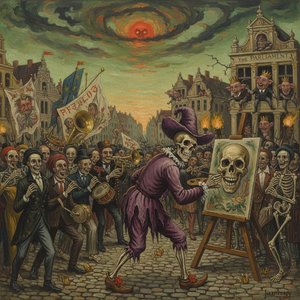
James Ensor's Grotesque Visions: Social Commentary & Artistic Innovation
Explore the unsettling yet captivating world of James Ensor, a pioneer of Expressionism. Discover his satirical masterpieces, symbolic imagery & lasting influence on modern art. High-quality reproductions available at OriginalUniqueArt.

Ephemeral Visions: Exploring the Artistic Legacy & Nuances of Watercolor Painting
Explore the captivating world of watercolor painting! Discover its rich history, essential techniques, influential artists & collecting tips from art experts. A comprehensive guide for enthusiasts.

Ephemeral Visions: Exploring the History & Emotional Resonance of Watercolor Painting
Explore the captivating history of watercolor painting, from ancient techniques to modern masters like Kandinsky & Blake. Discover essential artists, collecting tips & the emotional power of this luminous medium. Expert insights for art enthusiasts.

Ephemeral Visions: Exploring the Artistic Legacy & Contemporary Practice of Watercolor Painting
Explore the captivating world of watercolor painting! Discover its rich history, essential techniques, influential artists & collecting tips. A comprehensive guide for art enthusiasts from OriginalUniqueArt.

Watercolor Wonders: 10 Masterpieces That Redefined Art History | OriginalUniqueArt
Journey through 10 legendary watercolor masterpieces by Sargent, Turner & Homer! Explore iconic landscapes, portraits & floral art that redefined history. Find museum-quality reproductions and curated decor ideas at OriginalUniqueArt.com.


