Meni
BREZPLAČNO POSVETOVANJE O UMETNOSTI
PreviewPreview Kupi tiskanino Kupi tiskaninoKupi digitalno sliko Kupi digitalno sliko PošljiPošlji
Podrobnosti o deluPodrobnosti o delu Dodaj v priljubljene Dodaj v priljubljene PrenesiPrenesi Podobni izdelkiPodobni izdelki Rentgenski posnetekRentgenski posnetek Predvajaj diaporamaPredvajaj diaporama

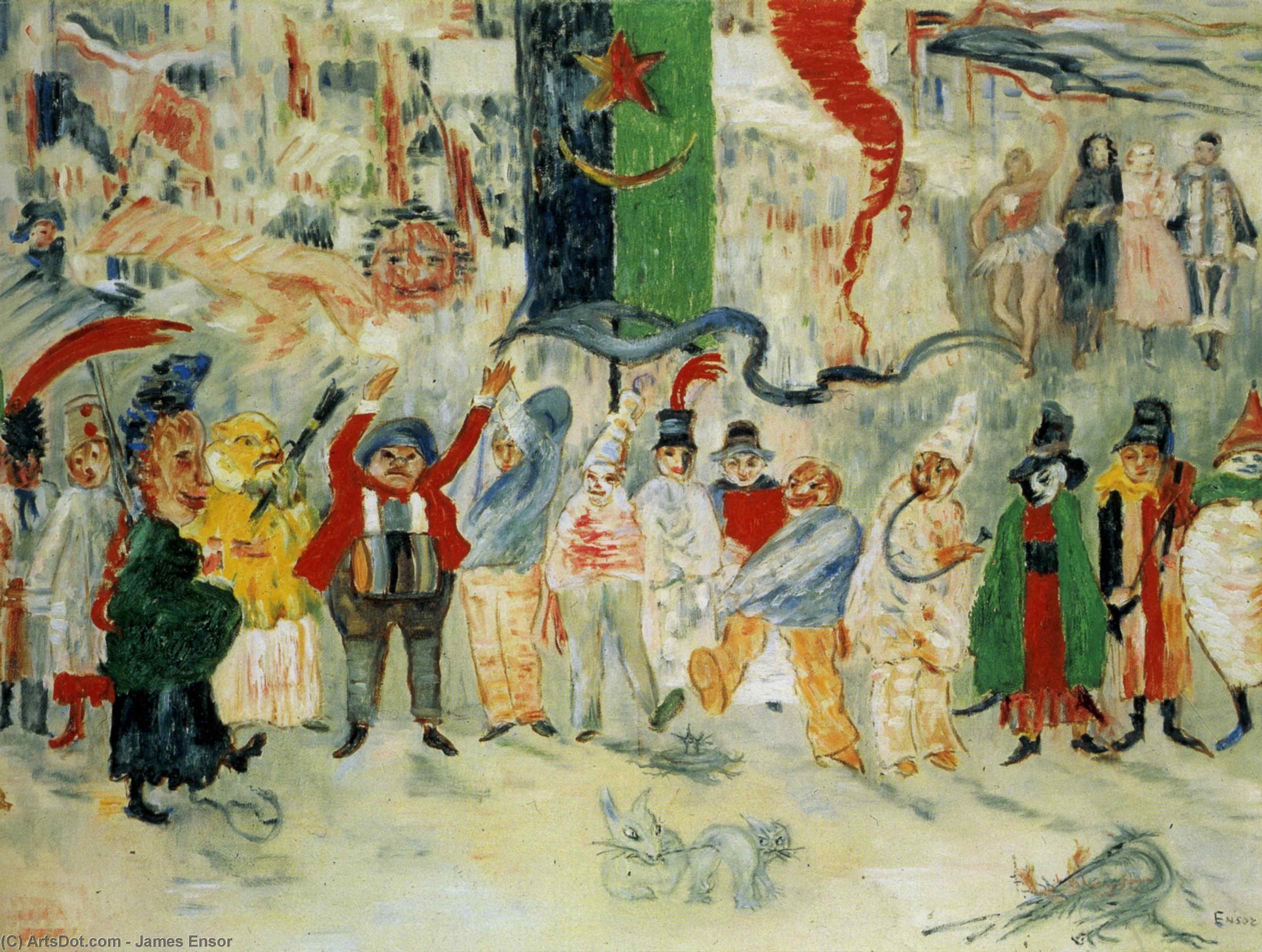
Carnaval en Flandre

James Ensor je belgijski mojster ekspresionizma in surrealizma znan po svojih brezobličnih slikah, karnevalskih motivih ter groteskni estetiki. Pogosto je prikazoval smrt, družbeno kritiko in religiozno satiro.

Ročno izdelana oljna reprodukcija

Ročno slikano olje na platnu v vaši izbiri velikosti in okvirja, izdelano po naročilu naših umetnikov.

P118B $10
P118H $10
P118W $10
P438Z $10
P508JH $12
P508YH $12
P805H $10
P805Z $10
P919BZ $10
P919G $10
P919XJ $10
P959ZH $10
P968JZ $12
W106C $8
W218G $10
W218JH $8
W218Y $10
W307PJ $10
W316G $10
W316PJ $8
W316Y $10
W398PJ $8
W4111J $10
W500HY $15
W500JH $15
W692G $12
W849H $8
W940BG $15
W953PJ $8

Standard
custom
CM
INCH

Izberite eno od naših vnaprej določenih velikosti, ki ustrezajo prvotnim proporcijam umetničkega dela.

širina
višina

Svoje dimenzije lahko vnesete tako, da se prilagodite določenemu okvirju ali prostoru. Če izbrana velikost ne ustreza razmerjem originalne slike, bomo umetniško delo obrezali ali sliko dopolnili z dodatnimi ročno naslikanimi elementi. Pred začetkom proizvodnje vam bo poslan digitalni osnutek v odobritev.
Upoštevajte, da predogled na zaslonu ne odraža dejanskega obrezovanja ali podaljšanja. Le osnutek bo natančno prikazal končno kompozicijo.
Čeprav so na voljo velikosti po meri, priporočamo izbiro dimenzije s preddefiniranega seznama, da ohranimo originalne razmere.

Primeri možnih sprememb: Zamenjava obraza s fotografijo stranke; Dodajanje hišnega ljubljenčka (npr. zamenjava mačke s psom); Vključitev skritega sporočila v ozadje; Sprememba pokrajine ali elementov v ozadju.
Po oddaji naročila bo ekipa OriginalUniqueArt.com stranki po e-pošti poslala navodila in predogled digitalnega predogleda.

Svetska dostava () za 3/4 nedelje umesto uobičajenih 5 nedelja. (23 julij). Bez kompromisa po pitanju kvaliteta.

why_choose_icon
Brezplačna ekspresna dostava po vsem svetu
why_choose_icon
Visokokakovostno laneno platno
why_choose_icon
Popolno zavarovanje pošiljke
why_choose_icon
Garancija povračila carine in uvoznih davkov
why_choose_icon
Garancija popolnega ujemanja barv
why_choose_icon
60-dnevna politika vračanja (le v primeru napak)
why_choose_icon
Garancija 100% povračila denarja
why_choose_icon
Popust pri večjem naročilu

Skupna cena

-

reproduction

Carnaval en Flandre

Tehnika reprodukcije

Velikost reprodukcije

-

Skupna končna cena

-

Ključni podatki

  • Medium: Oil on canvas
  • Notable elements or techniques: Masks, grotesque imagery
  • Artistic style: Surrealist
  • Influences: Symbolism
  • Movement: Expressionism
  • Location: Private Collection

Umetniški kviz

Pri vsakem vprašanju je na voljo le eden pravilen odgovor.

Vprašanje 1:
What artistic movement is James Ensor primarily associated with?
Vprašanje 2:
The painting depicts a lively celebration featuring people dressed in various styles. What prominent element contributes to the festive atmosphere?
Vprašanje 3:
James Ensor's upbringing was marked by exposure to souvenirs and curiosities. Where did his parents operate a business?
Vprašanje 4:
What color palette dominates the painting's depiction of the crowd?
Vprašanje 5:
James Ensor’s artistic vision was challenged by what aspect of the Académie Royale des Beaux-Arts?

Opis umetninine

Carnaval en Flandre: A Masked Reflection of Victorian Anxiety

James Ensor’s “Carnaval en Flandre” (1896) isn't merely a depiction of a festive Belgian celebration; it’s a profound meditation on the anxieties simmering beneath the surface of Victorian society. Painted during Ensor’s formative years as an Expressionist, this monumental canvas captures a chaotic scene of masked figures swirling amidst a vibrant tapestry of color—a visual paradox that speaks volumes about the artist's preoccupation with duality and hidden truths. The painting immediately grabs the viewer’s attention with its audacious palette: reds dominate the central figures, punctuated by splashes of emerald green and sapphire blue, creating an unsettling dynamism that contrasts sharply with the stillness of the background.
  • Subject Matter: Ensor meticulously portrays a carnival procession—a tradition rife with symbolism—featuring individuals adorned in elaborate costumes and masks. The sheer number of figures contributes to the overwhelming feeling of movement and disorientation.
  • Style & Technique: Ensor’s masterful brushwork exemplifies Expressionist principles, prioritizing emotional intensity over realistic representation. Thick impasto creates textural surfaces that convey a palpable sense of unease and disturbance.
The historical context is crucial to understanding “Carnaval en Flandre.” Victorian England was grappling with rapid industrialization, social upheaval, and anxieties surrounding mortality—themes frequently explored by Ensor through grotesque imagery and unsettling juxtapositions. The masks themselves serve as potent symbols of concealment and deception, representing not just disguises but also the hidden identities and repressed desires that lurk beneath societal facades. Notice particularly the central figure – a solitary man dressed in black, seemingly detached from the revelry—a poignant reminder of individual isolation amidst collective celebration. Symbolism: Ensor’s use of color is deliberately jarring, mirroring the psychological turmoil he sought to convey. The reds symbolize passion and aggression, while the blues evoke melancholy and despair. Recurring skeletal imagery reinforces the pervasive awareness of death and decay—a preoccupation that reflects Ensor's broader artistic vision. Emotional Impact: “Carnaval en Flandre” transcends mere visual spectacle; it compels viewers to confront uncomfortable truths about human nature and societal anxieties. The painting’s unsettling atmosphere lingers long after viewing, prompting contemplation on themes of alienation, repression, and the fragility of illusion. It's a masterpiece that continues to resonate with audiences today—a testament to Ensor’s ability to distill complex psychological ideas into unforgettable visual imagery.
  • Interior Design Inspiration: Consider incorporating elements of Ensor’s bold color palette and textural brushstrokes into contemporary interior spaces, creating an atmosphere of dramatic contrast and intellectual stimulation.
  • Collector's Perspective: Owning a high-quality reproduction allows you to appreciate the intricacies of Ensor’s technique and engage with his profound exploration of Victorian anxieties—a piece of art that speaks across time.

Biografija umetnika

James Ensor: A Pioneer of Expressionism and Surrealism

James Sidney Edouard Ensor (Ostend, 13 April 1860-19 November 1949) was a Belgian painter and printmaker who stands as one of the most influential figures in the development of Expressionism and Surrealism. Born into an English father and Belgian mother—a duality that profoundly shaped his artistic worldview—Ensor defied convention from the outset, rejecting academic formalism and embracing unsettling imagery rooted in psychological exploration.

Early Influences and Artistic Training

His formative years were marked by exposure to Ostend’s vibrant seaside atmosphere and his parents’ souvenir shop, which stocked exotic objects and carnival masks – stimuli that ignited his imagination and instilled a lifelong fascination with disguise. Ensor pursued formal artistic training at the Académie Royale des Beaux-Arts in Brussels, where he encountered fellow artists like Fernand Khnopff and Theo Van Rysselberghe—connections that fostered intellectual debate and propelled him beyond traditional boundaries.

A Shift Towards Grotesque Visionary Art

Around 1886-1889 Ensor embarked on a transformative stylistic journey, abandoning Impressionistic ideals for Expressionist techniques characterized by bold brushwork and vibrant color palettes. Influenced by Rembrandt’s masterful use of chiaroscuro, Francisco Goya’s unflinching depictions of human suffering, and Japanese woodcuts—a fascination with visual symbolism—Ensor developed a distinctive iconography focused on grotesque figures and unsettling narratives.

Key Masterpieces and Recurring Themes

His most celebrated works – including *Christ's Entry into Brussels* (1888-1889), *The Scandalized Masks* (1883) and *Skeletons Fighting over a Hanged Man* (1891) – exemplify Ensor’s commitment to confronting uncomfortable truths about human psychology and societal hypocrisy. Recurring themes throughout his oeuvre include death, decay, social critique, religious satire, and the boundless potential of imagination—elements that continue to resonate with audiences today.

Legacy and Influence

James Ensor's uncompromising artistic vision solidified his position as a pivotal innovator in modern art, paving the way for Expressionist artists like Edvard Munch and Surrealists like René Magritte. His rejection of academic conventions and embrace of psychological depth profoundly impacted subsequent generations of painters—establishing him as an enduring symbol of artistic rebellion and intellectual courage.

James Ensor

James Ensor

1860 - 1949 , Belgija

Hitri podatki

  • Artistic Movement Or Style: Expressionism, Surrealism
  • Artists Who Influenced This Artist:
    • Pieter Bruegel the Elder
    • Francisco Goya
    • Whistler
  • Date Of Birth: April 13, 1860
  • Date Of Death: November 19, 1949
  • Full Name: James Sidney Edouard Ensor
  • Nationality: Belgian
  • Notable Artworks:
    • The Scandalized Masks
    • Skeletons Fighting...
    • Christ's Entry into Brussels
  • Place Of Birth: Ostend, Belgium
Raziščite umetniška dela, razvrščena po temah, slogih in značilnostih.