Predogled v realnem okolju
 Pošlji
 Deli
Deli
 Podrobnosti o delu
 Priročnik

 Prenesi sliko
 Podobni izdelki
 Rentgenski posnetek
 Predvajaj diaporama
 Q&A
Q&A Statistika
Self-portrait


 Preberi več
Giclée tisk / Umetniški tisk
Giclée ali platnati odtis muzejske kakovosti z hitro proizvodnjo in prilagodljivimi možnostmi končne obdelave. ( Kupite ročno slikano delo Preklop na digitalno sliko)




P118B €10

P118H €10

P118W €10

P438Z €10

P508JH €12

P508YH €12

P805H €10

P805Z €10

P919BZ €10

P919G €10

P919XJ €10

P959ZH €10

P968JZ €12

W106C €8

W218G €10

W218JH €8

W218Y €10

W307PJ €10

W316G €10

W316PJ €8

W316Y €10

W398PJ €8

W4111J €10

W500HY €15

W500JH €15

W692G €12

W849H €8

W940BG €15

W953PJ €8




Izberite eno od naših vnaprej določenih velikosti, ki ustrezajo prvotnim proporcijam umetničkega dela.

Vnesite širino in višino, ki jih potrebujete za svoj okvir ali steno. Tiskanje se lahko le odreže, vendar ga ni mogoče narediti večjega od slike, zato format z drugačno obliko pomeni izgubo dela slike. Pred tiskanjem vam pošljemo digitalni predogled za potrditev. Slika, prikazana na tej strani, ne prikazuje dejanskega izrezka — le predogled to omogoča.
Globalna dostava () v 2 tednih namesto standardnih 4/5 tednov. (30 oktober)

Brezplačna ekspresna dostava po vsem svetu

Visokokakovostno laneno platno

Popolno zavarovanje pošiljke

Garancija povračila carine in uvoznih davkov

Garancija popolnega barvnega ujemanja

100-dnevna politika vračil (le v primeru okvar)

Garancija 100% povračila denarja

Popust pri večjem naročilu
 Možnost stekla je na voljo le za velikosti pod 110 cm

Self-portrait
Giclée tisk / Umetniški tisk
Velikost reprodukcije
-


Skupna cena
€ 71
A Study in Shadow and Silence: Whistler’s Self-Portrait of 1858
James Abbott McNeill Whistler's "Self-portrait," etched in 1858, isn’t merely a likeness; it’s a carefully constructed meditation on perception, light, and the very nature of artistic expression. This deceptively simple image, rendered in stark black and white, immediately draws the viewer into a world of quiet contemplation – a world that reflects Whistler's burgeoning aesthetic philosophy. The portrait depicts a man with short hair, gazing downward, his features etched with a subtle melancholy. A neatly trimmed mustache adds to an air of restrained formality, while the tie suggests a connection to the social conventions of the time, yet he subtly resists their full embrace.
- The Etching Technique: Whistler was a pioneer in etching, meticulously controlling every line and tonal value. The delicate lines of this portrait demonstrate his mastery of the medium, creating an astonishingly detailed surface despite its monochrome palette. Notice how he uses hatching – closely spaced parallel lines – to build up areas of shadow, suggesting depth and volume with remarkable subtlety.
- Compositional Restraint: The subject occupies a significant portion of the frame, anchoring the image while allowing ample negative space around him. This deliberate emptiness invites the viewer to focus entirely on the figure itself, fostering a sense of intimacy and solitude.
Echoes of Aestheticism
Whistler’s “Self-portrait” is deeply rooted in the aesthetic movement that was gaining momentum throughout Europe during this period. Rejecting the prevailing Victorian emphasis on moralistic narratives and historical subject matter, aesthetes like Whistler sought to elevate art to its purest form – an end in itself. They believed that art should be judged solely on its beauty and sensory impact, divorced from didactic or narrative content. This portrait embodies that philosophy perfectly; it’s not a story being told, but rather an experience of visual contemplation.
The year 1858 was pivotal for Whistler. He was beginning to establish his artistic identity, experimenting with tonal values and exploring the interplay between light and shadow – techniques he would later refine into his signature “Nocturnes.” This self-portrait can be seen as a preliminary study for these future works, a focused investigation of how color (represented here through value) could evoke mood and atmosphere.
Symbolism in Subtlety
While the portrait avoids overt symbolism, there are subtle clues that enrich its meaning. The downward gaze suggests introspection, perhaps even a degree of sadness or weariness. It’s not a triumphant or assertive pose; rather, it conveys a sense of quiet observation and self-awareness. The tie, while present, isn't overly emphasized – it hints at societal expectations without demanding adherence to them. Whistler was deliberately blurring the lines between art and life, suggesting that beauty could be found in the everyday, even in the act of simply looking.
Furthermore, consider the stark contrast between light and shadow. Whistler masterfully uses chiaroscuro – the dramatic interplay of light and dark – to sculpt the man’s face and create a sense of three-dimensionality. This technique not only enhances the visual impact but also contributes to the overall mood of quiet contemplation.
A Timeless Reflection
Whistler's "Self-portrait" of 1858 remains a powerfully evocative work, offering a glimpse into the mind of an artist grappling with his own identity and artistic vision. It’s a testament to Whistler’s innovative approach to etching and his commitment to aesthetic principles. A reproduction of this piece offers more than just a visual representation; it provides a window into a pivotal moment in art history – a moment when the pursuit of beauty was championed above all else. Its quiet intensity continues to resonate with viewers today, inviting us to pause, reflect, and appreciate the subtle power of a carefully crafted image.
Vprašanja in odgovori
Ali so barve v delu "Self-portrait" avtorja James Mcneill Whistler nasičene ali utemeljene?
"Self-portrait" avtorja James Mcneill Whistler ima Muted saturacijo.
Pod kakšnimi drugimi imeni je znan/a James Mcneill Whistler?
James Mcneill Whistler je znana tudi pod imenom Džejms Mcneil Visler, James Abbott Mcneill Whistler.
Kje je danes razstavljeno "Self-portrait" avtorja James Mcneill Whistler?
Originalno delo "Self-portrait" avtorja James Mcneill Whistler se nahaja v muzeju The Smithsonian’s National Museum of Asian Art, Washington, D.C., Združene države Amerike. Reprodukcija omogoča, da ta sklad prikazujete tudi v svojem domu.
Biografija umetnika
James Abbott McNeill Whistler: Ameriški umetnik, ki je posvečal lepoti
James Abbott McNeill Whistler, rojen leta 1834 v Lowellu, Massachusetts, je bil ameriški slikar, graver in ilustrator, ki je večino svojega življenja preživel in ustvarjal v Evropi. Njegova zgodnja pot je bila zaznamovana z selitvami zaradi očetove službe, kar mu je omogočilo izpostavljenost različnim okoljem in kulturem. Čeprav je nekaj časa obiskoval West Point, se ni mogel prilagoditi vojaškemu načinu življenja, nato pa je delal pri geodetskem uradu ZDA, a njegova strast do umetnosti je bila neomajna. Ta obdobja so ga oblikovala v ustvarjalno silo, ki jo je vodila želja po izstopanju in raziskovanju novih umetniških poti. Že zgodaj se je Whistler začel upirati konvencijam in moralističnim prikazom v slikarstvu, kar je utrlo pot njegovi kasnejši zavezanosti "umetnosti zaradi umetnosti".Pariz in rojstvo nove estetike
Ključni trenutek v Whistlerjevi karieri je bila selitev v Pariz leta 1855. Tam se je izpopolnjeval pri Sébastienne Bouréu, kjer je osvojil tehnike oljnega slikarstva, akvarela in grafike. Vendar pa Whistler ni ostal zvest le imitaciji; hitro je razvil prepoznaven stil, ki je poudarjal tonalne harmonije in atmosfere. Njegova umetnost ni bila namenjena natančnemu prikazovanju resničnosti, temveč ujetim trenutkom, subtilnim odtenki čustev in vzdušij. V Parizu se je Whistler začel opredelitevati k ideji, da mora biti umetnost ocenjena izključno po svoji estetski vrednosti, brez moralnih ali didaktičnih omejitev – filozofiji, ki je postala temelj njegovega ustvarjanja in definicija estetističnega gibanja. Ta prelomnica je Whistlerja postavila na pot k inovativnemu razumevanju umetnosti, kjer je oblika in tonalnost prevladovala nad naravoslovnim prikazom.Nokturne, portreti in iskanje harmonije
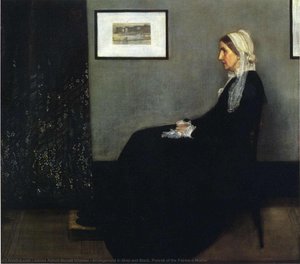
Whistlerjeva vizija se je kristalizirala v več ključnih temah in stilskih odločitvah. Zavrgel je prizore, preobremenjene z moralnimi ali družbenimi komentarji, in se osredotočil na ujetje subtilnih odtenkov svetlobe, barve in atmosfere – iskanje, ki je privedlo do njegovih ikoničnih *Nokturn*. Te atmosferske slike nočnih prizorov, pogosto prikazujoč Temzo v mraku, niso bile namenjene natančni reprodukciji, temveč evokativnim vtiskom, študijam tonalne harmonije in razpoloženja. Pogosto je uporabljal omejeno paleto barv in nežno tehniko nanašanja barve, kar je ustvarjalo občutek eterične lepote in tihe kontemplacije. Portreti so imeli prav tako pomembno mesto v njegovem delu, vendar jih je pristopil z edinstvenim razumevanjem. Whistler ni bil skrb za popoln prikaz podobe; namesto tega se je osredotočil na formalne aranžmaje in tonalne odnose, obravnavajoč svoje modele kot kompozicijske elemente v skrbno zasnovanem estetskem okviru. Delo *Arrangement in Grey and Black No. 1* – bolj znano kot *Whistlerjeva mati* – to pristop popolnoma prikazuje, spreminjajoč družinski portret v ikonično podobo viktorijanske materinstva s pomočjo mojstrske uporabe oblike in tona.Spori, vpliv in trajna zapuščina
Whistlerjeva kariera ni bila brez kontroverz. Znani sodni proces z umetnostnim kritikom Johnom Ruskinom leta 1878, sprožen zaradi *Nokturna v črnem in zlatem – padajoča raketa*, je postal mejnik v zgodovini umetnosti. Whistler je uspešno branil svojo umetniško avtonomijo in trdil, da njegove slike niso namenjene realističnim prikazom, temveč estetskim aranžmajem barve in oblike. Ta zadeva je povišala njegov ugled in sprožila pomembne debate o naravi umetnostnega kriticizma in umetniške svobode. Poleg tega se je Whistlerjev vpliv razprostiral daleč in široko. Globoko ga je navdihnil japonski tisk (ukiyo-e), ki je oblikoval njegove kompozicijske načine in poudaril dekorativne vzorce, pa tudi tonalno mojstrstvo španskih slikarjev, kot je Velázquez. Njegov zagovarjanje "umetnosti zaradi umetnosti" je močno vplivalo na estetistično gibanje v Angliji in Ameriki, odpirajoč pot modernizmu in izzivajoč konvencionalne predstave o umetniškem namenu. Ostavil je neizbrisov sled v ameriški umetnosti, navdihujoč generacije umetnikov, da sprejmejo formalistične pristope in raziskujejo ekspresivni potencial barve in kompozicije.- Pomembna dela: *Kovaštvo* (1861), *Portret Charlesa Lang Freerja* (1873), *Brown and Gold: The Gold Girl—Connie Gilchrist* (1876-77), *Arrangement in Grey and Black No. 1 (Whistler’s Mother)* (1871), *Nokturno v črnem in zlatem – padajoča raketa* (1875).
- Vplivi: Japonski tisk, Velázquez.

James Mcneill Whistler
1834 - 1903 , Združene države Amerike
Hitri podatki
- Datum Rojstva: 14. julij 1834
- Kraj Rojstva (Mesto In Država): Lowell, ZDA
- Nacionalnost: Ameriški
- Polno Ime: James Abbott McNeill Whistler
- Umetniki, Ki So Vplivali Nanj:
- Velázquez
- Japonski natis (ukiyo-e)
- Značilna Dela:
- The Forge (1861)
- Portret Charlesa Lang Freerja
- Brown and Gold: The Gold Girl
- Arrangement in Grey and Black No. 1
- Nocturne in Black and Gold
- Značilni Umetniški Slogi:
- Tonalizem
- Estetizem
Sorodni članki
Etching Masters: 10 Legendary Prints That Revolutionized Art | OriginalUniqueArt
Journey through 10 legendary etching masterpieces by Rembrandt, Dürer & Goya. Explore the history of printmaking and discover timeless art for your home. Find museum-quality reproductions at OriginalUniqueArt.com.

Dark Masterpieces: 10 Iconic Paintings Dominated by Black Tones |
Explore 10 iconic paintings dominated by black tones, from Rembrandt’s chiaroscuro to Goya's dark expressions. Discover the stories behind these masterpieces & find museum-quality art reproductions for your home at .

James Abbott McNeill Whistler: 25 Mojstrovskih Del za Navdih v Vašem Domu
Odkrijte 25 mojstrovskih del Jamesa Abbotta McNeilla Whistlerja! Preučite zgodbe, tehnike in navdih za njegove ikonične nocturne, portrete in dela estetizma. Najboljše reprodukcije slik online na OriginalUniqueArt.com – umetnost za vaš dom.

Etching: A Historical Survey of Technique, Aesthetic Qualities & Enduring Artistic Significance
Explore the rich history of etching, from its origins to Rembrandt's masterful innovations. Discover the technique, aesthetic qualities & enduring legacy of this captivating art form. Expert insights for collectors and enthusiasts.

The Intricate World of Etching: A Historical Survey of Technique, Aesthetic Evolution, and Enduring Artistic Impact
Explore the rich history of etching, from its origins to modern practice. Discover techniques, key artists like Rembrandt, and insights for collectors. A comprehensive guide by OriginalUniqueArt.