

 Predogled
 Pošlji
 Deli
Deli
 Podrobnosti o delu

 Prenesi
 Podobni izdelki
 Rentgenski posnetek
 Predvajaj diaporama
Wooded Landscape
 Dutch Golden Age
 101.0 x 144.0 cm
 Razviljaj več
Ročno izdelana oljna reprodukcija
Ročno slikano olje na platnu v vaši izbiri velikosti in okvirja, izdelano po naročilu naših umetnikov. ( Kupi tisk Kupi digitalno sliko)




































Izberite eno od naših vnaprej določenih velikosti, ki ustrezajo prvotnim proporcijam umetničkega dela.

Svoje dimenzije lahko vnesete tako, da se prilagodite določenemu okvirju ali prostoru. Če izbrana velikost ne ustreza razmerjem originalne slike, bomo umetniško delo obrezali ali sliko dopolnili z dodatnimi ročno naslikanimi elementi. Pred začetkom proizvodnje vam bo poslan digitalni osnutek v odobritev.
Upoštevajte, da predogled na zaslonu ne odraža dejanskega obrezovanja ali podaljšanja. Le osnutek bo natančno prikazal končno kompozicijo.
Čeprav so na voljo velikosti po meri, priporočamo izbiro dimenzije s preddefiniranega seznama, da ohranimo originalne razmere.
Po oddaji naročila bo ekipa OriginalUniqueArt.com stranki po e-pošti poslala navodila in predogled digitalnega predogleda.
Svetska dostava () za 3/4 nedelje umesto uobičajenih 5 nedelja. (28 avgust). Bez kompromisa po pitanju kvaliteta.

Brezplačna ekspresna dostava po vsem svetu

Visokokakovostno laneno platno

Popolno zavarovanje pošiljke

Garancija povračila carine in uvoznih davkov

Garancija popolnega ujemanja barv

60-dnevna politika vračanja (le v primeru napak)

Garancija 100% povračila denarja

Popust pri večjem naročilu
 Možnost stekla je na voljo le za velikosti pod 110 cm

Wooded Landscape
Tehnika reprodukcije
Velikost reprodukcije
-


Skupna končna cena
$ 325
Biografija umetnika
A Brussels Master of Woodland Scenes: The Life and Art of Jacques d’Arthois
Jacques d'Arthois, born in Brussels in 1613, emerged during a vibrant period for Flemish art—a time when landscape painting was steadily gaining prominence alongside the established traditions of portraiture and history. While not as widely celebrated as some of his contemporaries, d’Arthois carved out a significant niche for himself with his meticulously detailed depictions of wooded landscapes populated by figures engaged in everyday life or pastoral pursuits. His career unfolded against a backdrop of political and religious upheaval, yet he managed to cultivate a consistent style that resonated with patrons seeking both beauty and tranquility in their surroundings. Apprenticed to Jan Mertens in 1625, the specifics of his early training remain somewhat obscure; however, it’s clear that d'Arthois quickly developed an affinity for rendering the natural world with remarkable precision. He entered the Brussels Guild of St. Luke in 1634, marking a formal recognition of his artistic abilities and establishing him as a professional painter within the city’s thriving art community.The Tapestry Designer and the Pastoral Ideal
D'Arthois wasn’t solely dedicated to easel painting; he also achieved considerable success as a tapestry designer, becoming a chartered cartoon designer for the city of Brussels in 1655. This dual role is significant because it illuminates his broader artistic sensibilities—his ability to translate compositions from one medium to another and his understanding of decorative principles. Tapestry design demanded a clarity of form and narrative that likely influenced his paintings, encouraging him to create scenes that were both visually compelling and easily interpretable. His landscapes often evoke a sense of idealized harmony, reflecting the pastoral ideal prevalent in 17th-century art—a longing for a simpler, more virtuous existence rooted in nature. The woods around Brussels served as his primary source of inspiration, and he frequently depicted them with a keen eye for atmospheric effects and subtle variations in light and shadow. Figures were often added to his compositions by other artists, notably David Teniers the Younger and Gonzales Coques, creating collaborative works that showcased both d’Arthois's landscape expertise and the figure painters’ skill in animating the scenes.Influences and Artistic Development
Tracing the influences on d’Arthois’s style reveals a complex interplay of artistic traditions. Early works demonstrate a clear debt to Lodewijk de Vadder, another prominent Brussels landscape painter whose compositions often featured similar wooded settings and figure groupings. However, d'Arthois gradually developed his own distinctive voice, characterized by a greater emphasis on detail and a more refined sense of atmospheric perspective. The influence of Denis van Alsloot is also discernible in his early paintings, particularly in the rendering of trees and foliage. As he matured, d’Arthois began to experiment with larger-scale landscapes, responding to a growing demand for decorative works that could adorn churches and abbeys. These ambitious compositions required a sophisticated understanding of spatial organization and a mastery of color and tone. While documentary evidence is limited, it's believed that Cornelis Huysmans may have spent time in d’Arthois’s workshop around 1650, though the extent of his influence remains uncertain.A Legacy of Imitation and Historical Significance
Jacques d’Arthois enjoyed a successful career during his lifetime, attracting commissions from both private patrons and religious institutions. He owned several houses, including one in the Sonian Forest—a testament to his prosperity and connection to the natural world he so often depicted. Despite experiencing financial difficulties later in life, his artistic reputation remained strong. His influence extended beyond Brussels, as evidenced by the presence of pupils who emulated his style and disseminated his aesthetic principles throughout the region. While no works are definitively signed by either his brother Nicolaes or his son Jan Baptist, it is believed that many paintings attributed to Jacques d’Arthois were actually created by these family members. This ambiguity underscores the challenges inherent in attributing 17th-century Flemish landscapes, but it also highlights the enduring appeal of d'Arthois’s style—a style that was widely imitated and followed by other landscape artists for generations. His contribution lies not in radical innovation, but in his skillful execution of a beloved genre and his ability to capture the beauty and tranquility of the Belgian countryside. He represents a vital link in the development of Flemish landscape painting, bridging the gap between earlier traditions and the more sophisticated approaches that would emerge in the following centuries.
jacques d' arthois
1619 - 1686 , Belgium
Hitri podatki
- Artists Or Movements Influenced By This Artist: ['']
- Artists Who Influenced This Artist: ['']
- Date Of Birth: 1619
- Date Of Death: 1686
- Notable Artworks: ['']
- Place Of Birth: WahooArt
Sorodni članki

Golden Light & Dutch Skies: The Timeless Magic of Dutch Golden Age Landscapes
Discover the breathtaking beauty of Dutch Golden Age landscapes. Explore the mastery of light, chiaroscuro, and 17th-century realism through an expert art history lens, celebrating the enduring legacy of the Dutch Masters for discerning collectors and art lovers.

Masterpieces of Light: A Definitive Guide to the Landscapes of the Dutch Golden Age
Discover the luminous mastery of Dutch Golden Age landscapes. Our expert guide explores the atmospheric realism of masters like Van Goyen and Cuyp. Elevate your space with museum-quality, hand-painted oil reproductions from OriginalUniqueArt.com. Art history, beautifully realized.

10 Mojstrovin Nizozemske Zlate dobe: Umjetnost, ki je definirala svojo dobo
Odkrijte 10 mojstrovin Nizozemske zlate dobe! Rembrandt, Vermeer & več – spoznajte zgodbe za temi ikoničnih umetnin. Inspirirajte se za notranji dizajn in poiščite reprodukcije na OriginalUniqueArt.com!

Golden Light & Dutch Skies: Bringing the Magic of Dutch Golden Age Landscapes into Your Home
Transform your home with the breathtaking light of Dutch Golden Age landscapes. Discover how hand-painted oil reproductions of masterworks like Ruisdael and Vermeer bring timeless elegance, atmosphere, and soulful texture to modern interiors. Elevate your space with museum-quality art.
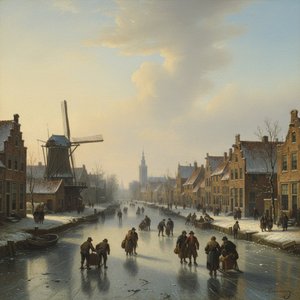
Charles Leickert: Capturing the Dutch Golden Age Light – A Comprehensive Study of Technique, Context, and Legacy
Explore the captivating winter landscapes of Charles Leickert, a master of Dutch Golden Age light & atmosphere. Discover his techniques, symbolism, and lasting legacy – a comprehensive study for art enthusiasts and collectors.

