
 Predogled v realnem okolju
 Pošlji
 Deli
Deli
 Podrobnosti o delu
 Priročnik

 Prenesi sliko
 Podobni izdelki
 Rentgenski posnetek
 Predvajaj diaporama
 Vprašanja in odgovori
 Statistika
Wheat Fields

- 100.0 x 130.0 cm


 Preberi več
Giclée tisk / Umetniški tisk
Giclée ali platnati odtis muzejske kakovosti z hitro proizvodnjo in prilagodljivimi možnostmi končne obdelave. ( Kupite ročno slikano delo Preklop na digitalno sliko)




P118B €10

P118H €10

P118W €10

P438Z €10

P508JH €12

P508YH €12

P805H €10

P805Z €10

P919BZ €10

P919G €10

P919XJ €10

P959ZH €10

P968JZ €12

W106C €8

W218G €10

W218JH €8

W218Y €10

W307PJ €10

W316G €10

W316PJ €8

W316Y €10

W398PJ €8

W4111J €10

W500HY €15

W500JH €15

W692G €12

W849H €8

W940BG €15

W953PJ €8




Izberite eno od naših vnaprej določenih velikosti, ki ustrezajo prvotnim proporcijam umetničkega dela.

Vnesite širino in višino, ki jih potrebujete za svoj okvir ali steno. Tiskanje se lahko le odreže, vendar ga ni mogoče narediti večjega od slike, zato format z drugačno obliko pomeni izgubo dela slike. Pred tiskanjem vam pošljemo digitalni predogled za potrditev. Slika, prikazana na tej strani, ne prikazuje dejanskega izrezka — le predogled to omogoča.
Globalna dostava () v 2 tednih namesto standardnih 4/5 tednov. (11 november)

Brezplačna ekspresna dostava po vsem svetu

Visokokakovostno laneno platno

Popolno zavarovanje pošiljke

Garancija povračila carine in uvoznih davkov

Garancija popolnega barvnega ujemanja

100-dnevna politika vračil (le v primeru okvar)

Garancija 100% povračila denarja

Popust pri večjem naročilu
 Možnost stekla je na voljo le za velikosti pod 110 cm

Wheat Fields
Giclée tisk / Umetniški tisk
Velikost reprodukcije
-


Skupna cena
€ 72
Jacob van Ruisdael’s “Wheat Fields”: A Symphony of Light and Landscape
“Wheat Fields,” painted circa 1670 by Jacob Jansz van Ruisdael, stands as arguably the most arresting depiction of Dutch pastoralism from the Golden Age. More than just a scenic vista, it's a masterful orchestration of atmospheric perspective and compositional dynamism—a painting that continues to resonate with viewers centuries later. Examining its intricacies reveals not only Van Ruisdael’s technical prowess but also his profound understanding of conveying emotion through visual language.A Masterclass in Atmospheric Perspective
Van Ruisdael's signature style is characterized by a deliberate flattening of depth, achieved through subtle gradations of color and tonal variation. The distant wheat field recedes into hazy blues and greens—a technique known as atmospheric perspective—creating an illusion of vastness and conveying the serenity of rural life. Unlike many contemporaries who prioritized detailed realism, Ruisdael prioritized capturing the essence of a landscape rather than meticulously recreating every blade of grass. This approach aligns perfectly with the prevailing philosophical currents of the time, where contemplation and reflection on nature held considerable sway. The artist skillfully uses light—particularly diffused sunlight filtering through clouds—to sculpt the forms of the field and its inhabitants, imbuing the scene with an ethereal quality.Compositional Drama: Figures Amidst Vastness
The inclusion of two figures—a man carrying a bag and a woman accompanied by a child—adds a crucial element of narrative complexity to the landscape. Their placement at the forefront draws the eye inward, anchoring the viewer’s gaze amidst the expansive expanse of wheat and sky. The figures aren't merely decorative additions; they serve as symbols of human presence within the natural world, prompting contemplation about our relationship with the environment. Furthermore, Van Ruisdael employs a dynamic diagonal line that bisects the canvas, guiding the eye across the scene and enhancing its visual impact. This compositional device contributes to the painting’s dramatic tension—the subtle interplay between light and shadow emphasizing the contours of the landscape and the figures alike.Symbolism Rooted in Dutch Identity
“Wheat Fields” embodies the spirit of the Dutch Golden Age, reflecting a fascination with idealized representations of national identity. The wheat field itself symbolizes fertility and prosperity—themes central to Dutch agricultural traditions and economic success during this period. The inclusion of livestock reinforces these associations, grounding the scene in tangible realities while simultaneously elevating it to a realm of symbolic significance. Van Ruisdael’s depiction of the sky—dominated by swirling clouds illuminated by sunlight—suggests both beauty and vulnerability—a motif that resonates with broader anxieties about the unpredictable forces of nature.Emotional Resonance: Tranquility and Reflection
Ultimately, “Wheat Fields” succeeds in evoking a profound sense of tranquility and contemplation. The muted palette—primarily blues, greens, and browns—creates an atmosphere of calm repose, inviting viewers to immerse themselves in the stillness of the countryside. Yet, beneath this surface serenity lies a subtle undercurrent of drama—the interplay of light and shadow hinting at hidden complexities. As Gavin Finney eloquently describes it, Ruisdael “picks the moment you’d want to press the shutter on a camera,” capturing not just what is seen but also what is felt—a testament to Van Ruisdael's ability to transform visual observation into emotionally resonant art.- Artist: Jacob Jansz van Ruisdael
- Date: Circa 1670
- Medium: Oil on Canvas
- Dimensions: 39 3/8 x 51 1/4 in. (100 x 130.2 cm)
Vprašanja in odgovori
Kakšen karakter v prostor prinaša "Wheat Fields" avtorja Jacob van Ruisdael?
"Wheat Fields" avtorja Jacob van Ruisdael ima Serene vzdušje in se priporoča za Living Room. Razpoloženje je tisto, kar delo vnese v okoliški prostor.
Kako lahko prenesem sliko dela "Wheat Fields" avtorja Jacob van Ruisdael?
Digitalno sliko za "Wheat Fields" lahko prenesete na strani Prenos digitalne slike, kjer je na voljo možnost prenos digitalne slike visoke ločljivosti.
Kakšna je svetlobnost dela "Wheat Fields" avtorja Jacob van Ruisdael?
Luminanca, zabeležena za delom "Wheat Fields" avtorja Jacob van Ruisdael, znaša Gentle Luminance.
Biografija umetnika
Mladost, družina in izobraževanje
Jacob Isaackszoon Van Ruisdael se je rodil leta 1628 v nizozemskem Haarlemu, v svetu, kjer je bila umetnost bila več kot le poklic – bila je družinsko zanatstvo. Kot sin Isaacka van Ruisdaela in Maycken Cornelisdochter je odrasel v liniji izjemnih ustvarjalcev. Njegov dedek, Jacob de Goyer, je delal kot izdelovalec pohištva, s čimer je v domačje okolje vnesel vrednote vrhunskega kroježa in tehnične natančnosti. To dediščevo ustvarjalnosti je postavilo trdne temelje za življenje, ki je bilo posvečeno vizualnim umetnostim.
Pot njegovega umetniškega razvoja je nedolžno oblikovala ljudi, ki so mu bili najbližji. Bil je nečec Salomona van Ruysdaela, ki je bil eden izmed najboljstih krajinarjev svojega časa. Široko je verovaj, da je Jacob Isaackszoon Van Ruisdael svoje formalno izobraževanje pridobil pod mentorstvom svojega uncleja, s čimer je skozi neposredno podajanje znanja osvajal nuance nizozemske krajine. Ta družinska povezava mu ni nudila le pouka, temveč je predstavljala neposredno vrto v ustanovljene tradicije Haarlemske šole.
Do leta 1648 je njegovo profesionalno status formalno potrdilo vstop v Haarlemsko strojno družino slikarjev. Ta članstvo je označovalo njegov prehod iz učenika družinskega zanata v prepoznavnega umetnika, ki je svojo pot kročil samostojno. Prva leta je preživel v vzpostavljanju prisotnosti v tem kompetitivnem umetniškem središču, s čimer se je pripravljal na širšo kariero, ki ga bo kasneje odpeljala daleč od njegove rodne kraja.
Življenje in kariera v Amsterdamu
Prehod iz mirnega Haarlema v živahno trgovinsko središče Amsterdam je v življenju umetnika, ki ga poznamo kot Jacob Isaackszoon Van Ruisdael, predstavljal odločilno prelomnico. Okoli leta 1656 ali 1657 se je preselil v metropo-lo, kjer je iskal širše tržne priložnosti, ki jih je nudilo komercialno srce Nizozemske republike. Ta obdobje selitve je bilo obeleženo tudi s pomembnimi osebnimi dogodki, vključno s krstovanjem, ki je potekalo 17. junija 1657 v Ankeveenu, blizu Naardena. Ko se je dokončno udomovil, je v Amsterdamu ostal do konca svojega življenja, kjer se je trdno utrdil v mestnem okolju, ki ga je v svojih delih tako pogosto dokumentiral.
Njegovo profesionalno življenje v mestu je zaznamovalo nepretrlo ustvarjanje raznolikih motivov, ki so segali od razleglih mestnih panoram do zapletenih detajlov ob kanalu Damrak. Kako je z leti zoreval, so se njegovi zanimanja zdi širila zmej ali platna. Govori se, da je v svojih poznejših letih deloval tudi kot zdravnik, kar nakazuje na intelektualno raznolikost življenja, ki je dopolnjevalo njegovo vizualno opazovanje sveta. Ta dvojna obstaja v mestu odraža večplastno naravo človeka, ki je bil globoko vpleten v socialno in profesionalno tkivo nizozemske zlate dobe.
Tehnika in umetniški slog
Ruisdaelov pristop k platnu je bil opredeljen z nenehno in nemirno vsestranskostjo. Ni se ustavil pri enem samem slogu, temveč je ustvaril obilje del, ki so se spreminjala od mirnih podeželskih scen do bolj herojskih, razleglavih krajin. Njegova tehnična natančnost je temeljila predvsem na nežnem nanašanju tankih slojev oljne barve. Ta metoda mu je omogočila doseganje subtilnih prehodov barv in tonov, s čimer je ustvaril občutek globine, ki je deloval bolj živahno in naravno, kot da je le namalana. Skozi to potrpežljivo aplikacijo je mojstersko osvojil atmosferično perspektivo, kjer je z uporabo zamegljenosti zraka dalečoječe hribe in gozdove potopil v mehkul, srebrnasto odmežje.
Mood njegovih del je pogosto nosil težo, ki je presegala preprosto opisovanje topografije. Imel je poseben dar, da je svojim kompozicijam vdeval poetično, včasih pa tudi melankolično ali tragično kakovost. To je dosegal z vrhunskim vladanjem svetlobo in senco. Namesto da bi se zanašal na ostre, neskladne kontraste, je svetlobo uporabljal za oblikovanje čustvene temperature scene. Njegove kompozicije so bile pogosto dramatične, saj je izkoriščal neskončnost nebesa, da bi pod njim zmanjšal pomen zemeljskih elementov. V mnogih njegovih poznejših delih nebo zasede značilen del okvirja in deluje kot primarni nosil notranje napetosti in vzdušja dela.
Znomenita in ključna dela
Prva dela njegove kariere razkrivajo slikarja, ki je bil že globoko potopljen v teksture nizozemske podeželske pokrajine. Leta 1646 je ustvaril Glade in a Wood in Landscape with a Village in the Distance, dela, ki so potrdila njegovo sposobnost organizacije naravnih elementov v koherentne, atmosferične scene. Do leta 1649 se je njegova pozornost premaknila k specifični topografiji njegove domače regije, kar vidimo v delu The Thicket (Path in the Haarlem Dunes). Te zgodnje leta so bila zaznamovana z naraščajočim vlaštvjem v igri svetlobe in senke znotraj gostega listja in odprtih razgledov.
Ko se je njegova tehnična dovršenost zreli, so se njegove teme širile in vključevale bolj dramatična ter raznolika okolja. Leto 1650 se je izkazalo za posebej plodno, saj je prineslo dela, kot sta The Cloister in bolj turbulentno Rough Sea at a Jetty. V tem obdobju je raziskoval tudi stičišče človeške industrije in narave v delu Two Watermills and an Open Sluice near Singraven ter zajel tiho samotnost pokrajine v delu Landscape with a Traveller. Te kompozicije demonstrirajo sofisticirano razumevanje razmerja in načina, na molčav, na katerega svetloba določa določen trenutek v času.
Njegove pozne kompozicije so pogosto poudarjale strukturno lepoto naravnega sveta. Leta 1656 je Edge of a Forest with a Grainfield prikazalo njegovo veščino pri uravnoteženju težke prisotnosti gozdov z odprtostjo kmetenskih zemljišč. Njegova sposobnost podajanja teh spreminjajočih se perspektiv je pomagala oblikovati vizualni jezik nizozemske zlate dobe.
- Glade in a Wood (1646)
- Landscape with a Village in the Distance (1646)
- The Thicket (Path in the Haarlem Dunes) (1649)
- The Cloister (1650)
- Rough Sea at a Jetty (1650)
- Two Watermills and an Open Sluice near Singraven (1650)
Dediščina in vpliv
Doseg vizije, ki jo je imel Jacob Isaackszoon Van Ruisdael, se je razprostiral daleč čez meje Nizozemske in dosegel same temelje kasnejših krajinskih tradicij. Bil je romantik pred romantizmom, naravi je podelil občutek moralne težave in melankolično, poetsko vzdušje, ki je predvidel čustveno intenzivnost prihodnjih stoletj. Ta sposobnost, da je motivom vdeval specifično psihološko atmosfero, je omogočila, da je njegovo del resoniral z umetnostjo še dolgo po njegovi smrti. Njegov vpliv je pomagal oblikovati angleške romantike in Barbizonsko šolo v Franciji, njegove posledice pa so prečesale Atlantik in oblikovale ameriško šolo reke Hudon v ZDA.
V svoji domovini je navdihoval generacije nizozemskih krajinskih slikarjev, ki so po njem prevzeli standard za to, kako lahko svet krajine interpretiramo skozi igro svetlobe in senčenja. Njegov pristop k okolju nikoli ni bil zgolj topografski; skušal je zajeti samo esenco zemlje, pri čemer je pogosto uporabljal dramatična nebesa in težke teksture, da bi izrazil občutek sublimnosti. Ta osredotočenost na atmosferične lastnosti narave je zagotovila, da so postale njegove stilistične izbire temelj za tiste, ki so sledili njegovim korakom.
Kje si danes lahko ogledate njegova dela
Fizična prisotnost njegovih platn je še vedno razpršena po največjih hramili evropske in ameriške umetnosti. V Nizozemski, kjer Rijksmuseum v Amsterdamu hrani pomembno zbirko njegovega dela, lahko obiskovalec dobi osredotočen pogled na njegov umetniški razvoj. V bližini, v Haagi, Mauritshuis prav tako shranjuje več njegovih slik, ki namerjavajo okno v krajine, ki so oblikovale njegovo kariero. Njegov vpliv sega vse do Londona, kjer National Gallery hrani njegova dela skupaj z drugimi izjemnimi nizozemskimi mojmi.
Če se odmaknemo od meja Nizozemske, je njegov vpliv opazen v stalnih zbirkah štetnih mednarodnih institucij. Louvre v Parizu in Hermitvejev muzej v Sankt Peterburgu oba vsebujeta njegova dela, kar zagotavlja, da njegov vizualni jezik ostaja del svetovnega kanona. V Združenih državah Metropolitan Museum of Art v New Yorku ohranja njegove slike, kar omogoča neprekinjeno raziskovanje njegovega pristopa k svetlobi in atmosferi.
- Krajina z vodopadom, okoli leta 1668
- Mlin v Wijk bij Duurstede, 1670
- Razgled na Haarlem z sušiliščmi, 1675
- Damov trg v Amsterdamu (podrobnost), 1670

Jacob van Ruisdael
1628 - 1682 , Nizozemska
Hitri podatki
- Artistic Movement Or Style: Nizozemska zlatna doba
- Artists Or Movements Influenced By This Artist:
- Angleški romantiki
- Barbizonška šola
- Šola Hudson River
- Artists Who Influenced This Artist:
- Cornelis Vroom
- Allart van Everdingen
- Date Of Birth: 1628
- Date Of Death: 1682
- Full Name: Jacob Isaackszoon Van Ruisdael
- Nationality: Nizozemska
- Notable Artworks:
- Glade in a Wood
- Landscape with a Village in the Distance
- The Thicket
- The Cloister
- Rough Sea at a Jetty
- Two Watermills and an Open Sluice
- Landscape with a Traveller
- Countryside
- Edge of a Forest with a Grainfield
- Woodland Scene with Lake
- The Forest Stream
- Waterfall in a Rocky Landscape
- Landscape with Shepherds and Peasants
- Grainfields
- An Extensive Landscape with a Ruined Castle
- Landscape with Church and Village
- The Waterfall
- Landscape with Waterfall
- The Windmill at Wijk bij Duurstede
- Landscape with Ruined Castle and Church
- Winter Landscape
- Wheat Fields
- The Breakwater
- Mountain Torrent
- Chapel by a Waterfall
- Beach View
- View of Haarlem with Bleaching Grounds
- View of the Dam and the Damrak
- Place Of Birth: Haarlem, Nizozemska
Sorodni članki

The Golden Harvest: Examining Vincent van Gogh’s Wheat Field Landscapes from Saint-Rémy
Explore the vibrant textures and colors of Van Gogh's Saint-Rémy wheat fields. Dive into this expert analysis of Post-Impressionist mastery.
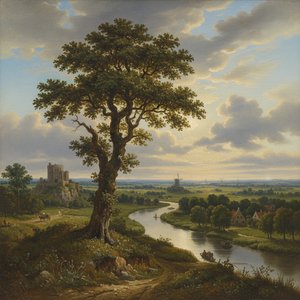
Jacob van Ruisdael: Master of Dutch Landscape & the Evocation of National Identity
Explore the life & work of Jacob van Ruisdael, the preeminent Dutch landscape painter. Discover his technical brilliance, symbolic depth, and lasting influence on art history. Learn about collecting Ruisdael's masterpieces.

Dutch Golden Age Landscapes: The Art of Atmospheric Realism and the Pastoral Ideal
Explore the mastery of Dutch Golden Age landscapes and atmospheric realism. Discover the secrets of these 17th-century masters now.

Jan van Goyen: Master of Dutch Landscape & Atmospheric Perspective
Discover Jan van Goyen, the master of Dutch landscape painting. Explore his subtle technique, atmospheric realism & lasting influence on art history. Learn about this 17th-century pioneer at OriginalUniqueArt.

Dutch Baroque Masters: 10 Paintings That Shaped an Era | OriginalUniqueArt
Journey through the Golden Age with our guide to the Top 10 Dutch Baroque masterpieces! Explore iconic paintings by Rembrandt, Vermeer & Frans Hals. Find museum-quality art reproductions and elevate your home decor at OriginalUniqueArt.com.

