
 Predogled v realnem okolju
 Pošlji
 Deli
Deli
 Podrobnosti o delu
 Priročnik

 Prenesi sliko
 Podobni izdelki
 Rentgenski posnetek
 Predvajaj diaporama
 Vprašanja in odgovori
 Statistika
Unexpected Return.

- 160.0 x 167.0 cm


 Preberi več
Giclée tisk / Umetniški tisk
Giclée ali platnati odtis muzejske kakovosti z hitro proizvodnjo in prilagodljivimi možnostmi končne obdelave. ( Kupite ročno slikano delo Preklop na digitalno sliko)




P118B €10

P118H €10

P118W €10

P438Z €10

P508JH €12

P508YH €12

P805H €10

P805Z €10

P919BZ €10

P919G €10

P919XJ €10

P959ZH €10

P968JZ €12

W106C €8

W218G €10

W218JH €8

W218Y €10

W307PJ €10

W316G €10

W316PJ €8

W316Y €10

W398PJ €8

W4111J €10

W500HY €15

W500JH €15

W692G €12

W849H €8

W940BG €15

W953PJ €8




Izberite eno od naših vnaprej določenih velikosti, ki ustrezajo prvotnim proporcijam umetničkega dela.

Vnesite širino in višino, ki jih potrebujete za svoj okvir ali steno. Tiskanje se lahko le odreže, vendar ga ni mogoče narediti večjega od slike, zato format z drugačno obliko pomeni izgubo dela slike. Pred tiskanjem vam pošljemo digitalni predogled za potrditev. Slika, prikazana na tej strani, ne prikazuje dejanskega izrezka — le predogled to omogoča.
Globalna dostava () v 2 tednih namesto standardnih 4/5 tednov. (11 november)

Brezplačna ekspresna dostava po vsem svetu

Visokokakovostno laneno platno

Popolno zavarovanje pošiljke

Garancija povračila carine in uvoznih davkov

Garancija popolnega barvnega ujemanja

100-dnevna politika vračil (le v primeru okvar)

Garancija 100% povračila denarja

Popust pri večjem naročilu
 Možnost stekla je na voljo le za velikosti pod 110 cm

Unexpected Return.
Giclée tisk / Umetniški tisk
Velikost reprodukcije
-


Skupna cena
€ 73
A Window Into the Soul: The Emotional Depth of Unexpected Return
In the vast tapestry of Russian Realism, few works capture the profound tension between private intimacy and public upheaval as poignantly as Ilya Yefimovich Repin’s Unexpected Return. Painted in 1884, this masterpiece is far more than a mere domestic tableau; it is a psychological study of a moment frozen in time, where the boundaries of a family's sanctuary are suddenly breached by the weight of history. The scene depicts the arrival of a revolutionary exile, a man whose very presence brings the turbulent winds of the Narodnik movement into the quietude of a Russian home. As he stands prominently in the center, clutching his hat, the viewer is immediately drawn into a complex web of anticipation, relief, and lingering anxiety.
The painting functions as a silent narrative, where every gaze tells a story of endurance. A woman leans over the returning man, her expression a delicate balance of compassion and concern, embodying the resilient bonds of family that persist even amidst political displacement. Through Repin’s masterful ability to capture subtle nuances in facial expressions, the canvas speaks volumes about the unspoken emotions of an era defined by social reform and upheaval. The blue wallpaper that adorns the room serves as a deliberate symbolic anchor, offering a sense of tranquility and stability that stands in stark, poignant contrast to the underlying social unrest represented by the man's sudden appearance.
Mastery of Technique and the Realist Vision
Repin’s technical execution in Unexpected Return is a testament to his dedication to the principles of realism. Eschewing the vibrant, light-drenched palettes of the Impressionists, Repin utilized a more subdued and atmospheric color scheme, deeply rooted in the traditions of Russian landscape painting. This choice of muted tones is essential to the work's melancholic mood, reflecting the uncertainties of a nation grappling with rapid industrialization and political repression. His use of oil on canvas allows for a remarkable textural depth; by employing a palette knife to build up thick impasto strokes, he captures the tactile reality of fabric, skin, and the very atmosphere of the room.
The composition is strikingly snapshot-like, prioritizing psychological immediacy over idealized beauty. This sense of "the moment" invites collectors and art enthusiasts to step into the room, feeling the weight of the man's experience and the breathless hush of the family's reaction. For those seeking to bring a piece of this profound historical resonance into their own spaces, a high-quality hand-painted reproduction offers an unparalleled opportunity. Such a rendition preserves the luminous colors and the intricate, painstaking detail that define Repin’s style, allowing the enduring themes of homecoming, reconciliation, and human resilience to continue captivating audiences in a contemporary setting.
Vprašanja in odgovori
Ali lahko s pomočjo proširjene stvarnosti vidim "Unexpected Return." avtorja Ilya Repin v svojem prostoru?
Stran Predogled v AR za delo "Unexpected Return." avtorja Ilya Repin uporablja tehnologijo proširjene reality, da na vaši zd compatible napravi prikaže umetniško del v vašem lastnem prostoru.
Katera barva prevladuje v kompoziciji dela "Unexpected Return." avtorja Ilya Repin?
Prevladujoča barva dela "Unexpected Return." avtorja Ilya Repin je Gray (#9d907b).
Katera postavitev najbolje ustreza formatu dela "Unexpected Return." avtorja Ilya Repin?
Format Square dela "Unexpected Return." avtorja Ilya Repin priporočamo za Living Room. Format in prostor skupaj pomagata pri izbiri optimalne postavnitve reprodukcije.
Biografija umetnika
Ilya Yefimovich Repin (1844–1930): The Soul of Russian Realism
Ilya Yefimovich Repin, a name that resonates with the very soul of Russian art, was born in 1844 in the humble Ukrainian town of Chuguev. His origins were far removed from the aristocratic circles often associated with artistic patronage; his father, a former soldier who traded horses, and his mother, deeply rooted in local traditions, instilled in young Ilya a profound connection to the land and its people. This early immersion into rural life – its hardships, its vibrant spirit, and its unwavering resilience – would become the bedrock of his artistic vision. Formal education began at a local school where his mother taught, but a period at a military cantonist school followed, an experience Repin later recalled with little fondness. Yet, even within the rigid confines of military discipline, his innate talent for drawing blossomed. At sixteen, he apprenticed himself to Ivan Bunakov, an icon painter, embarking on a rigorous training in religious art that honed his skills in meticulous detail and compositional precision. These formative years were not merely technical exercises; they represented a crucial immersion into the visual language of Russian culture, laying the groundwork for his later explorations of national identity and social commentary. Through restoring ancient icons and fulfilling portrait commissions, Repin began to observe and capture the essence of human character – a skill he would master throughout his illustrious career.Early Life and Artistic Foundations
Repin’s childhood was marked by modest circumstances but imbued with a strong familial bond. His father's military service instilled in him a sense of duty and discipline, while his mother’s connection to local traditions fostered an appreciation for the everyday realities of rural Russia. This formative experience profoundly shaped Repin’s artistic sensibility—a sensitivity to human emotion and suffering that would characterize much of his oeuvre. Despite initial difficulties with formal schooling, Repin's talent for drawing quickly emerged, demonstrating a natural aptitude for visual representation. His apprenticeship with Ivan Bunakov provided invaluable training in icon painting, mastering the techniques of meticulous detail and compositional precision – skills honed during those years that would prove crucial to his later artistic endeavors. The influence of Bunakov’s teachings extended beyond mere technical proficiency; it instilled a deep understanding of Russian religious iconography and its symbolic language.St. Petersburg and the Peredvizhniki Movement
Driven by ambition and fueled by an unwavering belief in the transformative power of art, Repin moved to St. Petersburg in 1863, seeking admission to the Imperial Academy of Arts. Despite facing initial rejection—a setback he overcame through diligent study and perseverance—Repin embraced the city’s vibrant artistic milieu. It was here that he encountered Ivan Kramskoi, a pivotal figure in the Peredvizhniki movement – a collective of realist artists who vehemently opposed academic conventions and championed an honest depiction of Russian life. Kramskoi became Repin's mentor, guiding him toward a more socially conscious art and fostering connections with fellow artists who shared his commitment to portraying the human condition with unflinching honesty. This encounter marked a turning point in Repin’s artistic trajectory—introducing him to the intellectual currents of the time and shaping his worldview. The Peredvizhniki's rejection of idealized beauty and embrace of social realism profoundly influenced Repin’s artistic vision, inspiring him to tackle challenging subjects and convey powerful emotions.Major Works: Capturing Russian Life and History
Repin’s artistic output spanned decades, producing a remarkable body of work that cemented his reputation as Russia's foremost realist painter. His breakthrough masterpiece, *Barge Haulers on the Volga* (1873), captured the grueling labor of ordinary men hauling barges along the Volga River—a scene rendered with breathtaking detail and imbued with palpable emotion. The painting’s monumental scale and dramatic lighting powerfully conveyed the hardships endured by the working class while simultaneously serving as a critique of social injustice. This work established Repin's mastery of realism and solidified his place among the leading artists of his time. He continued to explore themes of Russian history and society in subsequent paintings, including *Reply of the Zaporozhian Cossacks* (1880–1891), which celebrated the defiant spirit of Ukrainian Cossacks resisting Ottoman rule—a scene brimming with dynamism and expressive gesture. Repin’s portrayal of Ivan the Terrible killing his son (*Ivan the Terrible and His Son Ivan*) (1885) remains one of his most unsettling masterpieces, delving into psychological complexity and confronting viewers with uncomfortable truths about power and remorse.Legacy and Influence
Repin's artistic legacy extends far beyond his individual paintings—he profoundly shaped the trajectory of Russian art history. He championed realism as a means of conveying social commentary and capturing the human condition with empathy and insight, influencing generations of artists who followed him. His unwavering commitment to portraying everyday life and historical events established him as a towering figure in European art, securing his place among the most celebrated painters of the 19th century. Repin’s work continues to inspire admiration for its technical brilliance and emotional depth—a testament to his enduring artistic vision and his profound understanding of the human spirit. His influence can be seen in the works of numerous artists who embraced realism as a means of expressing social concerns and exploring psychological complexities, ensuring that Repin's legacy persists as one of the cornerstones of Russian art history.
Ilya Repin
1844 - 1930 , Rusija
Hitri podatki
- Artistic Movement Or Style: Realizem
- Artists Who Influenced This Artist:
- Ivan Kramskoi
- Vladimir Stasov
- Date Of Birth: 5 avgusta 1844
- Date Of Death: 29 septembra 1930
- Full Name: Ilya Yefimovich Repin
- Nationality: Rus
- Notable Artworks:
- Barge Haulers on the Volga
- Odgovor Zaporozhskih kozakov
- Ivan Tišči in njegov sin Ivan
- Place Of Birth (City And Country): Čugujev, Rusija
Sorodni članki

Ivan Bilibin: A Synthesis of Folklore, Modernism & National Identity in Russian Illustration
Explore the enchanting world of Ivan Bilibin, a master Russian illustrator who synthesized folklore, Art Nouveau & national identity. Discover his iconic fairy tale illustrations and legacy with OriginalUniqueArt.
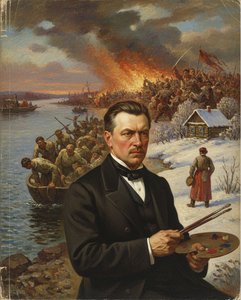
Ilya Repin: Realism, Revolution & the Russian Soul – A Comprehensive Exploration of Life and Legacy
Explore the life & legacy of Ilya Repin, Russia's leading realist painter. Discover his iconic works like 'Barge Haulers on the Volga,' social commentary, and profound portraits. A comprehensive guide for art enthusiasts.

Romantic Realism's Finest: 10 Masterpieces for Your Home | OriginalUniqueArt
Explore 10 defining masterpieces of Romantic Realism! Discover Courbet, Millet & Daumier's powerful paintings—capturing emotion and social realities. Find museum-quality reproductions for your home at OriginalUniqueArt.com.

The Hyper-Real Edge: Unveiling the Meticulous Mastery of Northern Renaissance Art
Discover the hyper-real mastery of Northern Renaissance art. Explore how pioneering oil techniques and intricate symbolism created a legacy of breathtaking detail that continues to inspire collectors and modern interiors today.
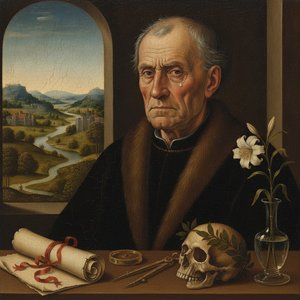
The Northern Renaissance: A Masterclass in Hyper-Realism, Oil Innovation, and Symbolic Depth
Explore the profound mastery of Northern Renaissance art. Discover the technical brilliance of Flemish oil painting, the intricate symbolism of Bosch and Bruegel, and the revolutionary realism that redefined European art history through an expert historical lens.


