
 Predogled
 Pošlji
 Deli
Deli
 Podrobnosti o delu

 Prenesi
 Podobni izdelki
 Rentgenski posnetek
 Predvajaj diaporama
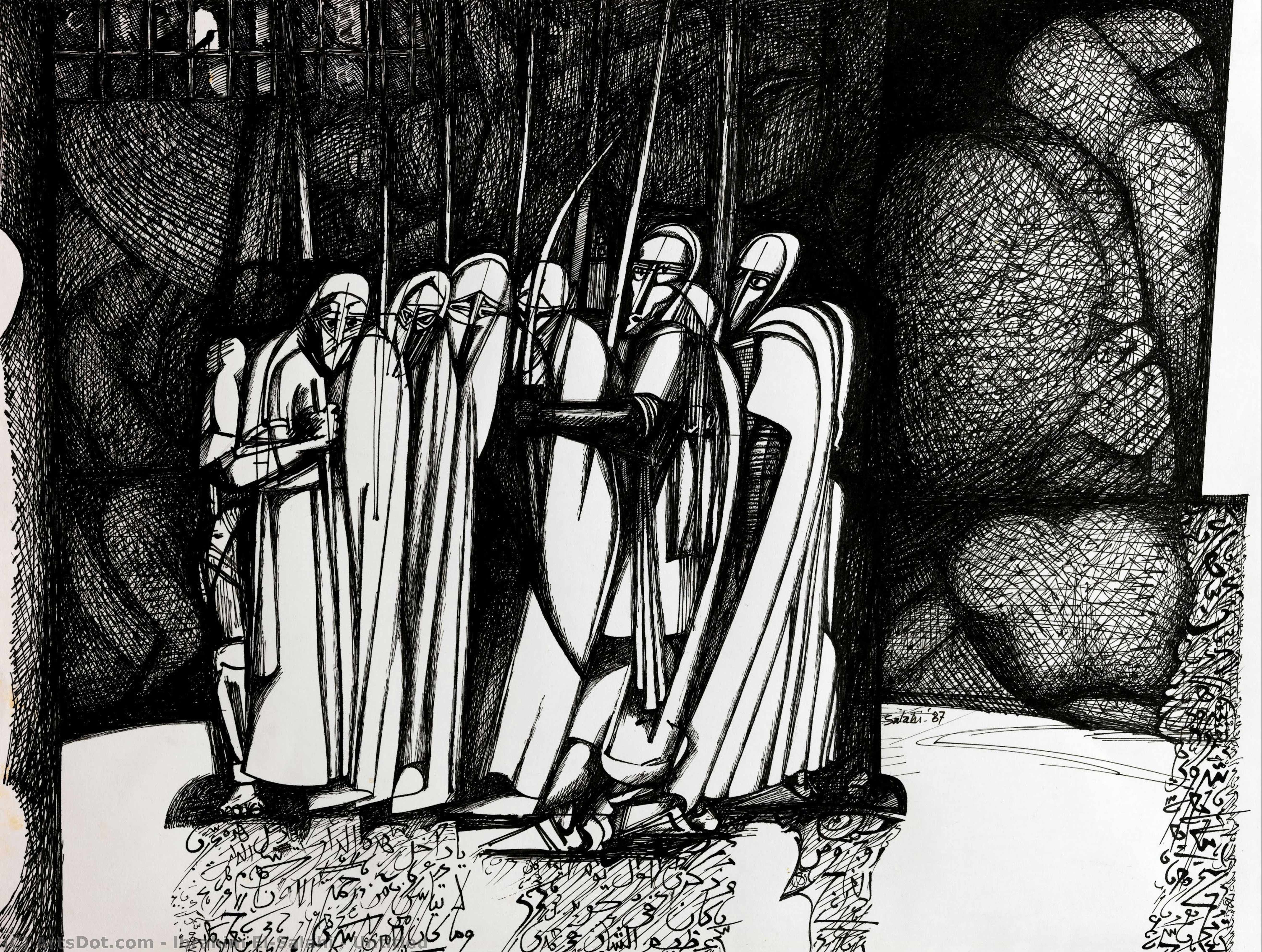
Untitled
 1987
1987 45.0 x 34.0 cm
 Mathaf: Arabski muzej sodobne umetnosti
 Razviljaj več
Kupite digitalno sliko visoke ločljivosti z izboljšano kakovostjo, ki je precej boljša od spletnega predogleda.
Vsaka datoteka je pod natančnim nadzorom naših strokovnjakov, ki uporabljajo napredna orodja in strokovno ročno obdelavo. Zagotovimo, da ima vsaka slika izjemno jasnost, natančnost barv in fine podrobnosti.
Končna datoteka je po e-pošti dostavljena v 72 urah, optimizirana za takojšnjo uporabo v profesionalnem, uredniškem in tiskarskem okolju. To je kakovost, ki ji zaupajo vrhunska oblikovalna studia, založniki in galerije.
Digitalna slika
Prenesite datoteko visoke ločljivosti za osebno uporabo, tiskanje in kreativne projekte. ( Kupi tisk Kupi ročno naslikano sliko)
Vključeno v vsako naročilo digitalne slike
Zagotovljena strokovna digitalna dostava
Ko izberete OriginalUniqueArt.com, ne prejmete le slike – prejmete digitalno umetniško delo, ki je profesionalno urejeno, izdelano z natančnostostjo in zavestno zagotovljeno z garancijo za zadovoljstvo. Tukaj je vse, kar samodejno prejmete z vašim naročilom:

Hitra dostava prek e-pošte
Vaša digitalna slika visoke ločljivosti bo na vaš e-naslov poslana v roku 72 ur od zaklopa naročila – pripravljena za takojšnjo uporabo.

Digitalna datoteka z umetno inteligenco
Vaše umetniško delo je strokovno optimizirano z uporabo naprednih orodij umetne inteligence in ročne obdelave, kar zagotavlja največjo stopnjo podrobnosti, jasnosti in barvne natančnosti.

Brezplačna ponovna dostava za vse življenje
Ste zaradi nespremietne napake izgubili ali izbrisali svojo datoteko? Ni težav – vam jo bomo ponovno poslali kadar koli in brezplačno.

Brez uvoznih pristojbin – vedno
Uživajte v svojem umetniškem delu takoj, brez carin, davkov ali stroškov dostave – digitalni prenosi so vedno brezdavčni.

Zagotovilo natančnosti barv
Z uporabo profesionalnih orodij in upravljanja barv zagotavljamo, da vaša digitalna slika čim bolj natančno odraža prvotne barve.

60-dnevna garancija zadovoljstva
Če niste zadovoljni s svojo digitalno sliko, jo bomo uredili ali vam v 60 dneh povrnili 100% denarja – brez kakršnih koli vprašanj.

100% Garancija povračila denarja
Niste zadovoljni? Zagovрите popoln povračilo sredstev v 60 dneh po prejemu digitalne datoteke – brez kakršnih koli vprašanj.

Popusti pri večjem številu naročil
Kupite 3 slike, prihranite 10% - Kupite 5 slik, prihranite 15% - Kupite 10+ slik, prihranite 20%. Odlično za kreativne projekte, galerije in agencije.
Biografija umetnika
The Visionary of the Khartoum School
Born in the historic city of Omdurman, Sudan, on September 5, 1930, Ibrahim El-Salahi stands as a monumental figure in the landscape of global modernism. His life and work represent a profound intersection of cultural heritage and avant-garde experimentation. As a central pillar of the Khartoum School, El-Salahi did not merely paint; he orchestrated a visual dialogue between the ancient rhythms of Islamic calligraphy and the radical abstractions of the twentieth century. His journey is one of deep intellectual synthesis, where the boundaries between the personal, the political, and the spiritual dissolve into a singular, flowing aesthetic.
El-Salahi’s early years were marked by an expansive curiosity that transcended borders. While his roots remained firmly planted in Sudanese soil, his artistic consciousness was shaped by a globalized perspective. During the 1950s, he began to absorb the transformative energies of various international movements, finding echoes of Pablo Picasso and Edgar Degas within his own developing language. This period of exploration was further enriched by his professional life as a public servant and diplomat. Traveling through diverse landscapes allowed him to witness the pulse of different cultures, an experience that would later manifest in his work as a sophisticated layering of motifs, textures, and symbols.
The Language of Hurufiyya and Abstraction
At the heart of El-Salahi’s contribution to art history is his mastery of the Hurufiyya movement. This revolutionary approach sought to reclaim the Arabic alphabet, not merely as a tool for literacy, but as a fundamental element of abstract composition. By deconstructing calligraphic forms, he moved beyond literal meaning to explore the raw, rhythmic power of the letterform itself. His canvases became battlegrounds of beautiful tension, where geometric precision met organic fluidity. This technique allowed him to participate in the broader African Modernism movement while maintaining a distinctively Pan-Arabic identity.
His stylistic evolution is characterized by a breathtaking use of bold colors and intricate, layered compositions. In his later works, one can observe a fascinating interplay of influences, where the structural lessons of Cubism meet a more meditative, almost spiritual abstraction. The artist possesses a unique ability to weave together disparate elements—traditional Sudanese motifs, cosmic symbols, and contemporary abstract shapes—into a cohesive visual tapestry. This synthesis creates a sense of "eternal time," where the past and the present exist simultaneously within the frame of a single painting.
Legacy and Global Recognition
The significance of Ibrahim El-Salahi’s oeuvre extends far beyond the borders of Sudan, reaching the most prestigious institutions in the world. His work has been celebrated in galleries and museums such as the Tate Modern and the Today Art Museum, cementing his status as one of the most important contemporary African artists of his generation. His ability to navigate the complexities of identity—balancing the local with the universal—has made him a vital voice in the discourse of post-colonial art.
Throughout his storied career, El-Salahi has achieved several milestones that define his enduring impact:
- Pioneering African Modernism: He played a decisive role in establishing a modern visual identity for Sudan and the wider continent.
- Mastery of Calligraphic Abstraction: His refinement of the Hurufiyya style provided a blueprint for integrating traditional script into contemporary fine art.
- Cultural Diplomacy through Art: Through his unique aesthetic, he bridged the gap between Islamic traditions and Western modernist movements.
- Global Artistic Influence: His works continue to inspire new generations of artists exploring the intersection of heritage and abstraction.
Today, the legacy of Ibrahim El-Salahi lives on through the profound emotional resonance of his paintings. Whether through the haunting beauty of "Deer in a Hat" or his more recent, complex abstractions, his work remains a testament to the power of art to transcend language, culture, and time.

ibrahim el-salahi
1930 - , Sudan
Ključne informacije
- Artistic Movement Or Style: African Modernism, Hurufiyya movement
- Artists Who Influenced This Artist:
- Edgar Degas
- Pablo Picasso
- Date Of Birth: September 5, 1930
- Full Name: Ibrahim El-Salahi
- Nationality: Sudanese
- Notable Artworks: ['Deer in a hat']
- Place Of Birth: Omdurman, Sudan

