
 Preverite v realnem okolju
 Pošlji kot čestitko
 Deli
Deli
 Podrobnosti
 Priročnik

 Prenesi
 Podobni artefakti
 Rentgenski posnetek
 Predvajaj diaporama
 Statistika
Play
 1869
1869 33.0 x 47.0 cm
 Royal Scottish Academy of Art - Architecture
 Preberi več
Kupite digitalno sliko visoke ločljivosti z izboljšano kakovostjo, ki je precej višja od spletnega predogleda.
Vsako datoteko naše strokovnjake v ekipi z največjo mero natančnosti pripravijo z uporabo naprednih orodij in strokovne ročne obdelave. Zagotovimo, da je vsaka slika izjemno jasna, barvno natančna in polna finih podrobnosti.
Končna datoteka je po e-pošti dostavljena v 72 urah, optimizirana za takojšnjo uporabo v profesionalnem, uredniškem in tiskarskem okolju. To je kakovost, ki ji zaupajo vrhunska oblikovalna studia, založniki in galerije.
Digitalna slika
Prenesite datoteko visoke ločljivosti za osebno uporabo, tiskanje in kreativne projekte. ( Preklop na tiskanine Naročite ročno slikano reprodukcijo)
Vključeno v vsako naročilo digitalne slike
Zagotovljena strokovna digitalna dostava
Z izbiro OriginalUniqueArt.com ne prejmete le slike – prejmete profesionalno urejeno digitalno umetniško delo, izdelano z največjo natančnostjo in zavestno podprto z garancijo za zadovoljstvo. Tukaj je vse, kar bo z vašim naročilom samodejno priloženo:

Hitra dostava po e-pošti
Vaša digitalna slika visoke ločljivosti bo na vaš e-naslov poslana v roku 72 ur od zaklopa naročila – pripravljena za takojšnjo uporabo.

Digitalna datoteka z uporabo AI
Vaše umetniško delo je strokovno optimizirano z uporabo naprednih orodij umetne inteligence in ročne obdelave, kar zagotavlja največjo stopnjo podrobnosti, jasnosti in barvne natančnosti.

Brezplačna doletna ponovna dostava
Ste datoteko zaradi nespremietne napake izgubili ali izbrisali? Ni težav – vam jo bomo ponovno poslali kadar koli in brezplačno.

Brez uvoznih pristojbin – vedno
Svoje umetniško del uživajte takoj, brez carin, davkov ali stroškov dostave – digitalni prenosi so vedno brezdavčni.

Zagotovilo natančnosti barv
Z uporabo profesionalnih orodij in procesov upravljanja barv zagotavljamo, da vaša digitalna slika čim bolj natančno odraža prvotne barve.

100-dnevna garancija zadovoljstva
Če niste zadovoljni s svojo digitalno sliko, jo bomo uredili ali vam v 100 dneh povrnili 100% denarja – brez kakršnih koli vprašanj.

100% Garancija povračila denarja
Niste zadovoljni? Zagotavljamo vam popoln povračilo sredstev v 100 dneh po prejemu digitalne datoteke – brez dodatnih vprašanj.

Popusti pri večjih naročilih
Kupite 3 slike, prihranite 10% - Kupite 5 slik, prihranite 15% - Kupite 10+ slik, prihranite 20%. Odlično za kreativne projekte, galerije in agencije.
Composition and Style
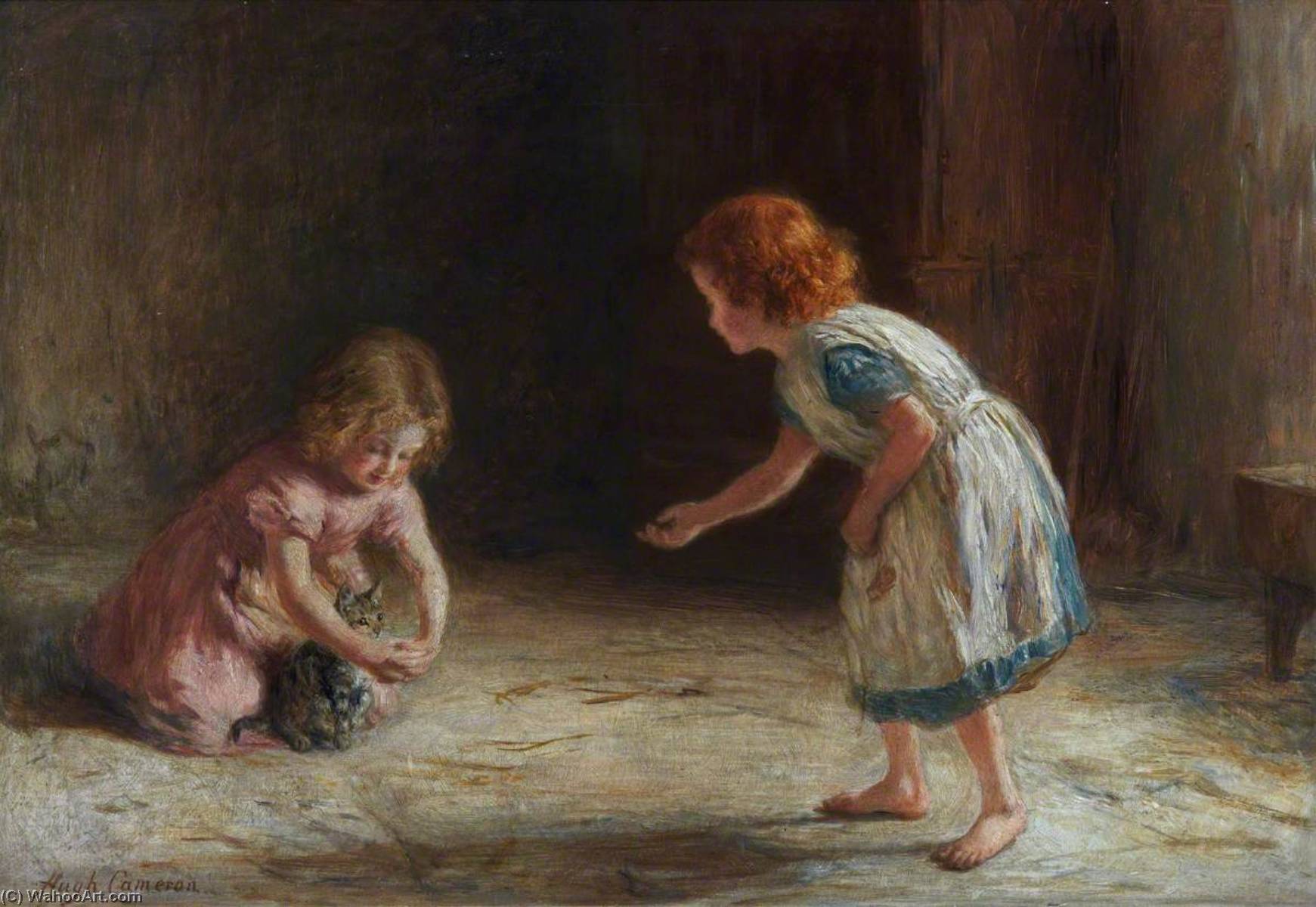
The scene features a young girl playing with her cat in a room, while another girl watches from behind her. The use of warm colors and soft brushstrokes creates a cozy atmosphere, drawing the viewer into the intimate moment. Wilson's style is reminiscent of other notable artists of the time, such as Claude Monet, who also explored the effects of light and color in their work. For example, Monet's The Bridge at Bougival showcases a similar emphasis on capturing the fleeting effects of natural light.Historical Context
The late 19th century was a time of great change and growth in Europe, as discussed in the history of Europe. The Industrial Revolution was transforming the continent, and the arts were responding to these changes. Wilson's painting Play can be seen as a reflection of this era, capturing the simplicity and innocence of childhood in a rapidly changing world. Key Features:- Oil on canvas piece measuring 33 x 47 cm
- Housed at the Royal Scottish Academy of Art - Architecture in Edinburgh, United Kingdom
- Created in 1869 by Hugh Cameron Wilson
The beauty of Play lies in its ability to transport us back to a simpler time, reminding us of the importance of childhood innocence and joy. As we gaze upon this captivating painting, we are invited to reflect on the significance of art in capturing the essence of human experience.
Biografija umetnika
A Life Painted in Light and Shadow
Hugh Cameron Wilson (1885-1952) wasn’t merely a painter; he was a meticulous recorder of the British landscape and its people during a pivotal era. Born into a family steeped in artistic tradition – his father, a prominent watercolorist – Wilson inherited not just talent but also a deep appreciation for observation and detail. His early life, spent amidst the rolling hills of Yorkshire and later in London’s vibrant art scene, provided fertile ground for his distinctive style: a blend of realism tempered by an almost melancholic sensitivity. Unlike many artists of his time who embraced grand romanticism, Wilson focused on capturing the quiet dignity of everyday life – farmers tending their fields, fishermen returning with their catch, children playing in sun-drenched lanes. This commitment to portraying the ordinary, coupled with his masterful use of light and shadow, cemented his place as a significant figure in early 20th-century British art.
Early Influences and Artistic Development
Wilson’s artistic journey began under the watchful eye of his father, who instilled in him a rigorous approach to watercolor painting. This foundation emphasized meticulous technique – layering washes, controlling pigment saturation, and achieving subtle gradations of tone. However, Wilson quickly developed his own voice, influenced by the Impressionists and particularly by artists like John Constable, whose atmospheric landscapes resonated with Wilson’s own fascination with light and color. His early works often depicted scenes from Yorkshire, capturing the rugged beauty of the moors and the starkness of the agricultural landscape. These paintings weren't simply representations; they were imbued with a sense of place – a feeling for the wind, the rain, and the enduring spirit of the region.
A crucial turning point in Wilson’s career came during his time in London. He immersed himself in the city’s art world, studying at the Slade School of Fine Art and absorbing the influences of contemporary artists. This exposure broadened his subject matter, leading him to paint portraits of prominent figures – politicians, writers, and members of the aristocracy – alongside his beloved landscapes. He approached portraiture with a similar level of detail and psychological insight as he did in his landscape paintings, capturing not just physical likeness but also the character and inner life of his subjects.
Technique and Style: Light, Shadow, and Detail
Wilson’s artistic signature lies in his extraordinary command of watercolor. He was a master of layering washes to create luminous effects, building up color gradually to achieve subtle variations in tone. His use of light is particularly noteworthy – he rarely employed harsh contrasts, preferring instead to capture the diffused glow of sunlight filtering through clouds or the soft shadows cast by trees and buildings. This delicate approach lends his paintings an ethereal quality, evoking a sense of nostalgia and quiet contemplation. Furthermore, Wilson’s meticulous attention to detail—the texture of wool clothing, the ripples in water, the weathered faces of his subjects—adds depth and realism to his work.
He frequently employed a limited palette, primarily utilizing blues, greens, browns, and grays. This restrained color scheme allowed him to focus on capturing the nuances of light and shadow, creating paintings that are both visually striking and emotionally resonant. His compositions were often carefully constructed, with elements arranged in a balanced and harmonious manner. He was known for his patience and dedication, spending countless hours observing his subjects and perfecting his technique.
Major Works and Historical Significance
Among Wilson’s most celebrated works are “The Pet Lamb,” a tender depiction of a young boy cradling a lamb, and “The Flight of the Seagulls,” a dramatic seascape capturing the raw power of the North Sea. These paintings exemplify his ability to convey both beauty and emotion through his masterful use of watercolor. His portraits, such as "The Flight of the Seagulls," offer valuable insights into the social and cultural landscape of Britain during the early 20th century. His work reflects a deep appreciation for British history and culture, capturing the spirit of a nation undergoing significant transformation.
Wilson’s legacy extends beyond his individual paintings. He played a crucial role in shaping the development of watercolor painting in Britain, demonstrating its versatility as a medium for both landscape and portraiture. His meticulous technique and sensitive approach to subject matter continue to inspire artists today. His work serves as a poignant reminder of the beauty and dignity that can be found in the everyday moments of life.

hugh cameron wilson
1885 - 1952
Kratek pregled
- Artistic Movement Or Style: Portrait painting
- Artists Or Movements Influenced By This Artist: ['British art']
- Artists Who Influenced This Artist: ['']
- Date Of Birth: 1885
- Date Of Death: 1952
- Full Name: Hugh Cameron Wilson
- Nationality: British
- Notable Artworks:
- The Pet Lamb
- The Flight of the Seagulls
- Place Of Birth: London, England