Preverite v realnem okolju
 Pošlji kot čestitko
 Deli
Deli
 Podrobnosti
 Priročnik

 Prenesi
 Podobni artefakti
 Rentgenski posnetek
 Predvajaj diaporama
 Statistika
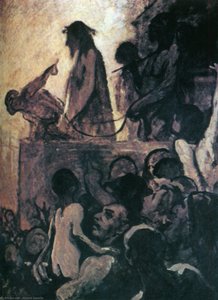
Scene from a Comedy
 Oil On Canvas
- WallArt
- Satirical Realism
 1858
1858 33.0 x 25.0 cm
 Muzej d'Orsay
 Preberi več
Giclée tisk / Umetniški tisk
Giclée ali platnati odtis muzejske kakovosti z hitro proizvodnjo in prilagodljivimi možnostmi končne obdelave. ( Naročite ročno slikano reprodukcijo Preklop na digitalno sliko)




P118B €10

P118H €10

P118W €10

P438Z €10

P508JH €12

P508YH €12

P805H €10

P805Z €10

P919BZ €10

P919G €10

P919XJ €10

P959ZH €10

P968JZ €12

W106C €8

W218G €10

W218JH €8

W218Y €10

W307PJ €10

W316G €10

W316PJ €8

W316Y €10

W398PJ €8

W4111J €10

W500HY €15

W500JH €15

W692G €12

W849H €8

W940BG €15

W953PJ €8




Izberite eno od naših vnaprej določenih velikosti, ki ustrezajo prvotnim proporcijam umetničkega dela.

Vnesite širino in višino, ki jih potrebujete za svoj okvir ali steno. Tiskanje se lahko le odreže, vendar ga ni mogoče narediti večjega od slike, zato format z drugačno obliko pomeni izgubo dela slike. Pred tiskanjem vam pošljemo digitalni predogled za potrditev. Slika, prikazana na tej strani, ne prikazuje dejanskega izrezkov — le predogled to omogoča.
Globalna dostava () v 2 tednih namesto standardnih 4/5 tednov. (22 oktober)

Brezplačna ekspresna dostava po vsem svetu

Visokokakovostno laneno platno

Popolno zavarovanje pošiljke

Garancija povračila carine in uvoznih davkov

Garancija popolnega barvnega ujemanja

Politika vračila v 100 dneh (le v primeru okvar)

Garancija 100% povračila denarja

Popust pri večjem naročilu
 Možnost stekla je na voljo le za velikosti pod 110 cm

Scene from a Comedy
Giclée tisk / Umetniški tisk
Velikost reprodukcije
-


Skupna cena
€ 70
A Moment Frozen in Satire: Honoré Daumier’s “Scene from a Comedy”
Honoré Daumier's "Scene from a Comedy," painted in 1858, isn’t merely a depiction of two figures; it’s a meticulously crafted snapshot of Parisian society and the biting social commentary that defined the artist’s career. Housed within the walls of the Musée d’Orsay, this oil on canvas offers a rare glimpse into Daumier's world – a world brimming with observation, critique, and an undeniable sense of humor laced with profound sadness. Measuring just 33 x 25 cm, its intimate scale belies the expansive social commentary it contains, inviting viewers to step closer and contemplate the subtle power dynamics at play.
The painting immediately draws the eye to the stark contrast between the two men. On the left stands an older gentleman, rendered in dark tones of coat and shirt, his face a study in sternness – a palpable embodiment of authority or perhaps simply ingrained habit. His posture is rigid, suggesting a lifetime spent upholding established norms. Juxtaposed against him is a younger figure, dressed more casually, tilted back with a relaxed amusement that hints at a different perspective, a willingness to question or even mock the older man’s demeanor. This immediate visual dichotomy establishes the core of Daumier's work: a deliberate exploration of conflicting viewpoints and the inherent tensions within social structures.
Realism and the Language of Gesture
Daumier’s mastery lies not just in capturing faces, but in conveying emotion through gesture and body language. The realism of his approach is evident in the meticulous detail with which he renders the textures of fabric, the subtle lines etched on the older man's face, and the slight tilt of the younger figure’s head. The dark background, punctuated by hints of blue and gray, serves to amplify these details, creating a sense of depth and drawing the viewer’s attention directly to the figures. This strategic use of light and shadow is characteristic of Daumier's style – a deliberate choice to highlight the emotional core of his subjects.
Furthermore, note the lack of elaborate setting or narrative context. Daumier strips away extraneous details, focusing instead on the immediate interaction between these two individuals. This minimalist approach forces the viewer to actively engage with the painting, interpreting the unspoken tensions and considering the broader social implications of their encounter. It’s a testament to Daumier's skill that such profound commentary can be conveyed through such simple means.
A Window into 19th-Century France
"Scene from a Comedy" is deeply rooted in its historical context. Created during the mid-19th century, it reflects the social and political upheavals of France at that time – a period marked by rapid industrialization, growing class divisions, and increasing calls for reform. Daumier’s work served as a powerful critique of these changes, exposing the hypocrisy and injustices inherent in the established order. His frequent use of caricature and satire allowed him to reach a wide audience, challenging conventional wisdom and sparking debate about the direction of French society.
As explored in articles like “Honoré Daumier: Social Commentary & Artistic Innovation in 19th-Century France,” Daumier’s art wasn't simply humorous; it was a direct engagement with pressing social issues. His work, alongside pieces like "Ratapoil (rear view)" and "The Defender," became a voice for the marginalized and a challenge to the status quo. He used his artistic platform to expose corruption, criticize political figures, and advocate for greater social equality – a remarkably courageous stance for an artist of his time.
Collecting a Masterpiece: Reproduction and Legacy
OriginalUniqueArt offers meticulously crafted hand-painted reproductions of “Scene from a Comedy,” allowing art lovers to experience Daumier’s genius in stunning detail. Each reproduction is created by skilled artisans who painstakingly recreate the artist's techniques, capturing the nuances of his style and ensuring an authentic representation of this iconic work. Whether displayed in a private collection or incorporated into a larger interior design scheme, a OriginalUniqueArt reproduction provides a beautiful and meaningful connection to one of art history’s most insightful social commentators.
To delve further into Daumier's life and work, we encourage you to explore the resources available on our website and through external links such as Wikipedia. Discover the rich tapestry of his artistic vision and appreciate the enduring legacy of a man who used art as a weapon against injustice – a legacy that continues to resonate with audiences today.
Vprašanja in odgovori
Kje se "Scene from a Comedy" uvršča med ponavljajoče se teme v delih umetnika Honoré Daumier?
Honoré Daumierove ponavljajoče se teme vključujejo realism, satire, social critique, 19th-century french society, politics, caricature, commentary, observation; "Scene from a Comedy" se osredotoča na comedy, daumier, satire, social commentary, 19th century, france, human emotion.
Katera je prevladujoča barva dela "Scene from a Comedy" avtorja Honoré Daumier?
Prevladujoča barva dela "Scene from a Comedy" avtorja Honoré Daumier je Black (#120f12).
Ali se lahko delo "Scene from a Comedy" avtorja Honoré Daumier, ki se nahaja v muzeju Muzej d'Orsay, pravno reproducira?
Delo "Scene from a Comedy" avtorja Honoré Daumier, ki se nahaja v muzeju Muzej d'Orsay, je v v javni domeni – njegova avtorska pravica je zastarela. Ta status določa, ali je dovoljeno izdelovati reprodukcije slike.
Biografija umetnika
Življenje in zgodnji razvoj Honoréja Daumierja
Honoré-Victorin Daumier se je rodil leta 1808 v Marseillu, njegovo življenje pa je bilo tesno povezano s burnimi dogodki 19. stoletja Francije. Njegova mladost, zaznamovana pesniškimi ambicijami očeta in kasnejšim preselitvijo družine v Pariz leta 1814, ga je potopila v mesto, polno umetniške energije. Čeprav je bil prvotno usmerjen k pravni karieri, se je mladi Daumier nagibal k likovni umetnosti. Učil se je pri Alexandre Lenoirju, vpijal klasične vplive in hkrati cenil dramatično chiaroscuro Rubensa, ter izpopolnjeval svoje spretnosti na Académie Suisse. Ta temeljna usposabljanje bi bilo ključno za oblikovanje njegovega značilnega sloga – močne mešanice realizma in ekspresivne grafike. Vendar Daumierja ni definirala samo umetniška tehnika, temveč predvsem občutljivost do družbene nepravičnosti in politične absurdnosti okoli njega. Preselitev v Pariz je bila prelomnica, saj se je tu začela oblikovati njegova vizija sveta, ki ga bo kasneje tako ostro kritiziral skozi umetnost.Ostre pero: Karikatura in družbena kritika
Daumierjeva kariera se je resnično razplamtela po Revoluciji leta 1830, dogodku, ki je za vedno spremenil potek francoske zgodovine in hkrati ustvaril plodno podlago za njegov naraščajoči satirični talent. Hitro se je uveljavil kot mojster litografije, sprva anonimno prispeval k različnim publikacijam, preden je pridobil sloves s svojim delom pri *Le Charivari*, neodvisnemu stripovskem časopisu Charlesa Philipona. Tu je Daumierjev genij resnično zacvetel. Njegove karikature niso bile le humorne upodobitve; to so bili ostre obsodbe buržoazije, pravosodnega sistema in politične elite. Brez strahu je posmehoval kralju Ludviku Filipu in si leta 1832 prislužil šestmesečno zaporno kazen za še posebej jedko karikaturo. To izkušnjo ga ni utišalo, temveč okrepilo njegovo odločenost, da bi razkrival hipokrizijo in izzival avtoritete prek umetnosti. Njegove litografije so postale vizualni manifesti, ki so ujeli duh disidentstva in ponujale kritičen komentar na družbene bolezni njegovega časa. Obseg njegove produkcije v tem obdobju je osupljiv – tisoče litografij, ki so služile kot priljubljena zabava in močne politične izjave. Njegova dela so bila pogosto provokativna, a so obenem odražala globoko razumevanje človeške narave in družbenih dinamik.Onkraj karikature: slikarstvo in vizionarski kip
Čeprav je Daumier najbolj znan po litografiji, bi bilo omejevanje njega samo na področje karikature resna krivica. Bil je tudi predan slikar in kipar, čeprav mu je priznavanje za ta dela prišlo kasneje v življenju. Njegova slikanja, ki pogosto prikazujejo prizore vsakdanjega pariškega življenja – tretjerazredni vagon, pralke, odvetnike – so prežeta z globokim občutkom realizma in empatije. To niso idealizirane upodobitve, temveč neomajne predstavitve trdote in boja. Mojstrsko je uporabljal ohlapno črtanje in dramatično osvetlitev za prenašanje čustev in vzdušja, kar je napovedovalo nekatere tehnike, ki so jih kasneje sprejeli impresionisti. Njegovo kiparstvo, večinoma ustvarjeno iz gline (mnoga dela so ostala nezapeljana med njegovim življenjem), razkriva podobno zavezanost ujemanju človeške oblike z iskrenostjo in čustveno globino. Te skulpture, odkrite po njegovi smrti, dokazujejo izjemno nadarjenost za modeliranje in sposobnost prenesti psihološko kompleksnost skozi fizično gesto. Njegova dela so bila pogosto kritizirana zaradi njihovega nekonvencionalnega sloga, vendar je Daumier vztrajal pri svoji viziji in ustvaril edinstven opus, ki odseva njegovo globoko človečnost.Trajna zapuščina: vpliv in zgodovinski pomen
Vpliv Honoréja Daumierja na umetnostno zgodovino je nesporna dejstvo. Premostil je vrzel med romantizmom in realizmom, utiral pot prihodnjim generacijam umetnikov, ki so si prizadevali prikazati svet tako kot je – z vsemi pomanjkljivostmi. Njegova neomajna družbena kritika je vplivala na umetnike, kot sta Gustave Courbet in Édouard Manet, njegova inovativna uporaba litografije pa je revolucionirala grafiko. Njegovo delo še danes odmeva, opominja nas na moč umetnosti, da izzove avtoritete, razkrije nepravičnost in priča o človeškem stanju. Pomembna zbirka njegovih slik in kipov je v Musée d'Orsay v Parizu, obiskovalcem pa ponuja vpogled v svet, ki ga je tako živo upodobil. Njegove litografije so široko dostopne prek zbirk, kot so tiste na OriginalUniqueArt, kar zagotavlja, da njegova satirična genialnost še naprej spodbuja razmislek in navdihuje dialog. Daumier ni bil samo umetnik; bil je kronist svojega časa – vizualni pesnik, ki je uporabil svoj talent, da bi dal glas tistim, ki so bili brez glasu, in držal oblast odgovorno. Njegova zapuščina ostaja kot dokaz trajne relevantnosti umetnosti kot sile za družbene spremembe.
Honoré Daumier
1808 - 1879 , Francija
Ključne informacije
- Datum Rojstva: 26. februar 1808
- Datum Smrti: 10. februar 1879
- Državljanstvo: Francoz
- Kraj Rojstva: Marseille, Francija
- Polno Ime: Honoré-Victorin Daumier
- Pomembna Dela:
- Rue Transnonain
- Les gens de justice
- Ecce Homo
- Umetniki Vplivani:
- Impresionizem
- Moderna umetnost
- Umetniški Smer: Realizem, Satira
- Vplivi Umetnikov:
- Alexandre Lenoir
- Jacques-Louis David
Sorodni članki
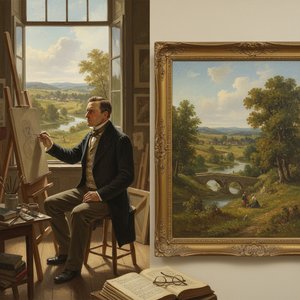
The Poetic Truth of Observation: Exploring 19th-Century Realism in Painting
Explore the captivating world of 19th-century Realism! Discover key artists like Courbet & Millet, masterpieces, and the powerful social commentary behind this influential art movement. Expert insights at OriginalUniqueArt.
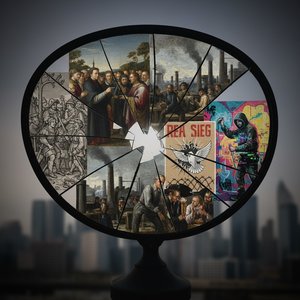
Reflecting Society's Shadows: Social Commentary in Art Through the Ages
Explore the powerful history of social commentary in art! Discover key artists like Hogarth & Daumier, movements from Realism to American Social Realism, and how art reflects—and challenges—society. Expert insights at OriginalUniqueArt.

Echoes of Society: Exploring Social Realism's Enduring Legacy in Art
Explore the powerful world of Social Realism art! Discover key artists, masterpieces & its profound social commentary. Expert insights into this influential movement's history and enduring legacy.
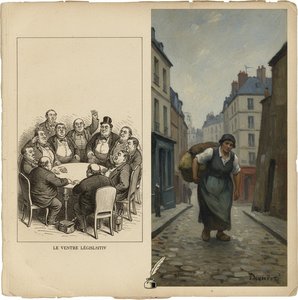
Honoré Daumier: Social Commentary & Artistic Innovation in 19th-Century France
Explore the life & work of Honoré Daumier, a master of 19th-century French realism and satire. Discover his powerful lithographs, paintings, and sculptures critiquing society – and his lasting influence on modern art.

Romantic Realism's Finest: 10 Masterpieces for Your Home | OriginalUniqueArt
Explore 10 defining masterpieces of Romantic Realism! Discover Courbet, Millet & Daumier's powerful paintings—capturing emotion and social realities. Find museum-quality reproductions for your home at OriginalUniqueArt.com.