

 Preverite v realnem okolju
 Pošlji kot čestitko
 Deli
Deli
 Podrobnosti
 Priročnik

 Prenesi
 Podobni artefakti
 Rentgenski posnetek
 Predvajaj diaporama
 Statistika
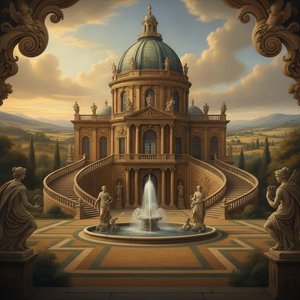
Classical Landscape with Figures
 Baroque
 71.0 x 112.0 cm
 Preberi več
Ročno izdelana oljna reprodukcija
Ročno slikano olje na platnu v vaši izbiri velikosti in okvirja, izdelano po naročilu naših umetnikov. ( Preklop na tiskanine Preklop na digitalno sliko)




































Izberite eno od naših vnaprej določenih velikosti, ki ustrezajo prvotnim proporcijam umetničkega dela.

Vnesite širino in višino, ki jih potrebujete, da se slika prilega vašemu okviru ali steni. Ker je delo ročno slikano, lahko umetnik pri različnih oblikih slik pri robovih doda malo več barve ali pa jih malo odreže — izberite sami. Pred začetkom slikanja vam pošljemo digitalni predogled za potrditev. Slika, prikazana na tej strani, ni končni rezultat — le predogled prikazuje dejansko podobo.
Po oddaji naročila bo ekipa OriginalUniqueArt.com stranki po e-pošti poslala navodila in predogled digitalnega predogleda.
Mednarodna dostava () v 3/4 tednih namesto običajnih 5 tednov. (22 oktober). Brez kompromisov pri kakovosti.

Brezplačna ekspresna dostava po vsem svetu

Visokokakovostno laneno platno

Popolno zavarovanje pošiljke

Garancija povračila carine in uvoznih davkov

Garancija popolnega barvnega ujemanja

Politika vračila v 100 dneh (le v primeru okvar)

Garancija 100% povračila denarja

Popust pri večjem naročilu
 Možnost stekla je na voljo le za velikosti pod 110 cm

Classical Landscape with Figures
Tehnika reprodukcije
Velikost reprodukcije
-


Skupna cena
€ 306
Vprašanja in odgovori
Kakšno je usmerjenje dela "Classical Landscape with Figures" avtorja Henri Mauperché?
Delo "Classical Landscape with Figures" avtorja Henri Mauperché ima Landscape format. Format opisuje proporcije kompozicije.
Koliko svetlobe se zdi, da odražajo barve dela "Classical Landscape with Figures"?
Barve dela "Classical Landscape with Figures" izkazujejo Dark luminanco.
Ali je delo "Classical Landscape with Figures" avtorja Henri Mauperché v javni lastini in zakaj?
"Classical Landscape with Figures" avtorja Henri Mauperché je v v javni domeni – njegova avtorska pravica je zastarela. Avtorske pravice veljajo od smrti umetnika, ki je umrl leta 1736.
Biografija umetnika
The Master of the French Landscape: The Life and Legacy of Henri Mauperché
In the golden age of 17th-century French art, few names evoke the serene grandeur of the Baroque era quite like Henri Mauperché. A painter whose brush captured both the rugged textures of the earth and the ethereal light of the heavens, Mauperché emerged as a pivotal figure in the evolution of classical landscape painting. Born in Paris around 1602, his early years were shaped by the vibrant artistic pulse of the French capital, yet it was his journey beyond the borders of France that would truly define his aesthetic vision. His travels to Rome in 1634 served as a transformative pilgrimage, exposing him to the timeless majesty of Italian antiquity and the profound influence of masters like Sébastien Bourdon. This encounter with the Bambochade style—a spirited blend of genre painting and landscape—infused his work with a unique vitality that balanced classical order with a touch of spontaneous charm.
Upon his return to Paris in 1639, Mauperché’s ascent within the royal circles was swift and spectacular. He possessed a rare ability to translate the spiritual and political ambitions of his patrons into visual poetry. His talent earned him the patronage of some of the most formidable figures in French history, including the legendary Cardinal Richelieu and Queen Anne of Austria. One of his most prestigious early commissions involved decorating the guard room and antechamber of the Palais-Cardinal, a task that required not only technical precision but also a profound understanding of how art could dignify a space of power. His work during this period helped establish him as a leading exponent of the classical landscape, a style characterized by its harmonious composition and its ability to evoke a sense of eternal peace.
A Symphony of Light and Devotion
The artistry of Mauperché is perhaps most deeply felt in his mastery of chiaroscuro—the dramatic interplay between shadow and illumination. While he was a skilled engraver, it was on the canvas that he truly explored the emotional depths of his subjects. His landscapes were rarely mere topographical studies; instead, they often served as stages for profound biblical narratives and pastoral allegories. In masterpieces such as “Landscape with Jephthah and his Daughter,” Mauperché utilizes the natural world to mirror human suffering and divine destiny. The rugged terrain and the heavy, atmospheric clouds do not merely surround the figures; they participate in the drama, echoing the anguish of sacrifice and the weight of religious devotion.
His technical development was marked by an incredible versatility, often moving between the structured elegance of classical architecture and the more fluid, capriccio style of imaginary landscapes. This ability to blend the real with the imagined allowed him to create worlds that felt both grounded in reality and elevated by myth. His brushwork, influenced by the meticulous realism learned from his early training, captured the delicate textures of flowing drapery, the weathered surfaces of ancient ruins, and the soft, warm glow of a setting sun. This dedication to detail ensured that even his most austere compositions possessed a tactile, living quality that captivated viewers across Europe.
Historical Significance and Artistic Triumph
The professional achievements of Henri Mauperché were nothing short of extraordinary for a landscape painter of his era. In 1648, he was admitted to the prestigious Académie Royale de Peinture et de Sculpture, and by 1655, he was named a Professor—an honor seldom bestowed upon those specializing in landscapes rather than portraiture or history painting. This elevation signaled a shift in the art world's perception, acknowledging that the landscape could carry as much intellectual and emotional weight as any human figure. Alongside contemporaries like Laurent de La Hyre, Mauperché played a crucial role in popularizing the classical landscape style of Claude Lorrain, helping to shape the visual language of French art for generations to come.
Though many of his grandest decorative works, such as those created for the Hôtel Lambert or the apartments at Fontainebleau, have tragically been lost to time, his surviving canvases remain enduring testaments to his genius. His legacy is found in the way he bridged the gap between the ruggedness of early Baroque expression and the refined elegance of French Classicism. Through his eyes, we see a world where nature is a vessel for the divine, and where every landscape tells a story of faith, beauty, and the eternal passage of time. He remains a cornerstone of the 17th-century canon, a painter who taught the world to find the sublime in the quiet corners of the earth.

Henri Mauperché
1644 - 1736 , France
Ključne informacije
- Full Name: Henri Mauperché
- Nationality: French
- Date Of Birth: 1644
- Date Of Death: 1736
- Place Of Birth: Paris, France
- Notable Artworks: ['Jephthah and daughter']
- Artistic Movement Or Style: Classical landscapes
- Artists Who Influenced This Artist: ['Nicolas Poussin']
- Artists Or Movements Influenced By This Artist: ['Baroque']
Sorodni članki

Razkodiranje baroknega veličastja: Drama, svetloba in čustva 17. stoletja
Odkrijte moč barokne drame, svetlobe in tehnik mojstrov kot Caravaggio. Spoznajte zgodovino umetnosti še danes.

Baroque Classicism: The Grandeur of Order and Drama in 17th-Century Art History
Explore the profound elegance of Baroque Classicism. Discover how 17th-century masters synthesized dramatic emotion with classical order through the lens of the Counter-Reformation and the works of legends like Carlo Maratta and Andrea Sacchi.

Romantična pokrajina: 10 mojstrovin, ki so definirale gibanje | Umetnost za vaš dom z OriginalUniqueArt.com
Odkrijte 10 mojstrovin romantizma v slikarstvu! Caspar David Friedrich, Turner in drugi. Preučite zgodbe, tehnike in čustva teh ikoničnih krajinskih slik. Kvalitetne reprodukcije za vaš dom na OriginalUniqueArt.com
Baroque Classicism: Reconciling Drama & Order in 17th-Century Art
Explore the captivating world of Baroque Classicism! Discover its history, key artists like Caravaggio & Rubens, and defining characteristics. Expert insights & high-quality reproductions at OriginalUniqueArt.

Evocations of Place: A Historical Journey Through Landscape Art
Explore the rich history of landscape art with OriginalUniqueArt. Discover renowned artists, movements like Impressionism & Romanticism, and expert guidance for collecting timeless pieces. Find your perfect serene escape today!