Predogled v realnem okolju
 Pošlji
 Deli
Deli
 Podrobnosti o delu
 Priročnik

 Prenesi sliko
 Podobni izdelki
 Rentgenski posnetek
 Predvajaj diaporama
 Vprašanja in odgovori
 Statistika
A Carnival Evening

- 117.0 x 90.0 cm


 Preberi več
Giclée tisk / Umetniški tisk
Giclée ali platnati odtis muzejske kakovosti z hitro proizvodnjo in prilagodljivimi možnostmi končne obdelave. ( Kupite ročno slikano delo Preklop na digitalno sliko)




P118B €10

P118H €10

P118W €10

P438Z €10

P508JH €12

P508YH €12

P805H €10

P805Z €10

P919BZ €10

P919G €10

P919XJ €10

P959ZH €10

P968JZ €12

W106C €8

W218G €10

W218JH €8

W218Y €10

W307PJ €10

W316G €10

W316PJ €8

W316Y €10

W398PJ €8

W4111J €10

W500HY €15

W500JH €15

W692G €12

W849H €8

W940BG €15

W953PJ €8




Izberite eno od naših vnaprej določenih velikosti, ki ustrezajo prvotnim proporcijam umetničkega dela.

Vnesite širino in višino, ki jih potrebujete za svoj okvir ali steno. Tiskanje se lahko le odreže, vendar ga ni mogoče narediti večjega od slike, zato format z drugačno obliko pomeni izgubo dela slike. Pred tiskanjem vam pošljemo digitalni predogled za potrditev. Slika, prikazana na tej strani, ne prikazuje dejanskega izrezka — le predogled to omogoča.
Globalna dostava () v 2 tednih namesto standardnih 4/5 tednov. (8 november)

Brezplačna ekspresna dostava po vsem svetu

Visokokakovostno laneno platno

Popolno zavarovanje pošiljke

Garancija povračila carine in uvoznih davkov

Garancija popolnega barvnega ujemanja

100-dnevna politika vračil (le v primeru okvar)

Garancija 100% povračila denarja

Popust pri večjem naročilu
 Možnost stekla je na voljo le za velikosti pod 110 cm

A Carnival Evening
Giclée tisk / Umetniški tisk
Velikost reprodukcije
-


Skupna cena
€ 72
Henri Rousseau: A Vision of Untouched Paradise
Henri Emile Rousseau (1875 – 1933) remains one od the most distinctive painters of his time—one characterized by an uncompromising embrace of Naïve Art. His canvases depict fantastical landscapes populated by animals and humans rendered with childlike simplicity and vibrant color palettes, transporting viewers into dreamlike realms brimming with symbolic resonance. Rousseau’s upbringing in a working-class family instilled in him a deep appreciation for the natural world and folklore, influences that would profoundly shape his artistic vision. Despite facing considerable skepticism from critics of his time—who dismissed his style as amateurish—Rousseau persevered, establishing himself as one od France's most celebrated artists and securing a place among the pioneers of Modern Art.The Enchanting Landscape of “A Carnival Evening”
“A Carnival Evening,” completed in 1886, exemplifies Rousseau’s unique approach to visual representation. Unlike the meticulous realism pursued by Impressionists, Rousseau opted for a style that prioritized emotional impact over precise observation—a deliberate choice rooted in his belief that art should capture the essence of experience rather than merely mirroring it. The painting depicts a nocturnal scene dominated by a colossal moon casting an ethereal glow upon a desolate forest landscape. Two figures dressed in formal attire stroll along a path, seemingly oblivious to the surrounding darkness, adding an element of melancholy and contemplation to the composition. Rousseau’s masterful use of color—primarily deep blues and browns—creates a palpable atmosphere of mystery and serenity.Naïve Art: A Departure from Academic Conventions
Rousseau's artistic method defied the formal training demanded by the Académie des Beaux-Arts, rejecting academic conventions in favor of a deeply personal visual language. He honed his skills through self-teaching, drawing inspiration from primitive art forms and folklore—a practice that resulted in canvases characterized by meticulous detail, flattened perspective, and an almost childlike simplicity. This stylistic divergence wasn’t indicative of lack of talent but rather a conscious decision to explore alternative modes of perception—a testament to Rousseau's unwavering commitment to artistic originality. The artist’s technique—primarily oil on canvas—allowed him to achieve remarkable textural richness and luminous color effects, capturing the beauty of nature with unparalleled sensitivity.Symbolism Beneath the Surface: Decoding Rousseau’s Vision
Beyond its aesthetic qualities, “A Carnival Evening” is laden with symbolic significance. The towering forest represents the unknown, embodying both fear and fascination—a motif recurrent in Rousseau's oeuvre. Simultaneously, the luminous moon symbolizes intuition and feminine grace, illuminating the scene with a gentle radiance. Perhaps most striking is the presence of a ghostly figure hovering above the couple—a potent emblem of aspiration, escape from earthly constraints, or perhaps a reflection of existential anxieties. Rousseau’s deliberate use of symbolism elevates the painting beyond mere depiction, inviting viewers to contemplate profound themes concerning human existence and the relationship between man and nature.A Legacy of Primitive Beauty
Henri Rousseau's unwavering devotion to Naïve Art cemented his place among the foremost artists of his era—a figure whose canvases continue to inspire awe and admiration for their evocative power. His distinctive style—characterized by childlike simplicity, vibrant color palettes, and meticulous detail—remains a beacon of artistic freedom and originality, demonstrating that beauty can be found in unexpected places and perspectives. Rousseau’s enduring influence extends beyond the realm of art, informing contemporary explorations of imagination, emotion, and the primal forces shaping human consciousness.Vprašanja in odgovori
Kakšno vzdušje prenosi "A Carnival Evening"?
"A Carnival Evening" avtorja Henri Emilien Rousseau je po vzduju opisan kot Mistično. Ta razvrščitev lahko pomaga pri izbiri ustreznega okolja za delo.
S kakšno tehniko je izdelano "A Carnival Evening" in v katerem slogu?
"A Carnival Evening" avtorja Henri Emilien Rousseau združuje tehniko Olje na platnu s slogom Surrealist Expressionism. Tehnika in umetnostno smer opredeljata način izdelave ter slog dela.
Na kakšen način je bila izdelana dela "A Carnival Evening" in katere so njene dimenzije?
Originalno delo "A Carnival Evening" avtorja Henri Emilien Rousseau je Olje na platnu z dimenzijami 117 x 90 cm. Tehnika in velikost opisujeta originalni objekt.
Biografija umetnika
Henri Emile Rousseau (1875 – 1933): The Enchanted Vision of Primitive Beauty
Henri Emile Rousseau, born in Lyon, France, in 1875, defied the conventions of Impressionism and Post-Impressionism to forge a singular artistic path—one characterized by an uncompromising embrace of Naïve Art. His canvases depict fantastical landscapes populated by animals and humans rendered with childlike simplicity and vibrant color palettes, transporting viewers into dreamlike realms brimming with symbolic resonance. Rousseau’s upbringing in a working-class family instilled in him a deep appreciation for the natural world and folklore, influences that would profoundly shape his artistic vision. Despite facing considerable skepticism from critics of his time—who dismissed his style as amateurish—Rousseau persevered, establishing himself as one of France's most distinctive painters and securing a place among the pioneers of Modern Art.- Early Life & Artistic Beginnings: Rousseau’s formal artistic training was minimal; he largely self-taught, honing his skills through sketching outdoors and studying prints. He initially pursued commercial illustration work to support himself, but his passion for painting remained unwavering.
- The Influence of Primitive Art: Rousseau's fascination with African masks and tribal art—particularly those collected by Alexandre Cabanel—served as a catalyst for his stylistic evolution. These artworks captivated him with their bold colors, stylized forms, and rejection of academic realism, inspiring him to abandon traditional techniques in favor of a more direct and expressive approach.
- Key Paintings & Artistic Style: Rousseau’s oeuvre is dominated by monumental landscapes infused with mythological elements and populated by animals imbued with spiritual significance. Notable works include “The Sleeping Venus” (1890), “The Promised Land” (1893), “The Concert” (1897), and “The Shepherdess,” which exemplifies his signature style—characterized by flattened perspectives, luminous colors, and a deliberate blurring of outlines.
- Recognition & Legacy: Despite initial rejection by the Parisian avant-garde, Rousseau gained recognition in 1905 thanks to the patronage of Ambroise Vollard, who championed his work and secured exhibitions at Galerie Bernheim-Jeune. His paintings gradually attracted admirers among artists like Picasso and Matisse, cementing his reputation as a visionary artist whose uncompromising vision anticipated Surrealism.
- Death & Enduring Influence: Rousseau died in Étampes in 1933, leaving behind a legacy of approximately 800 paintings—a remarkable achievement considering his unconventional methods. His distinctive Naïve Art style continues to inspire artists today, demonstrating the enduring power of imagination and the beauty found in unfiltered observation.
Exploring Rousseau’s Palette & Technique
Rousseau's artistic technique was remarkably simple yet profoundly effective. He eschewed meticulous detail, opting instead for bold brushstrokes and vibrant hues—often achieved through layering thin glazes of color onto a toned ground. This method allowed him to capture the essence of his subjects with remarkable immediacy and luminosity, conveying emotion and atmosphere as much as visual representation. His use of complementary colors—such as reds and greens—created striking contrasts that heightened the dramatic impact of his compositions. Furthermore, Rousseau’s deliberate flattening of perspective—a technique borrowed from African art—reinforced the dreamlike quality of his landscapes and contributed to their captivating allure.
Henri Emilien Rousseau
1875 - 1933
Hitri podatki
- Full Name: Henri Émile Rousseau
- Nationality: French
- Date Of Birth: 1875
- Date Of Death: 1933
- Place Of Birth: Nancy, France
- Notable Artworks:
- A Carnival Evening
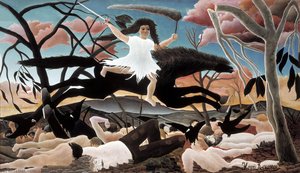
- War or The Ride of Discord
- Fantasia de mariage
- Artistic Movement Or Style: Naive Art
- Artists Who Influenced This Artist:
- Gustave Moreau
- Pierre Puvis de Chavannes
- Artists Or Movements Influenced By This Artist: ['Symbolism']
Sorodni članki

Naive Art Unveiled: The Charming Beauty of Simple Masterpieces
Discover the enchanting world of Naive Art. Explore the profound beauty of self-taught masters like Henri Rousseau through an art-history lens, uncovering how simple forms and vibrant colors create timeless, soulful masterpieces for the discerning collector.
Henri Rousseau: Primitivism, Paradox & Subversion of Academic Tradition
Explore the captivating world of Henri Rousseau, the celebrated Naïve artist who challenged academic traditions with his unique jungle scenes & dreamlike symbolism. Discover his lasting influence on modern art and collecting today.

The Untamed Vision: Exploring Naïve Art & Primitivism's Rejection of Convention
Explore the revolutionary world of Naïve Art & Primitivism! Discover how artists challenged academic traditions with raw emotion & unique styles. Learn about Picasso, Rousseau & more at OriginalUniqueArt.
Fauvism's Boldest Visions: 10 Masterpieces That Revolutionized Modern Art | OriginalUniqueArt
Explore 10 Fauvist masterpieces by Matisse, Derain & Vlaminck that ignited Modern Art! Discover bold colors, expressionist landscapes & the history of this revolutionary movement. Find museum-quality prints at OriginalUniqueArt.com.

Henri Matisse: 25 Mojstrovskih Del za Navdih v Vašem Domu | OriginalUniqueArt
Odkrijte 25 mojstrovskih del Henrija Matissea! Preučite fauvizem, barvite kompozicije in zgodbe za ikoničnimi slikami. Najdite popolno umetniško reprodukcijo za vaš dom na OriginalUniqueArt.com.