- Domov

- Tiskanje na platnu
- hamada shōji
- Square Dish
 Naročite reprodukcijo Kupi digitalno sliko
 Pošlji
 Deli
Deli
 Podrobnosti o delu
 Dodaj v priljubljene

 Prenesi
 Podobni izdelki
 Rentgenski posnetek
 Predvajaj diaporama
Square Dish


 Razviljaj več
Giclée tisk / Umetniški tisk
Giclée ali platnati odtis muzejske kakovosti z hitro proizvodnjo in prilagodljivimi možnostmi končne obdelave.




































Izberite eno od naših vnaprej določenih velikosti, ki ustrezajo prvotnim proporcijam umetničkega dela.

Svoje dimenzije lahko vnesete sami, da bodo ustrezne za določen okvir ali prostor. Če izbrana velikost ne bo skladna z razmerji izvirne slike, bomo umetniško delo orezali ali podaljšali s pomočjo ogledalnega odraza ali barvno polnega roba. Pred začetkom proizvodnje vam bomo poslali digitalni predogled za potrditev.
Upoštevajte, da predogled na zaslonu ne prikazuje dejanskega orezovanja ali podaljševanja. Le digitalni predogled bo natančno prikazal končno kompozicijo.
Čeprav so na voljo prilagojene velikosti, priporočamo izbiro dimenzije s predhodno določenega seznama, da ohranite prvotna razmerja.
Globalna dostava () v 2 tednih namesto standardnih 4/5 tednov. (20 julij)

Brezplačna ekspresna dostava po vsem svetu

Visokokakovostno laneno platno

Popolno zavarovanje pošiljke

Garancija povračila carine in uvoznih davkov

Garancija popolnega ujemanja barv

60-dnevna politika vračanja (le v primeru napak)

Garancija 100% povračila denarja

Popust pri večjem naročilu
 Možnost stekla je na voljo le za velikosti pod 110 cm

Square Dish
Giclée tisk / Umetniški tisk
Velikost reprodukcije
-


Skupna končna cena
-
Opis zbirateljskega predmeta
Hamada Shōji’s Square Dish: A Testament to Mingei Aesthetics
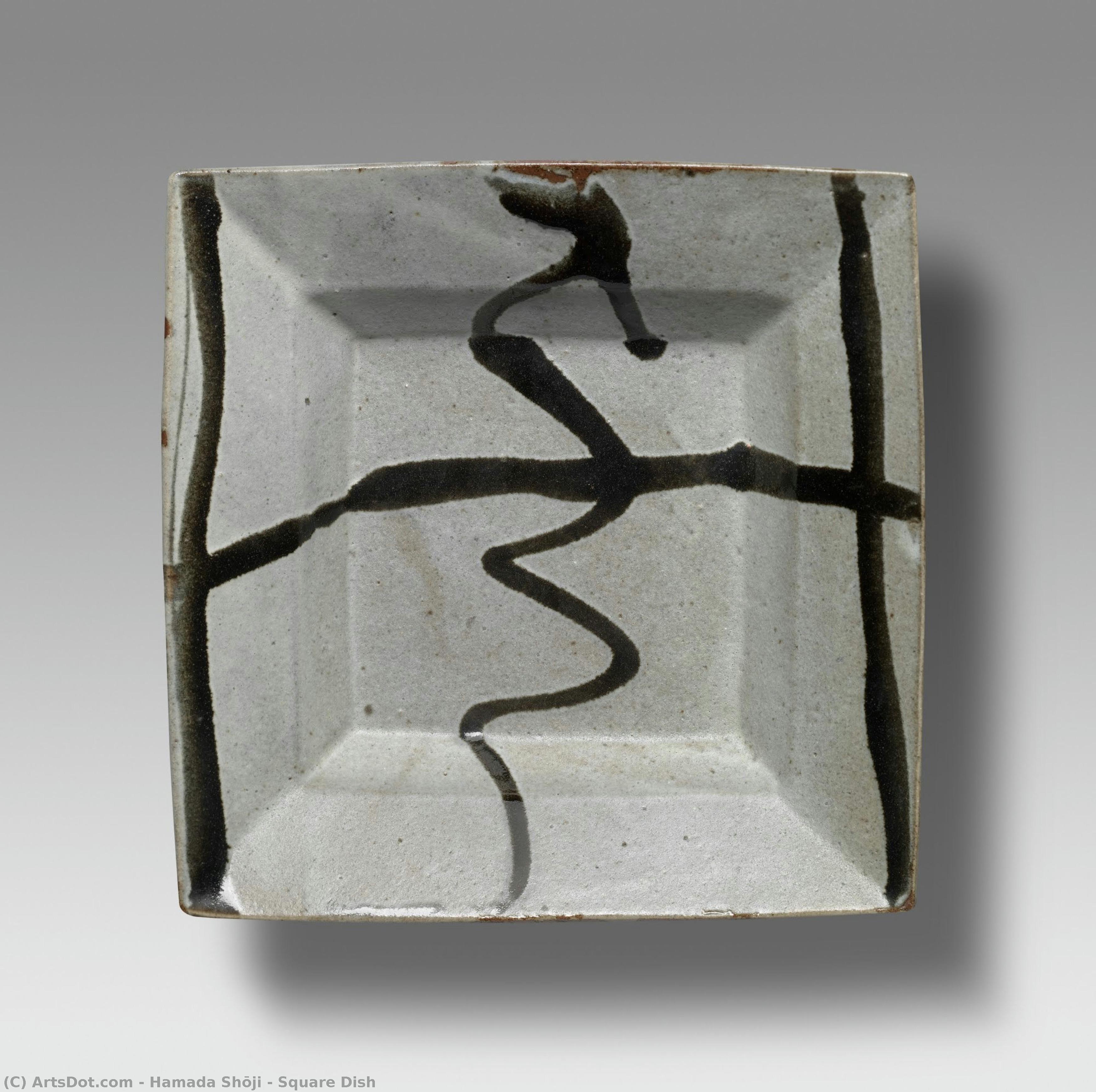
The photograph captures Hamada Shōji's “Square Dish” (1964), a ceramic masterpiece embodying the core principles of *mingei*, or folk art, and reflecting the profound influence of Bernard Leach on Japanese studio pottery. Presented against a stark white backdrop, the dish commands attention with its deceptively simple form—a square vessel molded from buff grey stoneware—yet brimming with subtle textural nuances and stylized floral ornamentation that speak volumes about craftsmanship and artistic vision.- Material & Technique: Crafted from locally sourced clay and glazed with iron oxide pigments – a technique reminiscent of Bizen ware – the dish showcases Hamada’s mastery of traditional ceramic methods. The glaze, applied unevenly across the surface, imparts a distinctive matte texture and contributes to the overall earthy aesthetic characteristic of Mingei art.
- Form & Composition: The square shape itself is deliberately chosen, symbolizing stability and grounding amidst the organic curves of the decorative pattern. A pronounced central depression adds visual interest and reinforces the vessel’s functional purpose while simultaneously creating a dramatic interplay between light and shadow.
- Decorative Motif: Delicate floral motifs adorn the dish's surface—stylized blossoms rendered in black lines that weave across the glaze, mimicking the flowing patterns found in nature. These undulating lines are not precisely straight but possess a slight irregularity, hinting at hand-drawn execution and conveying an element of spontaneity.
- Historical Context: Hamada Shōji’s work emerged during Leach's formative years in England, marking a pivotal moment in the revival of Japanese ceramics after World War II. Leach championed the idea of returning to “primitive” techniques—drawing inspiration from vernacular traditions—to rediscover authentic artistic expression and reconnect with the spirit of craftsmanship.
- Symbolic Resonance: Beyond its aesthetic qualities, "Square Dish" embodies a deeper symbolic message. The square form represents order and permanence, juxtaposed against the flowing lines of the floral design which evoke images of blossoming vines and represent growth and renewal—a harmonious blend reflecting the core tenets of Mingei philosophy.
Biografija umetnika
Hamada Shōji: A Pioneer of Mingei and the Soul of Mashiko
Born in Kawasaki, Japan, in 1894, Hamada Shōji’s life was a testament to his unwavering dedication to traditional Japanese crafts. Initially studying at Tokyo Institute of Technology under the guidance of Itaya Hazan, he quickly distinguished himself as a visionary artist deeply influenced by the burgeoning *mingei* (folk art) movement. This fascination with the beauty and functionality of everyday objects created by anonymous artisans would shape not only his artistic practice but also the very landscape of Japanese pottery.
Hamada’s early career was marked by a profound respect for the past, yet he possessed an innate desire to innovate. He spent formative years in Okinawa, immersing himself in the techniques and aesthetics of local ceramic traditions – particularly those employed in creating distinctive tableware. This experience, coupled with his time studying under Bernard Leach in England, provided him with a unique synthesis of Eastern and Western artistic sensibilities. Leach’s emphasis on simplicity, functionality, and direct engagement with materials resonated deeply with Hamada's own values, ultimately leading to the establishment of the Leach Pottery in St Ives alongside his mentor.
The Founding of Mashiko: A Center for Mingei
Returning to Japan in 1924, Hamada made a pivotal decision that would cement his legacy – he chose to establish his workshop and studio in Mashiko, a small, unassuming town nestled in Tochigi Prefecture. At the time, Mashiko was largely unknown as a pottery center, its landscape dotted with abandoned kiln sites. Recognizing the potential of this forgotten region, Hamada embarked on a mission to revive its ceramic heritage, transforming it into a world-renowned hub for *mingei* production.
He meticulously sourced his materials locally – clay from the surrounding hills, glazes derived from natural minerals, and even crafting his own brushes. This commitment to regional authenticity became a defining characteristic of his work and a cornerstone of the Mashiko pottery tradition. Hamada’s influence extended beyond simply producing beautiful ceramics; he actively encouraged local potters, fostering a sense of community and preserving traditional techniques for future generations. In 1955, this dedication was formally recognized when he was designated a “Living National Treasure,” a rare honor bestowed upon individuals who embody the spirit of Japanese craftsmanship.
A Style Defined by Simplicity and Function
Hamada Shōji’s artistic style is instantly recognizable for its profound simplicity and inherent functionality. He eschewed elaborate decoration, preferring instead to focus on the intrinsic beauty of the materials themselves – the texture of the clay, the subtle variations in glaze color, and the tactile quality of each piece. His forms are often understated yet elegant, reflecting a deep understanding of human needs and a respect for the utilitarian purpose of his creations.
His innovative techniques blended traditional Japanese methods with modern approaches. He experimented extensively with glazes, developing unique copper-green, iron, and white combinations that created stunning visual effects. Hamada’s work is characterized by a remarkable sense of balance – between restraint and expression, tradition and innovation. Notable examples include the stoneware jar, now housed in the Nelson-Atkins Museum of Art in Kansas City, and the square dish also found within their collection, both showcasing his exceptional skill and attention to detail.
Legacy and Influence
Hamada Shōji’s impact on Japanese ceramics extends far beyond his own prolific output. He was a key figure in popularizing the *mingei* movement, inspiring countless artists and shaping the course of contemporary studio pottery. His dedication to preserving traditional techniques and promoting regional crafts served as a model for future generations of artisans.
His influence can be seen in the work of other prominent potters, such as Bernard Leach, with whom he maintained a close working relationship, and Kawai Kanjiro, another key figure in the *mingei* movement. Hamada’s legacy continues to resonate today, reminding us of the enduring value of craftsmanship, simplicity, and connection to one's cultural heritage. His work remains a testament to his artistic vision and his profound contribution to the world of ceramics.

hamada shōji
1894 - 1978 , Japan
Hitri podatki
- Artistic Movement Or Style: Mingei pottery, Studio pottery
- Artists Or Movements Influenced By This Artist: ['Bernard Leach']
- Artists Who Influenced This Artist: ['Kawai Kanjirō']
- Date Of Birth: December 9, 1894
- Date Of Death: January 5, 1978
- Full Name: Hamada Shōji
- Nationality: Japanese
- Notable Artworks:
- Stoneware jar
- Square dish
- Place Of Birth: Kawasaki, Japan
Sorodni članki

Utagawa Kuniyoshi: A Master of Japanese Ukiyo-e – Narrative Innovation & the Fusion of Tradition with Popular Culture
Explore the captivating world of Utagawa Kuniyoshi, a master of Japanese ukiyo-e woodblock prints. Discover his innovative warrior scenes, vibrant landscapes & lasting legacy in 19th-century art history.

Echoes of Heritage: Continuity & Innovation in Traditional Art Forms
Explore the rich history of cultural heritage & folk art traditions worldwide! Discover inspiring artists, preservation efforts, and museum collections. Find handmade oil paintings & expert insights at OriginalUniqueArt.

Ephemeral Lines: Exploring Emotional Resonance in Ink Sketching Traditions
Explore the profound art of ink sketching! Discover techniques to express emotion, master line work, and cultivate artistic sensitivity. Learn from historical masters & unlock your creative potential.

Academic Art: Tradition, Technique & the Pursuit of Ideal Form in the 19th Century
Explore the world of Academic Art! Discover its history, key artists like Ingres & Bouguereau, defining techniques, and lasting influence on 19th-century painting. Learn about the Salon system and its legacy.

Beyond Reality: Exploring Symbolism's Influence on Modern Art & Psychological Expression
Explore the captivating world of Symbolism! Discover key artists, psychological themes & its lasting impact on modern art. Expert insights for collectors and enthusiasts at OriginalUniqueArt.

